Case Study
Balaji Wafers: From Indian Palates to Global Shelves
Balaji Wafers is one of India’s most recognised homegrown snack brands, built on a strong understanding of local tastes, disciplined execution, and a clear focus on value for money. The company’s journey began in the early 1980s, when the Virani brothers started making potato wafers at a cinema canteen in Rajkot after noticing that existing products did not meet customer expectations. What began as a small, hands-on operation soon gained popularity for its freshness, crunch, and honest pricing, laying the foundation for a scalable snack business.
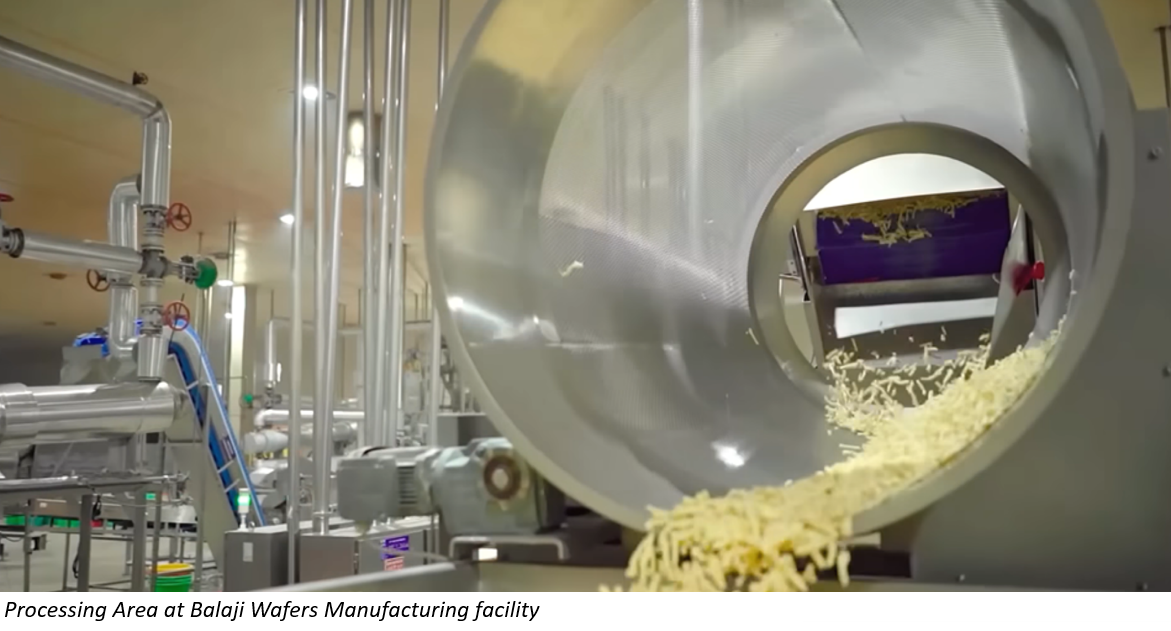
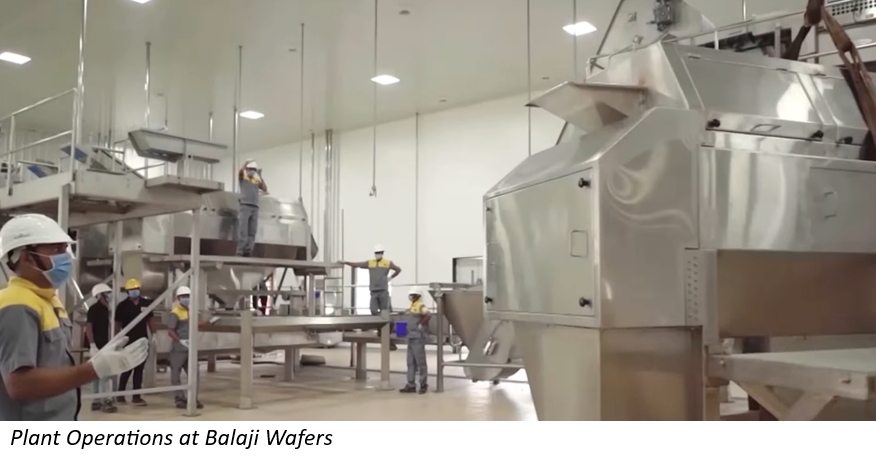
Over the years, Balaji Wafers steadily invested in automation, hygiene, and capacity expansion. The company transitioned into a Private Limited entity in 1995 and set up fully automated manufacturing facilities in Rajkot, followed by large-scale plants in Valsad and Indore. These facilities enabled consistent quality, high volumes, and an expanded product portfolio that today includes potato wafers, namkeen, western snacks, noodles, and confectionery items.
A key strength of Balaji Wafers lies in its deep distribution reach and operational efficiency. With more than 65 products and over 1,225 dealers, the brand has established a strong presence across urban and rural India without relying heavily on advertising.
Its “more chips, less air” value proposition has resonated strongly with consumers, helping the company become a household name across regions.
As Balaji Wafers strengthens its presence in domestic and international markets, its story reflects a deep understanding of consumer preferences, disciplined operations and a strong focus on value for money. In the following conversation with Mr. Shailendra Gaur, Manager, Export Department, Balaji Wafers, we discuss the company’s journey from a small local snack maker to one of India’s most recognised homegrown brands, its approach to scaling manufacturing and distribution, and how it is building its export business to meet growing overseas demand.
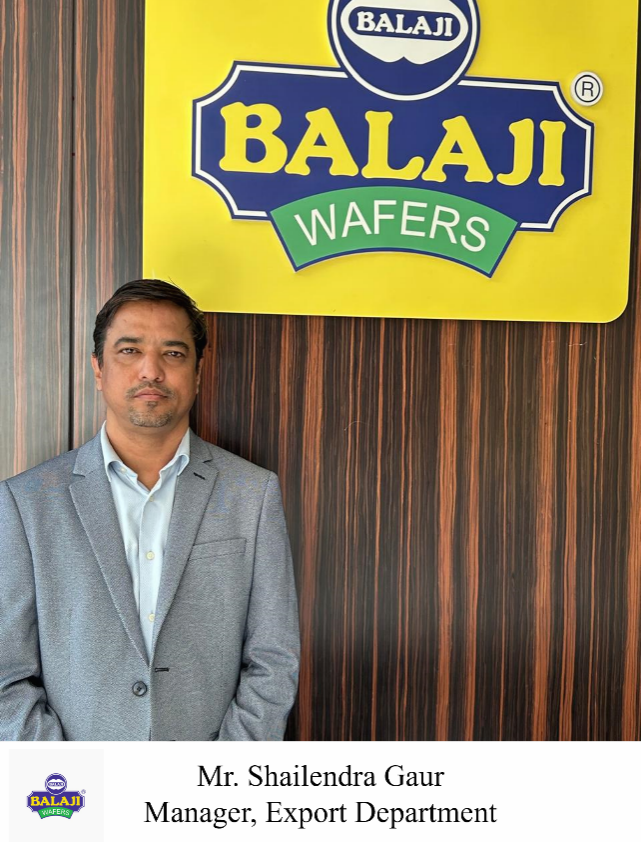
Balaji has always grown by understanding regional taste preferences. For exports, how did you evaluate which flavours would work, and did you have to reformulate anything for shelf life or compliance abroad?
Balaji Wafers selects export flavours using market research, buyer and distributor feedback, and its understanding of Indian regional tastes. The focus is on diaspora-heavy markets such as the USA, UK, UAE, Australia, Canada, and parts of the Middle East and Africa.
Indian flavours like Masala, Chaat-style, Tomato, and Simply Salted perform well overseas, while neutral flavours such as Salted and Cream & Onion are evaluated in mixed markets through pilot shipments. Major taste changes are usually not needed, as authentic Indian flavours are a key draw.
For exports, shelf life is extended to ~12 months through better moisture control, improved oils, and advanced packaging such as nitrogen flushing. Products are reviewed to meet local regulations, with minor changes to ingredients, allergens, and labelling to comply with country-specific requirements. Overall, the strategy focuses on authentic made-in-India taste, supported by global safety and packaging standards, guided by continuous market feedback.
FMCG exporters often struggle with packaging requirements. What were the biggest packaging or labelling changes you had to make for global markets, and how did you build those capabilities internally?
Three of the main changes Balaji Wafers made to export include the use of multilingual and fully compliant labels, high-barrier nitrogen-flushed packaging to increase shelf life, and the development of a robust in-house flexible packaging to balance the cost, speed, and compliance.
The company packaged products with multilingual labels, with Arabic-English where necessary, with clear product names, ingredient list, nutrition details, allergens declaration, and country of origin to comply with the laws of markets like the USA, the UK, the EU, and the UAE.
Labelling designs were standardised to conform to international standards, such as a descending ingredient list, additives listed in the form of E numbers, proper net quantity format, and allergen information. Primary packaging was enhanced to moisture and oxygen-resistant nitrogen flushing or modified atmosphere packaging high barrier films that could sustain a shelf life of ~12 months in sea transportation and without compromising quality.
To enhance internal capacity, Balaji established a special purpose flexible packaging support with Balaji Multiflex and Sanraj Polyprinters. They also invested in automated printing and packing lines with correct batch-coding and datemarking, and constantly modernised machinery to minimise cost and provide rapid design and regulatory flexibility across the export markets.
Shelf life becomes critical when snacks travel long distances. What investments or process changes helped you ensure freshness and consistency for export shipments?
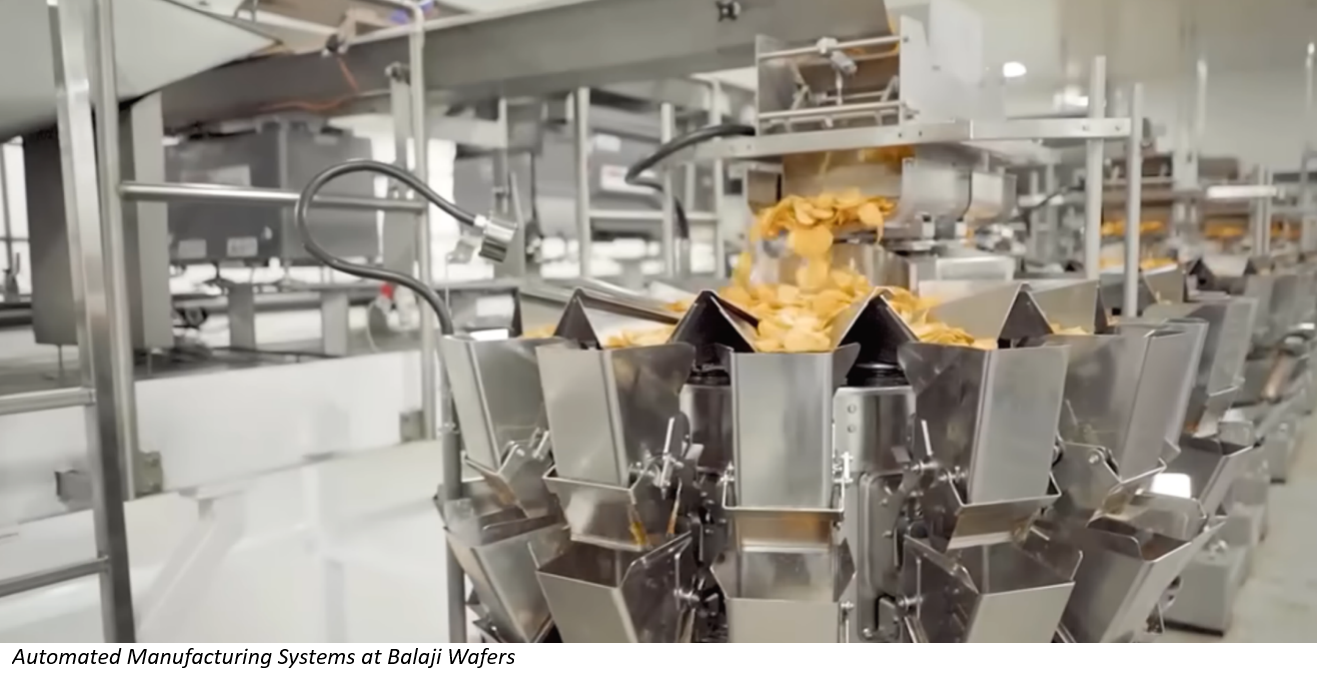
Balaji Wafers has a proven 12-month shelf life of export snacks, despite the long-distance sea deliveries to USA, UAE, and Australia. This is done by means of nitrogen-flushed Modified Atmosphere Packaging (MAP) by using high-barrier films to prevent oxidation and preserve crunch. The company has a Rajkot plant where more than 26 metric tonnes of potatoes are processed in an hour and more than 7,000 kg of wafers are processed in an hour on fully automated lines with accurate frying, seasoning, and on-line quality cheques. Strict screening of potatoes, high quality oil usage, robotic palletising, and structured warehousing are all combined to guarantee uniform freshness and quality to international consumers.
In FMCG, choosing distributors is often the most decisive step. What criteria did you use to select your first international distribution partners and what early learnings might help first-time exporters avoid common mistakes?
In the FMCG sector, distributor selection plays a decisive role in overseas success. For Balaji Wafers, this process began with a structured evaluation focused on market reach, supply chain strength, financial stability, and alignment with brand values. The company’s first international partners, including Gulf evergreen (UAE), Nikita foods (CANADA), ADAS Global (UK), Premier Food Supplies (USA), and Agribiz International Pty Ltd (Australia) were chosen for their deep presence in ethnic Indian grocery networks, markets that accounted for over 50% of Balaji’s initial exports.
Each partner demonstrated proven logistics infrastructure, reliable warehousing, and the financial capacity to manage high-volume imports while promoting the brand in targeted retail channels. These associations have since helped Balaji Wafers expand to 30+ international markets, including the USA, UK, Canada, Australia, and the Middle East.
Key Learnings for New Exporters:
- Begin with limited SKUs or pilot shipments to evaluate demand and distributor reliability.
- Ensure compliance documentation and landed cost analysis are finalized before shipment to avoid costly delays.
- Maintain direct communication and periodic market visits to verify pricing, placement, and brand visibility.
- Formalize agreements with clear terms on territory, marketing support, and performance metrics.
By combining structured partner selection with hands-on market engagement, Balaji Wafers established a global distribution framework that delivers the same “masaledar” experience worldwide proving that careful due diligence and phased growth remain the foundation of sustainable FMCG exports.

Export logistics for food products can be complex. Temperature, transit time, and damage risks. How did you build a logistics model that protects product quality while keeping costs manageable?
Balaji Wafers Pvt. Ltd. is a potato wafers and namkeen manufacturer based in Gujarat that has developed an export logistics model based on product integrity, efficiency, and cost optimization. We have 30+ countries of exports such as the USA, UK, Canada, Australia, Africa, and the Gulf supported by our logistics system.
To safeguard the quality of the products, we employ nitrogen-flushed, multi-layered packaging with a shelf life of 12 months, and high-GSM master cartons that do not get crushed in the sea transportation. Robotic palletizing systems and computer-controlled frying systems guarantee uniformity between production and export shipment. Shipments are completely automated on the FIFO (First in, first out) control to ensure freshness and goods shipped out of Rajkot to Mundra.
In managing cost, Balaji depends mostly on Full Container Load (FCL) sea freight with more cube utilisation in the 20 ft and 40 ft. containers to reduce the cost per packet. We combine volumes to ensure competitive freight contracts, which reduce the necessity of air freight. This is a combined model, which is high barrier packaging, automated handling, and smart route planning, so that Balaji Wafers can maintain the quality of its products internationally and maintain lower logistics costs than industry averages.
Pricing becomes tricky when export duties and freight can push up the landed cost. How did you adapt Balaji’s value-driven pricing model while entering overseas markets without losing competitiveness?
Balaji Wafers has tailored its value-based pricing to the international markets through integration of scale, operational efficiency, and targeted market selection. The company has been able to maintain low prices of its products, which are of good quality, despite the increased exportation taxes and freight expenses, which is a good indication of its good domestic positioning.
Balaji manages costs by mass production of its products by automated means, vertical integration in raw materials and packaging and effective export business, primarily via Mundra Port with consolidated shipments. Over half of the exports are sold to the high-demand markets of the USA, UK, Canada, the Gulf countries, and Australia, which assists in controlling the cost of logistics. Each market has its own pricing and pack sizes, which are affordable for the dealer.
Marketing is directed at high-turnover Indian diaspora stores, which maintains low marketing expenses and repeat buying. Trade data and performance metrics are used to select export partners to establish long-term relationships. Instead of aggressive price reduction, Balaji continues with its more chips, less air value proposition and reinvests the profits in capacity building, which promotes sustainable growth and balances quality, volume, and competitive pricing in the international markets.
Many FMCG brands struggle with compliance. Food safety, lab tests, certifications, and country-specific approvals. What were the key regulatory hurdles you had to meet before shipping BALAJI WAFERS' first batch?
Balaji Wafers Private Limited had to overcome several regulatory and compliance issues prior to commencing exportation because it did not only have to deal with domestic business, but also with the highly demanding international food safety and documentation requirements. The company initially obtained Food Safety and Standards Authority of India (FSSAI) central licencing and made sure that each export lot was assessed in laboratories that were accredited by National Accreditation Board for Testing and Calibration Laboratories (NABL).
Regarding overseas markets, Balaji made the necessary registrations, including the approval of the USA by the US Food and Drug Administration (USFDA) and the Middle East and African countries by the Halal certification. The products were modified to suit country-specific labelling regulations, such as bilingual labels, nutrition labels, additive codes, and clear expiry dates. Aflatoxins, heavy metals, and pesticide residues were also assessed in export batches to ensure that they met stringent limits in markets such as the USA, UK, and the Gulf countries.
Balaji enhanced export documentation through the help of Agricultural and Processed Food Products Export Development Authority (APEDA), mock shipments to prevent mistakes, and in-house and third-party quality systems based on Hazard Analysis and Critical Control Points (HACCP) and International Organisation for Standardisation (ISO) 22000 standards. Taking compliance as an asset instead of a challenge, Balaji was able to deliver shipments without early rejections and develop a good credibility in the markets including the USA, UAE, Australia, UK, and Europe, which is a good foundation to go global.
Balaji has historically grown with little advertising. In export markets, how did you build visibility or trust among retailers and consumers without heavy marketing spends?
Balaji Wafers Private Limited has established brand presence abroad by a low-cost, relationship-based strategy, as opposed to intensive advertising. The demand of the Indian diaspora, good distributor relationships, and the quality of products were the primary growth factors, and the promotional expenditure was maintained at an exceptionally low level compared to the average Fast-Moving Consumer Goods industry.
The company targeted the ethnic Indian markets in the USA, UK, UAE, Australia, and Africa where familiar flavours formed a strong emotional attachment. Ethnic grocery stores were penetrated with exclusive distributor agreements, which guaranteed constant supply, high retailer margins, and high shelf positioning. Balaji did not use traditional advertising but instead used word of mouth and community participation, particularly during Diwali and Independence Day.
Its more-chips-less-air value proposition, low cost, authentic flavour, and clear regulatory compliance contributed to the rapid development of trust in the consumers and retailers. Good domestic credibility also added to the trust in foreign markets, which resulted in repeat buying and constant shelf life. This model of relationships enabled Balaji to expand exports and brand loyalty without huge marketing funds.
Demand forecasting is challenging when Balaji wafers enter a new country. How did Balaji wafers' estimate initial volumes and avoid issues like overstocking, expiry, or stockouts in the early stages?
Balaji Wafers had a realistic demand forecasting strategy when venturing into new export markets. The company did not use complex models, but instead used distributor inputs, diaspora consumption patterns, and learning over time to match supply with real demand, which contributed to avoiding overstocking, expiry, and stockouts, and ensuring ~95% service levels.
Export started with small pilot shipments of one container to gauge demand. The sales insights and feedback of experienced ethnic distributors in the markets like the USA, UK, UAE, Canada, and Australia were used to plan volume and product mix. The tight control of inventory was ensured by high turnover, First-In, First-Out practises, and 12 months shelf life, which guaranteed freshness at the destination.
The orders were shipped as per the orders of the dealers, and the production was adjusted swiftly when some flavours were catching on. Flexible and responsive forecasting was achieved through regular sales data and retailer feedback that helped in refining plans on a continual basis. This small, scale-with-demand approach guaranteed stable supply, no expiry wastage, and sustainable export development.
As an FMCG brand scaling globally, what long-term capabilities do you feel Indian companies must build early, whether in quality systems, R&D, packaging, or supply chain to succeed in exports?
Balaji Wafers’ export journey shows that long-term global success for Indian Fast-Moving Consumer Goods companies depends on building strong structural capabilities early. Beyond good products, this means investing in robust quality and food safety systems, in-house research, and development for flavour localisation and 12-month shelf life, and advanced, compliant packaging that meets international expectations.
Equally important are resilient, digitised supply chains that can manage demand shifts and logistics challenges, supported by automation, traceability, and proximity to ports. Continuous upgrades through training, audits, and technology adoption maintain consistency, control costs, and meet strict overseas standards.
Balaji’s experience highlights that early investment in quality, innovation, packaging, and supply chain strength enables Indian brands to move from ethnic exporters to trusted global players, delivering consistent quality, lower risk, and sustainable growth across international markets.
Disclaimer: This information has been collected through secondary research. The views expressed by the spokespersons are their own and do not necessarily reflect those of IBEF. IBEF is not responsible for any errors in the same.
Get In Touch
Your input is valuable in shaping the future of the IBEF Export Newsletter! Take a moment to share your thoughts and help us bring you more relevant insights, success stories, and export branding strategies.
Contact & Subscriptions: Contact Us
Email us at: info.brandindia@ibef.org
Call: +91 11 43845501
Partners