Feature Article
Design and Innovation as Catalysts: India’s Evolving Global Exports Narrative
In the context of global trade dynamics, there has been a paradigm shift in competitiveness, in which cost efficiency and economies of scale are no longer primary determinants. As international markets have become more advanced in their expectations, value creation through design and innovation is gaining prominence. Functionality, ease of use, reliability, innovation, and flexibility are important factors that make global buyers more interested in such products. Such trends have necessitated a paradigm shift in the strategies followed by exporters and countries to build their international presence.
Such trends are currently visible in the case of India's exports, which are increasingly moving away from the traditional perception of India being a cost-efficient sourcing country to one that offers value-based solutions based on innovations in design. Indian companies are adopting innovative methods, including those based on design, product development, and engineering, to cater to the needs of global markets.
India currently has a well-developed, robust ecosystem for design and innovation, in which various institutions play a critical role. The National Institute of Design (NID) has played an instrumental role in building capabilities in design innovation, particularly in industrial, textile, and experiential design. Specialised centres like those dealing with natural fibres, bamboo, railway systems, and the Smart Handloom Innovation Centre represent the increased depth that is being achieved in sectoral design innovations in India.
In addition to these, efforts made through IIT-led Design Innovation Centres and IISc are geared toward building cross-functional capability through engineering, ergonomics, rapid prototyping, and other aspects, in creating globally relevant products. Furthermore, efforts taken in the form of the National Initiative for Design Innovation (NIDI) are contributing towards spreading design and product thinking among students in leading educational institutions through a hub-and-spoke model. Global capability centres focusing on product design, digital user interface, embedded systems, hardware experience engineering and similar fields are also part of this trend. Collectively, all these competencies ensure that India is not only a producer of products but also a designer and innovator.

From Cost Advantage to Export Value Creation
The export scenario for India on the world stage is witnessing a paradigm shift from its earlier position as a sourcing base based on cost competitiveness. With changing market dynamics, there is now an increasing emphasis on creating value through design and innovation, which makes products stand out from others. Competitiveness, in this case, is not only about meeting international benchmarks but also about catering to user needs in terms of performance and functionality.
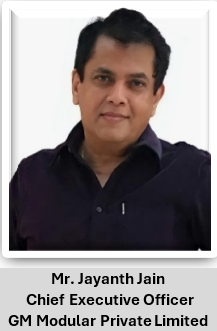
Reflecting this evolution, Mr. Jayanth Jain, CEO, GM Modular, states, “India’s emergence as a strong player in global markets is increasingly being shaped by its ability to combine design excellence with meaningful innovation. For Indian manufacturers, competing internationally is no longer only about cost advantage, but about creating products that resonate across geographies, meet global standards, and deliver a superior user experience. For many years, Indian manufacturing was largely associated with cost advantage. That perception is steadily changing. Today, there is a visible shift towards building products that can compete on quality, performance, and overall experience rather than just price. Manufacturers are putting more thought into how products are designed, how they function, and how they are positioned in global markets.”

The change is further bolstered by shifting requirements from international purchasers, who are focusing on reliability and technological know-how in addition to costs. The requirements of international markets include products that are not just effective but also innovative and well-suited to their specific uses. Indian exports are responding by concentrating more on developing their products and innovating.
Emphasising this broader shift, Mr. Keyur Shah, Chairman and Managing Director, Yash Highvoltage Limited, notes, “To me, the manufacturing revolution in India is at a significant inflexion point, as it is moving from being competitive with regards to cost towards being innovative to create value. For instance, in key sectors such as power infrastructure, reliability and problem-solving capabilities are the main priorities for global buyers. We can see this transformation first-hand at Yash Highvoltage Limited, where the conversation is shifting from ‘how much?’ to ‘how advanced?’ This clearly indicates a broader industry shift towards value-led differentiation, where innovation, engineering depth, and long-term performance are becoming the defining factors of competitiveness in global markets.”
Design as a Driver of Export Differentiation
With India gaining prominence in international business, design is now playing an important role in distinguishing its products for exports. In today’s international market, consumers are more concerned with the psychological aspects of purchasing a product than with its functionality alone. Hence, Indian exporters have clearly moved from being considered suppliers to creating unique value-added products. Therefore, design is not just about making something look attractive; it also plays an important role in usability and performance.
Reflecting this shift, Mr. Sunil Suresh, Founder & CMD, Stanley Lifestyles Limited, states, “India’s export journey is entering a new and defining era, one where value is no longer measured by scale alone, but by refinement, originality and design excellence. We are moving beyond being a sourcing destination to becoming creators of globally admired design-led luxury. From a founder’s point of view, this evolution reflects a deeper shift in global consumption. The modern luxury consumer is discerning, globally aware and emotionally invested in the spaces they create. They seek more than functionality; they seek timeless design, impeccable craftsmanship and an

authentic point of view. This is where India’s true strength lies. What distinguishes Indian brands today is our ability to harmonise heritage craftsmanship with contemporary design intelligence. This duality enables us to create products that are globally relevant yet carry a distinct identity piece that belongs as naturally in international homes as they do in India.”
In engineering-led export categories, design plays a vital role not just from an aesthetic point of view but also in functional reliability. It is becoming crucial for exporters to incorporate good design into their products to ensure they are accepted in the international market and compete effectively with other products there. Indian exporters are beginning to realise the importance of having strong design skills.
Highlighting this, Mr. Keyur Shah, Chairman and Managing Director, Yash Highvoltage Limited, notes, “The realm of design has become an essential distinguishing factor, as functionality, durability, and flexibility come together to create value. Earlier, Indian products were considered functional but not necessarily superior in design. This paradigm has been broken today, and design has become the medium through which we showcase our expertise in high-voltage technology. As supply chains around the globe evolve into ‘China Plus One,’ Indian manufacturers succeed not on account of lower costs, but through engineering driven by superior design in accordance with the toughest reliability standards. Our products do more than just work - they help power the grid of tomorrow. By focusing on aesthetic precision, ease of installation, and technical robustness, we are establishing ‘Brand India’ as synonymous with cutting-edge reliability. Design is the bridge that allows us to move from being a component supplier to a global innovator of critical infrastructure.”
Localisation and Global Relevance in Exports
With Indian exporters venturing into diverse markets globally, localisation becomes an important criterion for successful exports. The markets today require products suited to their legal, physical, and usage parameters. This is making exporters realise the need to go beyond offering generalised products and instead design products based on their application and the specific market. Export success lies in the exporter's ability to provide reliable, versatile solutions.
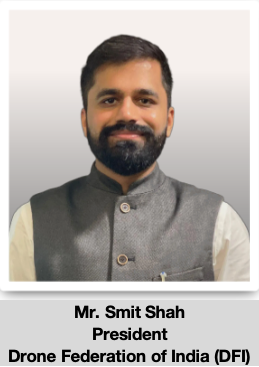
Highlighting this, Mr. Smit Shah, President of Drone Federation India (DFI) states, “Localisation and product design have become absolutely critical for success in international markets because global competitiveness today is defined by capability, reliability, and strategic trust, not just pricing. Several countries have become far more cautious after supply chain disruptions, export control restrictions, and concerns around dependency on foreign-origin critical technologies. Defence and homeland security buyers now assess who controls the core technology, not just who assembles the final platform.
For instance, for Indian drone manufacturers, localisation must go beyond airframes and assembly. Real competitiveness lies in indigenous flight controllers, secure communication links, propulsion systems, payload integration, and counter-drone technologies. Product design is equally decisive, as no single drone can serve every geography. A system built for desert border surveillance differs significantly from one required for maritime monitoring, high-altitude operations, or dense urban security. Indian companies designing mission-specific systems for agriculture, defence, mining, and industrial inspection are finding stronger acceptance than those offering generic platforms. The real shift is this: buyers are no longer asking only ‘How affordable is it?’ but also ‘How reliable, secure, and adaptable is it for our operational environment?’ That is where localisation creates lasting global advantage.”
The importance of localisation applies to both the consumer and the electrical products export segments. It becomes vital for the exporter to ensure that the product offered meets the needs of the particular market. This means they need to understand customers' expectations and offer products that meet their specific requirements.
Reflecting this, Mr. Jayanth Jain, “Localisation has become extremely important when entering international markets. Each region comes with its own set of expectations, whether it is in terms of technical standards, usage habits, or even design preferences. A product that works well in one country may need changes before it can succeed in another. Design plays a central role in making this possible. It is not limited to how a product looks, but also how it performs in a specific environment. Factors like voltage compatibility, safety requirements, and installation practices need to be considered from the start. At GM Modular, we approach product development with this in mind, ensuring that our offerings are relevant to the markets we serve. “ Getting localisation right helps build trust and makes it easier to establish a strong presence globally,” and Mr. Sunil Suresh notes, “Our approach goes beyond furniture.”

Our mission is to move beyond furniture by creating complete home solutions, while offering exceptional service and the quality assurance of a deep-rooted manufacturing brand. This integrated philosophy allows us to design holistically, where every product is part of a larger, cohesive living experience. What distinguishes Indian brands today is our ability to harmonise heritage craftsmanship with contemporary design intelligence. This duality enables us to create products that are globally relevant yet carry a distinct identity piece that belongs as naturally in international homes as they do in India.”

Sustainability, Compliance and Export Readiness
The growing involvement of Indian exporters in the international market has seen sustainability and regulation become an essential part of export-readiness. Today, the international market runs according to strict requirements for safety, environment, and performance of products. Consequently, while initially focused on compliance with the regulations, export-readiness has moved towards incorporating them into the designs of the products. Hence, it can be stated that export success is intrinsically dependent on delivering solutions that comply with both performance and regulation requirements.
Reflecting this shift, Mr. Jayanth Jain, CEO, GM Modular “Sustainability and regulatory compliance have become key considerations in product development. Global markets are increasingly focused on energy efficiency, safe materials, and adherence to strict certification standards. This has changed the way manufacturers approach both design and innovation. Instead of making adjustments later, there is now a stronger emphasis on building these aspects into the product from the beginning.
This means selecting better materials, improving efficiency, and ensuring that products meet international requirements without compromising on performance. At GM Modular, this approach helps us stay aligned with global expectations while also delivering reliable solutions. It is not just about meeting regulations but about creating products that are responsible and future-ready.” and Mr. Keyur Shah, Chairman and Managing Director, Yash Highvoltage Limited, states, “Changing trends in terms of safety, efficiency, and sustainability are the innovation drivers today. The global regulations have tightened considerably, and there is no scope for negotiation on issues of sustainability anymore; it has to be mandatory at all costs. In the case of Indian exporters, it has to be incorporated in the design phase itself. At Yash Highvoltage, these evolving requirements translate into continuous innovation across our product portfolio through improved insulation systems, optimised material selection, enhanced manufacturing processes, and rigorous testing aligned with international standards.”
The same applies to industries that have been enabled through technology, as in such cases, compliance is tied to market access and international trust. Exporters must comply with international certification standards, have safe supply chains, and make products that fit with international operational standards. The concept of sustainability in such scenarios transcends that of the environment; it becomes one of product credibility as well.
As emphasised by Mr. Smit Shah, President of Drone Federation India (DFI), “Global regulatory standards are increasingly shaping how Indian manufacturers approach design, innovation, and export readiness. For exporters, compliance is no longer a final checkpoint; it must be built into the product from the design stage itself. Manufacturers are therefore prioritising globally accepted military-grade certifications and quality benchmarks such as NATO-aligned standards, STANAG compliance where applicable, MIL-STD testing, environmental qualification, and secure communication protocols. In global markets, certification is not just compliance, it is market access.” and Mr. Sunil Suresh, Founder & CMD, Stanley Lifestyles Limited, notes, “Luxury, in our world, begins with an uncompromising approach to materials and craftsmanship. From hand-selected leathers to precision-engineered structures, every element is thoughtfully curated. Our design language blends global sensibilities with intuitive comfort, ensuring that our products feel as refined as they are functional. Innovation, in the luxury segment, is subtle yet powerful. It lies in modularity that adapts to evolving lifestyles, in customisation that respects individuality and in engineering that ensures longevity.”
Leveraging Technology: Accelerating Design, Precision and Global Scale
With Indian exporters facing stiff competition within highly dynamic global markets, digitalisation and sophisticated engineering processes have emerged as indispensable factors in ensuring competitiveness. With the help of digitalisation, exporters can not only design, prototype and perfect their products faster but also ensure that they meet the requisite standards. Indeed, in a global market where timing, quality and consistency are of utmost importance, digitalisation allows Indian firms to be efficient without compromising on quality standards.
Highlighting this transformation, Mr. Keyur Shah, Chairman and Managing Director, Yash Highvoltage Limited, said, “The advent of digital technology has transformed the manner in which products are designed and tested. Through the use of digital technologies like digital twin models and analytics as part of Industry 4.0, designers and engineers can perform simulations on product performance even before producing one unit.
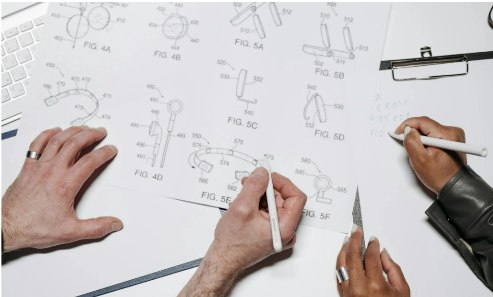
For Yash Highvoltage, such technologies reduce the time taken to go from ‘concept to market’ drastically. Our ability to design and develop rapidly allows us to ensure that each product is developed under the ‘Zero Defect’ philosophy. Digitalisation of the manufacturing process on the shop floor not only enables efficiency but also enables us to maintain the quality standards set out.” and Mr. Smit Shah, President of Drone Federation India (DFI) states, “Digital technology and advanced engineering tools are no longer support functions in drone manufacturing, they are the core drivers of product innovation and global competitiveness. In the drone industry, speed of iteration often determines market leadership. Companies that can simulate, test, and validate faster will always outperform those relying only on physical prototyping. Advanced tools such as digital twins, AI-based flight performance modelling, computational fluid dynamics (CFD), electromagnetic interference testing, and hardware-in-the-loop (HIL) simulation allow manufacturers to optimise airframes, propulsion efficiency, payload integration, and autonomous flight behaviour before the first prototype is built.”
Apart from engineering-driven industries, digitisation is making it easier for exporters dealing with consumer goods and lifestyles to increase the quality, uniformity, and flexibility of their products. This is because the use of sophisticated technology in design and production processes helps firms to fine-tune their products, adjust to shifting market dynamics, and align with international standards.
Reflecting this, Mr. Jayanth Jain, CEO, GM Modular, said, “Digital technology has made a significant difference in how products are designed and developed. Advanced engineering tools allow manufacturers to test ideas, refine designs, and identify potential issues much earlier in the process. This reduces delays and improves the overall quality of the final product. For us at GM Modular, these tools help bring greater precision and consistency into manufacturing. They also make it easier to adapt products for different markets without starting from scratch each time. The ability to move faster while maintaining high standards is a big advantage in today’s competitive environment.” and Mr. Sunil Suresh, Founder & CMD, Stanley Lifestyles Limited, notes, “Innovation, in the luxury segment, is subtle yet powerful. It lies in modularity that adapts to evolving lifestyles, in customisation that respects individuality and in engineering that ensures longevity. At Stanley Lifestyles, we continuously invest in processes and technologies that elevate precision while preserving the human touch that defines true luxury.”
Strengthening India’s Global Edge
In today's context, the process of exports from India is at a critical juncture. It is no longer about achieving sustainable global competitiveness through lower prices and costs. Global competitiveness now depends on delivering differentiated products and solutions that add value and meet higher expectations. It is apparent that exporters are becoming more adept at integrating design, innovation, and advanced engineering capabilities into their products, thus making them superior from a functional perspective as well as more globally relevant.
An important message from the above insights is that exporters need to place emphasis on design as an integral part of product design and development. The significance of design has evolved over time to include the product's performance, adaptability, and perception across various regions around the globe. Equally crucial would be the constant emphasis on innovation and technology that would enable exporters to respond to global requirements and compete with quality rather than price as the primary consideration.
Localisation is another important aspect that contributes to the effectiveness of exporting. Localising the product in terms of its features and functionalities is vital to ensuring that the exporter meets customer requirements, especially in the global market. Compliance and sustainability are also important aspects of exports that cannot be overlooked, given the growing emphasis on environmental sustainability and adherence to international regulatory requirements.
Another important factor influencing exporters in recent times is the use of digital technology to enhance their product offerings. Advanced technologies have been increasingly adopted in engineering and design processes, which enables them to improve quality, achieve economies of scale, shorten development cycles, and improve product designs in general. All of this helps exporters transform themselves from low-cost producers into innovators with globally accepted products. It can be concluded that with the integration of advanced design, innovation, localisation, sustainability, and digitalisation into product development and manufacturing, exporters from India can create products that stand up to global requirements and competition effectively.
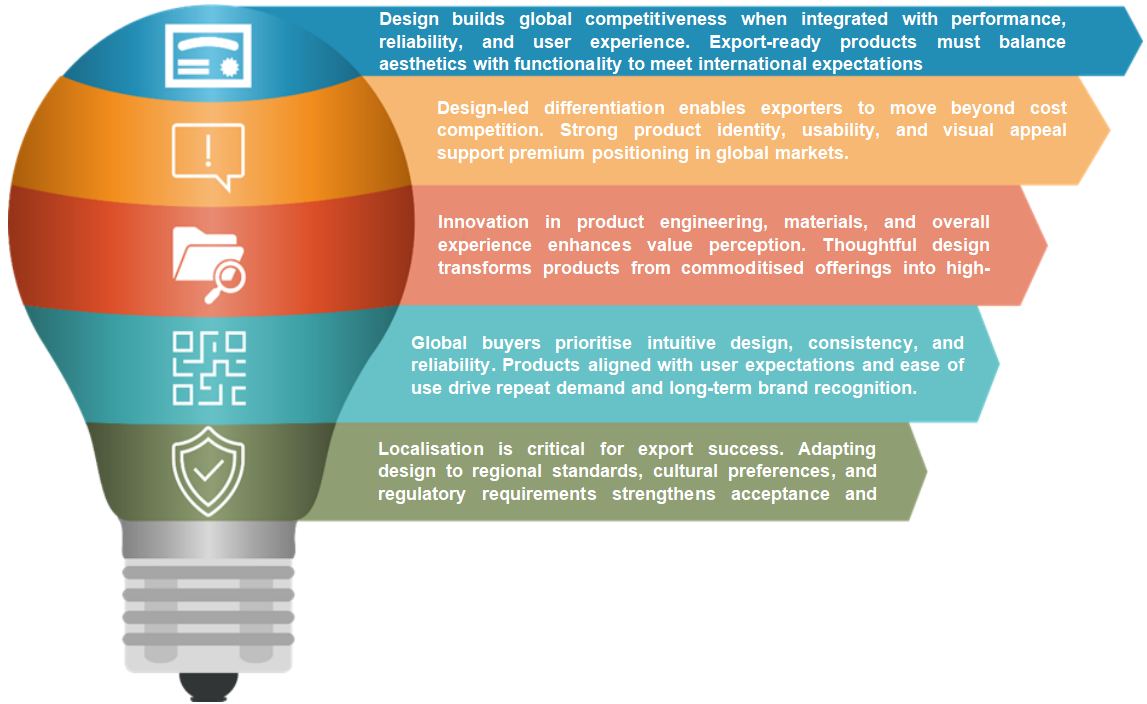
Design & Innovation-Led Export Tips
Get In Touch
Your input is valuable in shaping the future of the IBEF Export Newsletter! Take a moment to share your thoughts and help us bring you more relevant insights, success stories, and export branding strategies.
Contact & Subscriptions: Contact Us
Email us at: info.brandindia@ibef.org
Call: +91 11 43845501
Partners