Case Study
HSCL Success Story
Himadri Speciality Chemical Ltd (HSCL) is one of India’s most established carbon-materials and speciality-chemicals companies, recognised for its strong technology base and an evolving global footprint. The company is the leading coal tar pitch producer in India and is the only domestic manufacturer of advanced carbon materials in India, comprising specialised carbon products developed for applications such as lithium-ion batteries and other high value industrial uses, as per company disclosures. Over the years, it has also emerged as the country’s largest producer of naphthalene and SNF, supplying these materials for a wide range of industrial applications.
Himadri’s portfolio spans coal tar pitch, carbon black and speciality carbon black, naphthalene, refined naphthalene, SNF, PCE, speciality oils and several value-added downstream products. These products serve sectors such as lithium-ion batteries, tyres, aluminium, graphite electrodes, paints, plastics, construction chemicals, agrochemicals and defence. The company is also investing in next-generation materials, including LFP cathode active materials, advanced anode materials and coal-tar-based high-value derivatives. It has further expanded its focus to lithium-ion battery recycling, strengthening its position across the clean-energy value chain.
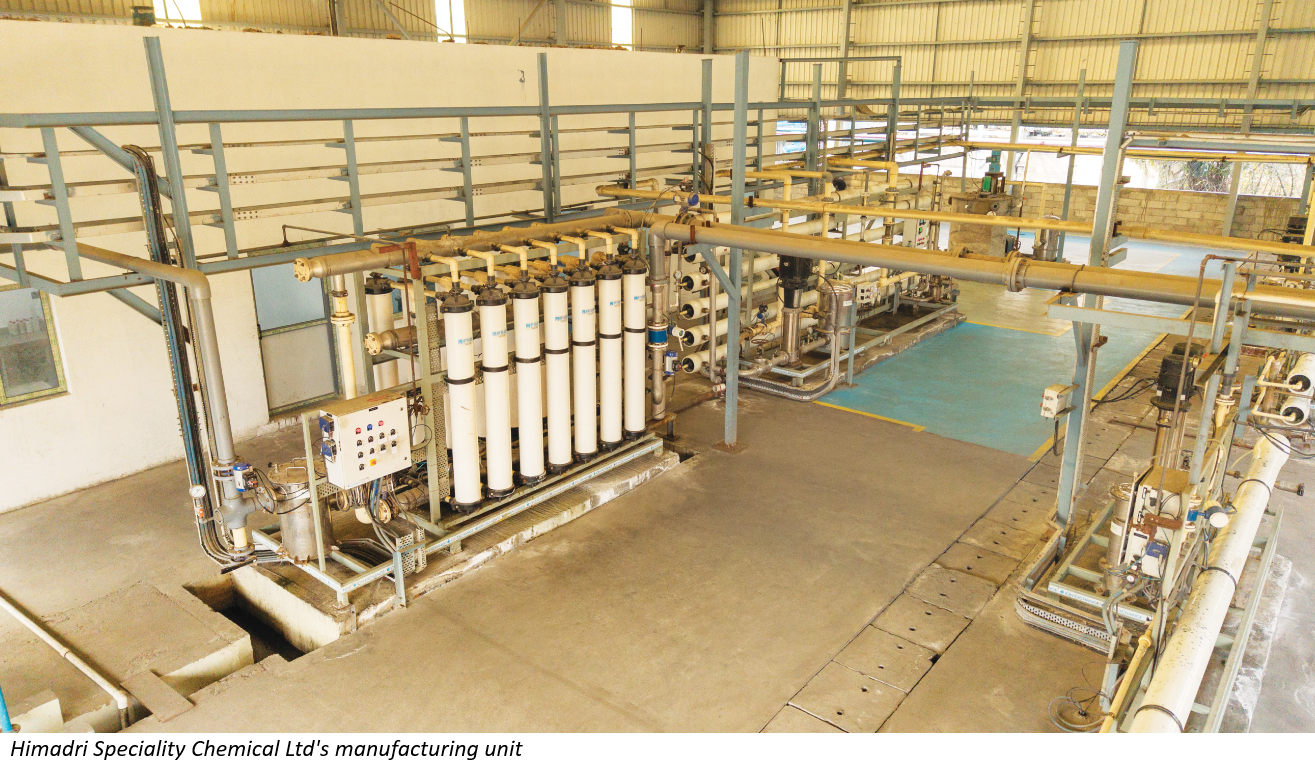
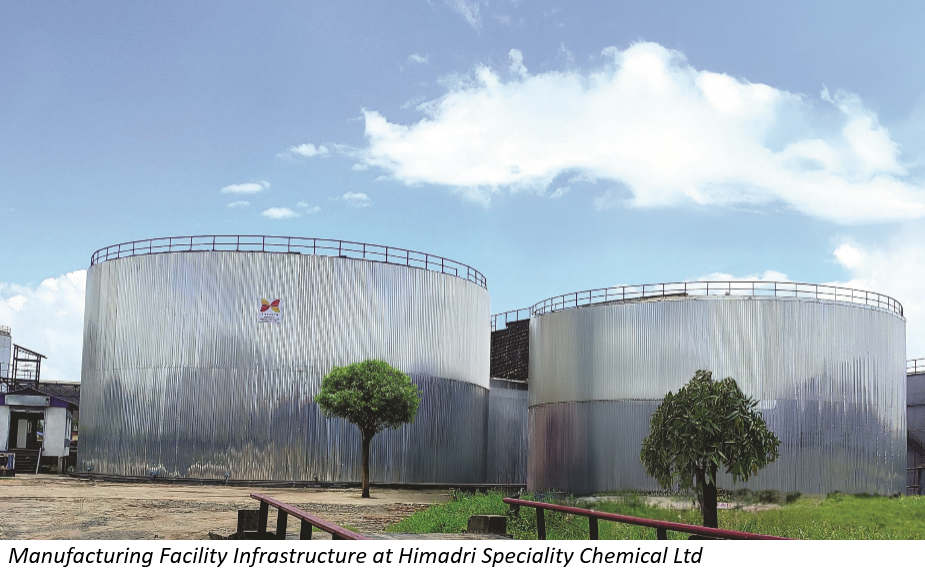
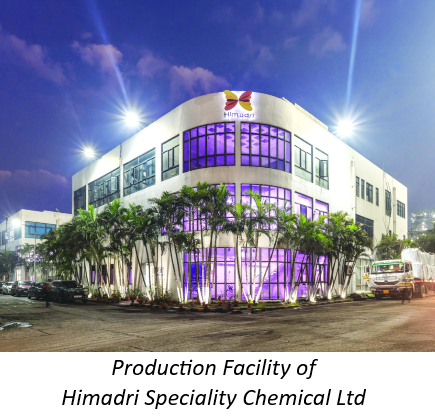
With seven manufacturing facilities in India and one unit in China, Himadri has built sizeable capacities in coal tar distillation, carbon black and speciality carbon black. A captive 28 MW power plant supports more than nine-tenths of its energy needs, ensuring reliability and cost efficiency. The company’s strong customer base includes prominent names such as CEAT, Apollo Tyres, Vedanta, Pidilite, NALCO, Bridgestone, MRF Tyres, Graphite India and Hwaseung.
Himadri’s exports have steadily increased, reaching around 54 countries across Europe, the Middle East, Africa and Asia. This growing global presence is supported by investments in capacity expansion, specialty-product development and large multi-year projects in lithium-ion battery materials. The company’s strategy combines deep manufacturing expertise with forward integration and technology-led diversification, positioning it well for opportunities in both traditional industries and new-age energy solutions.
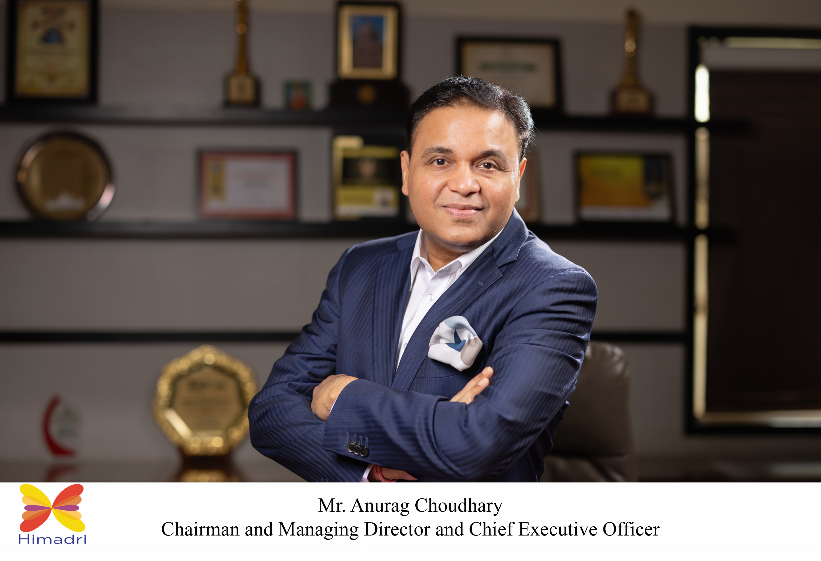
As Himadri continues to scale its presence across global markets, its journey reflects both strong manufacturing depth and a clear shift towards advanced materials. In the following conversation with Mr. Anurag Choudhary, Chairman and Managing Director and Chief Executive Officer of Himadri Speciality Chemical Ltd, we discussed the company’s expanding export footprint, the strategic choices behind this growth and how it is preparing for the next phase of international demand.
Himadri now exports to more than 50 countries. What were the first steps, and what early challenges did you face?
When we first stepped outside India, we did not treat it as a sales exercise, we viewed it as our technical validation journey. Our products, whether carbon black, coal tar pitch or advanced carbon materials, perform differently depending on the end-application. A pitch used for an aluminium smelter in Europe has completely different softening characteristics and quinoline insolubles (QI) distribution compared to what a graphite electrode manufacturer in East Asia might need.
The first step, therefore, was to map these requirements at a microscopic level: viscosity curves, ash levels, QI, particle size distribution and rheology. We had to prove that our materials would hold their consistency across multiple production batches, climates and shipping cycles.
The biggest early challenge was perception. Two decades ago, Indian speciality chemical manufacturers were largely overlooked in high-purity segments. Overseas customers ran qualification tests that stretched for months. To establish the robustness of our process controls, we submitted multiple samples from various lots, accompanied by comprehensive analytical reports outlining key specifications. Once this rigorous validation was successfully demonstrated, it helped us build lasting trust and lay the foundation for long-term partnerships.
How does Himadri decide which markets to enter? Is your approach data-led or customer-led?
It’s a layered process. For a technical product, the market is not determined by geography first, it’s driven by application clusters and industry momentum. For example, if a country is expanding its aluminium capacity, we anticipate a rise in demand for anode-grade pitch. Similarly, when a region begins to scale its EV infrastructure, it signals long-term opportunities for battery materials.
To validate our approach, we then conduct detailed feasibility assessments, combining data-led insights, customer feedback, regulatory cues and technology readiness. This ensures that our market entry is not only strategic but also sustainable in the long term.
In highly technical segments, how do you build trust with overseas clients?
In our segment ‘Trust’ is data-built, earned through performance rather than presentation alone. A smelter, a graphite electrode plant or a lithium-battery precursor manufacturer will not approve a supplier without months of spectroscopic, thermal and structural consistency checks.
We provide comprehensive results across all required quality parameters including complete QC trails, weight-distribution profiles and more, to enable seamless customer evaluation.
We are completely transparent and openly welcome clients’ technical teams to our facilities. When they observe our reactors, the automated controls, the inline analysers and the environmental systems we use, they see first-hand that our operational discipline aligns with global standards.
What role have government policies played in supporting your global expansion?
Policies have helped in removing friction. Faster port clearances, GST rationalisation, RoDTEP incentives and improved hazardous cargo handling infrastructure have all made exports less cumbersome. Standards in India have also tightened over time, which indirectly supports our efforts, as global customers increasingly view India as a stable and reliable regulatory environment. However, our growth has largely come from capability building backed by R&D, rather than policy reliance. In speciality materials, success is determined by technical excellence, not by optimizing subsidies.
Logistics and compliance remain challenges for exporters. How does Himadri handle this across many countries?
Our supply chain operates as a structured system and not merely a transport function. Our robust understanding of specific packaging rules for specific products, such as moisture barrier bags, temperature-controlled storage, MSDS compliance, IMDG classifications and ADR regulations for road movement in Europe, gives us an edge over other players.
We maintain up-to-date country-specific documentation repositories including REACH compliance for Europe, TSCA for the U.S., K-REACH for Korea, GHS label harmonisation and customer-specific certification formats.
In parallel, we closely monitor shipping routes because certain materials degrade if transit temperatures exceed threshold levels. As a result, our logistics planning is not a standalone function—it is tightly integrated with quality assurance.
With sustainability becoming central worldwide, how does Himadri ensure alignment with global norms?
Many of our processes have naturally evolved towards circularity given by the stringent purity requirements of the industry we serve—aluminium, graphite and battery materials. For example, our zero-liquid-discharge systems ensure that ionic contaminants don’t leak into the environment or the product.
We also recover energy from exothermic reactions and reuse it within the system, which reduces CO₂ emissions per tonne. Our emission control systems meet not just local regulatory norms but also EU-level VOC and particulate standards.
In addition, global customers regularly audit us for Scope 1 and Scope 2 emissions, and our digital systems enable transparent, data-based reporting across both parameters.
How has product innovation helped you stand out in export markets?
Innovation helps you escape the commodity trap. Our high-performance pitch grades are engineered with tight QI windows and high isotropy parameters that are critical for advanced graphite applications. In carbon black, our speciality grades offer controlled morphology and predictable dispersion patterns suited for high-end tyres and engineering plastics.
As for lithium-ion battery materials, we are working on LFP and LMFP cathode-active materials and silicon-carbon anodes.
These are long-gestation domains, but they position us within the global advanced materials ecosystem—beyond the scope of conventional chemical manufacturing.
What internal capabilities have enabled you to scale while meeting international quality norms?
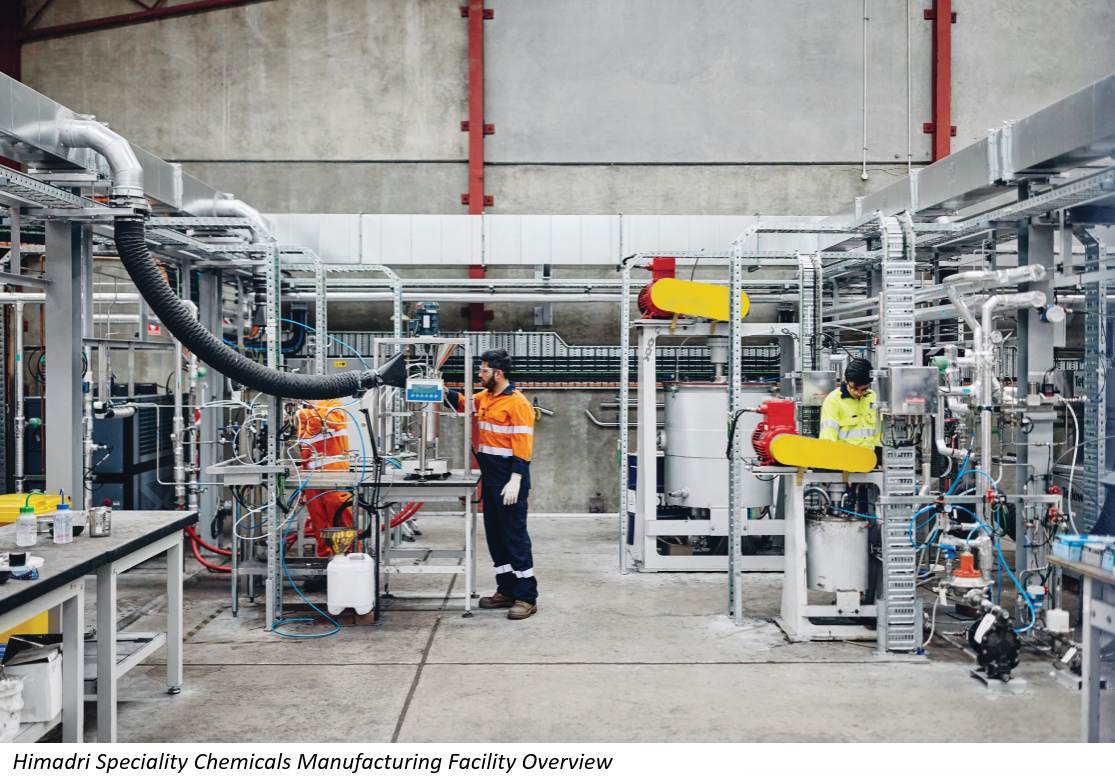
Two factors determine global credibility for a material supplier: process discipline and analytical depth. Our plants run on advanced DCS-based automation, with continuous monitoring of reaction temperatures, feed ratios and impurity control.
On the analytical front, we invest significantly in high-end instrumentation: ICP-OES for metal impurity analysis, SEM/TEM for morphology, BET for surface area measurement, XRD for structural phase identification and comprehensive rheological profiling.
Scaling becomes manageable when every batch behaves like the previous one at the molecular level, making process replication reliable and growth predictable.
How do you balance large capex plans with exports?
Capex in our industry is inherently a forward-looking decision. Capacity is built not for today's demand but for where technical industries are heading. Export diversification plays a critical role by balancing market cycles—when one region slows, another usually expands. This stability enables us to commit to large investments, particularly in battery materials where payback periods are longer.
What is your advice for MSMEs entering exports, especially in traditional industries?
Start by mastering one area and not everything at once. Global customers reward depth and reliability over breadth. Build a quality system that is audit-ready and reliable. And be ready for extended validation cycles. Technical trust takes time to earn, but once established, it becomes a long-term asset that is difficult to displace.
Disclaimer: This information has been collected through secondary research. The views expressed by the spokespersons are their own and do not necessarily reflect those of IBEF. IBEF is not responsible for any errors in the same.
Get In Touch
Your input is valuable in shaping the future of the IBEF Export Newsletter! Take a moment to share your thoughts and help us bring you more relevant insights, success stories, and export branding strategies.
Contact & Subscriptions: Contact Us
Email us at: info.brandindia@ibef.org
Call: +91 11 43845501
Partners




