India’s journey of growth is not restricted to any one sector but includes various industries which are interrelated among themselves in various ways ranging from agriculture, manufacturing, services, and technology. Ranging from conventional industries like textiles and food processing industries to newer high-growth industries like renewable energy, electronics, and chemical industries , India’s industrial profile is varied and intricate. For international investors, decision-makers, companies, and researchers alike, understanding India’s multi-sector economy demands much more than superficial data; it demands well-organised, validated, and up-to-date intelligence.
This objective is fulfilled through the industry segment on the India Brand Equity Foundation’s official website. Beyond being an information provider on the different sectors of India, the Industry segment can be termed as a layered source of intelligence encompassing macroeconomic statistics, microeconomic intelligence, visual intelligence, and live updates related to industries. Firstly, the Industry segment functions as a one-stop gateway for learning about India’s industries. It covers more than 45 industries.
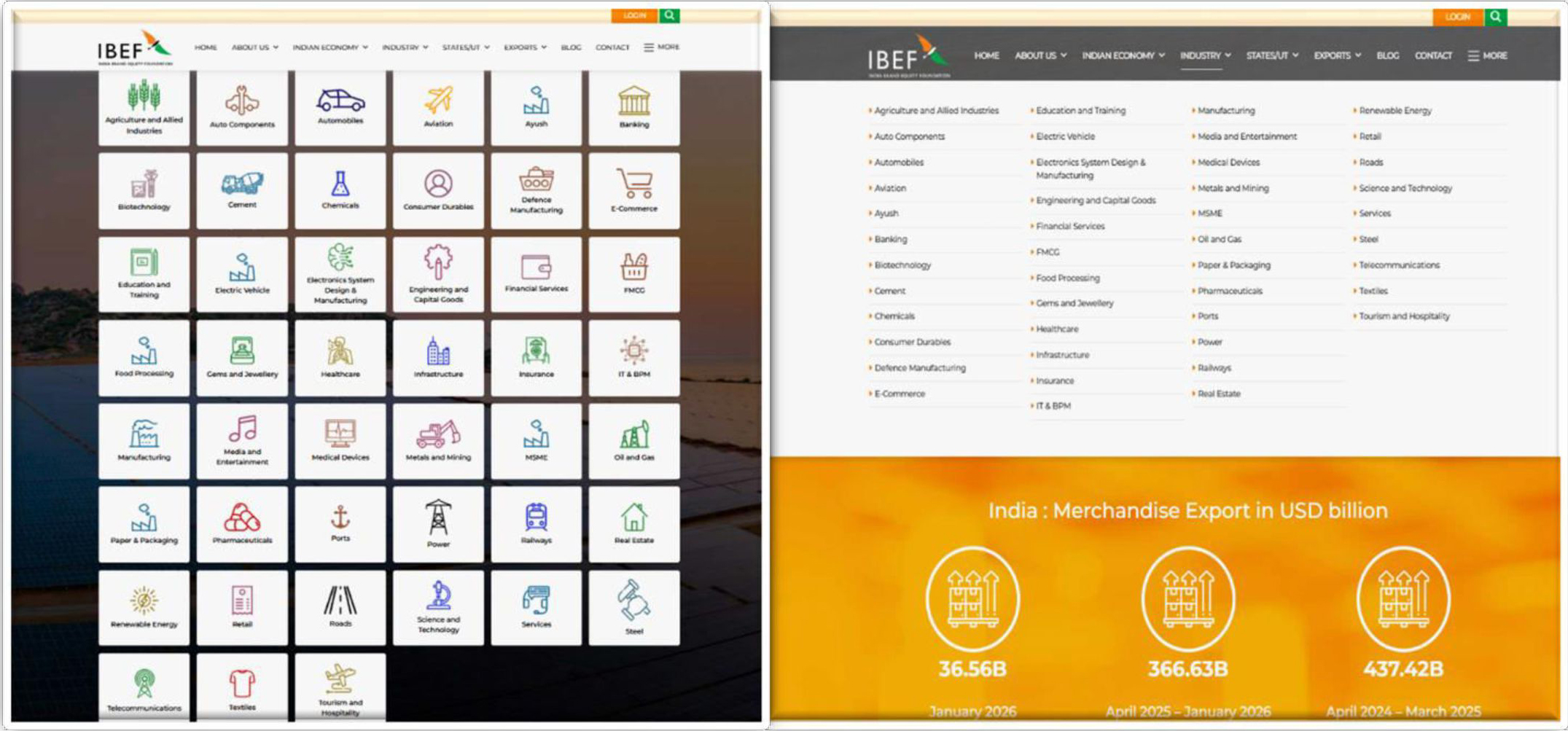
The homepage offers an organised overview of industries ranging from agriculture and allied sectors to advanced manufacturing and digital services. Designed for accessibility and clarity, it allows users to quickly navigate across sectors such as:
- Agriculture and allied industries
- Automobiles and auto components
- Chemicals and pharmaceuticals
- FMCG and food processing
- Infrastructure and capital goods
- Renewable energy and power
- IT & BPM and telecommunications
This wide coverage reflects the scale and diversity of India’s economy, where multiple sectors contribute simultaneously to GDP growth, exports, employment generation, and investment opportunities.
One of the defining strengths of the industry section is its breadth. By covering such a wide array of industries, the platform enables users to understand not only individual sectors but also the interconnected nature of India’s economy. This diversity ensures that users, from investors to policymakers, can analyse sector-specific opportunities while also understanding the broader economic context. However, the real strength of the industry section lies not just in its breadth, but in the depth of insights available within each industry.
The IBEF platform is structured as a multi-layered knowledge framework, offering insights across multiple dimensions. To understand this better, let us take the example of the Manufacturing sector, one of the most critical pillars of India’s economy.
Industry Snapshot: Building the Foundation
The first layer of an industry section is the Industry Snapshot, which gives a comprehensive picture of the particular industrial sector in question. The components include:
- The size of the market and its growth potential.
- The primary drivers of the demand.
- The policy initiatives that govern the industry and support its growth.
- The role that it plays in the national economy.
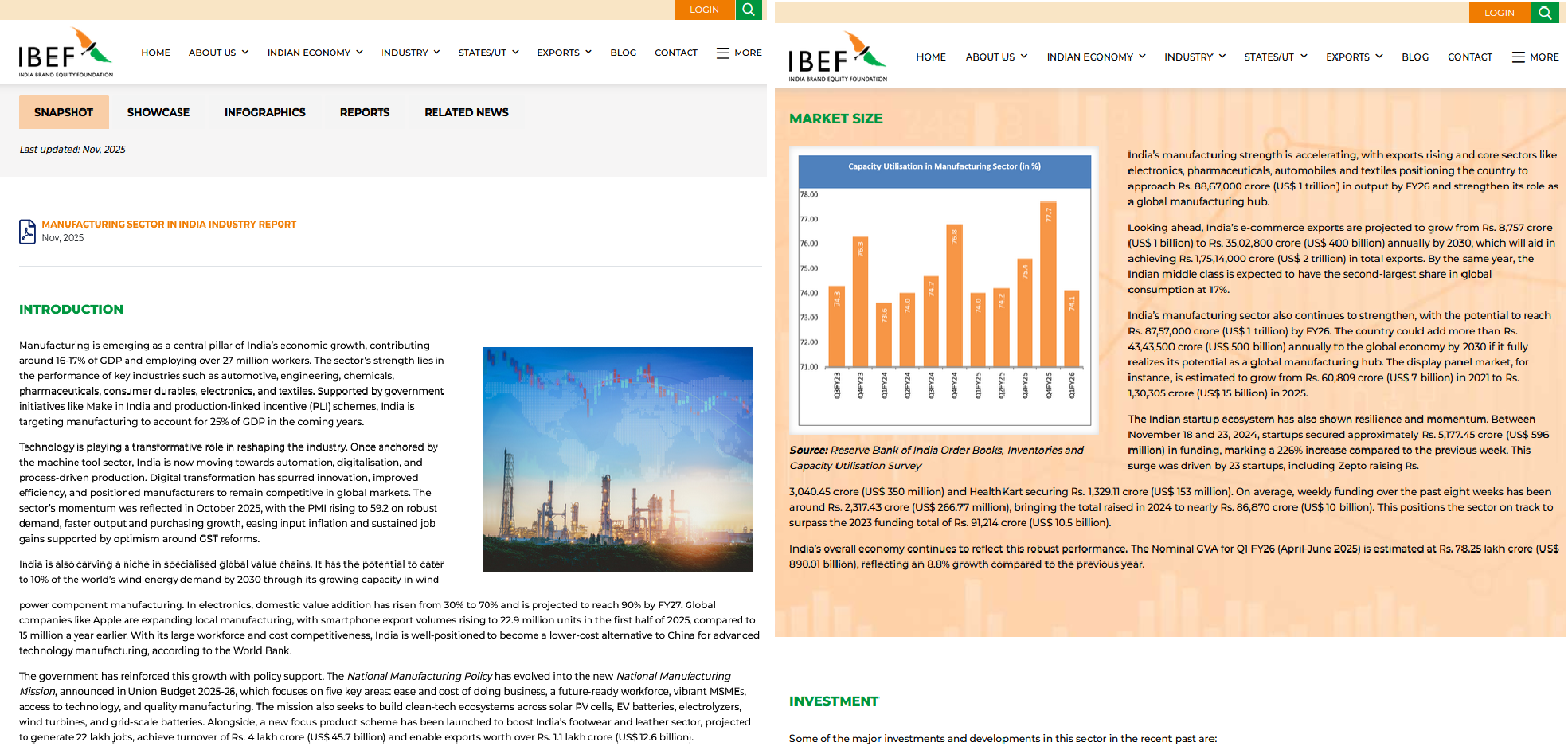
In the case of the manufacturing industry, this section covers India’s desire to transform itself into a world-class manufacturing powerhouse, supported by such initiatives as “Make in India” and Production-Linked Incentives (PLIs). Moreover, this section will cover the economic contribution of this industry to GDP, employment, and exports to demonstrate its significance. Thus, this layer allows the user to get a clear understanding of the significance of the particular industry.
Industry Showcase: Connecting Data with Real Companies
The second layer in the structure is the Industry Showcase, which goes deeper than mere numbers and figures and focuses on the particular companies involved in this business. Thus, the section will present the profiles of some industry-leading companies and their activities.
This is particularly important because it bridges the gap between data and real-world business activity. While statistics provide an overview, company profiles bring the sector to life by showcasing how businesses are driving growth, innovation, and global expansion.
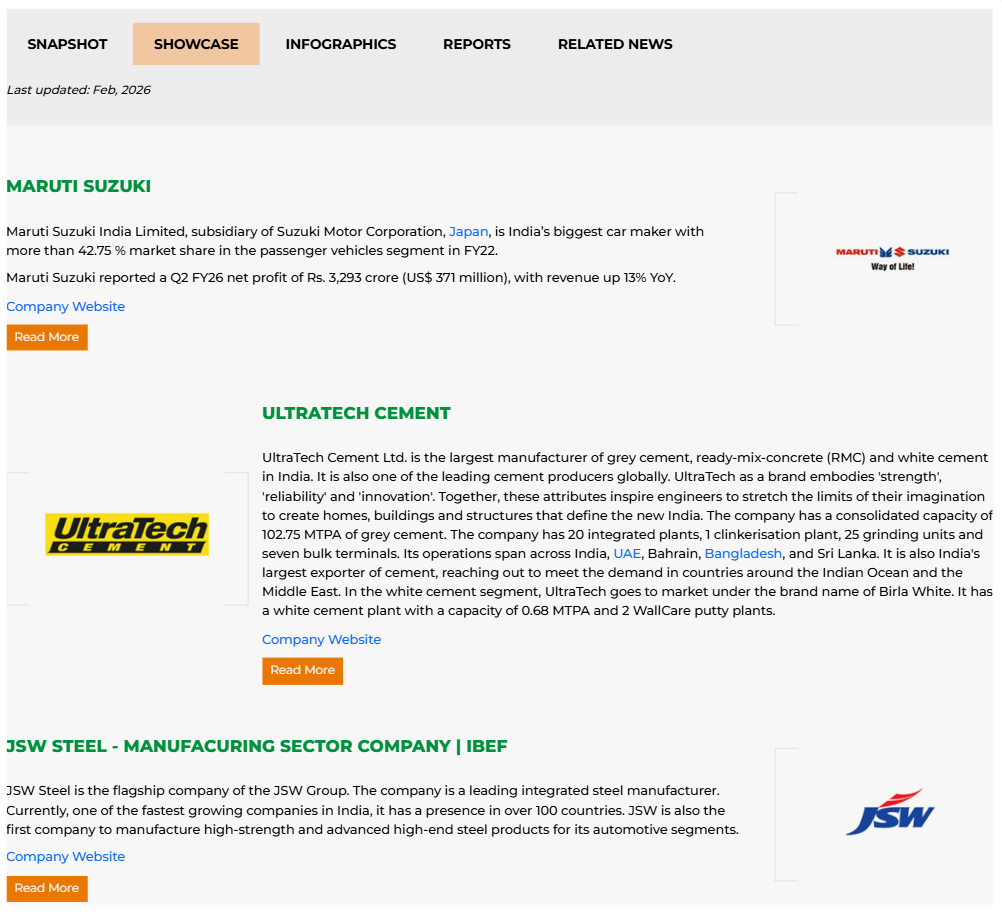
The section will cover the companies that work in various sectors of manufacturing, from heavy engineering to precision manufacturing.
Infographics: Visualising Industry Insights
Another significant layer in our structure is the section containing infographics. Infographics will contain industry-related data presented in an easy-to-understand form. Such information can be useful for:
- Decision-making.
- Presentation purposes.
- Covering high-level questions related to the industry.
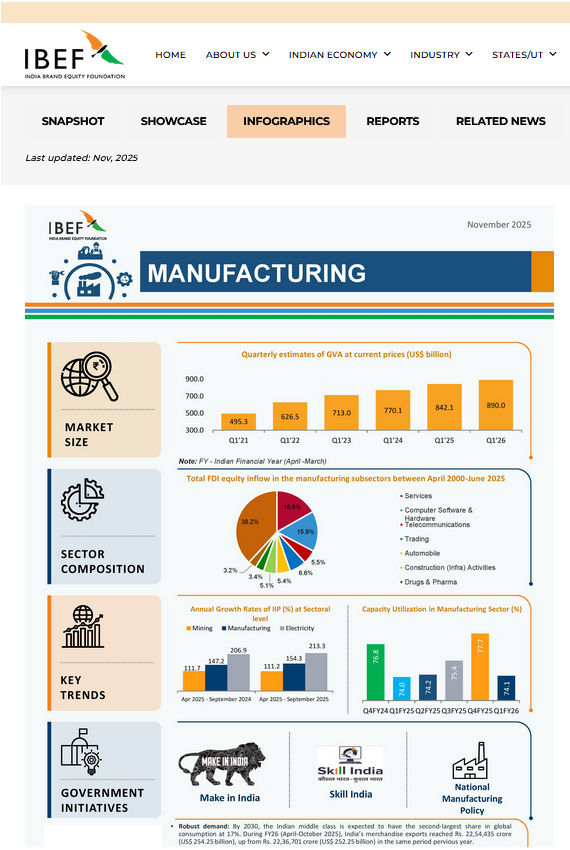
By combining visual clarity with data accuracy, this section enhances the accessibility of industry insights, catering to both experts and general users.
Detailed Reports: Deep-Dive Analysis
The most analytical layer of our industry section is the section which covers detailed reports on the sector under consideration. The reports will cover such issues as:
- Current export trends.
- Foreign direct investment trends.
- Changes in the regulatory environment.
- Growth prospects for the industry in the coming year.
In the case of the manufacturing industry, such reports will provide details of how India intends to become a leading manufacturing nation, backed by appropriate infrastructure and supported by government initiatives.
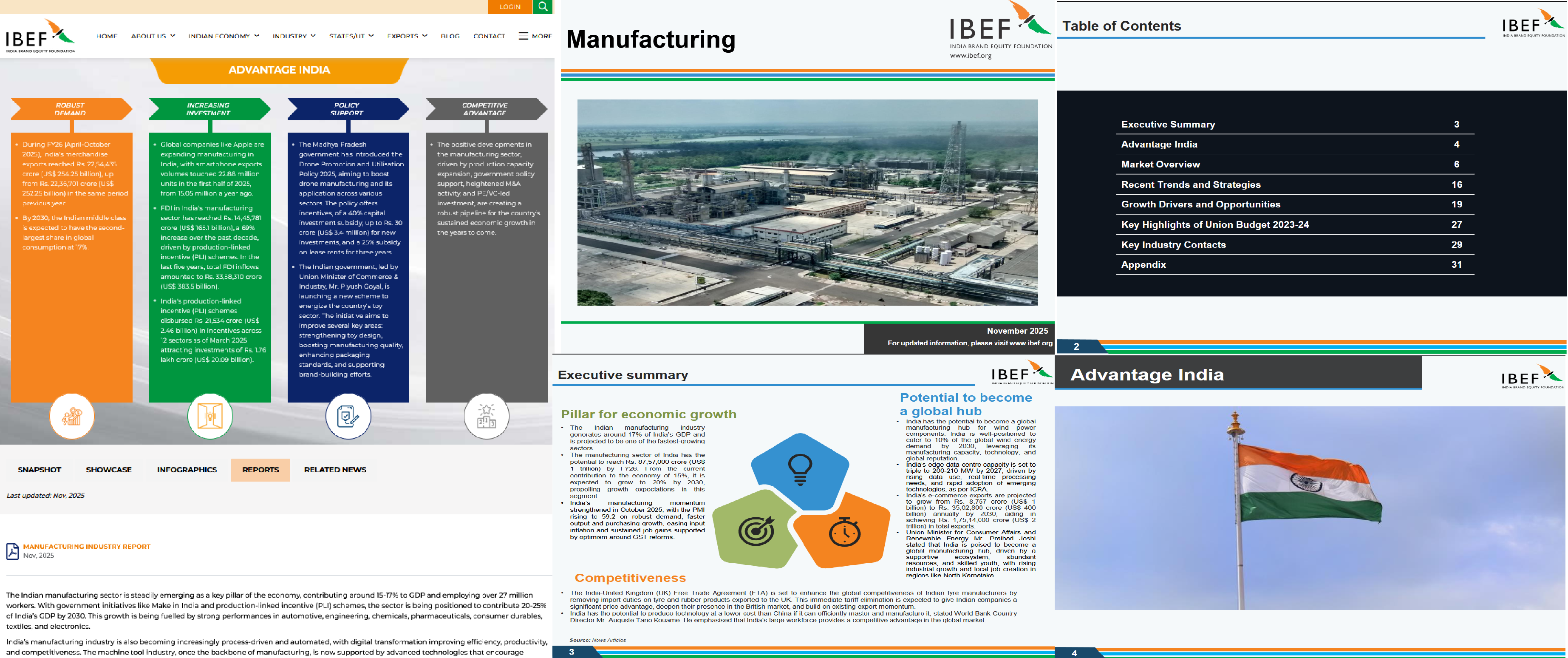
Such a report allows users to understand more about the current state of affairs and what the future holds for the particular industry.
Industry News: Keeping Insights Dynamic
The last layer of the industry section is the news section, which will allow users to stay updated on the industry. It will cover recent:
- Investments in the industry.
- Regulatory updates.
- Other industry-related news.
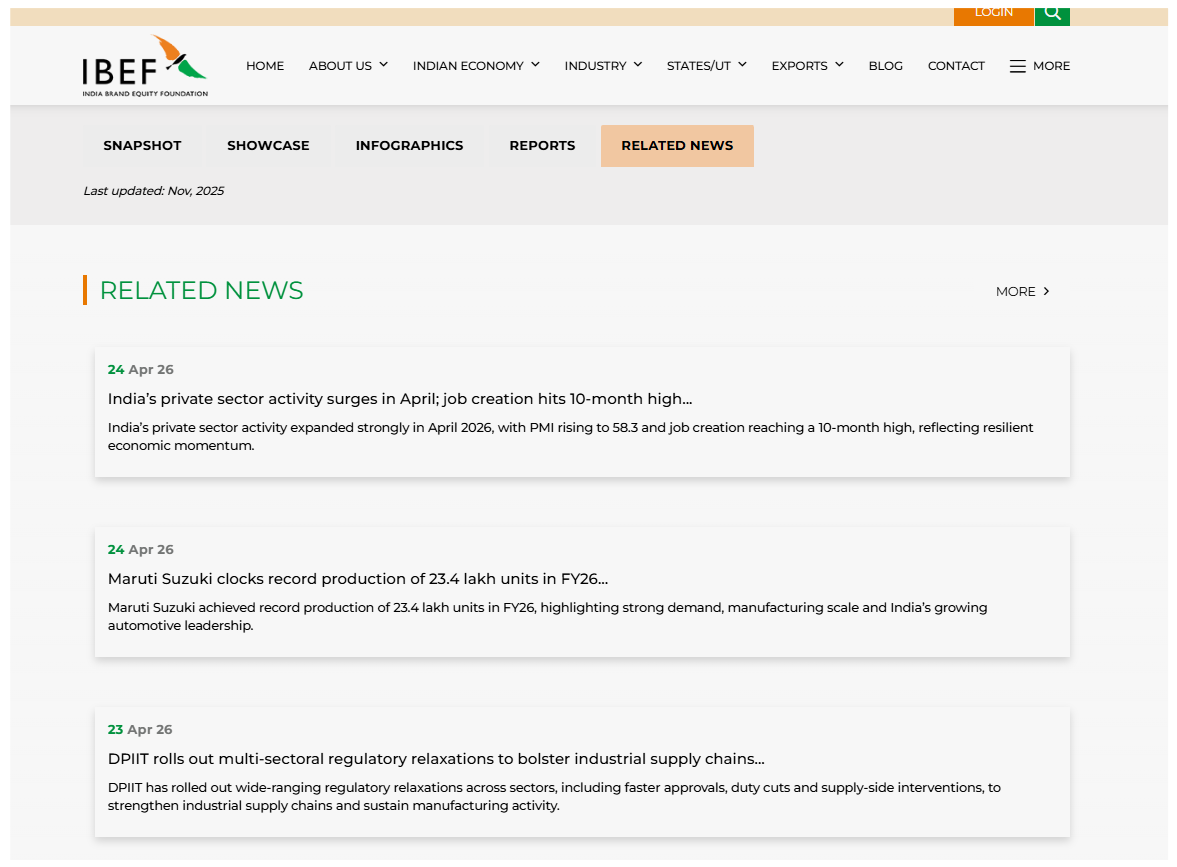
This real-time update mechanism ensures that users are not relying on static information but are continuously informed about the latest developments shaping each sector.
A Complete Ecosystem, Not Just a Section
The strength of the industry section lies in its ability to integrate these layers into a single, cohesive platform. Rather than presenting fragmented information, it offers a holistic view of each sector, combining:
- Data (market size, growth, exports)
- Companies (industry showcase)
- Visual insights (infographics)
- Detailed analysis (reports)
- Real-time updates (news)
This integrated approach ensures that users can move seamlessly from high-level understanding to detailed analysis, depending on their needs.
Bridging Data with Real Industry Narratives
Another important aspect of the industry section lies in its connection with real-life stories of the sector. Leaders of different industries observe the growing role of India in value chains around the globe. For example, in the area of chemicals and auto components, companies stop being cost-oriented and begin prioritising innovations, reliability, and partnerships. One may find evidence of this trend in industry insights presented by the IBEF platform: well-grounded data combined with real market transformations lead to greater realism when discussing the industry of India.
Why the Industry Section Matters
The industry section serves multiple stakeholders, each with distinct needs:
- Investors can identify high-growth sectors and evaluate opportunities
- Exporters can understand global positioning and demand trends
- Policymakers can track sectoral performance and policy impact
- Businesses can benchmark themselves against industry trends
By providing reliable, structured, and updated insights, the platform supports informed decision-making across all these groups.
Conclusion: A Strategic Window into India’s Economy
The industry section offered by IBEF is a great strategy for exploring the industrial environment of India. Thanks to the multi-layered structure of the industry analysis on the website, including snapshots, profiles, infographics, reports, and news, users get a complete idea of particular sectors.
It is especially useful for those stakeholders who are interested in engaging with the Indian economy on a large scale. Platforms like the one analysed allow closing information gaps for international users and make India's position on the global stage clearer.




