Case Study
Success Story: INOX India’s Export Journey
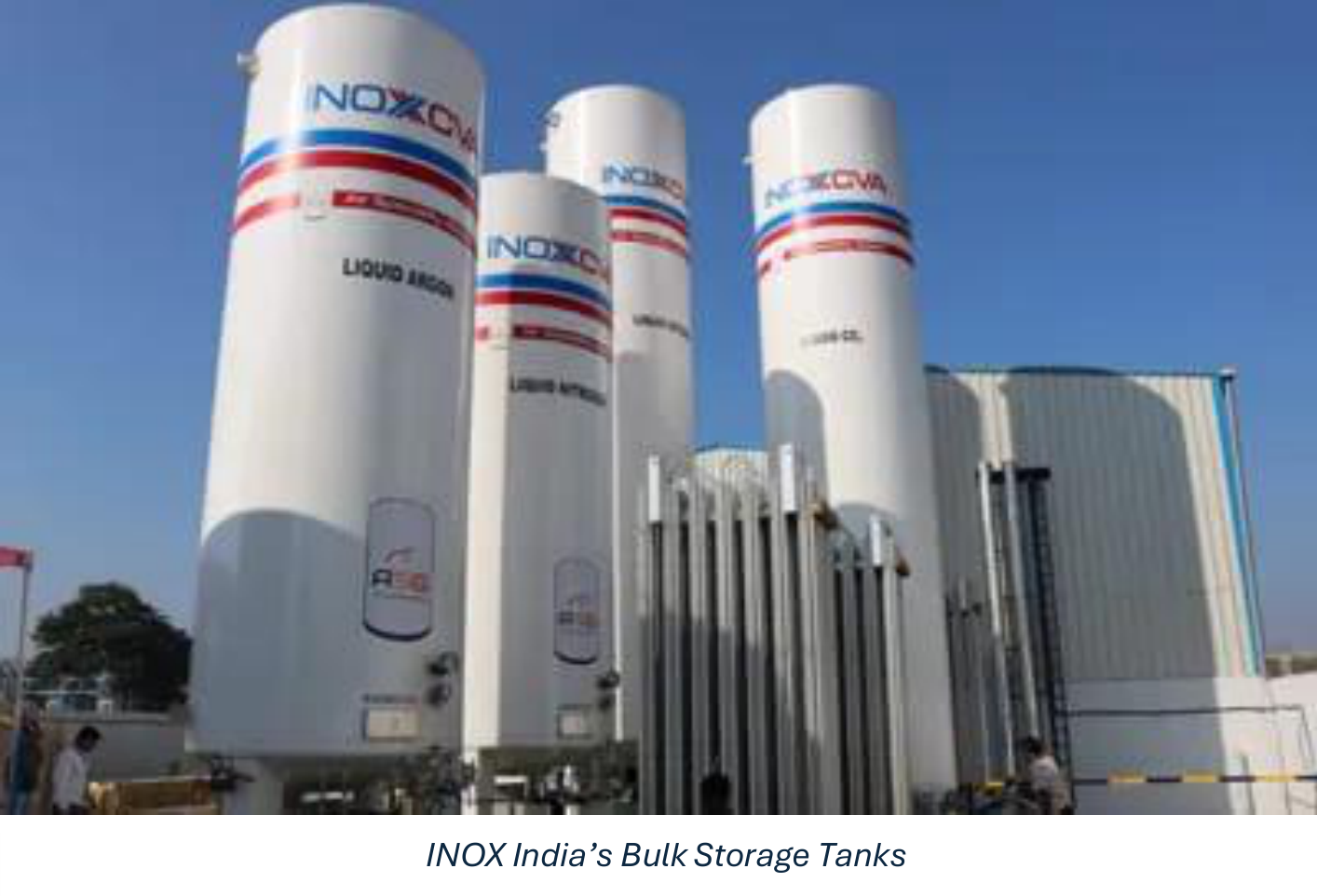
INOX India Limited (INOXCVA), founded in 1992 and headquartered in Vadodara, is a global leader in the cryogenic equipment industry and is today among the top five manufacturers worldwide. The company provides end-to-end cryogenic solutions for the storage, distribution, and application of industrial gases and clean fuels across more than 100 countries. Operations are supported by four manufacturing facilities in India along with facilities in Brazil and the Netherlands.
Manufacturing started way back in 1992. At that time, nobody was manufacturing cryogenic equipment in India. A tie-up was made with the Nippon Sanso Corporation, which was the number one company in Japan for manufacturing such equipment. Manufacturing started with them, and equipment was produced both for them and for international markets, although the primary focus initially was the Indian market. At that time, delivery timelines for imported cryogenic equipment were almost a year, and the parent company, INOX Air Products, was facing shortages of cryogenic equipment in the market. Manufacturing therefore started as a backward integration initiative.
The journey has focused on building deep expertise in cryogenic engineering through continuous investment in engineering, R&D, and manufacturing infrastructure. As capabilities expanded, the company moved into exports, initially targeting the Middle East and Southeast Asia before expanding to Europe, the US, and other advanced markets. Growth was supported by a robust supply chain, scalable manufacturing, and successful execution of complex projects globally.
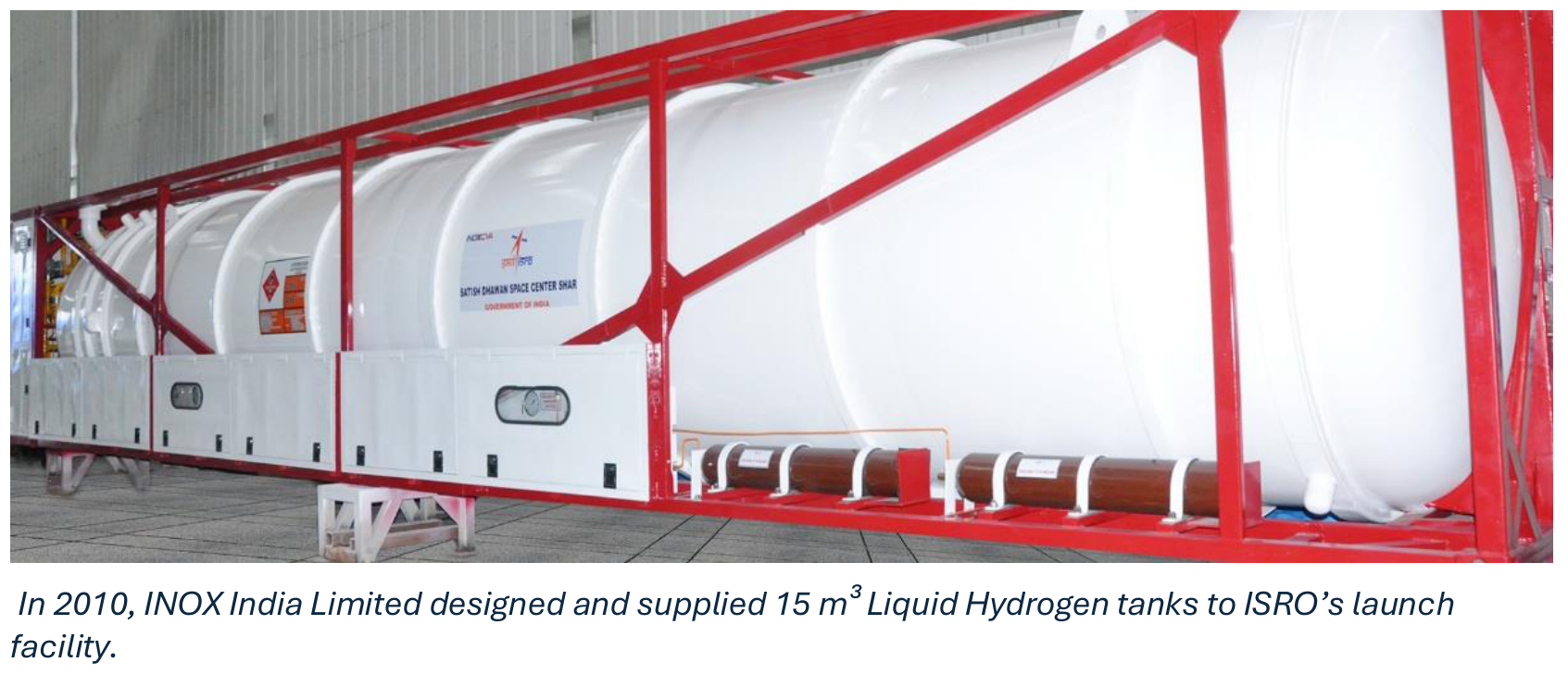
Today, the company operates through three major divisions Industrial Gases, LNG, and Cryo Scientific and continues to strengthen its position in clean energy solutions involving LNG, liquid hydrogen, and fusion energy. Major projects include supplying liquid hydrogen tanks for Indian Space Research Organisation, executing cryoline systems for the ITER fusion energy project, developing LNG infrastructure across several countries, and supplying cryogenic tanks for Highview Power’s Liquid Air Energy Storage facility in the UK.
Today, INOX India Limited is recognised globally for quality, innovation, manufacturing excellence, and consistent delivery across multiple industries and geographies.
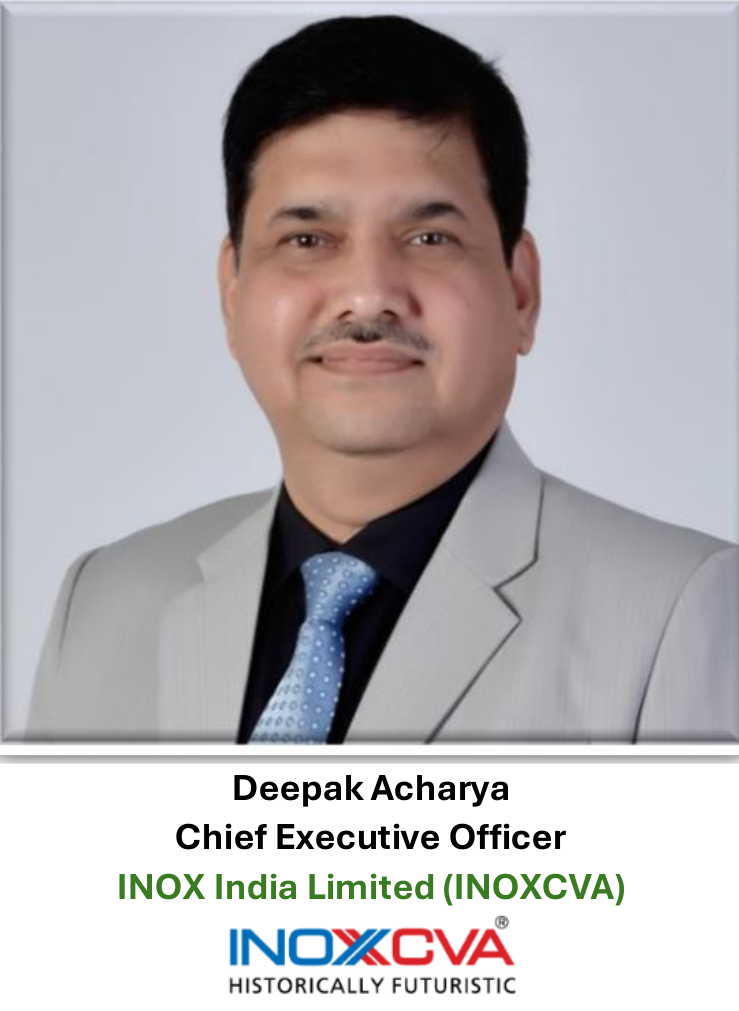
We interviewed Deepak Acharya, Chief Executive Officer at INOX India Limited, to understand the company’s export. From its early approach to international markets and capability building to its current global positioning and future priorities, the discussion provides a comprehensive perspective. In the following sections, we share key takeaways from our discussion and excerpts from the interview.
What motivated your early move into exports, and how did your international journey evolve over time? Also, what were the key milestones or breakthrough export opportunities that helped INOX India establish its presence in global markets?
Presently, almost 60% of our equipment is exported. And we sell our equipment to more than 65 countries worldwide. These are our credentials. Over a period of time, we have developed that capability to serve the entire market. The international market is primarily driven by the need to diversify beyond the domestic market and fully leverage its specialised capabilities in cryogenic engineering.
Given the niche nature of our products, global demand, particularly in sectors like LNG, industrial gases and healthcare sectors, the new clean energy initiatives, all that offered a greater scale and opportunities than in the domestic market so far. In the early stages, the company's export journey was an opportunity-based one, executing selective orders in nearby and rest-regulated markets, mainly the Middle East and Southeast Asia, because, from an access point of view, they were very near, and the logistics were close to us. We approached that market first.
And as our capabilities matured, INOX India began targeting more advanced countries, investing in international certifications, upgrading our engineering standards, and strengthening our quality system. These are the three basic pillars that we work on gradually. And over time, the export business evolved from supplying standard equipment to delivering integrated and turnkey cryogenic solutions.
So initially, when we started the company, we were just producing standard equipment. But gradually, we saw that in the market there was a need to supply complex equipment. Or maybe the custom-built equipment, and we started jumping on that. The company also built a long-term relationship with global EPC contractors and end users. Over time, we have registered with global EPC contractors and worked with them to secure more orders.
We expanded our geographic footprint and secured repeat business by supplying high-quality products worldwide. Today, exports are a significant and strategic part of INOX India's growth, supported by a structured global approach rather than opportunities and expansions. The whole idea was to capture the world because we have the advantage of manufacturing at a lower cost and to the quality requirement by the international market because we were certified with many complex certifications, such as American Society of Mechanical Engineers, European certifications, Japanese certifications, and so many other things, ISO certifications, which was a primary need of that time. And that is how we spread our wings into the export market.
In global engineering markets, credibility is critical. What key factors including capabilities, certifications, and execution helped INOX India build trust and differentiate itself internationally?
In the high-technology sectors, trust is earned through consistency, not by claims, and INOX India focused on exactly this principle. A key step was aligning its manufacturing engineering processes with globally acceptable standards. For instance, ASME, EN, PD, and other region-specific certifications, because different countries have different regulations, and we must comply with those regulations. This signalled to international customers that its products meet the same benchmarks as those of established global players. So, whenever we are competing with global players
We comply with those requirements. Another critical effort was delivering reliably in complex projects. Whenever we are supplying, the projects are not simple, such as aerospace or defence projects. There is complexity in nature. So early export assignments were characterised by a strong emphasis on quality, safety, and timeline.
Because whenever you export, these are the three major things. So, you have to produce high-quality products in a timely manner and in accordance with the safety standards laid down by that country. So, these were the things which we emphasised. In engineering-led businesses, successful execution often matters more than marketing. unless and until you deliver the products as per the requirements of the customer in a timely manner,
Then only the customer believes you on your commitments and gives you a repeat order. So, leverage this performance over a period of time.
It also built credibility by partnering with reputed global EPC companies and contractors on international projects. This collaboration served as validation of new markets, alongside transparent communication, detailed documentation, and responsive after-sales service, which helped us build customer confidence, so this was one of the major things we did.
Over time, the combination of certification, consistent delivery, and strong client relationships enabled INOX India to transition from being seen as a cost-effective supplier to being recognised as a trusted engineering partner in this global market.
INOX India serves multiple industries such as LNG, industrial gases, cryo-scientific and clean energy. Could you briefly outline your key export segments, and how your approach differs across these products and applications?
INOX India's export portfolio is delivered across several high-growth technology-intensive sectors, with each contributing differently to its global business. So, we have the basic 3 divisions. One is industrial gas, another is LNG, and 3rd is cryo-scientific. So, the different divisions have different requirements,
In industrial gases, most products are very standard. There are also many custom-built products. That customer gives you the input and has the output, and we have to design the entire thing.
So here, understanding a customer's process requirements was very important. Also, manufacturing the products, meeting industry standards. That was the main focus of the industrial gases. In healthcare, the products we supply are mission critical.
Even if a small thing goes wrong, it has to be paid. It is very difficult from the perspective of the hospitals and other things. So, we have to be very sensitive to the requirements and quality standards, especially because it deals directly with human beings. So, mission-critical equipment requirements of the healthcare sector are primarily there. When you go to, like, aerospace or other applications, precision engineering matters much more than in anything else.
The advanced materials also play a vital role. And high safety and quality standards, because when we deal with aerospace, you can see there is 300% redundancies required. So, if one wall is there, there is a requirement, you have to put three walls. Suppose one wall doesn't work, another wall doesn't work, another two don't work, and the third works. And quality and safety standards are very high in aerospace and cryogenic scientific applications.
In the clean energy space, including hydrogen, the approach is very innovative and driven because this is an emerging technology. So, we have to spend a lot of time in R&D and other products, understanding the requirements. This is a niche area again, and we are constantly developing new products for this clean energy businesses, and hopefully it will take off soon now.
Global customers often require customised solutions. What have been your key learnings in adapting products and solutions to diverse international requirements?
The key takeaway is that successful education in the international market requires a deep understanding of the entire project ecosystem. So, if you have that project ecosystem thoroughly understood, then your life is simple. The second key learning is the engineering flexibility within a strong quality framework. So, this is also another important aspect when we deal with such complex and international projects. And another important insight is the critical role of clear documentation and transparency in global projects, detailed technical documentation, traceability, structured communication, as important as the physical product itself.
In ensuring smooth approvals and exhibitions. These are the few important things. Again, a strong emphasis on alignment of expectations early in the project life cycle. So, whenever you are working on bigger projects or something, you have to work from the beginning. Not the RFQ is floated, and then you try to enter into it. Because these projects are very critical. They require a lot of understanding of the process capabilities to be there. So, you have to enter that requirement at an early stage, not at the RFQ stage. And finally, the responsiveness and collaboration throughout the project from design to commissioning and after-sales. Support is the key differentiator. Our key learnings in adopting solutions for global customers.
As your export business expanded, how did INOX India scale its capabilities to meet global demand while maintaining consistency in quality and delivery?
Now, since the export business has expanded, scaling was done through a structured approach focused on capacity systems and capability building, rather than on rapid expansion alone, because expansion alone doesn't help. You have to have these factors in place. A key step was the augmentation of plant capacity. We have new products and new requirements coming in; we need a planned capacity expansion and manufacturing infrastructure, ensuring we do not dilute quality standards. So, this was our main focus area. At the same time, the company significantly strengthens its engineering and project management capabilities during this period because these are the key things. Once we have the product, it must be thoroughly designed and engineered to meet the customer's requirements. And a quality management system was another important thing which we enforce from time to time.
Meeting the international certification and framework. This was very important for us. And one more important element was building a more resilient and diversified supply chain, reducing dependency risk and improving on timely delivery performance. Finally, a strong focus on process, discipline, and digital project tracking enabled us to have better visibility, control, and coordination across all functions. So, this was our main area: scaling capabilities while maintaining product quality and delivery.
What role have government policies, export schemes, and incentives (such as manufacturing support, export facilitation, or certification frameworks) played in enabling INOX India’s global expansion?
Government policies have acted as a strong enabler of Inox India's global expansion by improving cost competitiveness, market access, and manufacturing capabilities. Export incentives schemes reduce our hidden taxes, helping the company's price competitiveness in global tenders, especially schemes like remission of duties and taxes on exported products. The EPCG schemes, which advance automation and lower input and capital costs through duty-free imports, also helped. Market access programs, support participation, international exhibitions and certification, helping enter into the new market areas.
Infrastructure and digital customer reforms improved logistical efficiency and delivery timeliness. And broader initiatives like Make in India have strengthened the domestic manufacturing and ecosystem and scalability. These policies act as a force multiplier. They don't create capability, but they make companies like Inox India globally competitive. We also got various support.
Whenever we approach the government for various schemes or maybe support required by dealing with other countries, especially when you see a tariff imposed by the US government. We approached the government to say that we have a certain business in the US, but it is being hampered by these tariffs. And we got a very positive response from DPIIT, and even from the Commerce Ministry, for this. And we are very thankful to the government for taking such proactive actions when the industry approached them. This is a unique and fundamental help we received over time. And we are very much thankful to the government of India for the policies and schemes they have introduced in the business market.
How does INOX India approach markets where it does not have a direct presence, particularly in terms of execution, coordination, and customer engagement?
In markets where Inox India doesn't have a direct on-ground presence, the company relies on partner-led or project-driven exhibition models supported by strong centralised coordination. So, this is our basic philosophy. For exhibition, Inox India typically works with established EPC contractors. Local distributors or project partners who handle site levels, coordination and regulatory interactions. This allows the company to participate effectively even in geographically distant or highly regulated markets. Consider the example of South America. South America is a very limited market with very high taxes. But we have our sales office there, as well as some distributors, dealers or EPC consultants who work for us. And that makes our life very simple. So, we act accordingly. Coordination is managed centrally through a dedicated project management team. Because when such complex projects are there, you cannot just depend on the dealer or the distributor.
We are to support them through the project management team, and that is our initiative to work with them hand in hand and provide them with all the necessary inputs. Then, customer engagement in such a market is maintained through a combination of remote technical support, via VC or other means and periodic in-person interactions. Though the world has changed since COVID-19, we still believe that personal interaction has a significant impact. And the company places a strong emphasis on early-stage involvement in the design discussions which helps build confidence even without a permanent local office. So, these are a few things we do to approach the market where we don't have a direct presence.
Compliance and safety standards are stringent in global markets. What were the key challenges in meeting these requirements, and how did you build capabilities around them?
The people say cryogenic manufacturing is basically a fabrication industry, but it differs in many ways. So, meeting this stringent global compliance and safety standard was one of the key challenges in INOX India's international expansion, primarily because requirements differ across regions and are continuously evolving. So, the market is that we have to access different countries and geographies, and the rules and regulations there are quite different. So, for that, what we have done is, for example, if you want to supply a product to the American market, then we have taken ASME certification, which is the American Society of Mechanical Engineers. If you want to supply equipment to European countries, we have taken EU certification or EN certification. If you want to supply equipment to the food industry, we have taken the FSSA 22,000 certification. We are ISO 9,000, 14,000, 45,000.
So, all these certifications we have obtained show that we are globally competitive and accepted by the global market. To address this, INOX India invested early in building a robust quality management framework aligned with global benchmarks. Dedicated teams were developed to handle the certification process, compliance documentation, and regulatory coordination. This was the first step when we started the business, especially in the export market. Another challenge was ensuring consistent execution across complex projects, where even minor deviations can lead to compliance issues. This was addressed through a stronger process control, advanced inspection systems, and stricter quality checkpoints at every stage of manufacture. This is critical for our products because they are not simple. They are critical equipment. For example, when we are supplying equipment to the aerospace industry, and the rocket is about to launch, and your system doesn't work, you can understand how complex it is at that time. That particular wall is not opening, or it is not giving this particular flow, which is required, and the whole system has to shut down. So, it's very complex. So, capability building also included continuous training of engineering and shop-floor personnel to global standards. Because whenever we have an Indian workforce or Indian engineers, they have their own framework of mindset, and they don't have that global vision. So, we have to train these people to that global level. We have to depute people to different types of seminars, workshops, exhibitions, and customer meetings, allowing them to travel around the world to see what is happening. Because we are focused on our engineering and on your management, this thing, more focus is on engineering, on Indian industries. But this global outlook is required, and we have taken many initiatives to train people to ensure that all these compliance and safety standards align with this global market.
As global demand shifts towards clean energy solutions such as LNG and hydrogen, how has INOX India leveraged these trends to strengthen its export presence?
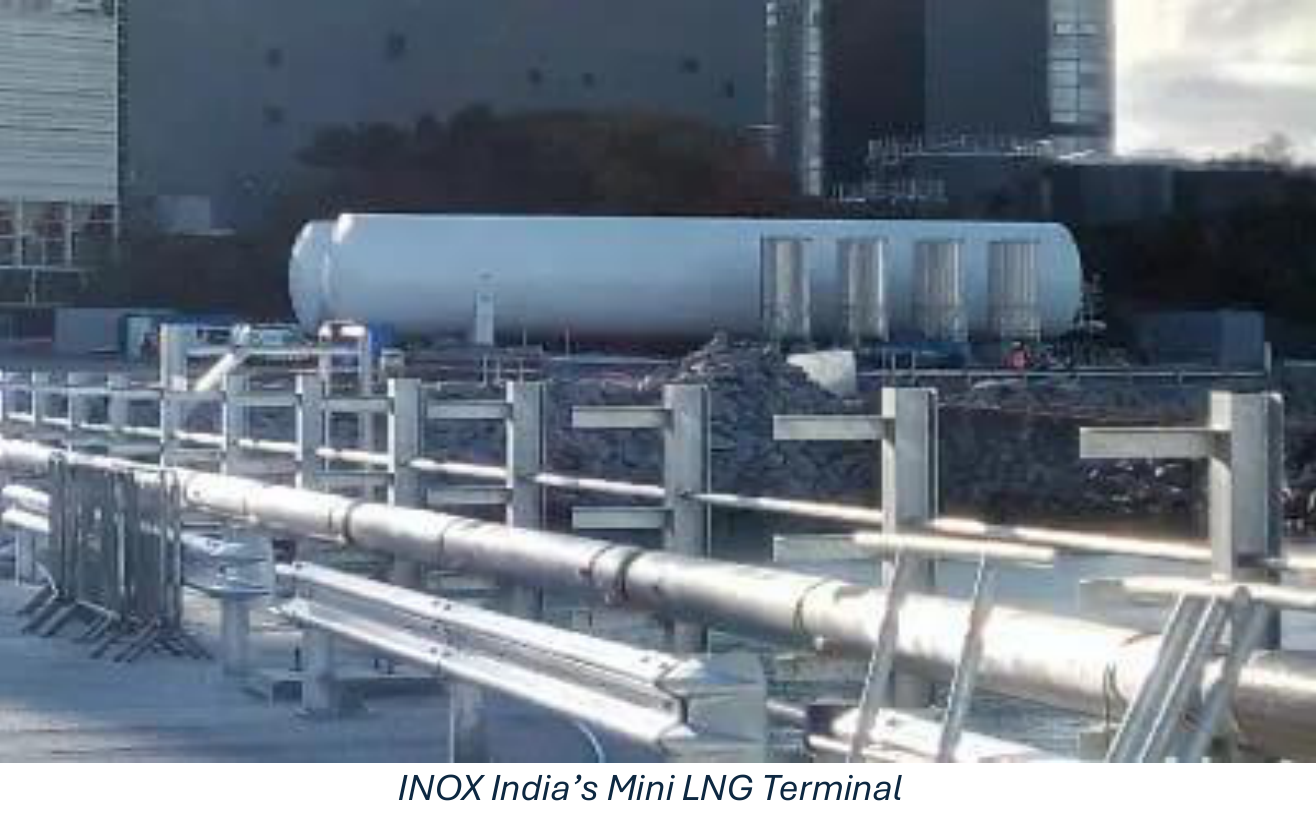
Initially, we were just in the business of industrial gases. So, which was not a major business, the industrial gases business grew at a rate of, say, 8 to 10% on an average CAGR basis. Then we realised that if we stay only in the industrial gas business, our growth is limited. So, we decided to go with LNG in 2010, when we started our LNG division. And we thought there were opportunities: this is a cleaner, future fuel, and we must work on that. So, we played a very strong action for developing products in LNG. And today, it is encouraging to note that the entire LNG ecosystem is required. For example, let it be a satellite station, a fuelling station, an LCNG station, or a small-scale LNG terminal.
Thanks for the marine application, thanks for the automotive application. So, the entire range we have developed over time. And we are quite confident in the reduction of almost 30% in CO2 levels, and in INOXA and SOX levels. through clean energy, use energy as a fuel. LNG is going to grow significantly. On the hydrogen side, as you rightly asked questions about what is going to happen with hydrogen. Hydrogen is the ultimate fuel. But going forward, still in an early stage and fast evolving, it will take some time to develop because it is producing hydrogen and making it commercially viable. It still will take some more time. So that way, we are working and developing the products. As we develop the LNG, we are developing the entire ecosystem; a few products we have already developed and put on the market are working very well.
But it will take some time, especially for hydrogen in India. So overall, the transition towards clean energy has not only expanded Inox India’s addressable market but also positioned it as a future-ready global player in cryogenic solutions. And our punchline is, it is historically futuristic. So, we always think ahead. So that also helps us in developing the products for these new requirements in advance.
In global projects, reliability and performance are critical differentiators. What practices have helped INOX India consistently deliver on these expectations?
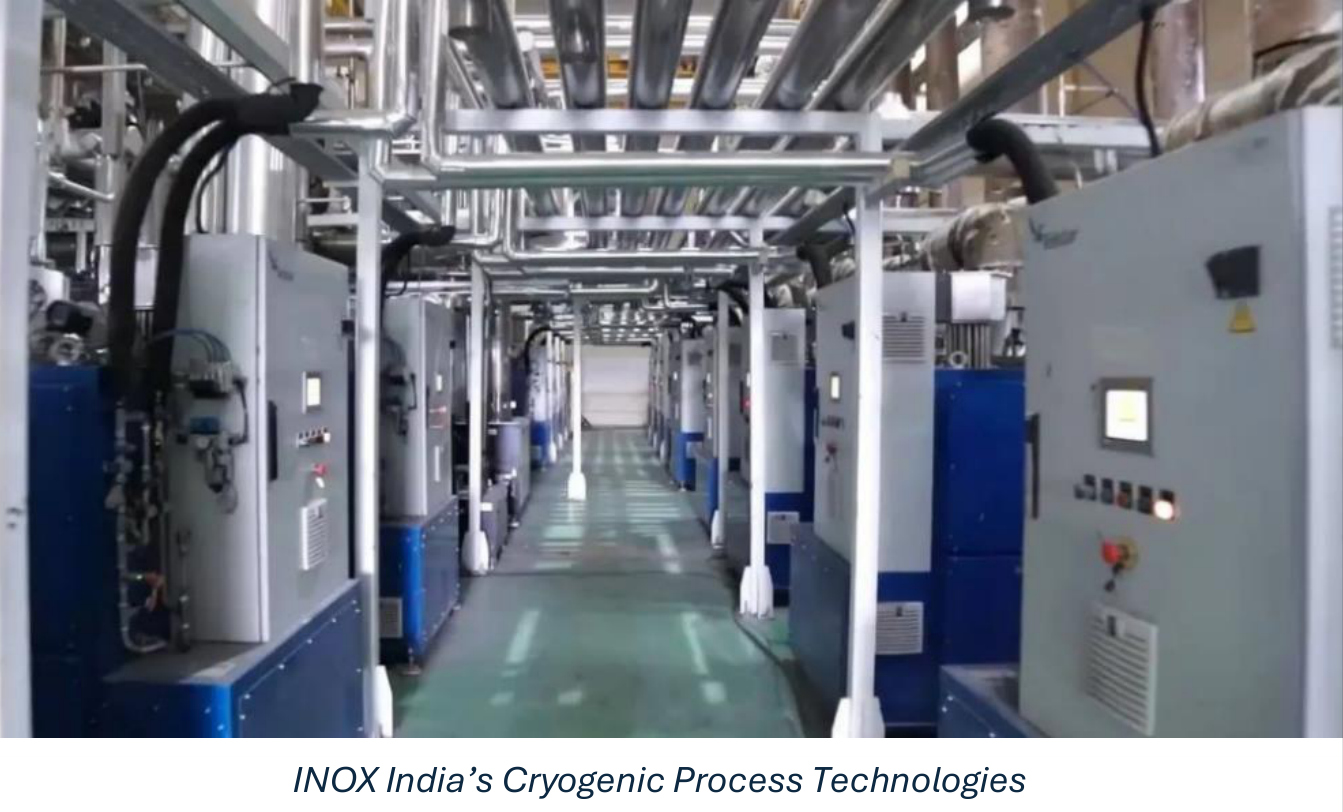
Reliability and performance in global cryogenic projects come from a combination of engineering depth, strict quality systems, and long-term customer focus. At INOX India, one of the key practices has been continuous investment in engineering capabilities and R&D. Cryogenic applications are highly sensitive, so even small design or manufacturing deviations can affect safety and operational efficiency. Therefore, we have always focused on maintaining international quality standards and robust testing procedures at every stage of manufacturing.
Another important factor has been our manufacturing infrastructure and process discipline. Over the years, we built scalable facilities with strong quality control systems, which helped us consistently deliver products meeting global specifications and timelines. We also developed a reliable supply chain and worked closely with certified vendors to ensure consistency in material quality and component performance.
Execution experience has also played a major role. We have handled projects across different geographies, industries, and operating conditions, which helped us build strong technical expertise and adaptability. Whether it is industrial gases, LNG, healthcare, or emerging sectors like hydrogen, each project has added to our understanding of customer expectations and operational challenges.
In addition, customer trust is built through consistent delivery and after-sales support. Global clients value partners who can not only supply equipment but also provide technical support, timely communication, and dependable service throughout the project lifecycle. Over time, this combination of quality, engineering reliability, execution capability, and customer commitment has helped INOX India establish itself as a trusted global cryogenic solutions provider.
Over the years, how has the perception of Indian engineering companies evolved among global customers, based on your experience?
Over the years, the perception of Indian engineering companies among the global customers has changed significantly and positively. Earlier, Indian firms were often viewed primarily as low-cost suppliers with limited roles in complex engineering projects. However, this perception has steadily evolved. Companies like Inox India and others have demonstrated their ability to deliver high-quality, technically complex and fully compliant solutions for the global market. Consistent execution of international projects has been a key factor in driving this change. Global customers today increasingly recognise Indian engineering firms as a capable partner that can handle end-to-end responsibilities from design and engineering to manufacturing and project execution as per the global standards. So, this is the major shift that we have seen.
Another important shift has been in trust levels. Successful delivery of regulated, safety-critical projects in sectors such as IG, LNG, healthcare, and energy has helped build confidence in Indian engineering capabilities. At the same time, Indian companies are now seen as more flexible, responsive, and cost-efficient without compromising on quality. So overall, the perception has shifted from a cost-driven vendor to a critical, innovative, and engineering partner in a complex global ecosystem.
A big shift in the minds of global customers. We have been delivering consistent, high-quality products to the very complex project, such as ITER, where the thermonuclear fusion reaction is taking place in Cadarache, France. And we were only two companies in India that were technically and commercially approved. One of them was INOX India. And we are getting a lot of repeat business from this customer because of such a complex, one-time project. It is like creating a sun on Earth. So, this project is very important to mankind. And we are proud to be part of this successful project.
Looking ahead, what are INOX India’s priorities for expanding its global footprint, whether in terms of markets, technologies, or sectors?
Advancement and deeper penetration into high-growth sectors. So, in high-growth sectors, there are many areas we are dealing with, like LNG, hydrogen, nuclear, semiconductors, aerospace, data centres, defence, and so many others. So, these are the areas where India is banking upon, the world is banking upon. And we have the privilege of having the product for each and every sector. It's not that we are only in the IG business. We are into LNG, hydrogen, and aerospace. Aerospace is at the forefront now. So, like all the countries, especially the US, Europe, Japan, India, everybody is expanding the aerospace sector. Basically, because the earlier satellites were lightweight, maybe one to two tons. But now these Bahubali rockets require about 5.5 to 6 tonnes of payload. So, the aerospace industry is booming today. So, everybody's expanding into this business and definitely, we will take advantage of this going forward. On the technology front, a key focus is advancing cryogenic solutions for emerging applications, particularly in hydrogen and other clean-energy sectors. Continuous investment in R&D and engineering capabilities will be critical to staying ahead of evolving global standards and customer requirements. So, this is what is the present need. Another important priority is strengthening global partnership and project-execution capabilities. And we are working on all such initiatives.
Based on your journey, what key lessons would you share with Indian companies looking to build a successful export business in high-technology and engineering sectors?
Based on our experience and the journey so far, one of the most important lessons is that credibility is built through consistent execution, not intent. In global engineering markets, every successfully delivered project becomes a reference for the next opportunity. So, reliability and performance matter more than the positioning. So, this is a key takeaway for us. A second key lesson is the importance of investing early in global standards and certifications. Because if you do that, you definitely have the upper hand over others when you are delivering the products.
Another critical factor is building deep in-house engineering and design capabilities. Dependence on external capabilities limits flexibility; strong internal expertise enables customization and faster response to global customer requirements. It is also essential to focus on long-term relationships rather than transactional sales. This is very important, in my opinion, because people would like to work with you for a longer period, not just for one or two sales or one or two supplies. Finally, sustained success requires a continuous investment in mindset in people, process, and technology. Export growth in complex engineering sectors is not a short-term effort, but a long-term capability-building journey. So, we have to invest substantially in advance to meet the global challenges ahead for all of us. And the next 10 years for India are the best period, because we now have sufficient manpower, skilled manpower, technology, and support from the government, and all these favourable conditions have existed after a long time. All Indian industries have to take advantage of this situation today and go global, beat the competition, make the products which are innovative, make it successful, and produce at a very competitive rate so that we can be proud of our products and we can sell with good margins as well. So, this is my key lessons for building a successful export business in high technology and engineering sectors.
Get In Touch
Your input is valuable in shaping the future of the IBEF Export Newsletter! Take a moment to share your thoughts and help us bring you more relevant insights, success stories, and export branding strategies.
Contact & Subscriptions: Contact Us
Email us at: info.brandindia@ibef.org
Call: +91 11 43845501
Partners