Case Study
Success Story: PI Industries’ Export Journey
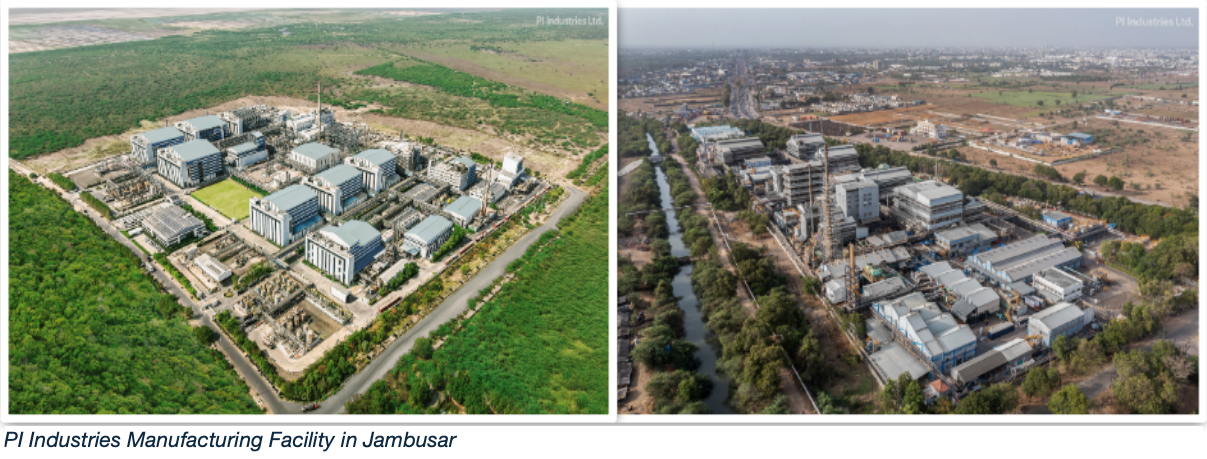
PI Industries Limited is one of India's leading agriscience and life sciences companies, with an emphasis on innovation and complex chemistry. The company was established in 1946, starting as a domestic agri-inputs firm and becoming globally integrated through value propositions that include high-value molecules and technologies. It operates in more than 40 countries through 10 overseas offices, 8 manufacturing units, and a broad distribution channel of 15,000+ distributors and 100,000+ retail outlets. With core competencies in process engineering and R&D strengths of 700+ scientists and 200+ Ph.Ds., the company provides end-to-end services from molecule development to commercial manufacturing for global markets.
The growth story of PI Industries Limited reflects its continuous transformation over the decades. During its early years, the company focused on building its domestic agri-input business. Over time, the company needed to diversify and invest in its scientific and process capabilities. A major change occurred during the 1980s, when the company entered the realm of custom synthesis and manufacturing with a clear commitment towards investing in research and development and process engineering.
This set up PI Industries to make the jump into innovation-driven markets. In the early years of the 2000s, through its custom-synthesis manufacturing strategy, PI Industries entered global value chains, partnering with international partners in product development and commercialisation. The next step in its growth trajectory saw the company adopt a focused niche high-value strategy that helped the company establish itself in the North American, European and Japanese markets.
Through these strategies, PI Industries built a global reputation for the company to establish long-term relationships with partners across geographies, customers and value chains. Today, its global operations reflect progress from a domestic entity to a globally connected organisation with significant linkages to global markets. PI Industries’ journey is characterised by its continuous development of capabilities and relationships with partners in innovator markets.
We had the privilege of interviewing Mr. Mayank Singhal, Vice Chairperson & Managing Director of PI Industries Limited, to understand its journey as an exporter in the agriscience and life sciences sector. The discussion covered various aspects, ranging from its journey into innovation-led markets to building partnerships across regulated markets. Following is an excerpt from the interview session.

Could you provide a detailed overview of PI Industries Limited’s journey, covering its evolution from early years to expansion, brand development, and how it established a strong presence in global markets?
PI’s story is not one of linear growth. It is one of constant evolution, each chapter more ambitious than the last. The companies that endure are the ones that know when to reimagine what they are. At PI, that conviction has guided us for eight decades: pushing the boundaries of science, driving innovation with intent, deepening trust, and building for relevance that lasts. We started in 1946, building a domestic agri-input business in Rajasthan . From the 1980s onward, we made a decisive shift into custom synthesis and manufacturing, backed by substantial investments in R&D and process engineering. From the early 2000s, our CSM model enabled us to integrate into global value chains, working with partners from molecule development through to commercial manufacturing. Today, PI operates across 40+ countries with over 700 scientists, 200+ PhDs, and 175+ patents. Our global partnerships, some spanning decades, are built on consistent delivery, IP protection, and governance that meet stringent international standards. What began as a domestic enterprise is now a globally integrated life sciences organisation.
PI Industries operates in highly regulated global markets. How did you identify the right international opportunities, and what were the initial steps taken to establish your presence abroad?
We focused on niche, high-value segments rather than commoditised markets. Our capabilities in complex chemistry and process innovation were best suited to innovator-driven markets in North America, Europe, and Japan , where quality, reliability, and IP practices are rewarded. Establishing presence required credibility before scale. We invested in regulatory compliance, quality systems, and certifications to meet standards such as those of the United States Environmental Protection Agency (US EPA) and the European Union's Registration, Evaluation, Authorisation and Restriction of Chemicals (EU REACH). Our decisive commitment to the Custom synthesis manufacturing model enabled us to move away from price-based competition and build long-term, innovation-led partnerships.
Building credibility is often a key challenge in global markets. What specific efforts did PI Industries undertake to establish trust with international customers in the early stages?
Trust in regulated markets is not declared. It is demonstrated repeatedly over the years. We began with benchmarks in quality and compliance. What differentiated us was scientific depth: the ability to solve complex problems reliably. Trust was then reinforced through execution. Each successful pilot opened the door to a larger engagement. Over time, pilot projects became multi-year contracts. Contracts became strategic partnerships. That track record became our strongest credential.
What efforts has PI Industries made to build and establish its brand in international markets, particularly in the absence of traditional marketing approaches?
In our space, brand is not built through visibility. It is built through reliability, relevance, and the confidence customers place in your performance over time. We focused on becoming a trusted long-term partner through execution. Consistent delivery, uncompromising quality, and deep scientific capability created a reputation that no marketing campaign could have achieved. Our track record spoke for us well beyond formal marketing channels. We also made a conscious choice to operate in specialised, high-entry-barrier segments, ensuring our brand became associated with precision and reliability rather than scale alone.
In competitive global markets, how has PI Industries positioned itself against established international players, and what differentiators have helped you win business?
We do not just compete on scale or price. We compete on reliability in high-consequence environments. When a global innovator is bringing a new molecule to market, the question is not who is cheapest. It is who can handle the complexity in science & technology, protect the IP, and deliver without surprises. Our positioning rests on three strengths: deep capability in complex chemistry from development to commercial scale, a platform built on co-development and long-term contracts, and a track record in regulatory compliance and IP protection maintained consistently across decades.
As your export business expanded, how did PI Industries adapt its product offerings or processes to meet different regulatory and customer requirements across markets?
Adaptability is built into how we operate. We developed strong regulatory affairs capabilities to navigate complex landscapes across the US, Europe, and Japan. On the process side, we modify and optimise manufacturing routes based on customer specifications, including impurity profiles, process safety, and batch consistency. We work closely with partners through co-development models, enabling early alignment with their technical and regulatory needs. The ability to combine regulatory expertise, process innovation, and operational flexibility enables us to serve diverse markets from a single integrated platform.
PI Industries is known for its strong R&D capabilities. How has your innovation ecosystem supported your export growth, particularly in securing global partnerships or contracts?
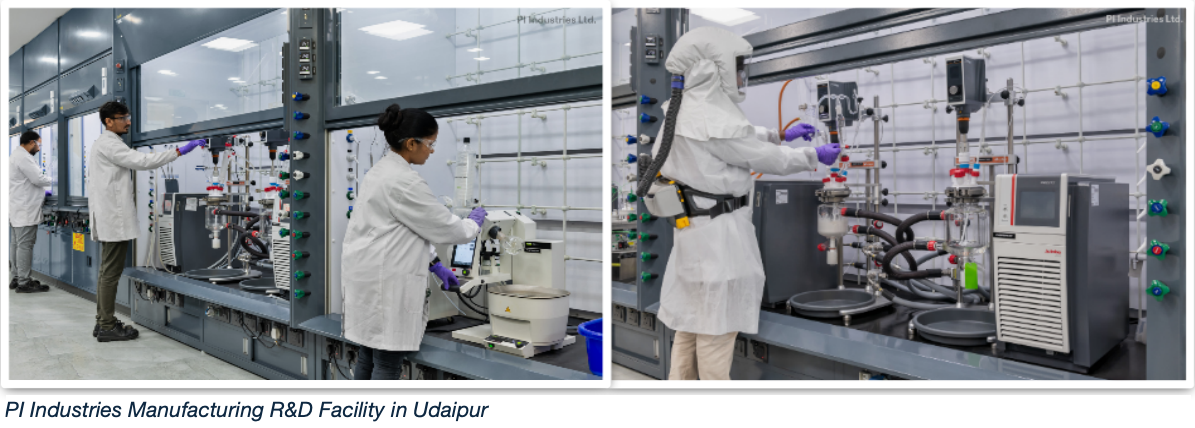
R&D is not a support function at PI. It is the engine of our global business. With over 700 scientists, 200+ PhDs, and 175+ patents, we work with global innovators from the earliest stages of product development. By offering end-to-end capabilities from molecule development to commercial scale-up, we become integral to our partners’ innovation pipelines. Products developed collaboratively tend to build long-term partner alignment. Our innovation capability is not aspirational. It is operational and measurable.
Many Indian companies are moving towards contract manufacturing and co-development models. How has PI Industries leveraged such approaches to scale its international business?
We were early to this model, and our experience goes beyond the current trend. We positioned ourselves as strategic partners, engaging early in the product lifecycle. Through co-development, we brought our strengths in complex chemistry and scalable manufacturing to enable faster commercialisation of new molecules. The contract manufacturing model provided revenue visibility through multi-year agreements. This approach moved us up the value chain from a cost-efficient manufacturer to a knowledge-driven solutions provider, building the kind of customer loyalty that comes only from shared investment in outcomes.
As exports scaled, how did you strengthen your manufacturing and supply chain capabilities to ensure consistency, reliability, and timely delivery across global markets?
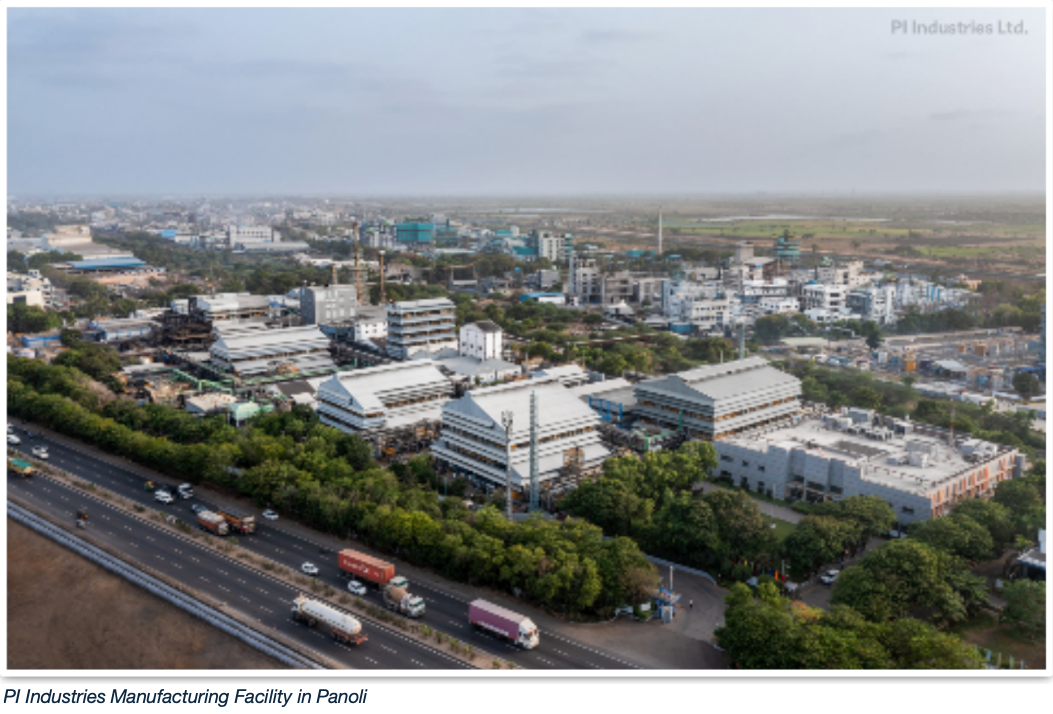
In our business, reliability is fundamental to the value we deliver. We invested in flexible, multi-purpose plants capable of handling complex chemistries at scale, with robust process engineering to ensure uniform quality from lab to commercial production. On the supply chain side, digital tools, advanced demand forecasting, and a qualified vendor ecosystem support business continuity even during disruptions. PI was recognised among India’s Top Supply Chain Champions in the agro-chemical sector in 2025.
For markets where you do not have a direct presence, how does PI Industries manage logistics, customer servicing, and overall execution?
We operate through carefully selected strategic and channel partners aligned with our quality and governance standards. Strong logistics planning supported by digital systems enables efficient forecasting and reliable global shipping. Centralised global teams and dedicated account management ensure responsive engagement even without physical presence. Execution quality is driven by close internal coordination between R&D, manufacturing, and commercial teams. Customer requirements are addressed proactively, which reinforces the reliability our global reputation rests on.
Sustainability is becoming increasingly important in global supply chains. What initiatives has PI Industries undertaken to align with global sustainability expectations, and how has this impacted your export business?
Sustainability at PI is not a recent priority. It has been part of how we operate for over two decades. In 2025, we achieved a score of 76 in the S&P Global Corporate Sustainability Assessment, placing us in the 98th percentile of the global chemicals industry. At the operational level, we invest in green chemistry, waste minimisation, renewable energy, and water productivity through technologies such as closed-loop systems and zero-liquid-discharge. Beyond our operations, we promote sustainable agronomic practices with farming communities and invest in biodiversity restoration, women’s empowerment, and rural education. Sustainability is not only a compliance requirement for us. It is also a source of long-term competitiveness.
Cost competitiveness is often a key advantage for Indian companies. How has PI Industries balanced cost, quality, and innovation while competing in international markets?
We do not position ourselves as the lowest-cost option. We position ourselves as a holistic value delivery partner of choice. In regulated markets, the cost of choosing the wrong partner far exceeds any savings on unit price. A failed batch, a delayed filing, or a compliance gap can carry consequences far beyond manufacturing cost. Our partners understand this. We are disciplined about cost efficiency through process optimisation, backward integration, and R&D-driven yield improvements. But our cost advantages are structural, driven by scientific capability, not by cutting corners.
Over the years, how has the perception of Indian companies evolved among your global customers, and how has PI Industries contributed to or benefited from this shift?
The shift is real, and it was earned. A decade ago, Indian companies were largely viewed as cost-efficient manufacturers. Today, the best is recognised as innovation-driven partners integral to global supply chains. That happened because companies invested in R&D, built governance that global partners could trust, and delivered consistently over years. PI has been part of that shift, and we have also benefited from it. But perception is fragile. It is maintained only through the same discipline that built it.
Based on your experience, what key lessons would you share with Indian companies looking to build a successful export business in regulated and innovation-driven sectors?
Four things, from our experience.
- First, invest in compliance before capacity. In regulated markets, compliance is your entry ticket.
- Second, build scientific capability that moves you up the value chain. The companies that will thrive are those offering differentiated solutions, not commoditised products.
- Third, adopt a partnership-led approach. Trust is built gradually. Focus on reliability over quick wins.
- And finally, trust is built by doing what you said you would do, repeatedly, over time. There is no shortcut to that. India has the talent and the ambition to lead in global life sciences. What will determine which companies succeed is not just capability but character and the ability to take India to the world.
Get In Touch
Your input is valuable in shaping the future of the IBEF Export Newsletter! Take a moment to share your thoughts and help us bring you more relevant insights, success stories, and export branding strategies.
Contact & Subscriptions: Contact Us
Email us at: info.brandindia@ibef.org
Call: +91 11 43845501
Partners




