Case Study
Success Story: Responsive Industries’ Export Journey
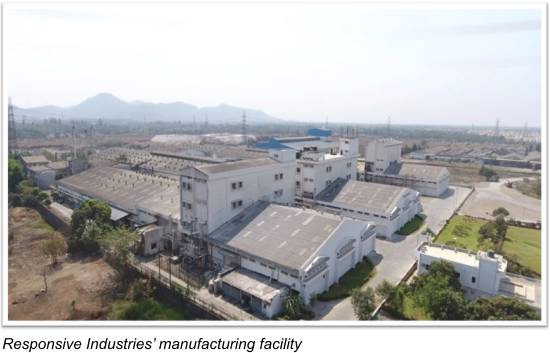
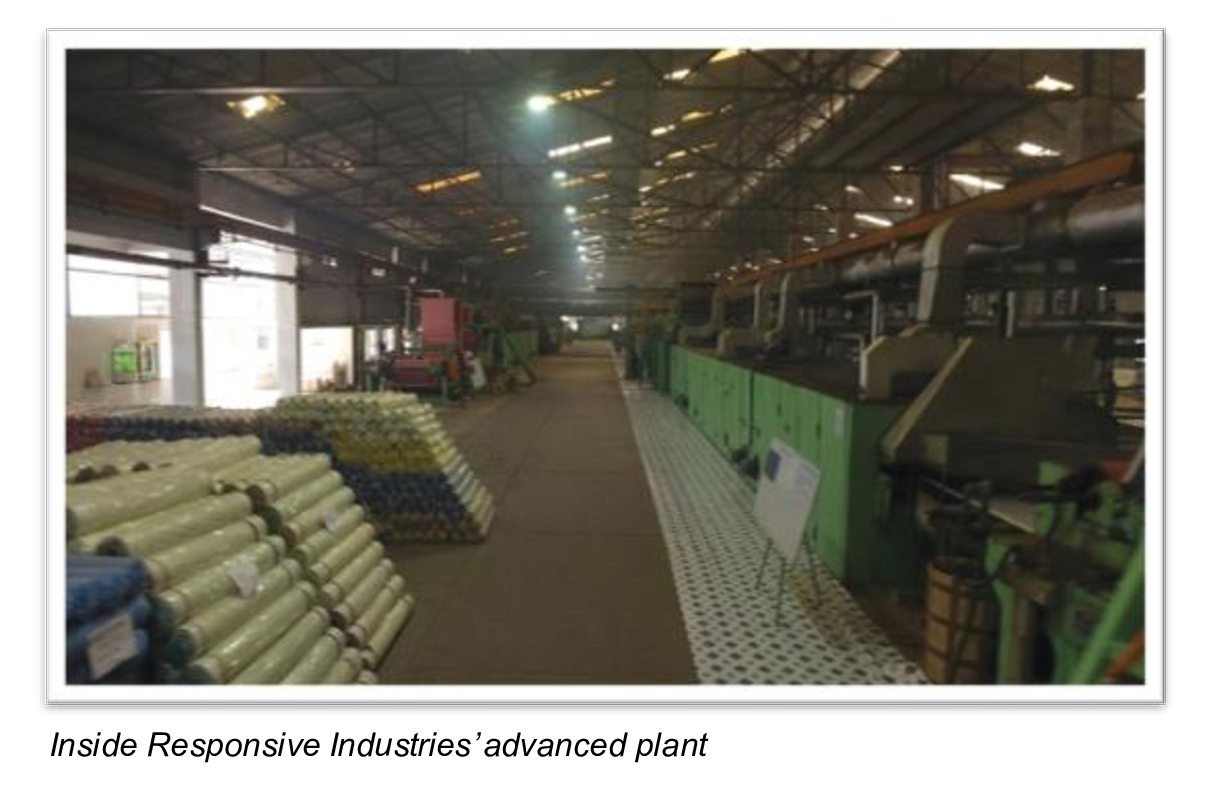
Responsive Industries has established itself as a leading manufacturer of Poly Vinyl Chloride (PVC) products, built over three decades of steady growth and industry experience. The company operates across three verticals such as vinyl flooring, synthetic leather and luxury vinyl tiles and has developed one of the most advanced infrastructure set-ups in India. Its 100-acre facility in Boisar, Maharashtra is equipped with 15 modern manufacturing lines and an installed capacity of 10,000 metric tonnes (MT) per month. The company’s strong industrial base, combined with US$ 180 million in fixed assets, continual positive cash flow and a zero long-term debt profile has allowed it to maintain both scale and financial strength while meeting global quality standards.
Responsive Industries’ progress has been driven by a focus on sustainable expansion and innovation, reflected in three successful capital expenditure (capex) cycles that enhanced its capacity and technological capability. The company now caters to 25 end-user industries, supported by a wide network of more than 75 distributors across India and a strong global footprint spanning more than 64 countries.
With a portfolio of over 30 product categories and all products aligned to EU and US certifications, Responsive Industries has earned its position as a trusted name in PVC solutions. Its journey illustrates how consistent investment in quality, performance and customer needs can create a long-term standard in a competitive global market.
Incorporated in 1982 as Sinhal Holdings, the company established its first large-scale vinyl plant in collaboration with Daewoo between 1992 and 1997, laying the foundation for global ambitions. Exports began in 2000 when Responsive Industries secured its first international certifications, opening doors to regulated markets overseas.
Between 2010 and 2012, Responsive Industries undertook a ~US$ 70 million capacity expansion, supported by US$ 55 million external commercial borrowing (ECB), which strengthened its ability to meet growing global flooring demand.
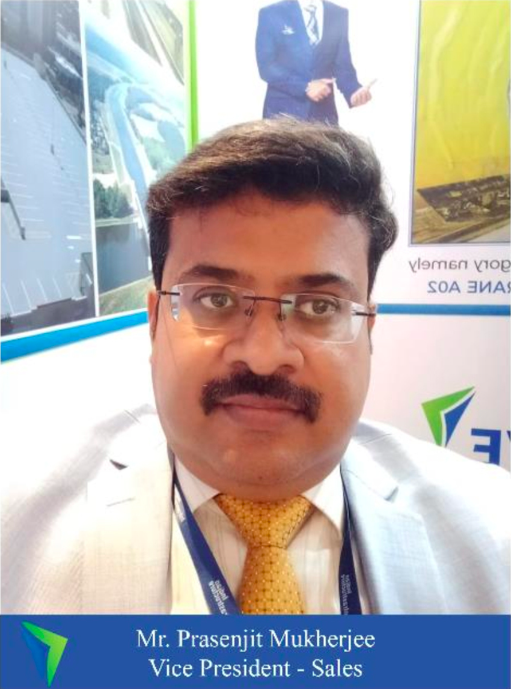
We interviewed Mr. Prasenjit Mukherjee, Vice President, Sales at Responsive Industries, to understand the company’s export branding journey. From its early export strategy and successes to its current global positioning and its next steps. In the following sections, we share key takeaways from our discussion and excerpts from the interview.
What inspired Responsive Industries to enter global markets, and how did you approach your initial export strategy?
Responsive Industries identified a significant opportunity in the international flooring market, especially for luxury vinyl plank (LVP), stone plastic composite (SPC) and sheet vinyl products that were seeing much stronger demand abroad than in India. This insight inspired us to explore international markets. To prepare for that we invested in expanding manufacturing capacity and receiving international certifications that would cater to the global standards as well as building distribution path for export. The first thing we did was to focus on value-added vinyl products and the markets where there was an emerging demand, both project based and retail based, for these categories.
Can you highlight key milestones in the Responsive Industries’ export journey and how they shaped growth?
Our export journey has been defined by a series of strategic milestones. We began exports and achieved our first set of international certifications in 2000, establishing early credibility in foreign markets. Between 2010 and 2012, we undertook a significant capacity expansion.
The launch of our IMPACT LVP brand in 2019 marked a major product innovation milestone. In 2020, we enhanced our presence in the US by setting up a distribution centre, followed by an expansion in SPC/LVP manufacturing capacity in 2021.
By 2022, we further strengthened our global footprint by establishing a manufacturing base in China. Each of these steps progressively enhanced our capability, widened market access, and increased trust with international customers.
How do you prioritise and adapt to different export regions? What made markets like North America strategic?
We prioritise export markets with reference to a number of considerations, including market size and growth prospects, regulatory standards, project pipeline, and access to existing distribution. North America, US in particular, represented a key business area owing to high demand for LVP and SPC flooring in the region with significant consumption growth rate. Trade factors including ‘China+1’ strategy and anti-dumping measures ensured the US market was favourable for Indian exporters as well. With that understanding we made an investment in setting up a US subsidiary and forged strong partnerships with retail and project players to have a very solid on-ground presence.
How have you structured your global operations and supply chain?
Responsive Industries’ global operations are designed to integrate manufacturing strength with market accessibility. Our primary production facilities are based at Palghar and Boisar in Maharashtra, India. To complement this, we established a manufacturing arm in China focused on LVT, enabling us to stay competitive and close to Asian markets. In the US, we built a subsidiary in Greenville, South Carolina to serve as a distribution hub and technical support centre, ensuring faster response times and better service. This structure is further supported by a robust distributor network spanning nearly 70 countries.
What role does innovation play in your export strategy? Can you share examples?
Innovation is a cornerstone of our export strategy, enabling us to differentiate and compete. Our in-house R&D has pioneered products such as the IMPACT LVP range.
We also developed advanced click systems such as I4F and UNILIN that simplify installation and improve durability.
Additionally, our chemistries have evolved towards phthalate-free formulations, and we have created recyclable and waterproof vinyl variants tailored to international project requirements.
Each innovation has helped us stay aligned with global trends and buyer expectations.
How have digital systems supported your operations and sales?
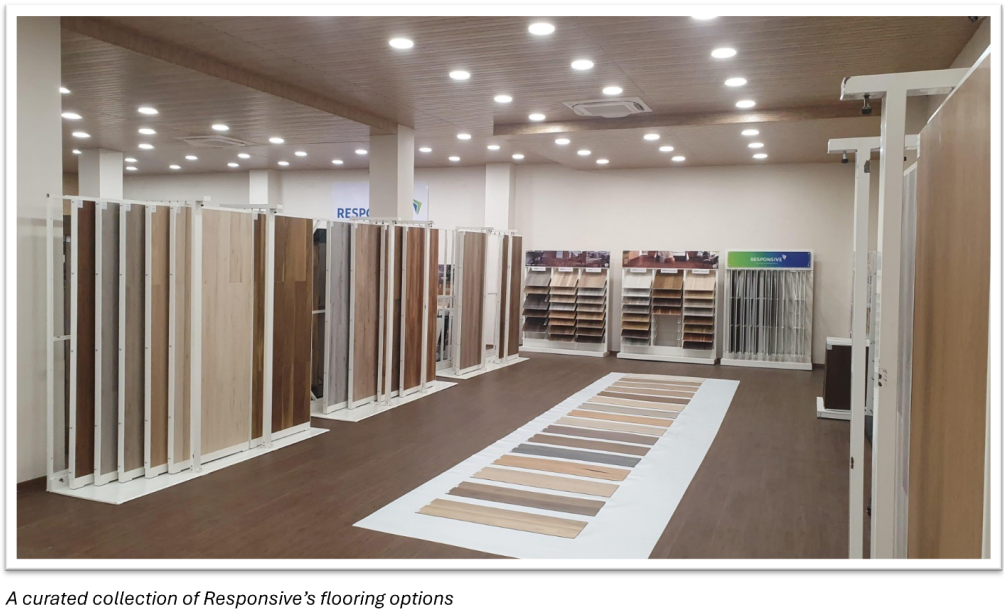
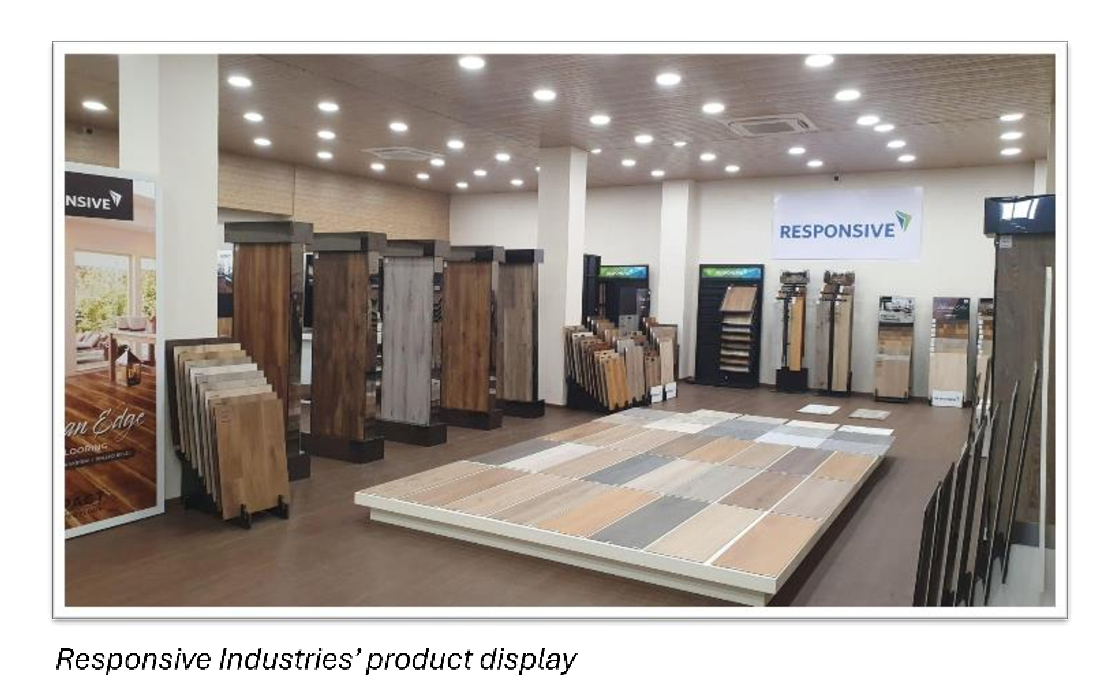
Digitalisation has played a pivotal role in our global expansion. We leverage digital channels to increase sales visibility, simplify distribution management, and provide engaging product presentation. For example, customers and architects can view various design options to visualise how these options will look in a real-world application through our online floor viewer or access updated information on demand, thanks to the digital catalogues that have simplified things for distributors and retailers globally. Digital engagement has also enabled us to establish better relationships with architects, retailers, and stockists worldwide.
How is Responsive Industries embracing new technologies, and what impact do you see?
We consistently adopt new technologies in both product development and manufacturing. Our move towards phthalate-free chemistries aligns with global sustainability standards. Similarly, by integrating next-gen click systems and high-performance SPC/LVP manufacturing, we have been able to reduce installation time and improve product longevity.
What major challenges have you faced internationally, and how have you overcome them?
The global flooring market demands stringent adherence to international standards and very quick delivery timelines. Initially, these were key challenges for us.
To overcome them, we invested in securing recognised certifications such as FloorScore and ISO testing, expanded our R&D infrastructure to ensure compliance and increased our capacity to handle orders.
Establishing a US distribution and technical support centre was another critical step, as it enabled us to address compliance issues thereby improving trust and responsiveness.
What marketing/certification strategies have been most effective internationally?
In international markets, we've found a combination of targeted marketing and strong certification credentials to be the most effective. Trade fairs have been helpful to show products globally. Working with distributors and even private-label or retail tie-ups, especially in the US, has really helped for us to have consistent market penetration. Accreditations such as FloorScore, International Maritime Organisation (IMO) compliance and being a member of United States Green Building Council (USGBC) have been crucial in reassuring institutional buyers.
How does sustainability factor into your export and product strategy?
Sustainability is a cornerstone of our product and export strategies. We have made significant progress in developing 100% recyclable vinyl floors and low-emission products. FloorScore and low-Volatile Organic Compounds (VOC) testing are a few examples of certifications that support these claims, but they also fit in line with our long-term approach to position ourselves as a carbon-zero company. Incorporating these standards into our products helps us satisfy customer demands and enhances the competitive situation in environmentally sensitive markets.
How have sustainable practices become part of your offering?
Sustainable practices are no longer just add-ons for us; they are embedded in our R&D and product design. We use phthalate-free formulations that are safer for environments, design products that can be fully recycled and subject our ranges to rigorous indoor air-quality testing and certification such as FloorScore. By incorporating these practices, we ensure that our products are environmentally responsible, which resonates strongly in international markets.
Sustainability is no longer something we simply tack on to what we do. It is integrated into our R&D and product design. We incorporate phthalate-free formulations to create safer products for the environment and design our products so that they can be fully recycled.Similarly, we put our ranges through a rigorous air-quality testing process; our solutions are certified (FloorScore).
That is what helps us to be green, and we ensure that our products are environmentally responsible, which resonates strongly in international markets.
Do customers abroad ask for green credentials, and how has this influenced your brand?
Yes, international customers, particularly in projects and institutional segments, place a strong emphasis on green credentials.
Buyers frequently expect certifications such as low-VOC standards, FloorScore and ISO testing. Meeting these requirements has significantly enhanced our credibility with global architects, project specifiers, and retail partners.
Looking ahead, what are Responsive Industries’ aspirations in international markets?
Our goal is to continue to build on the success we’ve already seen and expand our presence in high-value LVP and SPC categories. Near term, we plan to drive growth in US and Europe while investing further in our manufacturing and distribution infrastructure. Over the long term, we continue to see the company gaining more market share in the rapidly growing global LVT market by utilising our innovation strength, sustainability focus and customer centricity.
What advice would you give to new exporters?
For new exporters, our advice would be to start by focusing on product quality and ensuring compliance with international certifications. Building a strong R&D base to meet diverse local standards is essential. Instead of trying to tackle too many markets at once, prioritise a few strategic ones where you can build a robust presence. Invest in local distribution and customer support systems to gain trust and use case studies or project references to build credibility. These steps form the foundation of sustainable international growth.
Get In Touch
Your input is valuable in shaping the future of the IBEF Export Newsletter! Take a moment to share your thoughts and help us bring you more relevant insights, success stories, and export branding strategies.
Contact & Subscriptions: Contact Us
Email us at: info.brandindia@ibef.org
Call: +91 11 43845501
Partners




