Industry Trends
There is a growing trend towards the increasing importance of value, speed, and differentiation of products being developed across the world. Private label brands are becoming more common as retail firms increase their push to gain control over pricing, margins, and consumers. The growing trend is creating opportunities for suppliers’ ecosystems to go beyond mere manufacturing and engage more deeply with customers through the company's various services. Increasingly, firms in India have been playing an active role in global retail ecosystems as they develop, design, and package products for their customers. With growing complexity in global sourcing strategies, India's strengths in manufacturing and design are enabling more and more Indian firms to become integral parts of private-label ecosystems. This transition is positioning Indian firms as strategic partners in global retail value chains, supporting the next phase of export growth.
The Increasing Participation of Indian Companies in Global Retail and Private Label Ecosystems
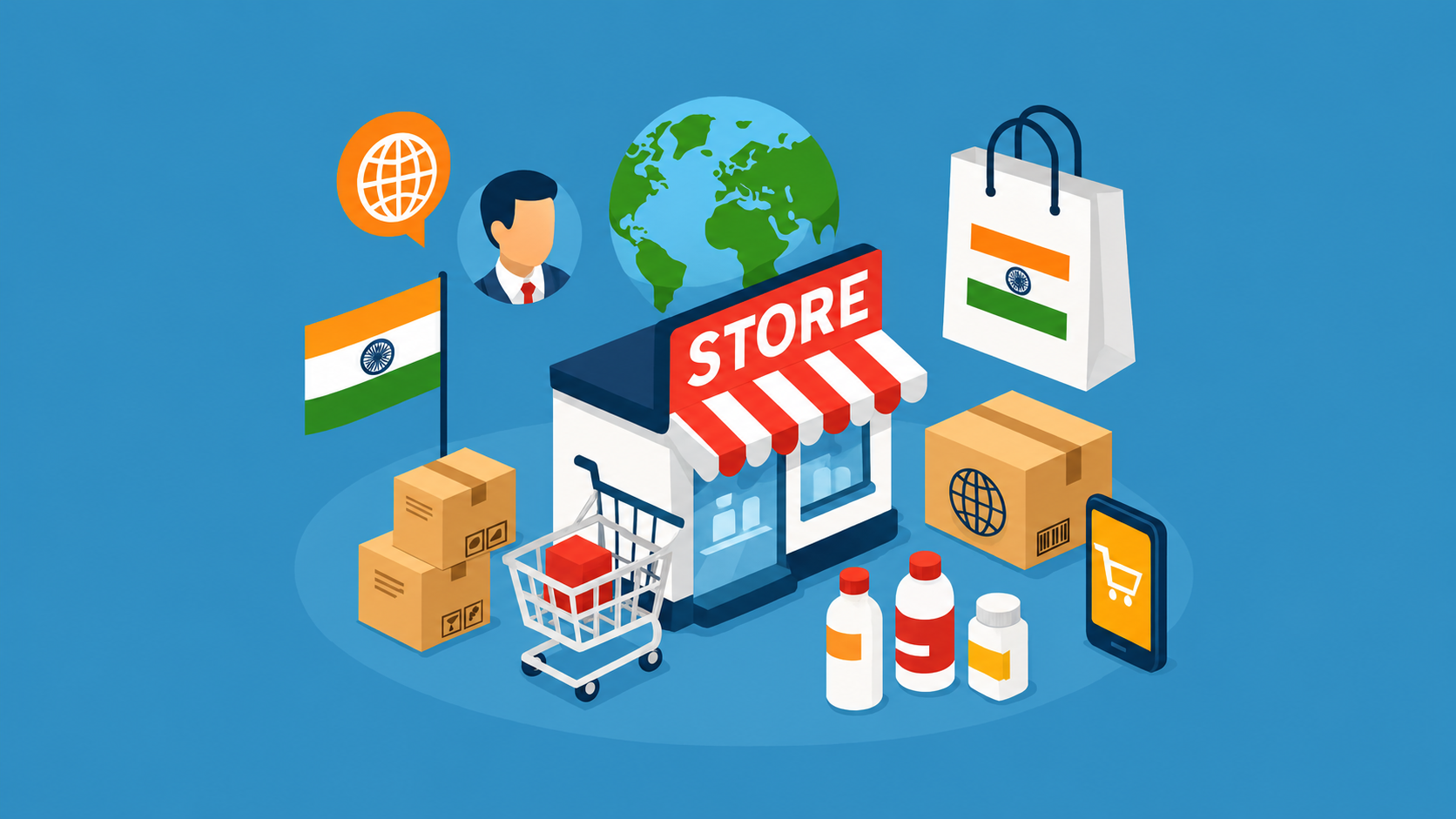
The global retail industry is set to undergo a significant structural shift in 2026, driven by value-seeking consumers, rising omnichannel complexity, and retailers’ stronger focus on protecting margins. US private-label products achieved their highest-ever market share of 21.3% in 2025, with total sales reaching Rs. 26.14 lakh crore (US$ 282.8 billion), which demonstrates the increasing consumer demand for retailer-owned brands that provide better pricing control. The 2026 Global Retail Industry Outlook from Deloitte indicates that 40% of consumers now exhibit deal-seeking purchasing patterns. As retailers redesign sourcing strategies amid the ongoing China+1 transition, backend supplier ecosystems are becoming increasingly important for exclusive stock-keeping units (SKUs), faster product refresh cycles, and differentiated assortments. Forbes identifies 2026 as a key moment when suppliers will begin working together and retailers will change their business operations. Indian companies are transforming their roles from export vendors to global retail ecosystem partners that support product development, localisation, packaging innovation, and back-end execution for omnichannel operations.
The Rise of Global Private-Label Ecosystems
Retail ecosystems across the world are undergoing a major transformation as retailers increasingly build their own private-label portfolios, managing product sourcing, packaging, design, compliance and omnichannel presentation through long-term supplier partnerships instead of relying on traditional branded procurement. The 2026 Global Retail Industry Outlook from Deloitte identifies private-label development as one of the main strategic priorities that retailers must follow to achieve their objective of increasing profit margins, strengthen pricing control and building deeper customer loyalty in increasingly value-conscious markets.
The retailers such as Walmart (Great Value, Mainstays) and Costco (Kirkland Signature) and Amazon Basics keep increasing their exclusive stock-keeping units (SKUs) across home linen, wellness, kitchenware and electronics accessories which helps them achieve better shelf control and omnichannel consumer experiences. The 2026 retail reset analysis from Forbes demonstrates how supplier ecosystems have advanced beyond white-label manufacturing to develop deeper design, packaging and innovation partnerships which enable retailers to refresh assortments faster while protecting their profit margins.
The evolving market creates better opportunities for Indian companies to develop exclusive bedding collections and wellness formulations, smart kitchen equipment and retail-specific electronic accessories. The backend operations of design adaptation, regulatory standards management and packaging innovation have become essential for companies that want to form global retail alliances.
India’s Expanding Participation Across Key Sectors
India’s participation in the global retail and private-label ecosystem is steadily expanding across sectors where design, capability, compliant backend execution, and retailer-specific product innovation are becoming increasingly important. In-home textiles and décor companies like Welspun Living and Trident Group continue to strengthen their presence in the global sourcing network, supplying bedding, towels and utility linen and décor products to retailers such as IKEA and Walmart. The retailer-solutions expansion at Welspun, together with its participation in New York Market Week 2026, shows that India now moves from contract manufacturing to design-based home category partnerships.
Indian exporters in wellness and Ayurveda are now supporting clean beauty products, botanical gifting, pharmacy private labels and nutraceutical wellness ranges through their worldwide compliant formulations and premium packaging. The worldwide success of Kama Ayurveda products shows that people increasingly trust India-backed wellness ecosystems.
The electronics and accessories segment is emerging as another strong growth pillar, supported by the expansion of Production-Linked Incentives (PLIs) and India’s growing manufacturing scale in smart chargers, audio accessories, electric vehicle (EV)-linked peripherals, and connected devices. The rapid scale-up of companies such as Tata Electronics is further accelerating India’s shift from traditional workshop production methods to modern technology-based retail partnerships. Indian premium brands Vahdam and Sancha Tea have expanded their presence in the gourmet and gifting market through their exclusive tea collections, festive packs, spice products and gifting-led food assortments. The market for sustainable cotton lifestyle products has experienced increased growth driven by global sustainability regulations, which include California's 2026 plastic bag restriction and the growing demand for reusable bags, storage solutions and utility organisers. Indian businesses have adopted specialized design, packaging and innovation partners, enabling global retailors to scale exclusive product assortment with stronger margins and better shelf control.
Design, Packaging and Shelf Integration
With the objective of being successful in 2026 retailing, Indian manufacturing needs to switch focus from the quantity supply chain of products to their efficient shelf placement, where efficient export will depend not only on product quality but also on the intelligence behind its packaging. The latter now starts with retailer-specific shelf sizes, ensuring that Indian home textiles, decorations, kitchenware, and functional items integrate effectively into the densely populated aisles of the United States and Europe.
The design trend of today is going for simple visuals, multilingual labelling and clear visual hierarchy to ensure that the Indian private label looks like a locally produced premium item among other products on global retail shelves. Effective integration into such systems should be ensured by barcode accuracy, QR traceability, and advanced packaging capabilities that help automate inventory management and verify product authenticity.
With more emphasis on gifting and festive retailing, there is an increasing need for premium unboxing concepts, holiday packs, and custom presentation structures that apply not only to Ayurvedic wellness, gourmet tea, and spices but also to lifestyle products. All the while, the greatest competitive advantage for Indian exporters will come from sustainability and compliance with international environmental standards, including the use of environmentally friendly packaging materials. Indian backend partners have ceased to be mere suppliers and have become retailers’ allies in creating modern shopping experiences.
Digital Marketplaces and Platform-Led Private Labels
Platform-led private labels are transforming how brands scale globally, with digital discoverability replacing traditional aisle dominance as the first point of consumer conversion. Amazon and Shopify together account for nearly 49.7% of US. e-commerce activity in 2026, highlighting how marketplace ecosystems increasingly shape retailer-owned as well as direct-to-consumer assortments.
The platforms such as Amazon Basics, Walmart Marketplace, Wayfair and Shopify white-label storefronts provide private-label ecosystems with new retail opportunities by allowing these platforms to let retailers and emerging brands launch category-specific assortments with lower entry barriers than traditional retail channels. The real differentiator is no longer limited to fulfilment speed, but algorithm-driven shelf visibility, where ratings velocity, review depth, click-through performance, sponsored search placement, and keyword relevance determine product ranking. The Walmart Marketplace’s seller ecosystem experienced growth through 44,000 new sellers during the first five months of 2025, which demonstrates how rapidly new digital shelves are expanding their market share.
Indian companies can take advantage of digital-first private labels, exclusive online bundles, marketplace-native packaging and review-led product optimisation, which applies to décor, kitchenware, electronics accessories and lifestyle utilities. The success of businesses now depends on three factors, which include search ranking discipline, ratings trust and platform-specific merchandising intelligence, as the winning shelf has increasingly shifted from the physical aisle to the search result page.
Policy and Export Enablement
The Indian export growth in 2026 is being supported by a strong policy framework that aims to make global trade accessible for micro, small and medium enterprises (MSMEs). The Directorate General of Foreign Trade (DGFT) E-commerce Export Handbook serves as the centre of the ecosystem, which enables small businesses to obtain international retail channels and market access via its partnership with Amazon-DGFT and Walmart Vriddhi program. Open Network for Digital Commerce (ONDC) enhances the digital infrastructure of India by developing a system which optimizes domestic supply chains whereas the Trade Connect e-platform act as a comprehensive support system for transportation and compliance-related challenges. To improve scale efficiencies, the government is also strengthening export clusters, common facility centres, and MSME support infrastructure, reducing operational costs for individual manufacturers, the government is also strengthening export clusters, common facility centres, and MSME support infrastructure, reducing operational costs for individual manufacturers. This wider ecosystem is simplifying MSME onboarding and enabling local artisans and manufacturers to evolve into global private-label partners. By integrating these support systems, India is not only exporting products but also building a scalable, policy-backed export engine that strengthens the global reach of “Make in India.”
Strategic Outlook
By 2026, India’s participation in global retail ecosystems marks a decisive shift from volume-driven white-label supply to high-value co-innovation partnerships. As global retailers expand private-label portfolios for stronger margins, Indian firms are increasingly mastering design, packaging, sustainability, and digital traceability, enabling them to move beyond the traditional “factory” label into trusted long-term retail partnerships. Indian firms are moving from white-label suppliers to co-innovation and retailer-trust partners, capturing higher margins through design intelligence, packaging precision, and faster category innovation. The rapid rise of private labels is also becoming a launchpad for own-brand evolution, where Indian heritage, sustainable materials, and technology-backed product innovation can command premium shelf space globally. This transformation positions India not merely as a backend supplier, but as an increasingly authoritative force shaping the future of global shelf ownership.
Disclaimer: This information has been collected through secondary research. The views expressed by the spokespersons are their own and do not necessarily reflect those of IBEF. IBEF is not responsible for any errors in the same.
Get In Touch
Your input is valuable in shaping the future of the IBEF Export Newsletter! Take a moment to share your thoughts and help us bring you more relevant insights, success stories, and export branding strategies.
Contact & Subscriptions: Contact Us
Email us at: info.brandindia@ibef.org
Call: +91 11 43845501
Partners