Industry Trends
The Rising Importance of Consumer Experience and Product Storytelling in Building Global Brand India
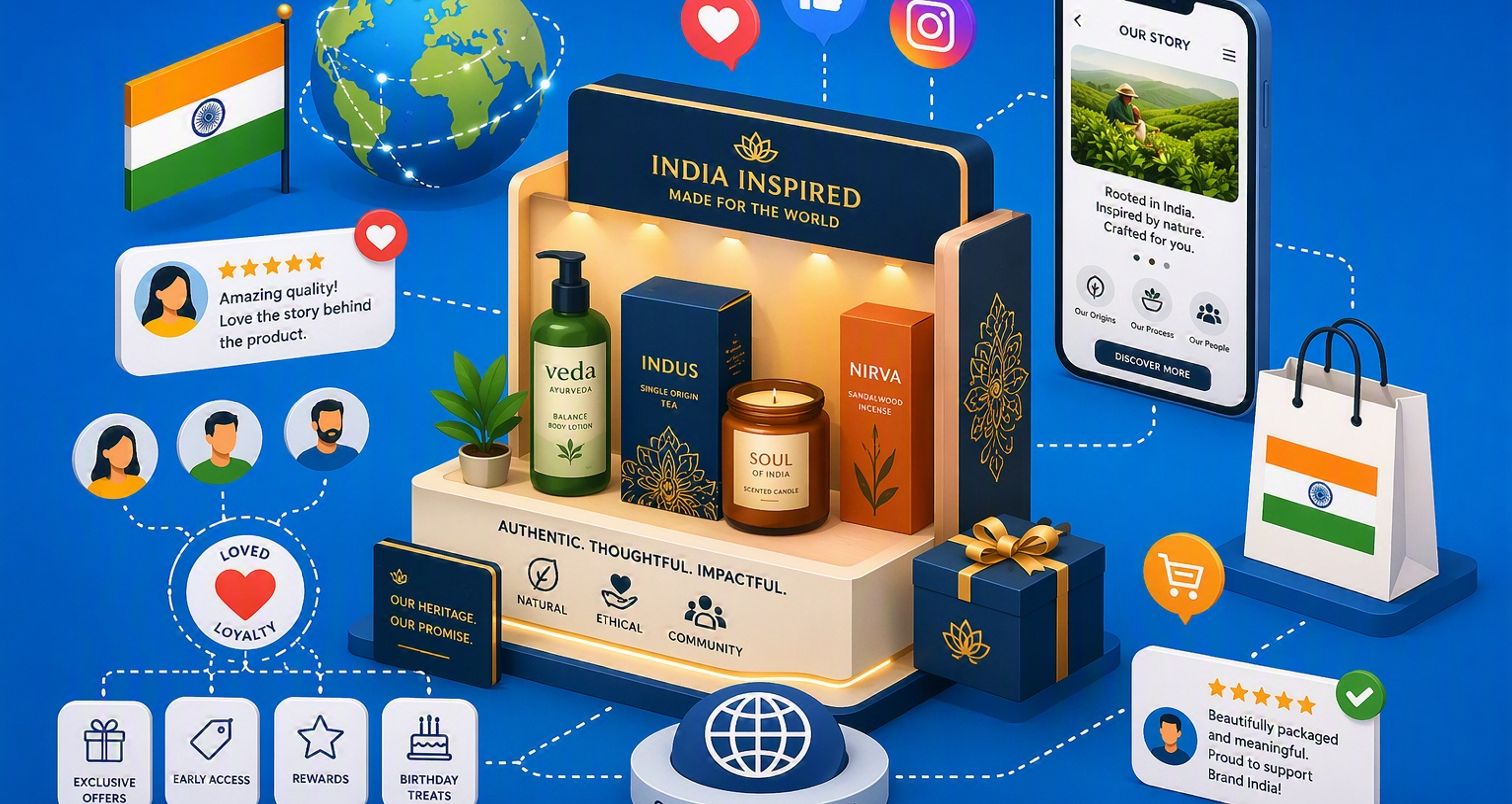
Through the years, Indian exporters have kept their competiveness in the international arena because of the ability of India to provide good quality products at competitive prices. However, with the changing needs of consumers all over the world, the attention now lies on building Indian products into brands and experiences that will be chosen as the best option for the global market.
It comes at a time when India intends to achieve an Rs. 96.14 lakh crore (US$ 1 trillion) merchandise export economy by the year 2030. As mentioned in the report, Viksit Bharat, published by the Ministry of Commerce & Industry, and PwC India, to achieve the goal, there is a need to move from just scaling up production to producing high-quality products that appeal to international consumers through innovation, sustainability, and strong brand positioning.
It is further confirmed by UNCTAD, pointing out that nowadays, the consumers of the globe are paying attention to the source of the products, their sustainability, and responsible sourcing. At the same time, OECD's studies highlight that the value addition and differentiation in global value chains are becoming more and more important. It is an enormous chance for Indian exporters to show not just the good quality but also the story behind the products, the stories of craftsmanship, innovation, and heritage that make Brand India unique.
The International Consumer Has Changed
The modern consumer is more oriented towards sustainability, transparency, and brand values aside from price and quality considerations. The commercial potential of this shift is significant. PwC’s 2024 Voice of the Consumer Survey, covering 20,662 consumers across 31 countries and territories, found that 80% of consumers were willing to pay more for sustainably produced or sourced goods, with an average willingness to pay a 9.7% premium. Consumers also placed importance on tangible sustainability attributes, including waste reduction and recycling (40%), eco-friendly packaging (38%), and efforts towards nature and water conservation (34%). These findings suggest that credible sustainability credentials can contribute to both consumer trust and product differentiation.
The rise of digital shopping, social media, and cross-border e-commerce has changed the process of product search, evaluation, and acquisition. An international consumer can compare products of different countries within minutes – from buying Darjeeling tea in New York to purchasing Ayurvedic skincare in Berlin and hand-crafted home decor items in Sydney. According to PwC, consumers are ready to pay 9.7% premium on average for sustainably produced or responsibly sourced goods, and almost half of all customers purchase products through social media platforms. Thus, there are new opportunities in digital interaction, responsible sourcing, and authentic storytelling. The influence of social platforms is particularly visible in India. PwC’s Voice of the Consumer Survey 2024 found that 77% of Indian consumers had discovered new brands through social media, while 57% reported purchasing products directly through these platforms. This indicates that social channels are increasingly functioning not only as awareness platforms but also as spaces where brands can shape consumer perceptions and influence purchase decisions
According to McKinsey & Company, State of the Consumer 2025, value is now understood as a balance between affordability, trust, quality, convenience, and brand purpose. In contrast to choosing the cheapest option, consumers seek to purchase products from authentic and transparent brands that have a close relationship with the origin of the product. Thus, there is an opportunity for Indian exporters.
For Indian exporters, there is a great chance to utilise the changing preferences of the modern consumer. The country has competitive advantages in terms of traditional craftwork, Ayurveda, high-quality agriculture production, engineering, and sophisticated manufacturing processes, which allow creating a solid foundation for product differentiation. The issue is related to the communication of these advantages, and when the consumers realise that behind Indian products there is a history, innovation, sustainability, and craftsmanship, they can understand its value better and become loyal customers. Thus, in the future, as the preferences of consumers keep changing, there are not only opportunities to participate in global market but create demanded and trusted products and experiences. Reflecting this shift, Ravi Saxena, Founder & CEO, Wonderchef Home Appliances, notes, “The world pays a premium for something thoughtfully made and genuinely original. Indian brands have to lead with design, not apologise for price.”
According to Harvard Business Review, stories are more engaging than facts and thus they increase product memorability and customer trust. In the international market, where there are many options to choose from, storytelling became not just a marketing tool, but a strategic instrument of communication that allows sharing not only what is sold, but why the products are important. For exporters, it means brand recognition and loyalty. Neelima Burra, SVP – Chief Strategy and Marketing Officer, Business Head – Omnichannel Retail and International Business, Luminous Power Technologies, adds, “Exporters should also invest in content, thought leadership, and brand storytelling to differentiate themselves beyond price and product specifications.”
Through product storytelling, there comes an engagement of consumers with people behind the product, places where the product was made, and the processes involved. This helps the product storytelling convey some of the contextual information and increase its perceived value. The use of product stories is of particular relevance in international markets where consumers do not know much about overseas manufacturers but want to know what makes a particular product special, authentic, and valuable. Spokesperson from Jaquar Group highlights the broader role of brand communication, noting that, “International buyers assess suppliers based on their ability to manufacture, innovate on the product, assure quality, respond quickly and deliver equally across markets.”
However, storytelling can create value only when it is supported by credible evidence. Deloitte’s consumer sustainability research found that 49% of consumers are sceptical about the authenticity of sustainability claims, while 23% are frustrated by the difficulty of distinguishing genuine claims from greenwashing. This makes transparency, traceability and verifiable sustainability credentials increasingly important for exporters seeking to convert product stories into long-term consumer trust.
India is in a very fortunate position when it comes to product storytelling. From the Darjeeling tea, Banarasi silk, and Pashmina shawls to Malabar pepper, Alphonso mangoes, Ayurveda wellness products, engineering products, and precision manufacturing, Indian exports are filled with stories of heritage, innovation, and region-specific quality. World Intellectual Property Organization states that Geographical Indication (GI) protection facilitates product differentiation through their unique origin, quality, and identity.
Italy, Switzerland, Japan, South Korea, and other nations prove that besides the capacity for high-quality manufacturing, there must be consistent storytelling about craftsmanship, quality, and innovations. Realising the importance of storytelling, Indian exporters are beginning to include product origin and sustainability stories in their packaging and digital/e-commerce presence. As stated by ITC, storytelling about provenance and sustainability of a product has become one of the most important factors in gaining competitiveness and market access especially for premium consumer segments.
How Indian Companies Are Building Global Brand India Through Consumer Experience and Storytelling
Despite being already used by global brands to emphasise the business importance of stories, Indian companies in different industries try to employ narratives about heritage, innovation, sustainability, and trust to improve their competitive performance abroad. In various sectors of consumer goods, wellness products, engineering, pharmaceuticals, and automotive manufacturing, Indian exporters abandon price competition and start building long-term relations with global customers and institutions.
In particular, the transformation of traditional products into global premium offers is very apparent in India's food and beverage industry. For instance, the VAHDAM India brand is successfully building up its image based on direct sourcing of teas from tea gardens, faster delivery from farms to cups, and cooperation with local farmers. Instead of presenting a commodity, VAHDAM India emphasises India's tea heritage, freshness, traceability, and sustainability of its products. Similarly, Tata Consumer Products has made Indian teas and beverages international because of their high quality, authenticity, and responsible sourcing. Another example in rice segment is LT Foods that positions Daawat Indian basmati rice by emphasising its origin in the Himalayas, ageing process, and culinary heritage.
The Indian wellness industry is developing according to the same logic. With the increasing demand of global markets for natural and preventive health care solutions, such brands as Forest Essentials, Himalaya Wellness, Dabur, and Organic India communicate about Ayurveda as a modern, scientifically backed wellness system instead of traditional treatment. By means of international branding that unites centuries-old Indian knowledge, science, premium packaging, and sustainability, these companies make consumers emotionally connected with products due to their provenance, responsible sourcing and holistic wellness philosophy.
In addition, the use of stories has become integral in India's textile, handicraft, and lifestyle products export. Jaipur Rugs, Fabindia, Good Earth, Anokhi, and some other firms started emphasising the artisanal community connected to their brands. Not only do they market handmade rugs and fabrics based on their design and high quality but also tell people about the heritage of artisans that keep centuries-old practices alive. This is consistent with the growing consumer awareness about ethical manufacturing, artisanal life conditions, and sustainable consumption.
It is evident that there are indications for transition from commodities-based marketing appeals to those based on storytelling about craft, heritage, and dependability within the Indian jewellery industry. That is why the brand of Tanishq (subsidiary of Titan) established its reputation on integrity, high-quality design, and sustainable material sourcing. Furthermore, the values of Kalyan Jewellers include trust, quality control, and customer relationship management. Altogether these examples show how narrative framing may help consumers build confidence in luxury goods due to their heritage in the international market.
Despite the connection of storytelling to consumer products, the latter trend can be observed in industrial exports as well. Indian pharmaceutical companies like Sun Pharmaceutical Industries, Dr. Reddy's Laboratories, and Cipla continue to build their reputation and enhance the image of India as the "Pharmacy of the World" through such values as research potential, regulatory compliance, patient safety, and innovations. These narratives increase confidence in Indian producers in the eyes of international healthcare providers, distributors, and regulators while building distinctions in the global market.
There is also another example that can be seen in the field of engineering and manufacturing. Industrial firms (for example, Tata Steel, JSW Steel, Bharat Forge) also increasingly share the information about their efforts related to sustainability, advanced manufacturing, and implementation of green technologies. Taking into account increased expectations of consumers and changing regulations (for example, the Carbon Border Adjustment Mechanism introduced in the European Union), responsible manufacturing became an essential part of supplier evaluation.
In addition, India's automotive companies change the perception of Indian brands due to strong brand narratives. Royal Enfield has successfully turned into a global lifestyle brand through heritage, craftsmanship, and adventure; thereby creating fan communities in Europe, North America, and Southeast Asia. Mahindra & Mahindra actively speaks about innovations in electric mobility, agricultural mechanization, and sustainable transport, while Tata Motors talks about innovations in electric vehicles, safety and future mobility solutions. Through these stories, Indian automotive companies prove their ability to compete not only in price but also in innovative technologies and designs.
Even in the field of electronics manufacturing, which implies the manufacturing of products on commission, storytelling becomes relevant. Companies such as Dixon Technologies tell stories about India's increasing competencies in advanced electronics manufacturing and supply chain integration in the context of India being a production hub under the Make in India initiative. Consumer electronics brand boAt also managed to create a unique image by means of modern design, online presence, and aspirational lifestyle proposal.
The gems and jewellery market in India moves towards transparency and traceability as well. There are increasing commitments of such firms as KGK Group and Hari Krishna Exports in responsible sourcing, craftsmanship, and ethically processed diamonds.
All the above-mentioned trends show the change in the approach towards exports in India. Enterprises in all industries are aware that in the modern competitive world, the competitive advantage of their countries depends not only on the manufacturing process or prices. Consumers around the world prefer products which possess such qualities as authenticity, innovation, and sustainability. Through incorporating those qualities in their brands' concepts, Indian exporters not only enhance the product value but also promote the concept of Brand India.
The Road Ahead: Building Brand India for the Next Generation of Global Consumers
In pursuit of its vision of becoming a country where the export of goods worth US$1 trillion can be realised by 2030, competitiveness in the international business environment of India would depend to a great extent on the generation of value in addition to manufacturing. In a world where knowledge and experience prevail, manufacture of quality products alone cannot suffice.
The Government programs like “Make in India”, “One District-One Product” (ODOP), “Districts as Export Hubs”, the Production Linked Incentive (PLI) Scheme, “PM Gati Shakti”, and FTAs of India are helping to build a strong base for exports. Simultaneously, Indian exporters can gain an edge through good storytelling, showcasing the manufacturing prowess, innovations, and rich culture of their country.
Technologies such as artificial intelligence, traceability through blockchains, digital passports of products, and consumer engagement through QR codes are changing the way brands can build trust. With the rising need of global consumers for greater levels of transparency, sustainability, and good manufacturing practices, the inclusion of such technology-based solutions will become necessary in the future for strengthening customer trust.
India has a unique place in this evolving scenario. India’s offerings such as GI products, Ayurveda, hand-woven textiles, pharmaceutical products, engineering products, sustainable steel, and advanced manufacturing represent true stories that resonate well with modern-day consumer needs.
In essence, Brand India will emerge as a result of collective effort on behalf of those who have always been able to supply products that were based on trust, transparency, and relevant consumer experiences. The shift from “Made in India” to “Chosen Globally” is not merely a brand shift but the process of becoming a country whose exports are valued and sought after worldwide. Focusing on consumer experience and the story behind products becomes the key for Indian businesses to establish their global reputation and the next stage of exports.
Get In Touch
Your input is valuable in shaping the future of the IBEF Export Newsletter! Take a moment to share your thoughts and help us bring you more relevant insights, success stories, and export branding strategies.
Contact & Subscriptions: Contact Us
Email us at: info.brandindia@ibef.org
Call: +91 11 43845501
Partners




