Introduction
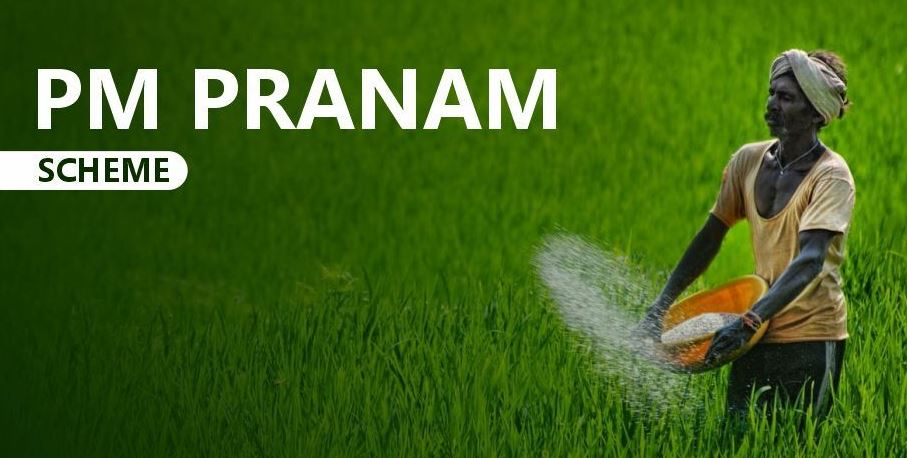
India’s government started the PM-PRANAM programme, which stands for the Prime Minister's Programme for Restoration, Awareness Building, Nourishment, and Amelioration of Mother Earth, on June 28, 2023. It demonstrates the need for change in agricultural practices, as soil health plays an important role in ensuring food security for the country. The PM-PRANAM programme, in particular, addresses growing issues related to the application of chemical fertilizers and pesticides in agriculture. Even though such materials are often associated with an increase in yield, their negative impact on the quality of the soil has been shown multiple times. The programme seeks to motivate states to take steps towards sustainable land management by developing a balance in fertilizer use. One of the key aspects of the PM-PRANAM programme is a rewarding system, as states that successfully cut down the use of chemical fertilizers will get subsidies that could be used to develop sustainable agriculture in their state.
Objective of the scheme
The PM-PRANAM program has managed to incorporate the following critical issues with regards to the state of soil and fertilizers in India using the aforementioned framework. The objective is to encourage the states to take a holistic view of fertilizers usage through encouraging the adoption of biofertilizers and natural substitutes along with chemical fertilizers. With the above-mentioned strategy, the program will help to enhance soil health thus helping towards the enhancement of productivity levels in the future. Another intention of the program is to minimize the financial costs of the government incurred through subsidies for chemical fertilizers. The freeing up of the budget will help to invest in government programs supporting sustainable agriculture. Here are the scheme's key objectives:
- Promote Balanced Fertiliser Use: Encourage the use of a variety of fertilizers to maintain soil health and ensure outcomes by offering incentives, for biofertilizers and organic alternatives in addition, to chemical fertilizers.
- Reduce Reliance on Imports: Encourage the manufacturing of fertilizers to reduce reliance on imports and mitigate price fluctuations.
- Promote Sustainable Practices: Encourage regenerative agriculture principles such as integrated farming systems, micro irrigation, and crop rotation for a more sustainable agricultural sector.
- Reduce Long-Term Costs: Reducing the chemical fertilizer subsidy burden by promoting alternatives and freeing up resources for other government initiatives.
Features of the scheme are as follows:
- The scheme aims to reward farmers to reduce overall fertiliser consumption.
- It makes use of savings from reduced chemical fertiliser subsidies to fund its operations.
- States demonstrating reduced reliance on chemical fertilisers receive a grant equivalent to 50% of the saved subsidy.
- The grant promotes a balanced approach to fertilisation, encouraging the use of biofertilisers and organic alternatives, alongside chemical options.
- A significant portion (70%) of the grant is allocated for infrastructure development for alternative fertiliser production at various levels.
- The remaining portion of the grant (30%) rewards stakeholders that are actively engaged in reducing fertiliser use and raising awareness.
- The scheme is aiming to mitigate environmental degradation and promote sustainable agricultural practices.
- Infrastructure development at local levels empowers communities and fosters self-sufficiency.
- Emphasis on biofertilisers and organic alternatives contributes to long-term agricultural sustainability.
Need for the scheme
Chemical fertilizers which initially increase crop yields can harm the soil quality in the long-term impacting both the environment and agricultural productivity over time. To combat this issue, it is essential to transition towards sustainable farming practices. The PM PRANAM program presents a solution, by advocating for biofertilizers and organic options which not only improve soil health but also encourage eco-friendly methods. Furthermore, by promoting fertilizer production PM PRANAM aims to lessen reliance on imports making the agricultural industry more self-reliant and resilient to market changes. The significant cost of subsidizing chemical fertilizers puts a strain on government finances. By promoting alternatives, PM-PRANAM has the potential to significantly alleviate this strain. The reallocated resources can then be directed towards government programs that benefit the nation and its agricultural sector.
Recent Developments
- Dadra and Nagar Haveli, Delhi, Goa, Manipur, and Mizoram have experienced an overall decline in their consumption level by 0.18 LMT compared to their previous three year average consumption levels. It was established by the government that the PM-PRANAM incentive has not been released yet.
- In total, 5,800+ field trials have been performed on Nano DAP and Nano Urea in different agro-climatic zones. To be specific, IFFCO conducted 2,500 farmer field trials for the Kharif & Rabi season of 2024-25 and another 2,938 field trials for the Kharif & Rabi seasons of 2025-26 till 23 March 2026, covering 15 agro-climatic zones. At the same time, the Department of Fertilizers & fertilizer companies carried out a nation-wide drive for the demonstration of Nano Urea Plus in 100 districts. These efforts represent supplementary steps for promoting balanced usage of nutrients.
- According to ICAR’s long-term studies, balanced nutrient application improves crop yields by 20-30% over nitrogen-only usage, while integrated nutrient management practices combining chemical fertilizers with farmyard manure can enhance productivity by 30-50% and improve soil health indicators such as soil organic carbon and microbial biomass.
- The government highlighted that India’s overall N:P:K ratio improved to 9.3:3.5:1 in FY25 from 11.8:4.6:1 in FY23, reflecting gradual progress towards balanced fertilizer usage
- In March 2026, the government stated that the PM-PRANAM (Promotion of Alternate Nutrients for Agriculture Management) Scheme provides financial incentives to States and Union Territories for reducing the consumption of chemical fertilizers such as urea, DAP, NPK and MOP. Under the scheme, States and UTs are eligible to receive incentives equivalent to 50% of the fertilizer subsidy savings generated through reduced chemical fertilizer consumption.
- Under PM-PRANAM, 95% of the incentive grant is allocated to the concerned State or Union Territory, while the remaining 5% is utilised for monitoring, awareness generation, research, capacity building and reward initiatives. The scheme promotes the adoption of alternative fertilizers, natural farming, micro-irrigation, zero tillage and integrated nutrient management practices.
- Under the PM‑PRANAM initiative, chemical fertiliser consumption in 14 states fell by 1.51 million tonnes in 2023-24 compared with the three-year average, enabling subsidy savings to be partly shared as grants to states.
- On August 9, 2024, all States and Union Territories are included under the PM-PRANAM scheme. Under this initiative, 50% of the fertilizer subsidy saved by a State/UT in a financial year, through reduced consumption of chemical fertilizers (Urea, DAP, NPK, MOP) compared to the average consumption of the past three years, is provided to that State/UT as a grant. This grant can be used by the States/UTs to benefit their people, including farmers.
- On June 30, 2023, the Minister of Chemicals & Fertilisers, Dr. Mansukh Mandaviya announced the allocation of Rs. 1451.84 crore (US$ 173 million) for Market Development Assistance (MDA) to promote organic fertilisers from the Gobardhan plants. This support aims to market Fermented Organic Manure (FOM), Liquid FOM (LFOM), and Phosphate Rich Organic Manure (PROM) derived from Biogas Plants and Compressed Biogas (CBG) Plants established under the Gobardhan initiative. The Gobardhan initiative also includes a subsidy of Rs. 1500 (US$ 18) per metric ton over the sale of each type of manure.
- These organic fertilisers, branded as FOM, LFOM, and PROM, offer solutions to post-harvest residue management and stubble burning while contributing to environmental cleanliness and providing additional income sources for farmers at affordable prices. Additionally, on the same date, the introduction of Sulphur Coated Urea (Urea Gold) was highlighted as a measure to address soil sulphur deficiency, reduce farmers' input costs, and increase production and productivity.
- The Minister of Chemicals & Fertilisers, Dr. Mansukh Mandaviya inaugurated the 59th Fertiliser Association of India Annual Seminar on December 06, 2023, emphasising the Indian fertiliser sector's support to 14 crore farming families and its significant role in shaping the global market.
- The Union Minister highlighted government efforts in ensuring stable fertiliser availability, promoting sustainable farming practices under initiatives, including PM-PRANAM, introducing innovative technologies such as Nano fertilisers, and making drone spraying services accessible through schemes such as NAMO Drone Didi. Additionally, he encouraged Indian industries to develop smart nutrients and emphasised the importance of greener fertiliser manufacturing.
Conclusion
The PM-PRANAM scheme presents a multifaceted approach in tackling critical issues in Indian agriculture. It incentivises states to adopt a balanced approach for fertiliser use, promoting domestic production of biofertilisers and organic alternatives. This initiative has the potential to significantly enhance soil health and secure long-term agricultural output. By embracing these practices, India can not only combat environmental degradation but also ensure the sector's lasting sustainability. Additionally, the program incentivises states to reduce their reliance on chemical fertilizers, creating a win-win scenario. States gain resources for vital investments, while the central government can ease the substantial financial burden it faces due to chemical fertiliser subsidies. These reallocated resources can then be directed towards projects that strengthen India’s agricultural sector and bolster national food security. However, the success of PM-PRANAM hinges on its execution. Sustained government commitment, robust monitoring through the iFMS platform and active stakeholder involvement are crucial in unlocking the program's full potential. As India strives for a resilient agricultural future, PM-PRANAM emerges as a promising step in the right direction.
Partners