SEARCH
RECENT POSTS
Categories
- Agriculture (39)
- Automobiles (20)
- Banking and Financial services (36)
- Consumer Markets (57)
- Defence (6)
- Ecommerce (21)
- Economy (72)
- Education (14)
- Engineering (9)
- Exports (22)
- Healthcare (25)
- India Inc. (10)
- Infrastructure (31)
- Manufacturing (33)
- Media and Entertainment (17)
- Micro, Small & Medium Enterprises (MSMEs) (16)
- Miscellaneous (31)
- Perspectives from India (37)
- Pharmaceuticals (5)
- Railways (4)
- Real Estate (20)
- Renewable Energy (19)
- Research and Development (12)
- Retail (1)
- Services (7)
- Startups (16)
- Technology (66)
- Textiles (8)
- Tourism (16)
- Trade (9)
Authors






AI for Local Language - Inclusion through Vernacular Models
- Jan 13, 2026, 16:10
- Technology
- IBEF
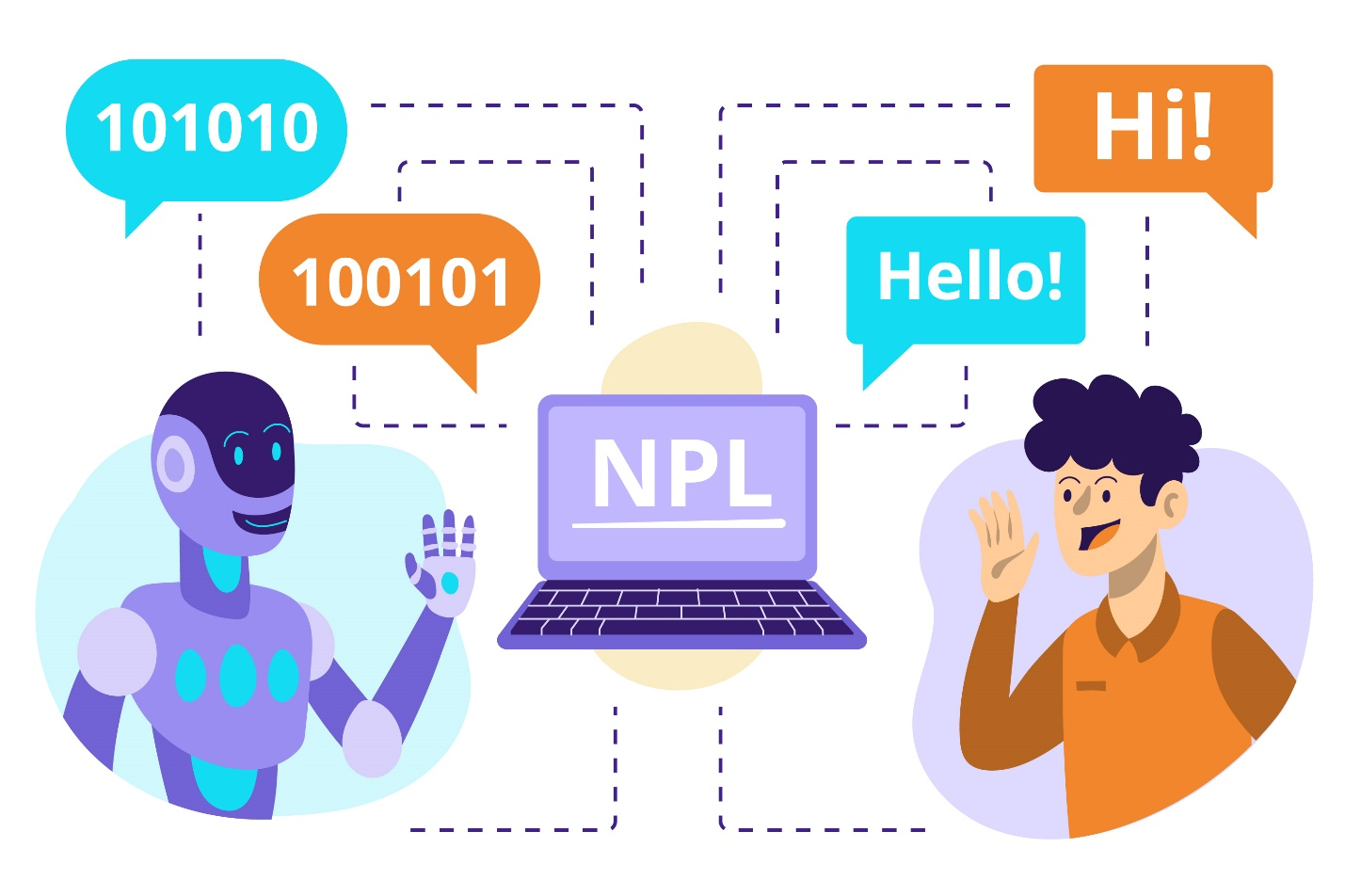
India, home to hundreds of languages and celebrated for its cultural diversity, is seeing a powerful shift with the rise of artificial intelligence (AI) in local languages. AI tools in regional languages are making technology more personal and relatable, turning even simple everyday tasks into something engaging and effortless. A great example of this was when Google launched its campaign announcing that Google Assistant, now powered by Gemini, could understand and respond in India’s diverse vernacular languages. It sparked excitement and encouraged user engagement with the platform. Today, a Tamil-speaking farmer can ask about the weather or mandi (market) prices and receive a response in Tamil. This ability to interact in one’s own language makes technology more inclusive, accessible and impactful for millions who might otherwise be excluded by English-only systems.
Why vernacular AI matters
India’s linguistic diversity, with 22 official languages and hundreds of dialects, means English-only tech can exclude many. This gap is growing as more Indians come online and cheaper-than-ever smartphones and voice-driven interfaces amplify this challenge. However, data shows that people engage far more when technology speaks their language. For instance, a Microsoft study found that users are roughly 2.5 times more likely to trust and interact with an app if it provides content in their mother tongue. In short, serving users in local languages dramatically boosts digital inclusion.
Vernacular AI in action
Vernacular AI is already powering solutions across society:
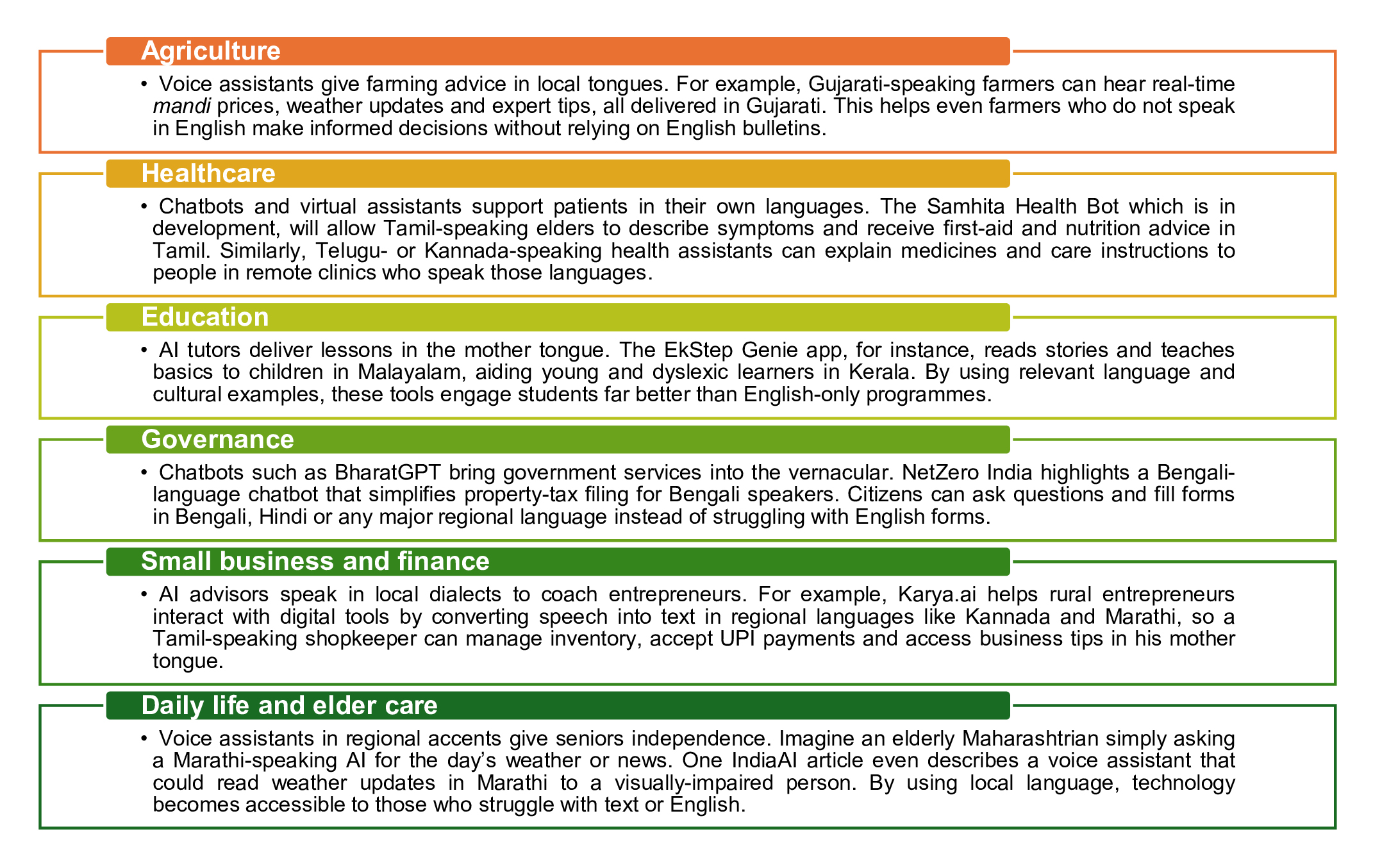
These use cases show how vernacular AI tailors technology to people’s lives. By speaking the local tongue, these apps empower Indians to learn, earn and stay healthy in ways English-only tools cannot.
Progress
Progress is accelerating, with new language models trained on Indian data improving reliability. Google’s Multilingual Representations for Indian Languages (MuRIL) and other Indic natural language processing (NLP) models (such as IndicBERT and Wipro’s Vakyansh) are specifically designed for Indian scripts and contexts. These models are helping AI recognise Indian words and idioms far better. NetZero India reports that these tools rapidly improve AI’s accuracy when it comes to understanding regional inputs. In practice, this means voice transcription, translation and chatbots in Hindi, Tamil, Bengali and other languages are becoming much more accurate as the underlying models evolve.
Tools and platforms
A growing ecosystem of tools is enabling vernacular AI. BharatGPT is one such tool. It is a homegrown AI assistant that can converse in over 10 Indian languages. It aims to be India’s own multilingual ChatGPT, answering questions and handling voice queries in Hindi, Tamil, Bengali and more. On the developer side, open-source libraries are now supporting Indian scripts and voices. Engineers can plug in speech-to-text modules for Gujarati, Telugu or Odia directly into applications, making it easy to add voice-input in those languages.
Indian research projects are also building foundational models. Initiatives such as AI4Bharat and IndicNLP collect text and audio from regional sources to train new AI engines. The projects mentioned above include various activities starting from decoding Dravidian scripts to introducing grammatical rules for Indo-Aryan languages. The outcome is a rising AI stack specially designed for India consisting of speech recognition, translation and conversation systems that have Indian languages as their base. These platforms have made it possible for even small groups and local governments to rapidly put into use the vernacular AI functionalities.
Government initiatives
The government has explicitly backed this vernacular tech push. For example, the Ministry of Electronics’ Bhashini platform (part of the National Language Translation Mission) provides free cloud Application Programming Interfaces (APIs), datasets and models for all 22 scheduled Indian languages. NetZero India notes that Bhashini is providing APIs for developers, open datasets in 22 Indian languages and incentives for AI startups focusing on regional languages. In practice, this means anyone from startups to government agencies can leverage advanced language tools without starting from scratch.
At a higher level, NITI Aayog’s AI roadmap proposes Digital ShramSetu, a mission to empower India’s 490 million informal workers (farmers, artisans, caregivers, etc.) with digital skills and access. ShramSetu explicitly mentions that by 2035, voice-first AI-powered interfaces will shatter barriers of language and literacy, making digital platforms universally accessible. This could mean vernacular e-learning for farmers, voice-based job portals for artisans and mobile helplines in local dialects for rural communities. These flagship programmes signal that policymakers see AI in local tongues as a cornerstone of India's digital inclusion agenda.
The way forward
The path is quite clear: technology has to undergo change that will make it compatible with humans and not the other way round. To put it differently, IndiaAI asserts that creating for native languages is nothing but inclusion and power. By using AI for local language communication, India can have a universal system where all its citizens, irrespective of their wealth, age and living and working in the cities or the countryside can access information, education and e-commerce in their own language. Through the focus on the needs of accessibility, cultural sensitivity and trust, the digital divide will be completely bridged, and citizens from all regions will be truly empowered. Moreover, it will create an actual digital ecosystem that appreciates the beauty of Indian languages.
In such a future, the digital revolution belongs to all. Technology will serve people on their own terms, and India’s rich bunch of languages becomes a strength, not a barrier. With continued investment in vernacular AI models, voice assistants and language tools (supported by smart policy), India can ensure that its next wave of growth “speaks the languages of Bharat” and leaves no one behind.
FAQs
What is vernacular AI and why is it important for India?
Vernacular AI enables technology to understand and respond in local Indian languages. It makes digital platforms accessible to people who are not comfortable with English, helping bridge the digital divide across rural and urban India.
How does AI in local languages help rural communities?
One can ask questions in their native language and get instant answers about weather, prices, health or government schemes. This reduces dependence on others and makes information easy to access.
Which sectors are using vernacular AI the most?
Agriculture, healthcare, education, governance and small businesses are adopting AI in local languages. It helps users get personalised advice, study support or government services in a language they understand best.
What are the main challenges in creating AI for Indian languages?
India has many dialects, accents and limited digital data for several languages, making AI training difficult. Incorrect translations or pronunciations can also affect user trust and reliability.
What is the government doing to support AI in local languages?
Through initiatives such as Bhashini, the government is providing open datasets, language tools and APIs for 22 Indian languages. These efforts aim to make digital services more inclusive and accessible to every citizen.
Partners




