SEARCH
RECENT POSTS
Categories
- Agriculture (39)
- Automobiles (21)
- Banking and Financial services (36)
- Consumer Markets (58)
- Defence (6)
- Ecommerce (21)
- Economy (72)
- Education (14)
- Engineering (9)
- Exports (22)
- Healthcare (25)
- India Inc. (10)
- Infrastructure (31)
- Manufacturing (33)
- Media and Entertainment (17)
- Micro, Small & Medium Enterprises (MSMEs) (16)
- Miscellaneous (31)
- Perspectives from India (37)
- Pharmaceuticals (5)
- Railways (5)
- Real Estate (20)
- Renewable Energy (19)
- Research and Development (12)
- Retail (1)
- Services (8)
- Startups (16)
- Technology (66)
- Textiles (8)
- Tourism (16)
- Trade (9)
Authors






Fire Safety Equipment Market in India Current Trends and Future Outlook
- Sep 10, 2026, 12:55
- Engineering
- IBEF
As the country evolves towards becoming a global manufacturing centre and an economy characterized by robust infrastructure, the importance of safety and security in the country’s construction has been elevated. With the fast-paced growth of high-rise apartment complexes, commercial buildings, factories, logistics parks, airports, and data centres, the urban landscape has been changing while at the same time adding to the complexities involved in fire safety management. In this dynamic scenario, fire safety management is not just about complying with the regulatory requirements but has become one of the essential aspects of sustainable infrastructure development and business continuity.
The growing concern regarding the safety of lives and assets has led to an increased adoption of advanced fire protection systems across different sectors. From intelligent fire detection and automatic fire fighting systems to building management systems, contemporary fire safety management techniques have become an indispensable part of modern constructions. At the same time, India’s regulatory system, based on the National Building Construction Standards (NBCs) guidelines, Bureau of Indian Standards (BIS), and the state fire safety regulation system, keeps emphasizing the regulatory compliance requirements to promote widespread adoption of fire protection systems.
As a result of urbanization, increase in industrial activity, investment in infrastructure, and an increased emphasis on the safety of workplaces and buildings, India's market for fire safety equipment is progressing from conventional methods of fire protection to more intelligent, technology-based fire safety measures. As companies and policy makers begin to realize the need for fire resilience, the fire safety equipment market is poised to become a key contributor to the country's infrastructure growth.
India's Fire Safety Market Overview
The fire safety equipment market of India has evolved from offering regular firefighting products to providing advanced fire protection solutions amid the increasing number of built infrastructures of the country. Currently, fire safety not only involves responding to fires but also constitutes an entire ecosystem of technologies, systems, and services aimed at prevention, detection, containment, and extinguishing fire incidents and preserving occupants and infrastructure from damage. With rising height of commercial buildings, complexity of industrial plants, and interconnectivity of urban infrastructure, fire protection is a basic aspect of construction and operation of buildings and facilities.
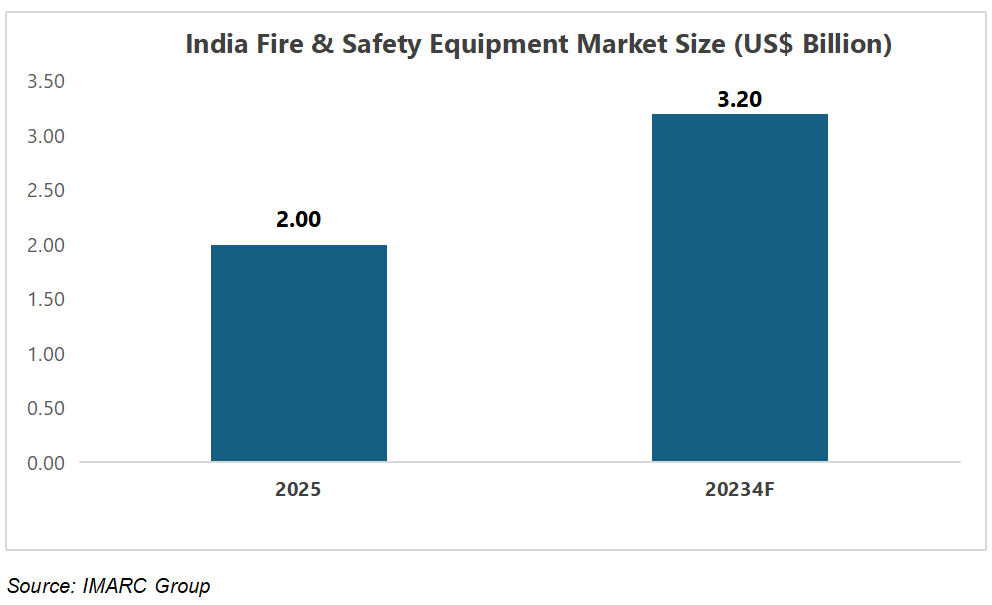
The market reflects this growing importance. According to IMARC Group, the India fire safety equipment market was valued at US$ 2.0 billion in 2025 and is projected to reach US$ 3.2 billion by 2034, registering a CAGR of 5.09% during 2026–2034. This growth is being supported by rising infrastructure investments, stricter fire safety regulations, increasing awareness of workplace safety and the adoption of advanced fire protection technologies across diverse end-use sectors.
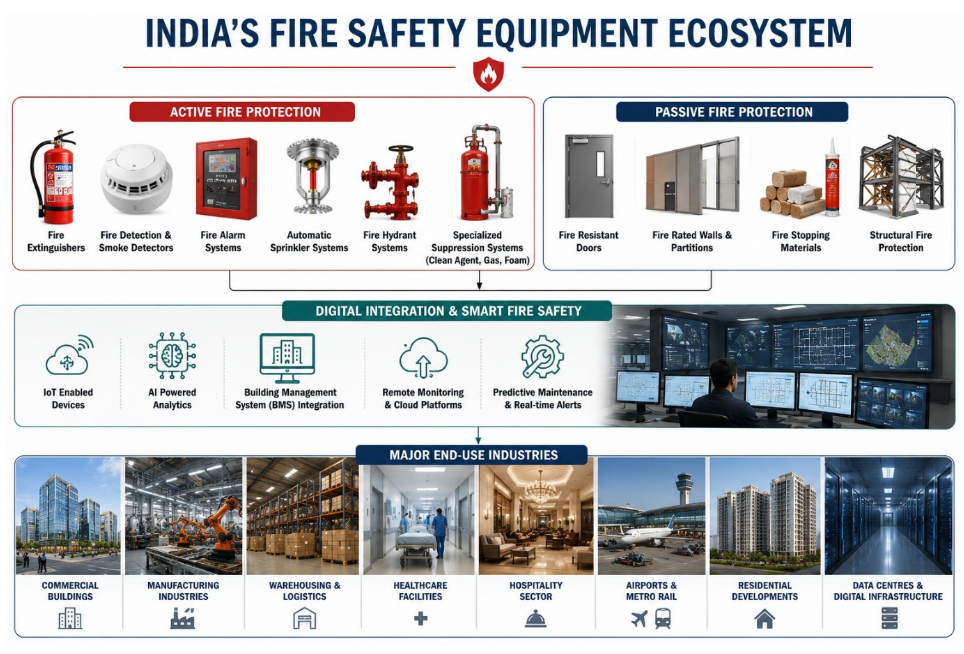
Active fire protection solutions that react to fire emergencies and passive fire protection solutions that control fire spread are the major segments of the Indian fire safety equipment market. Fire extinguishers, sprinklers, fire hydrants, detectors, alarm systems, and clean-agent extinguishers belong to active fire protection, while fire doors, fire-rated walls, compartmentalization, and fire-resistant structures belong to passive protection. Gradually, fire protection systems are being integrated into digital building management systems and thus enable fire incidents' detection, prevention, and quick reaction to emergencies.
There are different end-users of fire safety equipment, including commercial properties, manufacturing industry, healthcare sector, hotels and resorts, educational establishments, logistics facilities, transportation systems, and residences. The new segments such as data centers, semiconductor production facilities, electric vehicles' production sites, and large warehouses also offer many possibilities for development of advanced fire protection solutions owing to complex conditions of operations and high value of assets. Evolving building codes, growing awareness of workplace safety issues, and constant infrastructure investments make the Indian fire safety equipment market move towards smart solutions and technological developments.
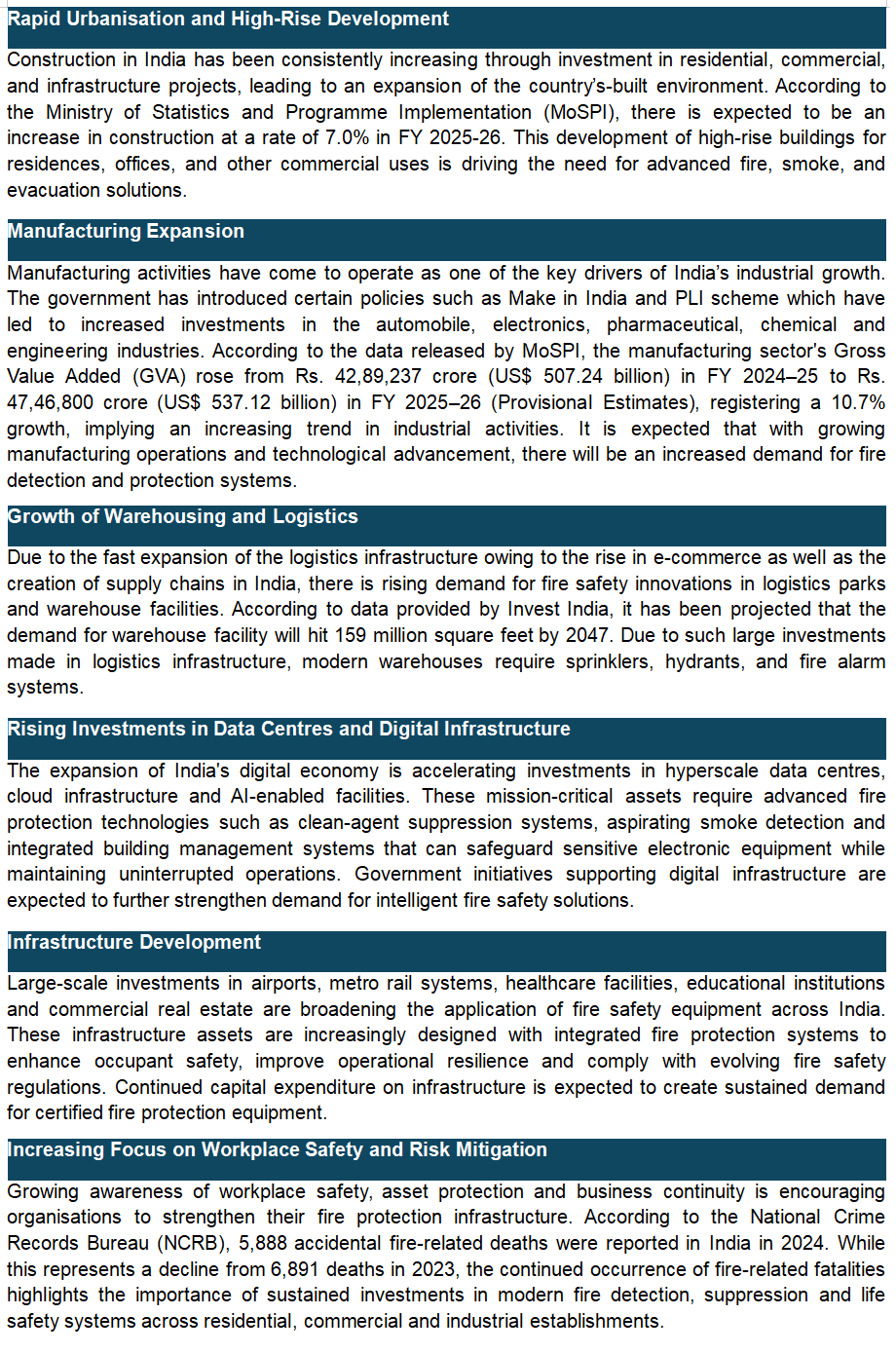
Growth Drivers Reshaping India's Fire Safety Equipment Market
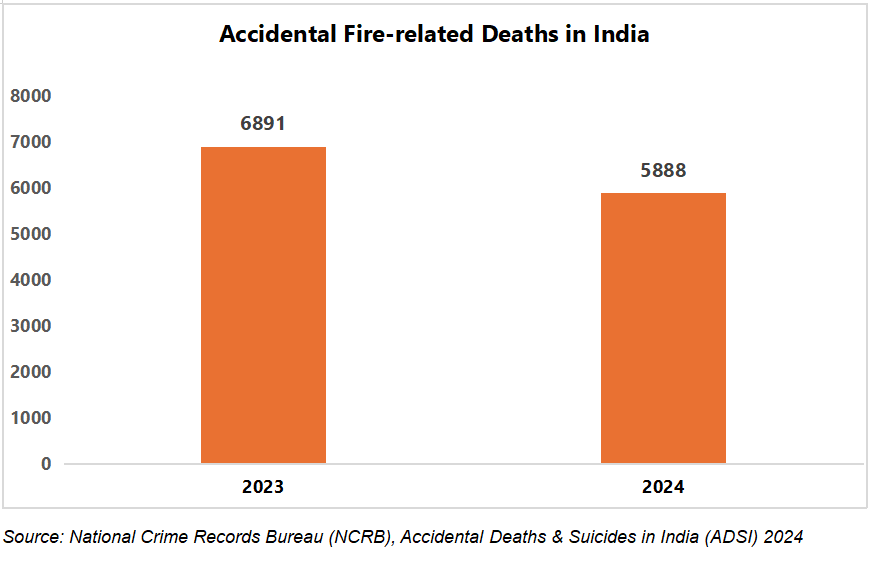
The Indian fire safety equipment market is being driven by the rapid pace of urbanization, development of infrastructure, growth in the industry sector and smart buildings technology. With increasing complexities and dimensions of the Indian built environment, fire safety is shifting from being an obligation to being an integral part of the infrastructure.
The Road Ahead: The Future of Fire Safety in India
The market for fire safety equipment in India is set to grow in the years ahead due to the increasing pace of urbanization, industrialization, and digitization which will keep transforming India's physical landscape. Protection against fires is increasingly becoming an important part of building infrastructure, ensuring continuity of business operations, and ensuring safety of residents, instead of just being another compliance requirement. This factor is expected to lead to increased usage of advanced fire protection systems.
In the years to come, the fire safety equipment market in India is expected to see increased adoption of IoT-based fire detection systems, AI-based monitoring tools, Building Management Systems (BMS), and cloud-based fire safety equipment. These systems would be instrumental in enabling effective real-time monitoring of the situation, maintenance through predictive analytics and fast response during emergency situations.
Additionally, sustainability factors are likely to impact the future course of evolution of fire protection systems. With India progressing towards construction of greener buildings, sustainable cities, and energy efficient infrastructure, there is expected to be increased demand for environmentally sustainable fire suppression systems, smart monitoring tools, and digitally integrated fire safety equipment.
Due to increased investments in infrastructure development, stringent regulations around building safety, and increasing awareness about safety of people and assets, India's market for fire safety equipment is set for growth in the years ahead. The ongoing trends of smart buildings and intelligent infrastructure will result in fire protection systems becoming an important part of sustainable development.
FAQs
What is the current size of India's fire safety equipment market?
According to IMARC Group, the India fire safety equipment market was valued at US$ 2.0 billion in 2025 and is projected to reach US$ 3.2 billion by 2034, registering a CAGR of 5.09% during 2026–2034. Growth is supported by infrastructure expansion, stricter fire safety regulations and increasing adoption of smart fire protection systems.
What is driving the growth of India's fire safety equipment market?
India's market is expanding due to rapid urbanisation, industrialisation and infrastructure development. MoSPI estimates the construction sector will grow by 7.0% in FY2025–26, creating significant demand for advanced fire detection, suppression and monitoring systems.
Which sectors offer the biggest opportunities for fire safety equipment manufacturers?
Commercial buildings, manufacturing, warehousing, healthcare, airports, metro rail, hospitality and data centres are among the fastest-growing end users. These sectors require advanced fire protection systems to safeguard people, assets and business operations.
How are regulations shaping India's fire safety equipment market?
The National Building Code (NBC), BIS standards and state fire regulations are strengthening compliance across buildings and industries. These frameworks are driving investments in certified fire detection, alarm and suppression systems.
How is technology transforming fire safety systems?
Fire safety is becoming smarter through IoT-enabled sensors, AI-powered analytics, cloud monitoring and Building Management Systems (BMS). These technologies improve early detection, enable predictive maintenance and support faster emergency response.
Partners