SEARCH
RECENT POSTS
Categories
- Agriculture (37)
- Automobiles (20)
- Banking and Financial services (35)
- Consumer Markets (57)
- Defence (6)
- Ecommerce (21)
- Economy (72)
- Education (14)
- Engineering (8)
- Exports (21)
- Healthcare (25)
- India Inc. (10)
- Infrastructure (31)
- Manufacturing (32)
- Media and Entertainment (16)
- Micro, Small & Medium Enterprises (MSMEs) (16)
- Miscellaneous (31)
- Perspectives from India (37)
- Pharmaceuticals (5)
- Railways (4)
- Real Estate (20)
- Renewable Energy (19)
- Research and Development (12)
- Retail (1)
- Services (7)
- Startups (16)
- Technology (66)
- Textiles (8)
- Tourism (16)
- Trade (8)
Authors






How National Highways Are Strengthening India’s Transportation Infrastructure
- Jun 18, 2026, 11:10
- Infrastructure
- IBEF
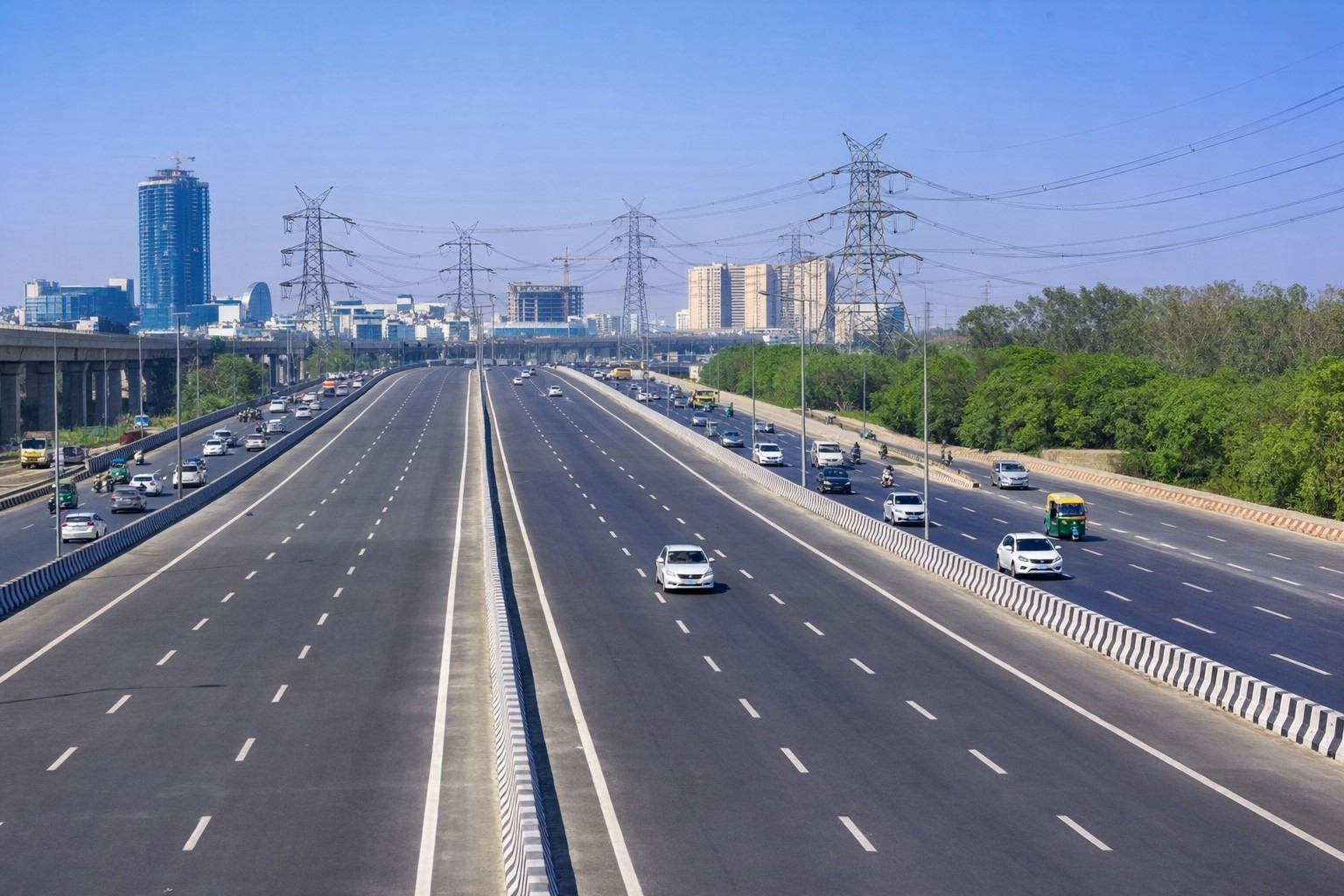
The construction of transportation facilities in India is taking place through expansion of its national highways which have increased to more than 1.46 lakh km as of December 2025, compared to 91,287 km in 2013-14, thereby recording a growth rate of about 60%. This has taken place because of the change in the construction of road transport facilities in favour of good policy environment. National highways are expected to be very important in helping achieve the objectives of the improved transport system that India is working towards establishing.
Significance: Driving Economic Efficiency, Connectivity, and Investment
National highways are crucial for the Indian economy, as they link manufacturing centers and markets efficiently, thereby reducing logistics and supply chain costs.
The government’s ongoing investment shows the strategic importance of these highways, as seen in the Union Budget. In the Union Budget 2026-27, the total allocation for roadways was Rs. 3,09,875.30 crore (about US$ 33.2 billion). This amount is a significant part of the overall spending on infrastructure. Highways and play a key role in economic development and improving connectivity in semi-urban and rural areas. The use of digital systems has greatly improved the user experience.
The adoption of digital systems has led to a significant improvement in user experience. There are currently over 8 crore users of FASTag, representing approximately 98% penetration and providing a frictionless way of collecting toll receipts for users. The FASTag Annual Pass, launched in August 2025, has already exceeded 25 lakh users and recorded 5.67 crore transactions in the first two months. Integrated digital systems are being used across the planning, construction, and maintenance of highways, which will improve efficiencies throughout the entire lifespan of highways.
Industry Overview
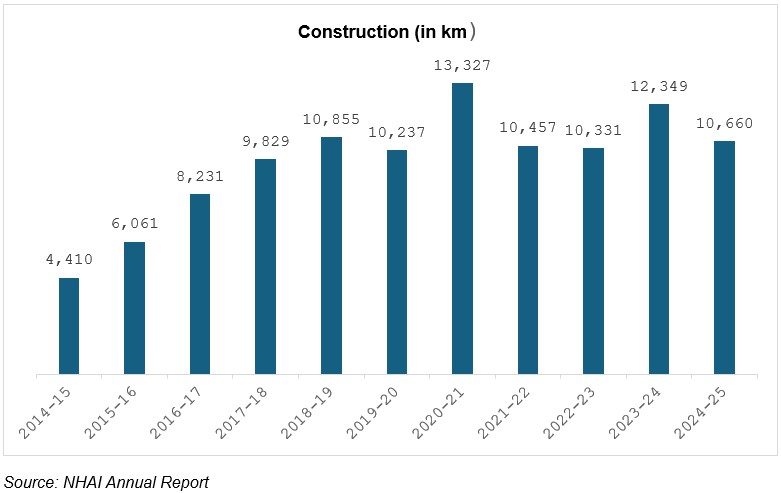
There have been many improvements in national highway construction in India over the last decade, which has risen from 4,410 km in 2014-15 to 10,660 km in 2024-25. The maximum construction occurred during 2020-21, wherein there were constructions of 13,327 km, after which there were slight variations during subsequent years.
Infrastructure development in India has been achieved with the help of large investments by both the government and private players. Capital investments made towards infrastructure development are projected to rise to Rs. 11.11 lakh crore (US$ 123.4 billion), accounting for 3.4% of the country's GDP. The total investments made towards infrastructure development would be more than doubled to Rs. 142.9 lakh crore (US$ 1.59 trillion) in 2030.
Investments from the private sector are expected to improve further through different types of contracts (Engineering, Procurement & Construction Model (EPC), Hybrid Annuity Model (HAM), and Toll Operate Transfer (TOT)). Private companies secured highway contracts worth Rs. 53,983 crore (US$ 6.28 billion) in January 2025 alone, accounting for almost 58% of all contracts awarded during that period. The sector’s financing ecosystem has strengthened with the adoption of asset monetisation initiatives. The NHAI has monetised assets worth Rs. 1.52 lakh crore (US$ 17.88 billion) through the TOT and InvIT routes and raised Rs. 42,334 crore (US$ 4.98 billion) in FY24.
In addition to this, the proposed launch of a public InvIT by 2026 is anticipated to add to the capital inflows. In the coming years, the public private partnership (PPP) projects on highways worth 13,400 kilometers, with investment worth Rs. 8.3 lakh crore (US$ 92.2 billion) in the coming three years, highlight the bright future prospects of the sector.
Government Initiatives and Policy Support
The Indian government has created an excellent platform for infrastructure development through its efforts like Bharatmala Project.
Bharatmala’s main concern would be to enhance connectivity in terms of freight transportation through developing multimodal and fast corridors. The first phase of the project, which involves 34,800 km of roads linking up to 80 percent of districts in India, 17,411 km of roads have already been successfully completed.
To complement this, the Government has begun administration of Multimodal Logistics Parks (MMLPs), which are being constructed throughout the nation, with a total estimated cost of approximately Rs. 46,000 crore (US$ 5.5 billion). These 35 MMLPs are projected to move nearly 700 million metric tonnes of cargo currently through India's interstate corridors and to assist in increasing the efficiency of India's logistics network. The Port Connectivity Masterplan also identifies 59 port connectivity projects covering a total distance of approximately 1,300 km, focused on increasing ‘last mile connectivity’ to ports and facilitating smoother transport of cargo through major trade corridors.
Growth Drivers and Key Trends
The following factors are driving the expansion and shaping the evolution of India’s national highway ecosystem:

Outlook and Road Ahead
The expansion of India's highway network is changing from being concentrated on building more roads to being focused on building better roads. The government has outlined plans to expand the national highway network through continued additions and upgrades. In addition, it aims to significantly increase the length of access-controlled highways from around 4,000 km at present to a substantially higher level over the long term.
Future improvements will focus on enhancing safety, improving the highway network, and upgrading service quality for travellers. Monetization of India’s national highways and greater private-sector involvement in the industry would continue to ensure investment in the segment. Future infrastructure development would make India's national highways an important instrument for further economic growth.
FAQs
How has India’s national highway network expanded?
It has grown from 91,287 km in 2013–14 to over 1.46 lakh km.
Why are highways important for the economy?
Highways are crucial because they enhance connectivity, reduce costs, and facilitate the flow of goods.
What role does technology play in highways?
Technology such as FASTag allows for effortless toll payment and enhanced traffic control.
What is Bharatmala Pariyojana?
Bharatmala Pariyojana is a flagship scheme that concentrates on enhancing connectivity through economic corridors.
What will be the future scenario for highways in India?
The highway network is anticipated to increase to more than 200,000 kilometers by 2037.
Partners