SEARCH
RECENT POSTS
Categories
- Agriculture (39)
- Automobiles (20)
- Banking and Financial services (36)
- Consumer Markets (57)
- Defence (6)
- Ecommerce (21)
- Economy (72)
- Education (14)
- Engineering (9)
- Exports (22)
- Healthcare (25)
- India Inc. (10)
- Infrastructure (31)
- Manufacturing (33)
- Media and Entertainment (17)
- Micro, Small & Medium Enterprises (MSMEs) (16)
- Miscellaneous (31)
- Perspectives from India (37)
- Pharmaceuticals (5)
- Railways (4)
- Real Estate (20)
- Renewable Energy (19)
- Research and Development (12)
- Retail (1)
- Services (7)
- Startups (16)
- Technology (66)
- Textiles (8)
- Tourism (16)
- Trade (9)
Authors






Millets Economy in India: From Nutrition to Global Demand
- Aug 27, 2026, 18:45
- Agriculture
- IBEF
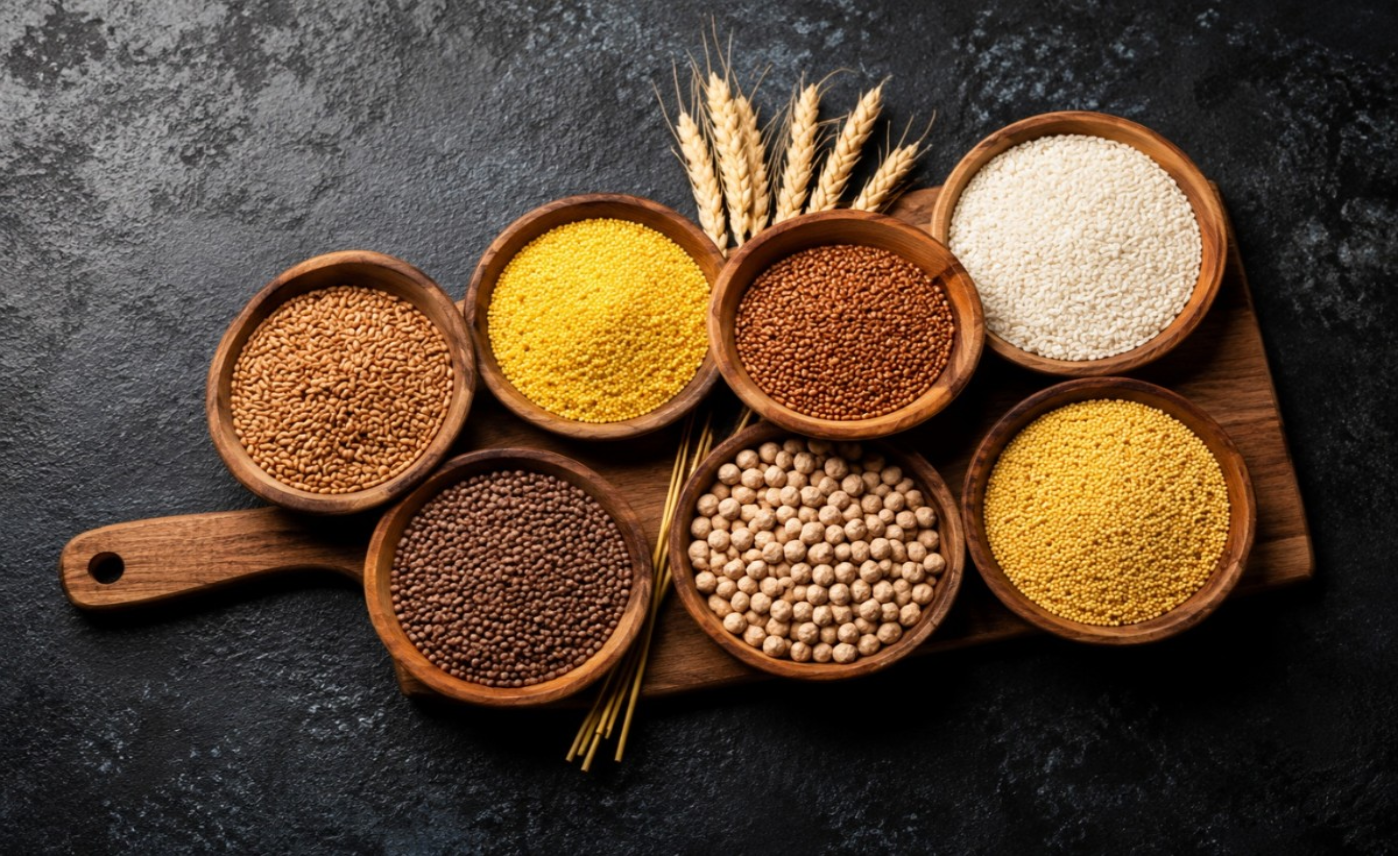
Millets, referred to as nutri-cereals, have been identified as an integral part of India's food security and nutritional status, and sustainable agricultural development. Characterized by essential nutritional value and climate resilience, millets are becoming popular among consumers and policymakers, in addition to being marketed internationally. India has established itself as the top producer of millets globally with a production of 42.75% of the world's production, which is 180.15 lakh tonnes in the year 2024-25. This position is attributed to favorable agro-climatic factors and government policies and efforts towards promoting cultivation, processing and export of millets, thus solidifying India's leadership in the world of millets. Increasing consumer interest in healthy and climate-resistant foods, is creating opportunities in the value chain of millets right from farm production through food products and exports.
India's Position in Global Millet Production
India is the largest producer of millets in the world with 42.75% of global production of millets as reported by FAO data quoted in APEDA. In addition, India produces 38.4% of the world's production of pearl millets (bajra), thus establishing its leadership in the global millet economy. The production of millets in India stood at 180.15 lakh tonnes (18.01 million tonnes) in 2024-25, increasing by 4.43 lakh tonnes compared to the previous year.
Millet production occurs mostly in the dry areas of India, with Rajasthan as the major producer followed by Maharashtra and Karnataka. Of the total production of millets, bajra accounts for about 60.3% of the total production, with jowar, ragi and other small millets forming the rest of the production. The area under cultivation for millets is 12.86 million hectares in 2024-25, demonstrating the importance of this crop in the Indian agriculture. With the favorable agro-climatic conditions and promotion of nutri-cereals through government policies and initiatives, India is establishing itself as the global leader in millets production.
Global Market and Export Performance
The global market of millets shows consistent growth fueled by an increasing demand for nutritious, gluten-free, and climate-resistant products. In 2025, the global market of millets was evaluated at Rs. 1.16 lakh crore (US$ 12.60 billion) and reached Rs. 1.22 lakh crore (US$ 13.22 billion) in 2026, and projections show its growth to Rs. 1.54 lakh crore (US$ 16.78 billion) in 2031 at the pace of the compound annual growth rate of 4.89%. The market of Asia-Pacific region is considered the largest one owing to high production and consumption of millets in India and other Asian countries.
India's position in the global market of millets becomes stronger. According to statistics gathered by APEDA and DGCIS, the country exported 1.21 lakh metric tonnes of millets worth Rs. 500.81 crore (US$ 59.23 million) in FY25. Main destinations include the UAE, Saudi Arabia, Nepal, the USA, Germany, Bangladesh, and Libya. Besides traditional bulk grain export, growing demand for healthy food, snacks, ready-to-cook meals, and other products allows India to promote value-added export and to develop as the leading producer of the millet products on the international market.
Nutritional and Climate Advantages of Millets
Millets are becoming popular not only due to their nutritional value but also because of climate resilience. These crops provide nutrients and are an integral part of sustainable agriculture. Being rich in proteins, dietary fiber, amino acids, B-complex vitamins, and such minerals as iron, calcium, magnesium, zinc, and phosphorus, millets have also some beneficial bioactive compounds and antioxidants which make them valuable food products. Gluten-free property and low glycemic index make millets especially valuable for people with diabetes and celiac disease as well as for health-concerned consumers.
Apart from nutrients, there are some environmental benefits associated with millets. They require less water in comparison with other cereal plants; also, they can be grown on marginal and low-fertility soil and are highly resistant to drought, heat, and unpredictable rains. Such properties of millets are important due to climate issues related to water scarcity, climate changes, and sustainable development of agriculture.
Government Initiatives Supporting the Millet Ecosystem
The Government of India has adopted a comprehensive approach to strengthen the millet ecosystem by supporting cultivation, processing, value addition, research, procurement and exports.
1.Support for Cultivation
National Food Security and Nutrition Mission (NFSNM)
The Government of India has come up with a holistic strategy to strengthen the millet ecosystem through activities in cultivation, processing, value addition, research, procurement, and export.
2. Processing and value chain support
a) PM Formalisation of Micro Food Processing Enterprises (PM-FME)
Under PM-FME scheme, micro food processing enterprises, including those dealing with millets, are assisted with financial, technological and marketing support. The scheme has allocation of Rs. 2,000 crore (US$ 236.52 million) in 2025-26 for value addition and processing infrastructure.
b) Production Linked Incentive for Millet-Based Products (PLISMBP)
Under PLISMBP Scheme, the production of ready-to-eat and ready-to-cook millet-based products is encouraged to achieve value addition and linkage of farmers with processors. Rs. 793.27 crore (US$ 93.81 million) have been sanctioned to 29 companies for growth of millet processing and its domestic as well as export market.
3. Export Promotion and Marketing
APEDA coordinates to develop the international market for Indian millets through export promotion, international engagement and collaboration with other stakeholders. With allocation of Rs. 80 crore (US$ 8.70 million) in 2025-26, APEDA helps exporters, processors and startups in various ways like Export Promotion Forums (EPF) and launching millet portal to give information about production, nutritive value, exports and list of registered exporters.
4. Research and Development
ICAR-Indian Institute of Millets Research (IIMR), Hyderabad acts as national research body for millets in India and has been declared as Global Centre of Excellence for Millets during International Year of Millets 2023. IIMR is involved in the development of high-yielding varieties of millets and climate-resilient farming practice and millet-based Farmer Producer Organizations (FPOs). It helps in expansion of millet cultivation, increased productivity and awareness regarding nutrition provided by millets through state government agencies and agricultural institutions.
5. Public Distribution and Procurement
Millets are increasingly incorporated into the Indian food security framework by way of the Pradhan Mantri Garib Kalyan Anna Yojana (PM-GKAY) and the National Food Security Act (NFSA). The government can distribute millets through the Public Distribution System (PDS) as a substitute for rice and wheat, contributing both to nutritional security as well as market demand for the produce of millet farmers. The PM-GKAY received an allocation of Rs. 2.03 lakh crore (US$ 24.00 billion) for 2025-26.
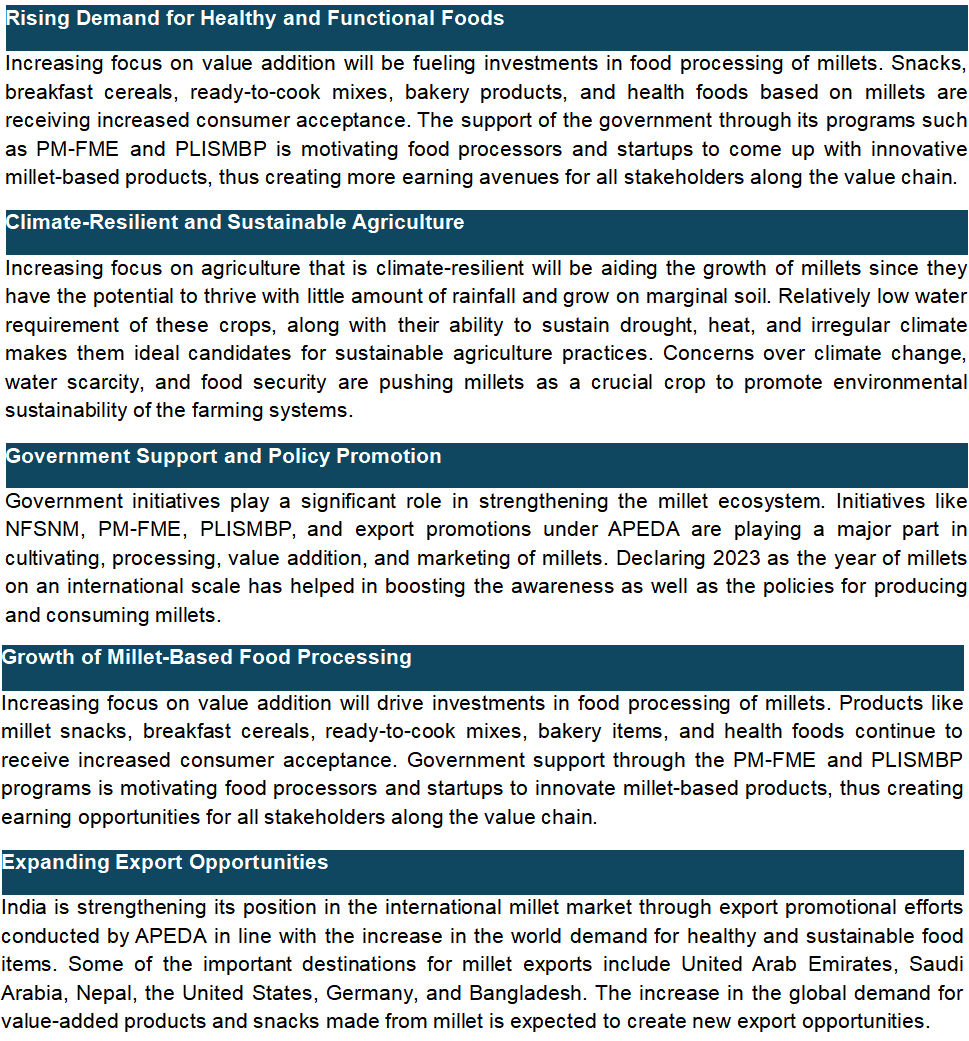
Growth Drivers and Key Trends
Outlook and Road Ahead
It is evident that India can maintain its position as the leader of the world's millet market through further expansion in production, processing, and value-added exports. Growing awareness among consumers about nutritional value, increasing demand for climate-resilient crops, and growing opportunities in the manufacturing of millet-based food products are expected to lead to sustained market expansion. Various government programs in the fields of cultivation, food processing, research, procurement, and export promotion are contributing towards creating an effective industry ecosystem. With the continued rise in demand for healthy and sustainable foods globally, millets are expected to play an increasingly significant role in improving farmers' incomes and ensuring food and nutrition security.
FAQs
Why are millets considered important for food and nutrition security?
High amounts of protein, fiber, vitamins, iron, and other essential nutrients in millets are the reason for their significant nutritional value and make them one of the essential components in ensuring food and nutrition security due to their climate-resilience.
What is India's position in global millet production?
India takes first place among all countries producing millets, with its share equaling 42.75% of total millet production and 38.4% of total pearl millet production, according to FAO's statistics presented by APEDA.
Which government initiatives support millet cultivation and value addition?
The most popular policies that can be considered are the NFSNM program, the PM-FME scheme, the PLISMBP scheme, export promotion efforts by APEDA, and various research conducted by ICAR-IIMR.
What are the major export markets for Indian millets?
The export destinations for Indian millets are such countries as the UAE, Saudi Arabia, Nepal, the USA, Germany, Bangladesh, and Libya due to the increase in global demand for healthy food.
What are the future growth opportunities for the millet sector in India?
Some factors which contribute to growth include increasing consumer demand for nutritious products, climate-resilient agricultural practices, developing value-added millet products, and export opportunities.
Partners