SEARCH
RECENT POSTS
Categories
- Agriculture (37)
- Automobiles (20)
- Banking and Financial services (36)
- Consumer Markets (57)
- Defence (6)
- Ecommerce (21)
- Economy (72)
- Education (14)
- Engineering (8)
- Exports (21)
- Healthcare (25)
- India Inc. (10)
- Infrastructure (31)
- Manufacturing (32)
- Media and Entertainment (16)
- Micro, Small & Medium Enterprises (MSMEs) (16)
- Miscellaneous (31)
- Perspectives from India (37)
- Pharmaceuticals (5)
- Railways (4)
- Real Estate (20)
- Renewable Energy (19)
- Research and Development (12)
- Retail (1)
- Services (7)
- Startups (16)
- Technology (66)
- Textiles (8)
- Tourism (16)
- Trade (8)
Authors






Transforming Spaces: The Growth and Opportunities in India’s Home Décor Industry

- Dec 30, 2025, 11:35
- Consumer Markets
- IBEF
India’s home décor industry is evolving into one of the most dynamic and influential segments in the consumer market. Rising incomes, rapid urbanisation and a growing appetite for premium and stylish items are driving growth in this sector. The home décor industry is a high-Stock Keeping Unit (SKU) industry, as every person has a unique taste and preference in decorating their homes. Some like minimalism, while others feel at home in vibrant spaces. Some keep it old school, while others like ultra-modern interiors.
This segmentation makes home décor a multibillion-dollar industry, with consumer tastes and fashion trends changing and evolving continuously. Fuelled by e-commerce, social media and Indo-Western trends, India’s home décor market is poised for robust growth, creating opportunities along the way.
The Indian home décor landscape
The home décor market in India, with a value of Rs. 2,26,415 crore (US$ 25.50 billion) in 2024, is set for steady growth. The IMARC Group estimates that this market will expand to Rs. 3,62,263 crore (US$ 40.80 billion) by 2033, with a Compound Annual Growth Rate (CAGR) of 5.40% between 2025 and 2033. This expansion underscores the increasing need of trendy and practical living spaces with changing consumer preferences and tastes.
While the global home décor market is estimated at Rs. 50,32,617 crore (US$ 566.8 billion) in 2025, it is expected to reach Rs. 51,53,372 crore (US$ 580.4 billion) in 2026 and Rs. 63,73,346 crore (US$ 717.8 billion) in 2035 with a CAGR of 2.4% between 2026 to 2035, according to Business Research Insights.
India has emerged as a global powerhouse in the home décor space, ranking as the second-largest exporter of home décor in the world by volume. By July 14, 2025, around 20,940 shipments of hand-made, factory-made products were exported from India. The increasing global presence is a testimony that India is capable of blending traditional and contemporary styles, which has made it a favourite import source among various nations.
Domestic market dynamics
India’s home décor industry remains highly fragmented, with smaller workshops, family-run businesses and regional handicraft sellers coexisting alongside bigger organised retail brands.
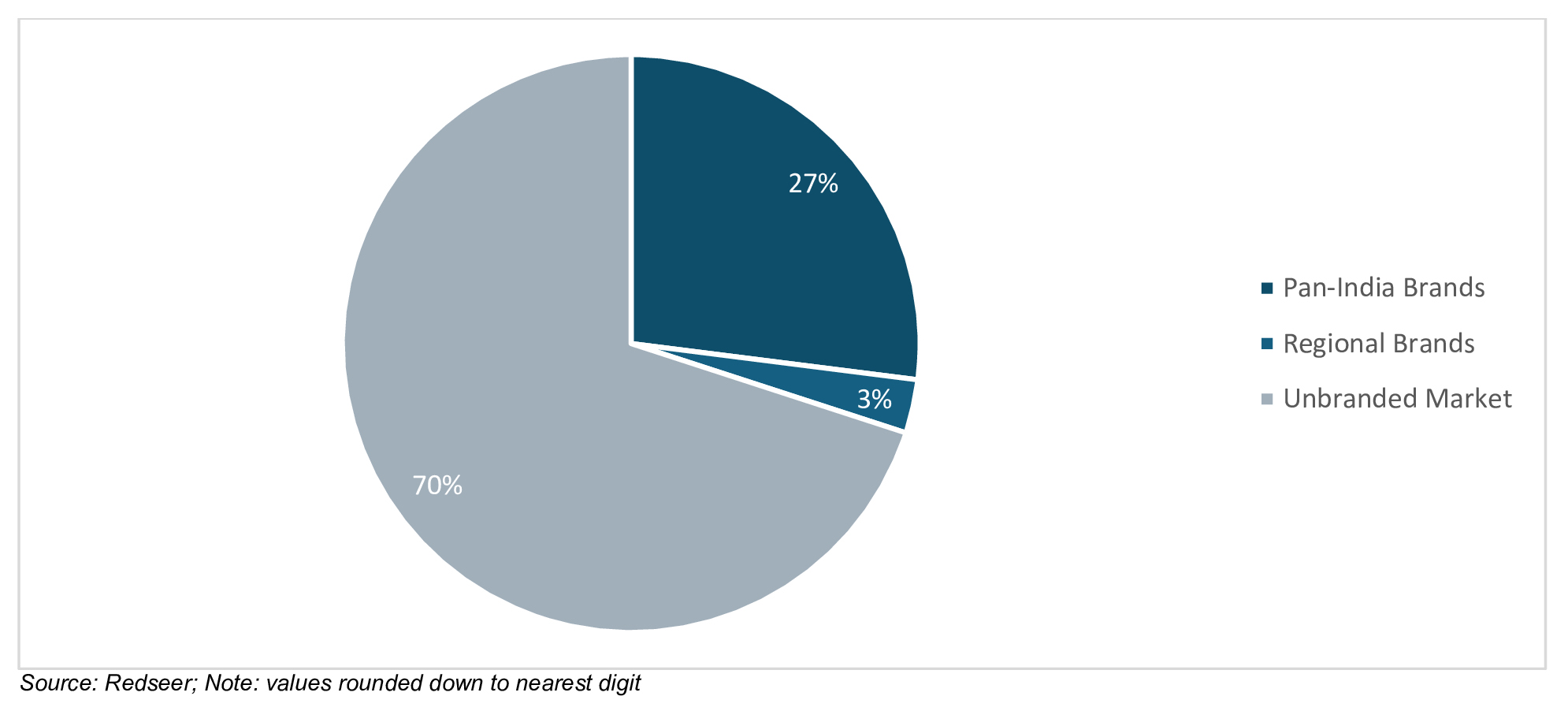
Home décor is highly personalised, resulting in variations across markets and designs that differ from vendor to vendor. Different regions specialise in unique crafts: Rajasthan in blue pottery and textiles, Bihar in Madhubani paintings and Kerala in woodwork. This diversity enriches the market and drives global demand for Indian products.
Consumer preferences
The Indian home décor industry is evolving rapidly. Consumers desire something more than just simple, bare furniture and décor. They desire things that suit their own style, make them feel at home and fit their life. This change is based on a number of primary trends:
- Personalisation: The Indian consumer today prefers home products that have a story to tell. They like modular furniture that suits their likings and apartments, made to-fit curtains, wallpapers and rugs that suit their colour preferences.
- Premiumisation: Consumers today consider décor a symbol of a fashionable life. As individuals earn more, they are ready to pay a higher price for branded, high-quality and personalized décor for their homes.
- Artisanal Products: Products that are handmade are always a favourite among affluent customers. Handmade products reflect the workers efforts which mass produced products fail to provide. Recently due to Make in India initiative crafts that are more authentic and have a cultural connect are being revived in order to support the local artisans.
- Technology Integration: Smart décor is increasing with the increased tech-connectivity of Indian homes. Customizable lights, mood lamps, voice-activated gadgets and tech enabled furniture are becoming increasingly popular among consumers. AI and IoT is making everything centralized so that multiple electronic devices can be controlled by just one app on your phone.
In general, consumers are shifting off of plain furniture to experience-based interiors. The market is now demanding products that are stylish, functional, unique and technologically advanced.
Opportunities
The growth of India’s home décor industry has great potential and is unlocking new opportunities across the value chain which benefit everyone from artisans and manufacturers to exporters and digital platforms.
- Platform-Driven Models
The way consumers purchase décor is evolving through online and direct-to-consumer (D2C) platforms. Retailers now do not need a large store to display giant catalogues of products, including basic furniture and luxury goods. For example, IKEA’s online store in India allows customers to view thousands of items and apply augmented reality (AR) to visualise furniture in their rooms. Pepperfry a home-grown startup also combines online discovery and physical showrooms. These features simplify, enhance and personalise the shopping experience.
- Supply-Chain Visibility
Clear supply chains and good logistics provide customers with high product quality, quick delivery and increased satisfaction. Retailers also benefit in terms of inventory management and reliable and safe delivery, especially in furniture and handmade products where timeliness and quality are important.
- Sustainability a growing trend
Consumers today are now increasingly making environmentally conscious choices and prefer sustainable products over normal ones. Sustainable practises can help retailers create a unique brand image and offer a wider range of products. Young, environmentally conscious consumers prefer products that are both stylish and sustainable, like bamboo furniture, hemp fabrics, recycled fabrics or sustainably sourced wood. IKEA and many others are aiming towards becoming a circular business in order to reduce wastage and recycle the existing products.
Sustainability today does not just make good ethics, it also provides a definite competitive edge in the market. These opportunities demonstrate how technology, effective supply chains and sustainable decisions can build trust, attract shoppers and shape the future of home décor in India.
Looking forward
The home décor industry in India is on the verge of a new age, where the old and the new merge smoothly, and sustainability influences consumer preferences. In the coming years, the industry will likely report stable, organic growth as incomes increase, lifestyles change and technology changes how people shop and design their spaces. The business is not only in selling products but also in creating experiences that make homes more personal, functional and future-ready. As the industry continues to grow, creative, sustainable and digital-first players will shape the next phase of the Indian journey in transforming every square foot into a story and every space into a home.
FAQs
Why is India considered a global hub for home décor exports?
India ranks as the second-largest exporter of home décor globally, with 20,940 shipments recorded as of July 14, 2025. The country’s ability to blend traditional craftsmanship with modern designs makes its products highly sought after in international markets.
What is the current size of India’s home décor market?
India’s home décor market was valued at Rs. 2,26,415 crore (US$ 25.50 billion) in 2024 and is expected to reach Rs. 3,62,263 crore (US$ 40.80 billion) by 2033, expanding at a CAGR of 5.40% between 2025 and 2033.
How do regional crafts contribute to India’s home décor industry?
Regional specialities define India’s home décor market. For example, Rajasthan is famous for blue pottery, Bihar for Madhubani paintings and Kerala for woodcraft. These diverse styles strengthen domestic demand and boost India’s global reputation.
What are the key opportunities in India’s home décor market?
Opportunities exist in online and D2C platforms, efficient supply chains for timely delivery and sustainability as a market differentiator. These create space for retailers, artisans, exporters and startups to scale.
How does India’s cultural heritage impact its home décor market?
India’s ability to merge its deep cultural heritage with modern designs makes its décor globally appealing. The revival of authentic crafts aligns with the Make in India vision, boosting both domestic and international demand.
Partners