SEARCH
RECENT POSTS
Categories
- Agriculture (39)
- Automobiles (20)
- Banking and Financial services (36)
- Consumer Markets (57)
- Defence (6)
- Ecommerce (21)
- Economy (72)
- Education (14)
- Engineering (9)
- Exports (22)
- Healthcare (25)
- India Inc. (10)
- Infrastructure (31)
- Manufacturing (33)
- Media and Entertainment (17)
- Micro, Small & Medium Enterprises (MSMEs) (16)
- Miscellaneous (31)
- Perspectives from India (37)
- Pharmaceuticals (5)
- Railways (4)
- Real Estate (20)
- Renewable Energy (19)
- Research and Development (12)
- Retail (1)
- Services (7)
- Startups (16)
- Technology (66)
- Textiles (8)
- Tourism (16)
- Trade (9)
Authors






Why India Is Emerging as a Global Sourcing Hub for Textiles
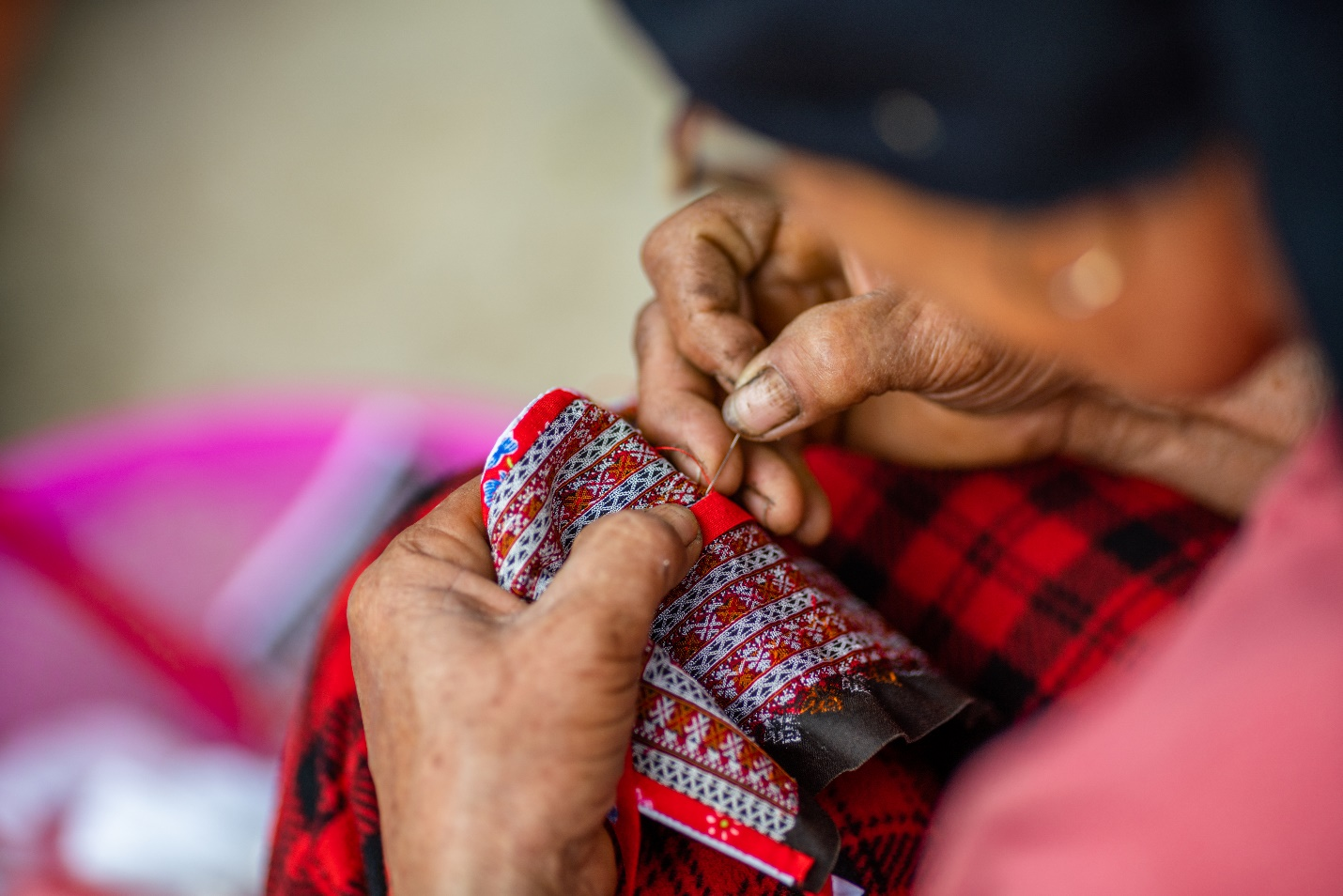
India’s textile industry is quickly weaving a new story on the world stage. Once heavily reliant on China, many global buyers are now turning to India. Indian firms such as Arvind have recently reported strong profit growth as global brands increase sourcing from India instead of China. United States (US) and European apparel companies are diversifying supply chains amid geopolitical tensions in other markets, and India’s large, established textile base is well positioned to meet that demand.
Government initiatives, including Make in India, have strengthened infrastructure and provided incentives across the textile value chain. Today, the sector contributes ~2.30% of India’s Gross Domestic Product (GDP) and employs ~45 million people. With strong policy support and a sizeable workforce, India is rapidly cementing its role as a preferred global sourcing destination for textiles.
Strength in raw materials of India
India is also blessed with natural and synthetic fibres, which provide a stable raw-material advantage.
India is the largest global cotton producer with output consistently among the highest. In 2024, the Cotton Corporation of India procured ~42.11 lakh bales of cotton, at Rs. 16,215 crore (US$ 1.8 billion) at Minimum Support Price (MSP). This procurement served ~7.75 lakh farmers and guaranteed stable supplies to mills.
India also has the second largest production of raw silk in the world. In 2023-24, silk production reached ~38,900 tonnes, compared to 26,480 tonnes in 2013. The country is also the largest producer of jute in the world and a major producer of wool.
On the synthetic side, India has developed huge manufacturing capacity in synthetic fibres. It manufactures ~1,700 million kg of synthetic fibres and 3,400 million kg of filaments each year, such as polyester, viscose and nylon. Good domestic supply minimises the reliance on imports and makes the cost of production competitive.
These strengths, combined, cotton and silk, polyester and rayon, form one of the most extensive fibre-to-yarn global pipelines. This advantage is further enhanced by continued investments such as the establishment of new cotton varieties and research centres.
Price competitiveness and size
The textile clusters enjoy the advantage of large scale and integrated operations that keep the costs low and the productivity high. India is the second-largest textile manufacturer in the world, and it has thousands of mills and a wide manufacturing ecosystem. The spinning capacity alone is more than fifty million spindles, which provides the country with one of the largest yarn production in the world.
This cost advantage is centred on labour. The textile and apparel industry is the second-largest employer after agriculture with ~45 million people employed as of 2024. The level of wages is moderate as per international standards, which allows competitive prices.
In India, ~80% of the textile capacity is in Micro, Small and Medium Enterprises (MSMEs) that exploit shared services and local supply chains. Other schemes such as the Amended Technology Upgradation Fund Scheme (ATUFS) with a budget of Rs. 17,822 crore (US$ 1.97 billion) are used to modernise machinery and the cost of imported equipment is reduced by customs exemptions. These improvements allow more output per employee, increasing India’s global competitive standing.
Emergence of sustainable and traceable textiles
Traceability and sustainability are now a necessity among global fashion brands and India is doing a lot in this regard.
The Kasturi Cotton India project offers branded name and complete traceability of high-quality Indian cotton. The cotton batches are registered by farmers and ginners to enable international buyers to trace the origin of fibre to the fabric. These certification systems and digital tracking infrastructure are supported by an investment of Rs. 30 crore (US$ 3.3 million). This improves the confidence in the quality and sustainability of Indian cotton.
Indian textile producers are also embracing international eco-labels like Oeko-Tex, Global Organic Textile Standard (GOTS) and Worldwide Responsible Accredited Production (WRAP). Dyeing and processing units are enhancing effluent-treatment facilities, and sector associations work with organisations that encourage responsible cotton farming. Combined, these initiatives make India a viable sourcing partner to brands that believe in ethical supply chains.
Increasing international demand of Indian textiles
International markets have increased demand of Indian textiles. ~40% of the Indian textile and apparel are exported to the US and the European Union (EU). Ready-made garments alone generated over Rs. 1,44,193 crore (US$ 15.97 billion) in export value during FY25.
The total textile and apparel exports (including handicrafts) increased by ~6% per annum in FY25 to Rs. 3,30,010 crore (US$ 36.55 billion). The expansion was diverse, including cotton textiles, clothing, and household goods, with US being the highest importer with a 30% share in total textile exports from India.
Global retailers like Gap, H&M, Zara, and Uniqlo have also placed more orders as they diversify out of China. Several American retailers have indicated that they are willing to source more of their products in India as part of their supply-chain risk-mitigation measures.
The trade agreements and fiscal incentives of India make it competitive. The nation has almost 15 Free Trade Agreements and preferential trade arrangements. New treaties such as the India-United Kingdom (UK) accord lower the importation tax on textiles. Rebates on embedded taxes are provided in export schemes like Rebate of State and Central Taxes and Levies (RoSCTL) and Remission of Duties and Taxes on Exported Products (RoDTEP), also enhance the profitability of exporters.
MSMEs and skilled workforce
One of the characteristics of the textile ecosystem in India is the robust MSME base. ~80% of the industry capacity is provided by MSMEs which are in clusters that are small towns to traditional weaving centres. This cluster network facilitates flexible production, rapid order scaling, and easy access to shared processing facilities.
Skill development has also increased. In the Scheme for Capacity Building in the Textile Sector (SAMARTH) programme, ~4.78 lakh workers enrolled in training by March 2025. Among them, 3.82 lakh trainings were completed and 2.97 lakh got employment. The National Institutes of Fashion Technology (NIFT) and special textile universities are also institutions that help in ensuring a continuous supply of talented designers, technicians, and engineers.
India has a large labour force with women constituting a large percentage of the workforce, particularly in the garmenting and handloom industries.
Conclusion
The rise of India as a textile sourcing destination is influenced by the robust raw-material base, mass production, economies of scale and a highly skilled labour force. The industry is still modernising its sustainability and compliance requirements, which are in tandem with world expectations.
In FY25, India exported Rs. 3,30,010 crore (US$ 36.55 billion) worth of textiles, and the market is expected to reach Rs. 31,60,150 crore (US$ 350 billion) by 2030 as per Press Information Bureau (PIB). As logistics are becoming increasingly efficient and government aid turns more aggressive, India provides foreign customers with an attractive package of quality, size, cost-effectiveness, and reliability.
FAQs
How does India ensure competitive pricing in textiles?
Moderate labour costs, large manufacturing clusters, extensive MSME networks and modernisation schemes such as the ATUFS Scheme keep production costs low and output high.
Which country is the highest importer of Indian textiles?
The US accounting for ~30% is the highest importer of textiles from India.
What role do MSMEs play in India’s textile ecosystem?
MSMEs contribute ~80% of textile capacity, offering flexibility, faster turnaround, and cluster-based efficiencies across spinning, weaving and garmenting.
Does India have a skilled workforce and training infrastructure for textile manufacturing?
Yes. Training programmes such as SAMARTH and institutions like the NIFTs ensure a steady pipeline of skilled workers and designers.
What is the outlook for India’s textile industry?
India’s textile market is projected to reach Rs. 31,60,150 crore (US$ 350 billion) by 2030, driven by sustainable practices, global sourcing shifts, and improved logistics.
Partners