RECENT CASE STUDIES
Containerisation: Transforming India's Maritime Trade
Last updated: Nov, 2026
Despite other modes of transportation, the maritime shipping mode is the backbone of international trade. The concept of containerisation has revolutionized cargo movement using standardised containers which transit easily from one ship to the other through railways and road transport.
Containerisation plays a crucial role in India's logistics landscape given the growing volumes of merchandise trade. According to the MoPSW, India's 95% of merchandise trade by volume happens via its maritime sector. There are 12 major ports and more than 200 non-major ports in the country. While the MoPSW oversees the management of major ports, non-major ports come under the control of the respective state maritime boards/State governments. These ports serve as hubs for a variety of cargo including crude oil, coal, container, fertilizers, agriculture, among others.
The government of India remains committed to the development of infrastructure through constant investment in public sector. As per the Union Budget FY27, capital expenditure has been increased to Rs. 12.20 lakh crore (US$ 135.56 billion). Indian maritime logistics infrastructure is being developed through the initiatives of the Sagarmala programme, PM GatiShakti National Master Plan, National Logistics Policy (NLP) and Maritime India Vision 2030. The Sagarmala programme that was launched in 2015 targets to reduce logistics cost of EXIM cargo through more than 800 identified projects for port modernisation and connectivity.
Containerisation is changing India's logistics value chain through the improvement of cargo movement via Inland Container Depots (ICDs), Container Freight Stations (CFSs), Multimodal Logistics Parks (MMLPs) and Dedicated Freight Corridors (DFCs). This integrated logistics value chain is making the country better integrated into the global value chain. The digital initiative of Port Community System (PCS 1x) along with Maritime Amrit Kaal Vision 2047 is expected to make logistics operations even more efficient.
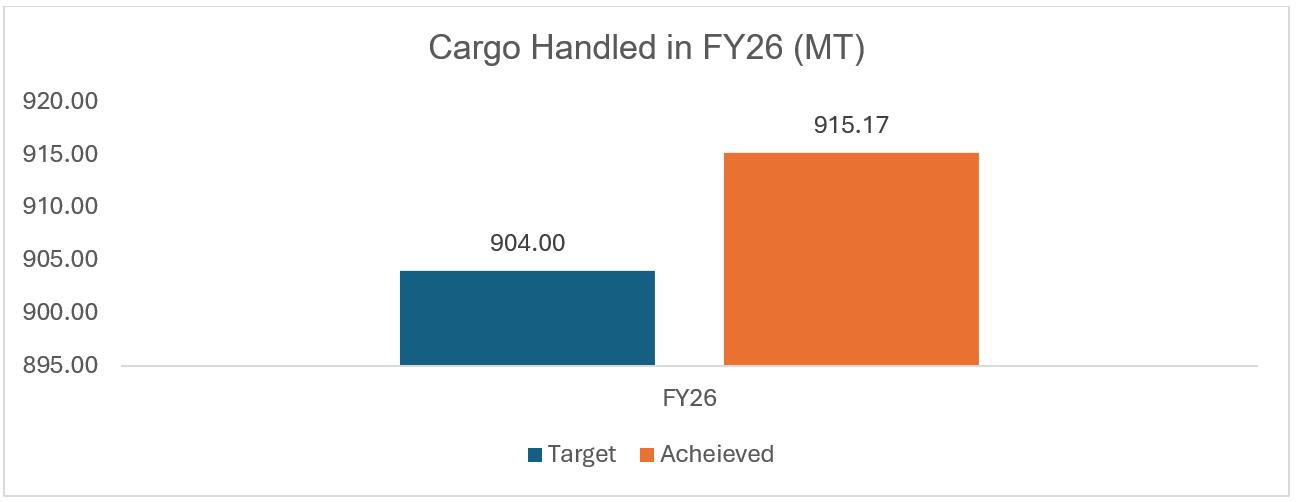
As a result of all of these developments, India's major ports have handled an unprecedented 915.17 million tonnes (MT) of cargo in FY26 beating the target of 904 MT for the year. Year-on-year increase in cargo handling was 7.06%. It happened thanks to the improved efficiency of port management, growth of trade volume, capacity addition and infrastructural modernisation at major ports. With the help of the strategic investments and policy changes made under Maritime Amrit Kaal Vision 2047, India's port sector remains instrumental in the development of multimodal logistics, international trade and position of the country as a global maritime hub.
Policy Framework Driving Containerisation in India
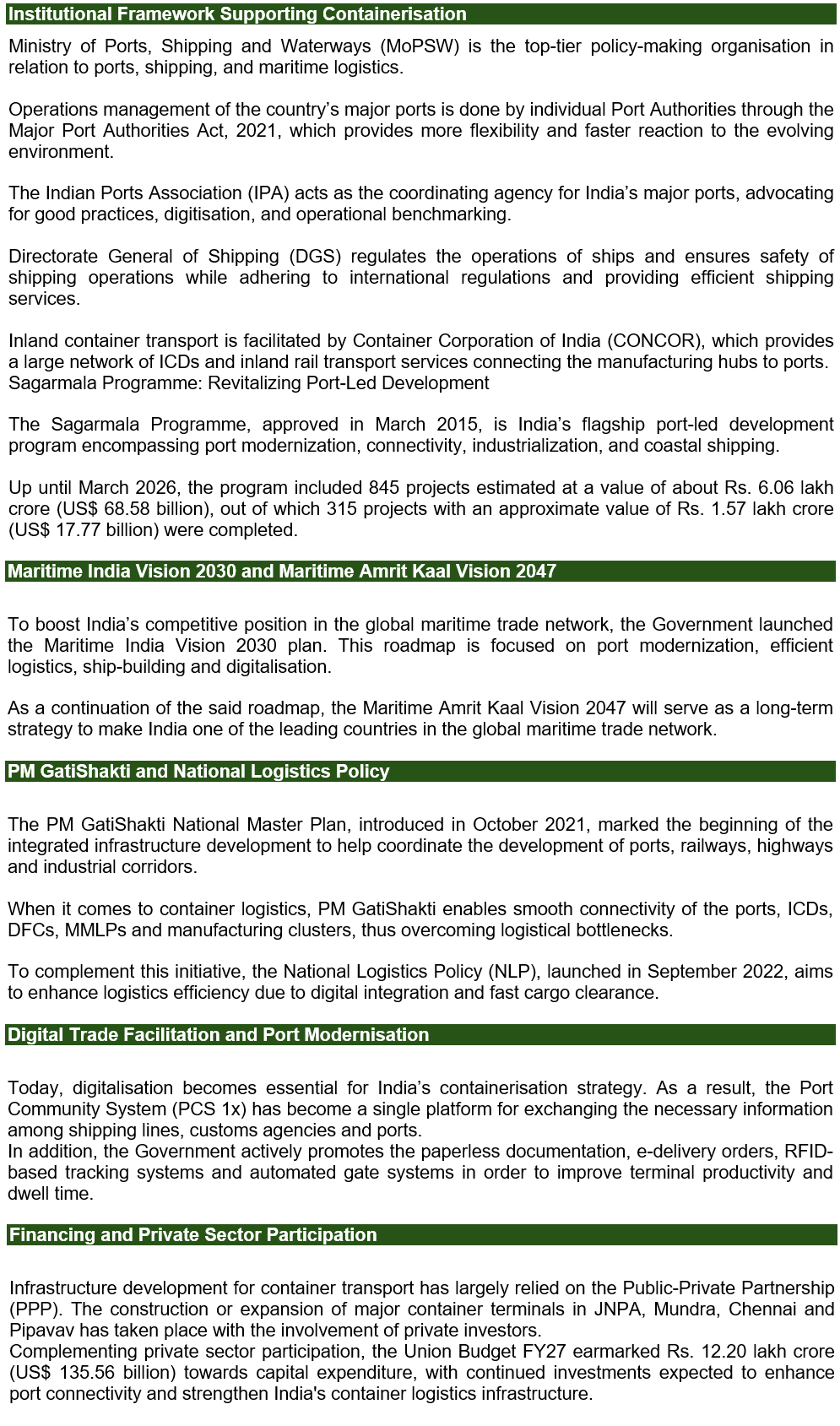
India's containerisation ecosystem has evolved through institutional reforms, infrastructure investment and policy initiatives, strengthening the container supply chain from ports and inland facilities to industrial corridors and export gateways.
Containerisation as a Driver of Maritime Trade and Logistics Transformation
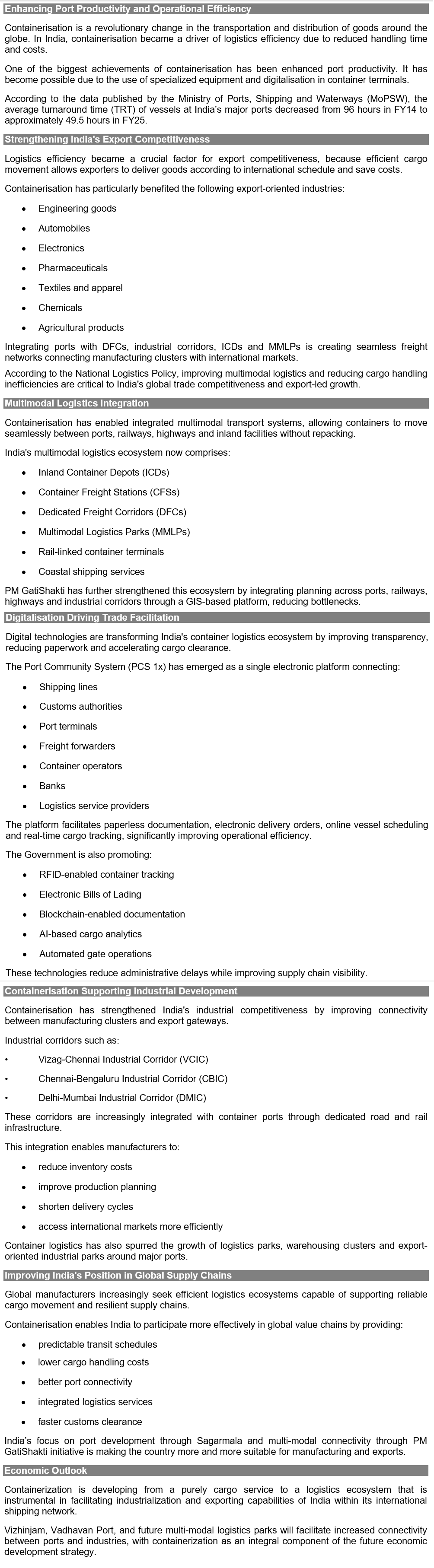
Containerisation has fundamentally transformed how goods are transported and distributed across global supply chains. In India, container-based logistics has improved maritime trade efficiency by cutting handling time and costs.
Conclusion and Road Ahead
Containerisation has fundamentally transformed India's maritime trade by improving cargo handling efficiency and deepening integration into global supply chains, becoming a critical pillar of manufacturing and exports.
Government-led initiatives including the Sagarmala Programme, PM GatiShakti National Master Plan, National Logistics Policy (NLP) and the Maritime Vision programmes have accelerated an integrated maritime logistics ecosystem.
India's major container gateways-including Jawaharlal Nehru Port Authority (JNPA), Mundra Port, Chennai Port, Deendayal Port and emerging transshipment hubs such as Vizhinjam and Vadhavan Port are expected to play a growing role in container throughput.
Containerisation has also generated economic benefits beyond the port sector, strengthening export-oriented manufacturing, agricultural exports and pharmaceutical and automobile supply chains, and helping MSMEs access global markets.
Looking ahead, the future of India's maritime trade will depend on automation, AI and green shipping. Adopting Port Community System (PCS 1x) is expected to transform Indian ports into intelligent logistics hubs.
As India advances towards the Viksit Bharat 2047 vision, containerisation is expected to remain central to the country's maritime strategy, positioning India to emerge as a leading maritime logistics economy.
Partners