SEARCH
RECENT POSTS
Categories
- Agriculture (37)
- Automobiles (20)
- Banking and Financial services (36)
- Consumer Markets (57)
- Defence (6)
- Ecommerce (21)
- Economy (72)
- Education (14)
- Engineering (9)
- Exports (21)
- Healthcare (25)
- India Inc. (10)
- Infrastructure (31)
- Manufacturing (32)
- Media and Entertainment (16)
- Micro, Small & Medium Enterprises (MSMEs) (16)
- Miscellaneous (31)
- Perspectives from India (37)
- Pharmaceuticals (5)
- Railways (4)
- Real Estate (20)
- Renewable Energy (19)
- Research and Development (12)
- Retail (1)
- Services (7)
- Startups (16)
- Technology (66)
- Textiles (8)
- Tourism (16)
- Trade (9)
Authors






Government Policies Boosting India's International Trade Competitiveness
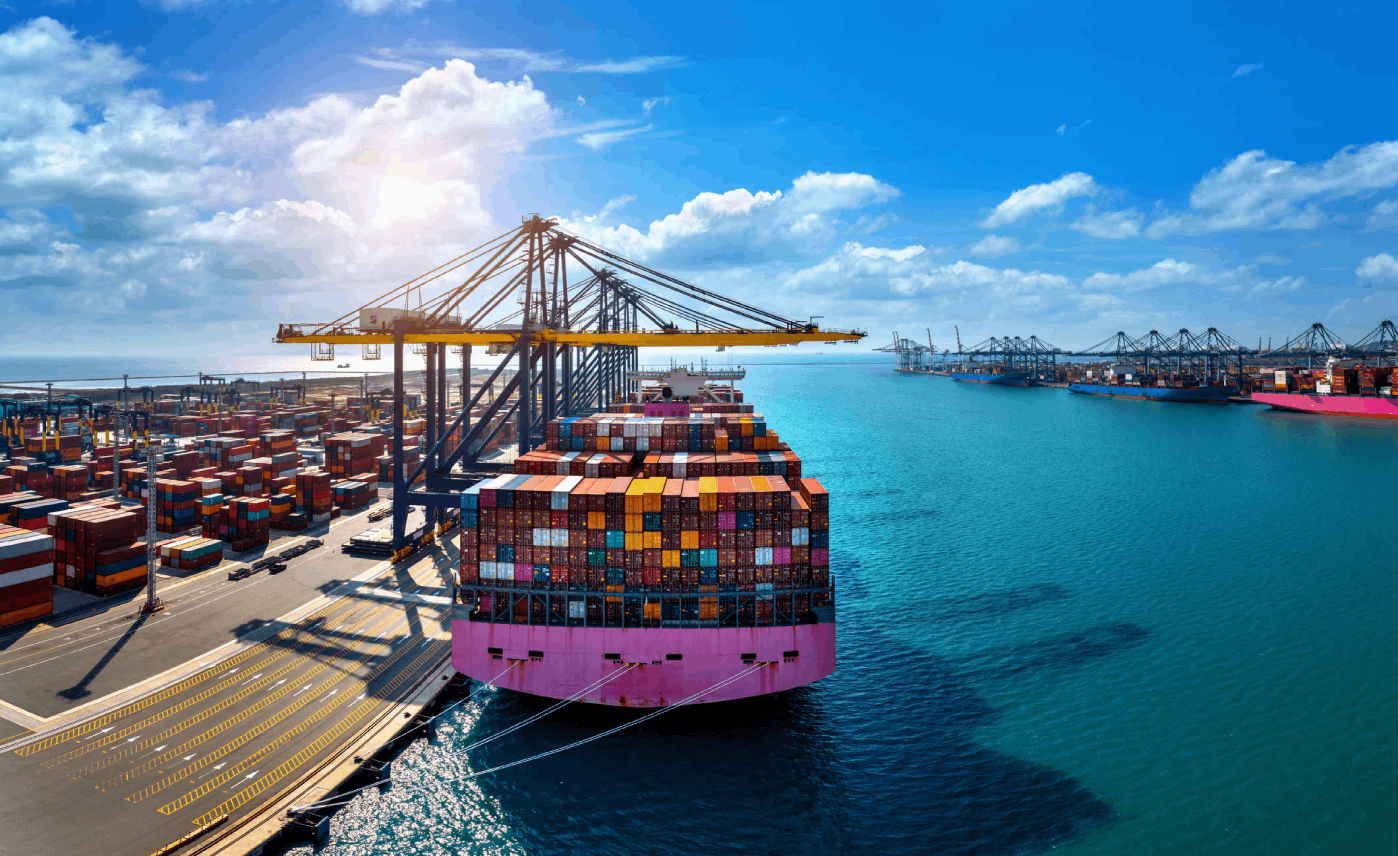
International trade has emerged as one of the primary growth drivers. As the globalization process proceeds and companies adopt diversified sourcing and manufacturing practices, nations that possess a highly efficient trade ecosystem with robust infrastructure and policies are more likely to capitalize on their international trade operations. The Indian economy has been gradually strengthening its presence in the global trading arena with policy reforms, infrastructural developments, manufacturing incentives, and trade facilitation through digital platforms. All these measures have not only boosted exports but have also enhanced the ease of conducting cross-border transactions.
The Indian Government has implemented a range of reforms such as the Foreign Trade Policy 2023, Production Linked Incentive (PLI) Schemes, PM Gati Shakti National Master Plan, National Logistics Policy, and several other Free Trade Agreements (FTA). The above-listed policies and agreements are complemented by the use of digital platforms like National Single Window System (NSWS), ICEGATE, and Trade Connect, which have significantly streamlined regulatory procedures. All these measures make it easier for Indian enterprises to gain access to foreign markets, improve manufacturing capacity, and integrate into global value chains.
The effectiveness of the above-mentioned policy initiatives has already started to demonstrate itself through India's growing trade performance. During FY26, India's aggregate exports of merchandise and services were evaluated at approximately Rs. 76.01 lakh crore (US$ 860.09 billion), showing a growth of 4.22% compared to the previous year, and 7.94% in the case of services. With India working towards achieving its export goals, it is anticipated that the further policy support, logistics modernization, and international economic cooperation will be important for the country's global trade operations.
India's Growing Position in Global Trade
India has been able to establish itself as one of the most rapidly growing trading economies globally with diversification of its export basket, rapid development of its services economy and growing penetration into many important international markets. Trading activities of the country are currently taking place with over 217 partner countries, with export of over 11,700 commodities, and through many trade agreements with 53 partner countries, highlighting growing integration of the country with the international trading system. Over time, India has increasingly diversified its export composition from traditional commodities towards manufacturing sectors with high added value like electronics, machinery, pharmaceuticals and automobiles. Services export continues to be a very strong component of India's external trade.
The gradual success in this regard is evident from India's total exports performance. India's cumulative exports of merchandise and services during FY26 were recorded at Rs. 76.01 lakh crore (US$ 860.09 billion) as compared to Rs. 69.78 lakh crore (US$ 825.26 billion) during FY25, which represents a growth of 4.22%. The exports of merchandise grew to Rs. 39.04 lakh crore (US$ 441.78 billion) and services to Rs. 36.97 lakh crore (US$ 418.31 billion) which showed a good growth of 7.94% as compared to last year. The non-petroleum exports also grew to Rs. 34.28 lakh crore (US$ 387.88 billion).
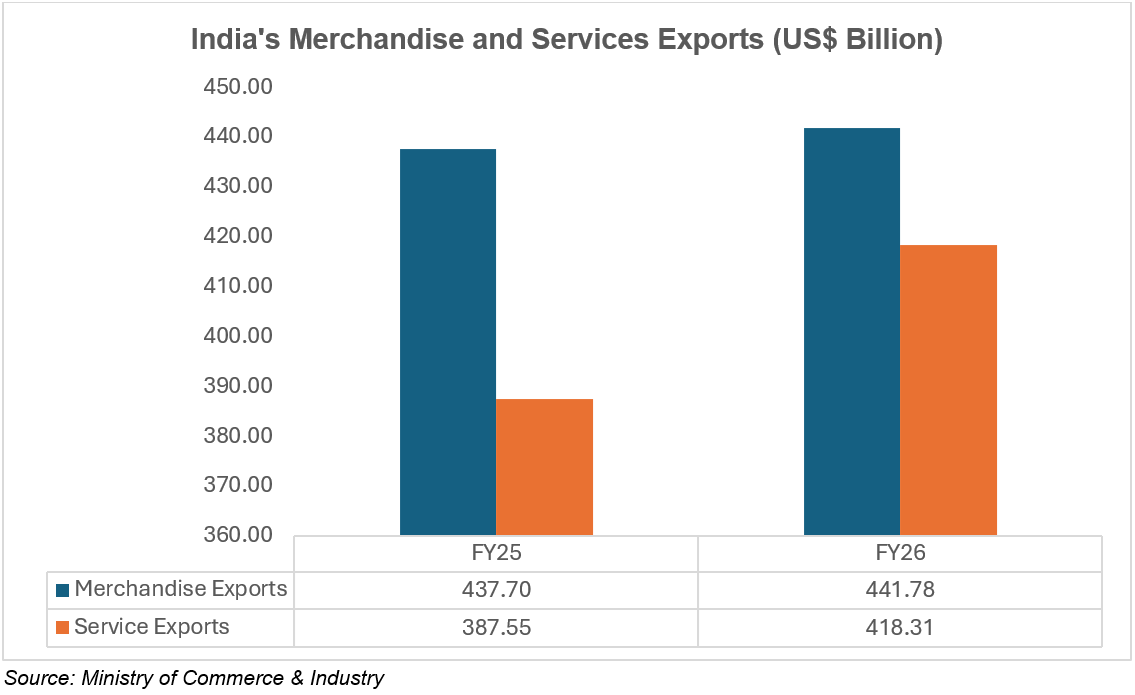
The rising trend in export activities is also an indicator of increasing competitiveness of India in international markets. Engineering goods, petroleum products, pharmaceuticals, electrical machinery, automobiles and agricultural commodities continue to lead India's merchandise export activities. In addition to this, information technology, business and other knowledge-based services have made India a dominant player in the global services trade market.
Government Policies Driving India's International Trade Competitiveness
The increase in the country's competitiveness in international business is ensured by a set of structural policy reforms to enhance the competitiveness of industries, the logistics efficiency, market reachability and to simplify the process of trading. Instead of providing only export incentives, the government took a holistic approach and combined the efforts of industrial policy, infrastructural development, digitization and international trade deals in order to create a resilient and competitive international trade ecosystem.
One of the major landmarks is the adoption of the Foreign Trade Policy (FTP) 2023 to achieve the target of Rs. 180 lakh crore (US$ 2 trillion) worth of exports by 2030 using a dynamic and technologically advanced framework. There are four key aspects of the policy: incentive to remission, export promotion through cooperation, ease of doing business and encouragement of emerging sectors like e-commerce exports and Districts as Export Hubs. The policy encourages paperless trade, automation of approvals and reduction of compliance costs in order to simplify the export process, particularly of MSMEs. It promotes several initiatives including Towns of Export Excellence, merchanting trade and e-commerce exports.
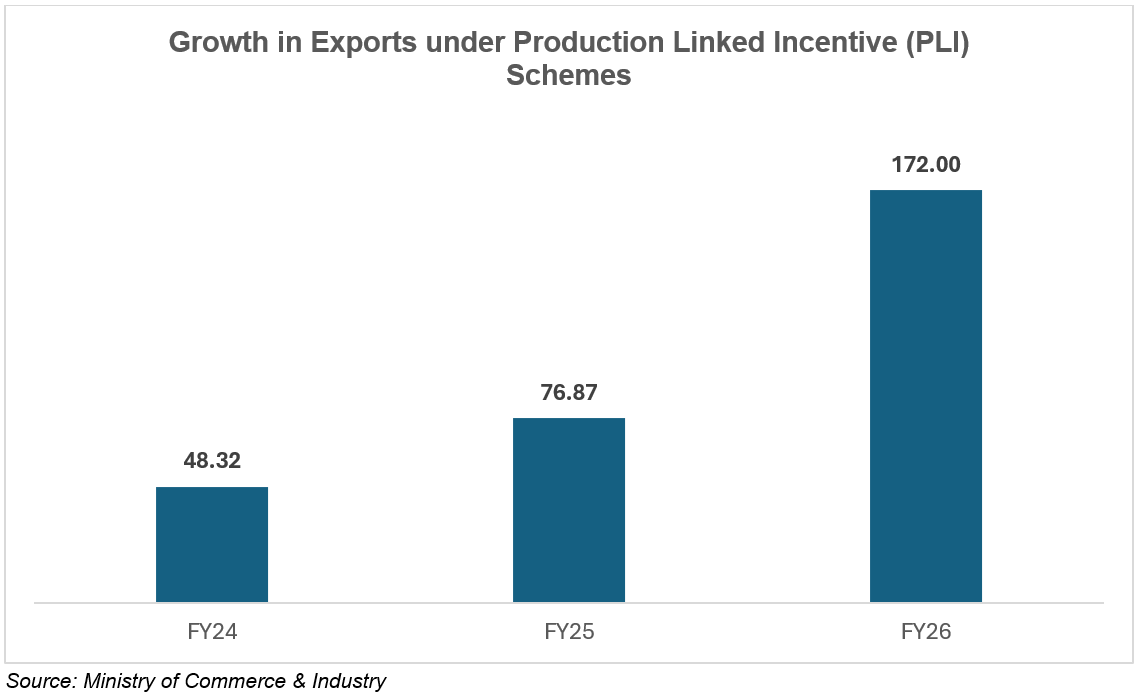
The competitiveness of the manufacturing sector has been enhanced through Production Linked Incentive (PLI) Schemes implemented in 14 industries. As of March 31, 2026, these schemes attracted investments worth more than Rs. 2.40 lakh crore (US$ 27.17 billion), generated exports worth over Rs. 15.2 lakh crore (US$ 172.00 billion) and created jobs for over 14.15 lakh people. These schemes helped in enhancing domestic production in industries including electronics, pharmaceuticals, automobile industry, telecommunications equipment, special steel, solar photovoltaic modules and others. The mobile phone production has grown almost 2.4 times since the inception of these schemes and about 99.2% of the mobile phones in use in the country are produced domestically.
Infrastructure and logistics reforms have further enhanced India's export competitiveness. The PM Gati Shakti National Master Plan has improved multimodal connectivity by integrating transport infrastructure planning across railways, roads, ports and logistics hubs, reducing bottlenecks and improving freight movement. Complementing this initiative, the National Logistics Policy focuses on reducing logistics costs to global benchmarks, improving supply chain efficiency and enhancing digital integration. The Unified Logistics Interface Platform (ULIP) has already facilitated over 160 crore digital transactions across more than 30 digital systems, while the Logistics Data Bank provides real-time tracking for over 75 million EXIM containers across 101 Inland Container Depots. These reforms have supported India's rise to the 38th position in the World Bank's Logistics Performance Index.
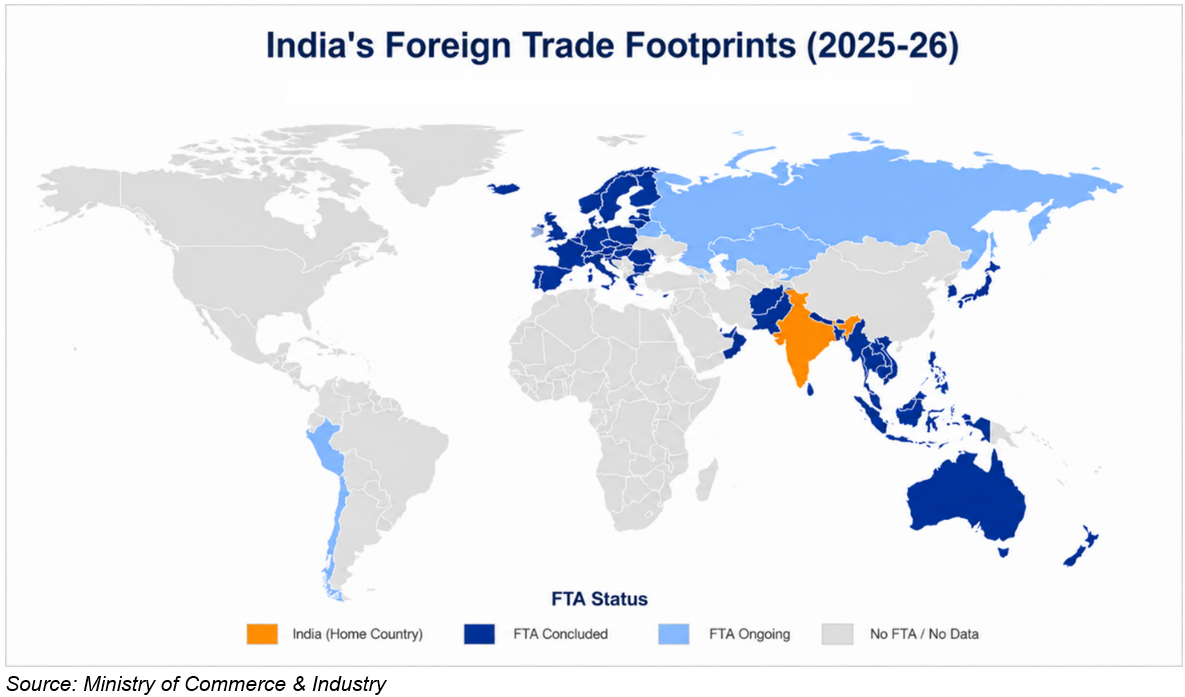
India has managed to expand its exposure to international markets by signing a series of significant Free Trade Agreements (FTA) and trade deals. The FTA’s signed with the UK, Oman, and New Zealand and negotiations being held with EU and US have opened up new avenues for Indian exporters in sectors including textiles, pharmaceuticals, engineering goods, agriculture, and services. These FTAs provide not only better tariff access but also boost investments, technology tie-ups, services trade, and manpower mobility.
Moreover, initiatives like the NSWS, ICEGATE, and Trade Connect for facilitating digital trade have made the process of regulations, customs documentation, and support for exporters easier. More than 8.29 lakh approvals have been made through the NSWS within 32 Central Departments and 32 States, and the ICEGATE system has helped simplify the process of customs documentation and online duty payment and e-filing. In times when there is uncertainty globally, the Government has shown itself responsive enough to policy to reduce the negative effect of increased logistics costs due to disruption in West Asia through the reduction of RoDTEP rates and values.
Key Growth Drivers Strengthening India's Global Trade Competitiveness
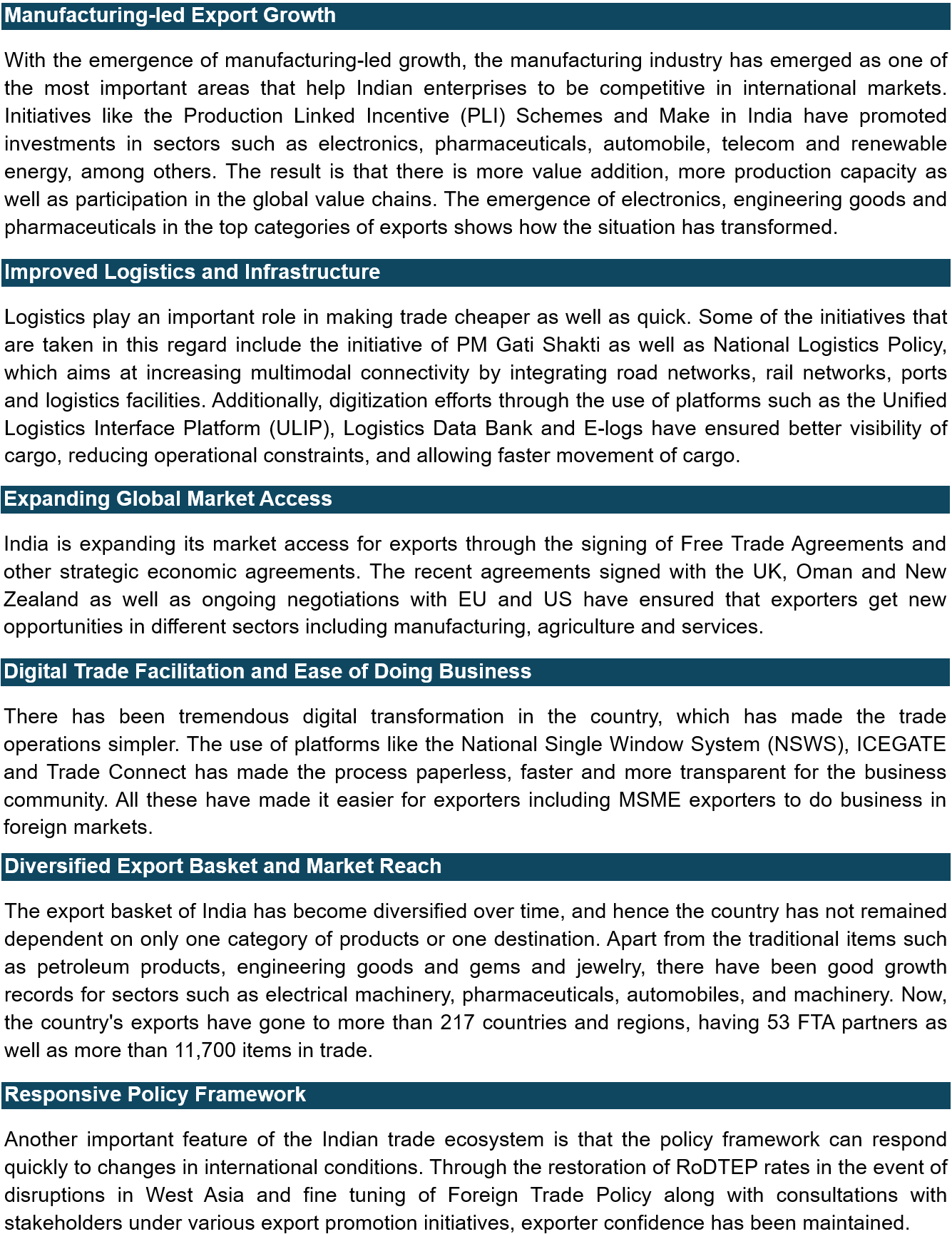
India's progress in international trade has been supported by multiple structural factors that are improving the country's ability to compete in global markets. Continued investments in manufacturing, infrastructure, logistics, digital trade systems and market diversification have created a stronger export ecosystem that enables Indian businesses to expand globally while improving efficiency and resilience.
Outlook and Road Ahead
India's ecosystem for international trade activities is poised to see sustainable growth due to continuous efforts of the Government in building up manufacturing, logistics, digital trade facilitation and economic relationships across the globe. The launch of initiatives like Foreign Trade Policy 2023, Production Linked Incentive Schemes, PM Gati Shakti, National Logistics Policy and FTAs has laid solid groundwork for improving India's competitiveness in trade in the coming years. Investments in new infrastructure, digitized trade system and export manufacturing units will help in improving the efficiency of supply chains and also lead to participation in the global value chains.
Efforts of the Government in lowering logistics costs, simplifying procedures and providing wider access to international markets will further improve the competitiveness of exporters from India. Increasing adoption of digital platforms including National Single Window System, ICEGATE, ULIP and Trade Connect will bring about increased transparency and reduction of transaction cost along with facilitating cross-border trade processes. On the other hand, efforts such as Districts as Export Hubs and MSME Support will ensure broadening of the base of India's exports through active involvement of manufacturing units in smaller towns and districts.
India is also well placed to derive benefits from evolving global supply chain strategies in the face of growing diversification of multinational corporations regarding locations of manufacture and procurement of goods. With its huge internal market, cost-effective manufacturing facilities, trained labor force and growing number of trade agreements, India is slowly positioning itself as an attractive global hub for manufacturing and export. As efforts of policy reform are geared towards responding to changes in global trade environment, India will become a reliable trading partner and approach closer to realizing its long-term objective of being a global trade hub.
FAQs
What government policies are strengthening India's international trade competitiveness?
India's international trade competitiveness is being strengthened through key policy initiatives such as the Foreign Trade Policy (FTP) 2023, Production Linked Incentive (PLI) Schemes, PM Gati Shakti National Master Plan, National Logistics Policy, Free Trade Agreements (FTAs), RoDTEP and digital trade facilitation platforms like ICEGATE and the National Single Window System.
How does the Foreign Trade Policy (FTP) 2023 support Indian exports?
The Foreign Trade Policy 2023 promotes exports by simplifying trade procedures, encouraging paperless and technology-driven processes, supporting e-commerce exports, developing Districts as Export Hubs, strengthening exporter recognition and improving ease of doing business to help Indian businesses access global markets more efficiently.
Why are Free Trade Agreements (FTAs) important for India's export growth?
Free Trade Agreements provide Indian exporters with preferential market access by reducing or eliminating import duties in partner countries. They also promote investment, strengthen supply chain integration, expand services trade opportunities and improve the global competitiveness of Indian products across multiple sectors.
How do PM Gati Shakti and the National Logistics Policy improve trade competitiveness?
PM Gati Shakti and the National Logistics Policy enhance multimodal connectivity, modernise logistics infrastructure, improve cargo movement and strengthen digital integration across supply chains. These initiatives help reduce logistics costs, improve delivery efficiency and support faster movement of exports to international markets.
How has the Production Linked Incentive (PLI) Scheme contributed to India's exports?
The PLI Scheme has encouraged large-scale investments in manufacturing across 14 key sectors, leading to higher domestic production, increased exports, employment generation and greater participation in global value chains. The initiative has particularly strengthened sectors such as electronics, pharmaceuticals, automobiles, telecom equipment and renewable energy, improving India's overall export competitiveness.
Partners




