SEARCH
RECENT POSTS
Categories
- Agriculture (39)
- Automobiles (20)
- Banking and Financial services (36)
- Consumer Markets (57)
- Defence (6)
- Ecommerce (21)
- Economy (72)
- Education (14)
- Engineering (9)
- Exports (22)
- Healthcare (25)
- India Inc. (10)
- Infrastructure (31)
- Manufacturing (33)
- Media and Entertainment (17)
- Micro, Small & Medium Enterprises (MSMEs) (16)
- Miscellaneous (31)
- Perspectives from India (37)
- Pharmaceuticals (5)
- Railways (4)
- Real Estate (20)
- Renewable Energy (19)
- Research and Development (12)
- Retail (1)
- Services (7)
- Startups (16)
- Technology (66)
- Textiles (8)
- Tourism (16)
- Trade (9)
Authors






Role of SEZs in Promoting Export-Led Growth
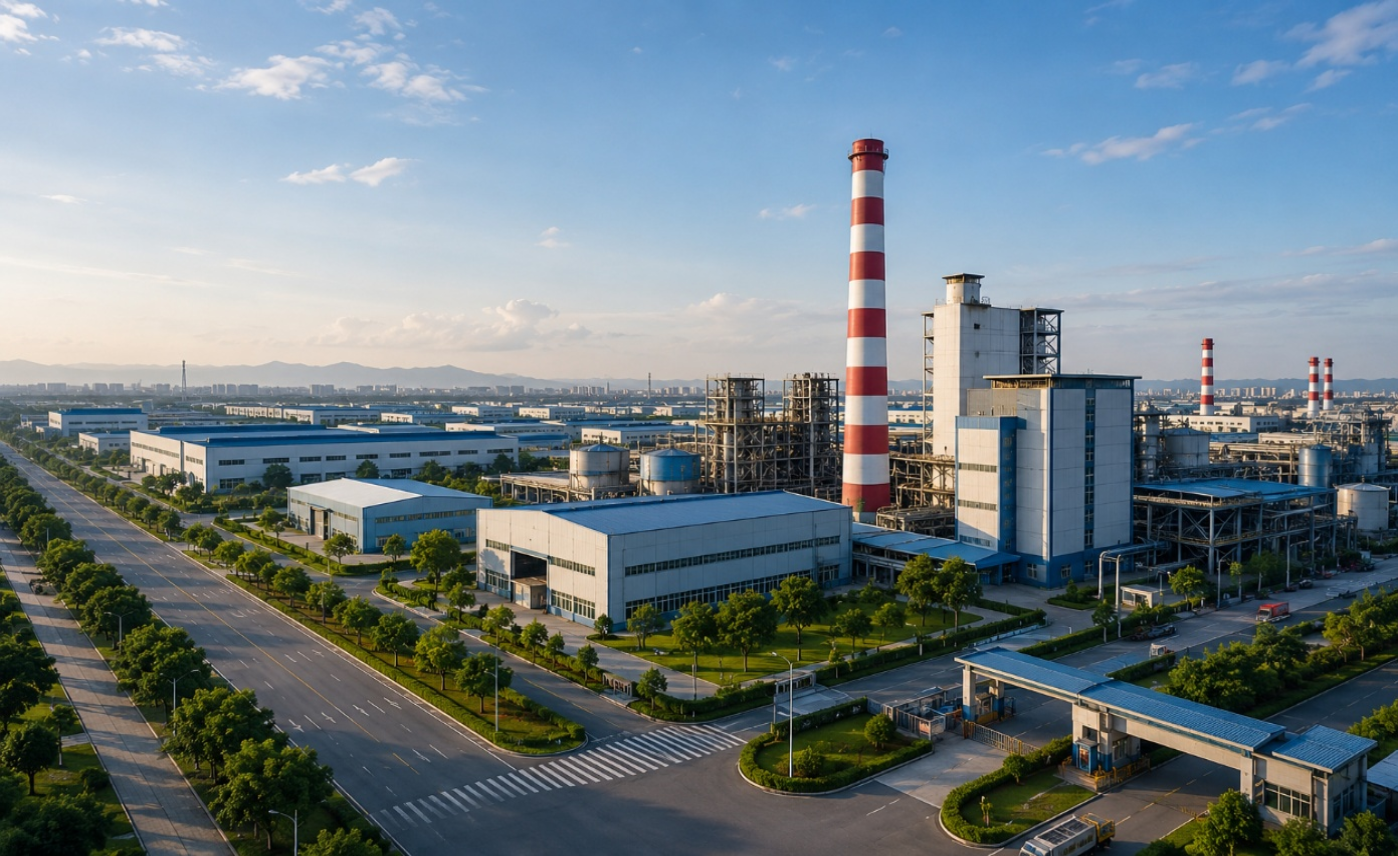
Special Economic Zones (SEZs) are a key policy measure in India designed to promote exports, attract investments, generate employment, and improve industrial competitiveness. These zones follow a special regime of regulations and fiscal measures aimed at facilitating export-oriented manufacturing and services by minimizing obstacles for businesses. According to the Special Economic Zones Act, 2005, SEZs in India were based on the previous EPZ scheme but had shifted focus to industrial development, the role of the private sector, and global value chain linkages. During the last two decades, SEZs have been a cornerstone in improving India's exports. Between FY06 and FY24, exports from SEZs grew with a Compound Annual Growth Rate (CAGR) of around 23%, greatly exceeding the CAGR of India's overall exports during the same period. Currently, SEZs contribute to about 37-38% of India's total merchandise exports, thus representing an essential element of the country's export-oriented growth model.
Scale and Export Performance
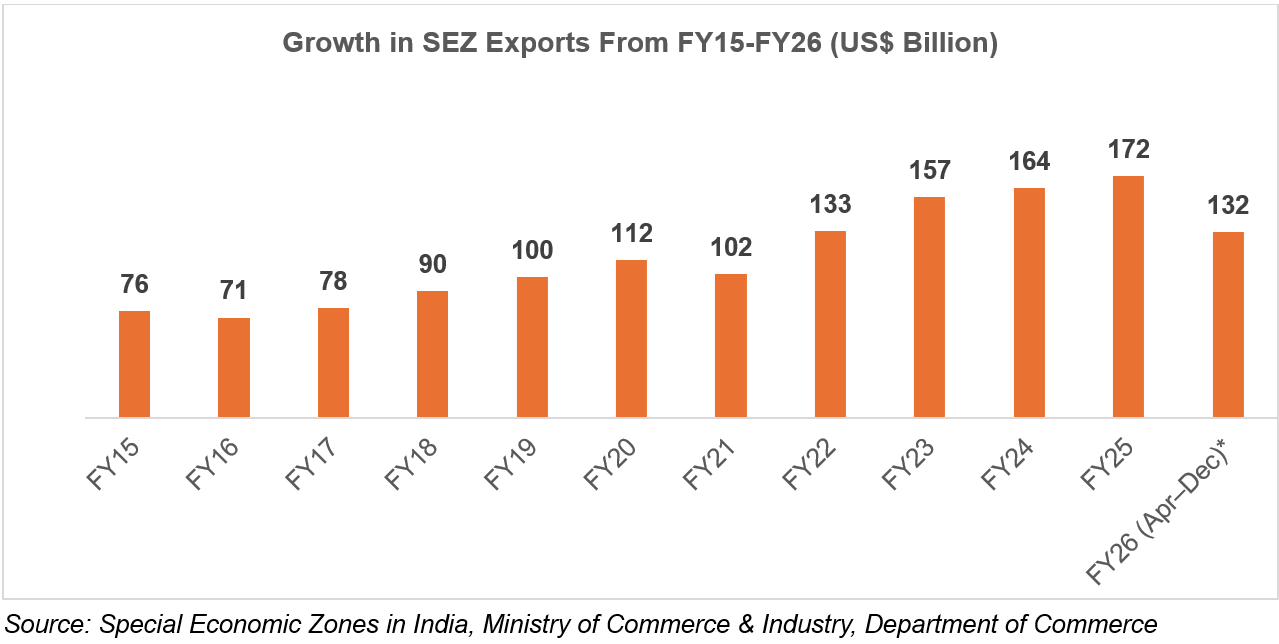
SEZs play an increasingly prominent role in India's exports. Exports from operational SEZs exceeded Rs. 11.70 lakh crore (US$132.38 billion) during FY26 (till December 2025), showing growth by 32.02% compared to the same period of the previous year. In FY25, SEZ exports amounted to Rs. 14.57 lakh crore (US$172.27 billion), making up for about 37% of total India's merchandise exports. Such consistent growth of exports testifies to the success of the SEZ approach in improving competitiveness, opening access to global markets, and creating conditions for large-scale export-oriented production. SEZs have become key centers of manufacturing, IT services, pharmaceuticals, engineering goods, electronics, and finance services.
Investment and Employment Generation
SEZs have attracted significant domestic and foreign investments creating the environment suitable for sustainable economic development. By December 2025, there were 368 notified SEZs in India, out of which 276 were operational, housing over 6,200 approved units. Total investments made in SEZs amounted to approximately Rs. 7.86 lakh crore, demonstrating high level of investors' confidence in the export-oriented economy of India. Employment generation has also been quite impressive: the number of employed in SEZs has exceeded 31.73 lakh as of December 2025, and 29.36 lakh new jobs have been created since the introduction of the SEZ Act. These jobs relate to manufacturing, IT services, logistics, finance, and other areas. Indirect employment generation through activities in construction, transportations, warehousing and other services should not be overlooked either.
Sectoral Contribution and Global Competitiveness
The Special Economic Zone regime in India is mainly focused on the IT/ITES sector, which makes the lion's share of existing operational SEZs. In active SEZs, there is a considerable number of SEZs, specializing in IT and business process management services in Karnataka, Telangana, Tamil Nadu and Andhra Pradesh. Apart from that, manufacturing SEZs make a significant contribution to the export of pharmaceuticals, textiles, engineering products, electronics, gems and jewellery, automobile parts, and chemicals. The main countries receiving the goods exported from Indian SEZs are the US, the UAE, the UK, Australia, and Singapore. Examples of sector-specific SEZs in India include GIFT City, semiconductor-specific SEZs, and integrated manufacturing SEZs.
Strengthening Infrastructure and Industrial Ecosystems
An important contribution of SEZs in India is the creation of state-of-the-art industrial infrastructure. SEZs provide all necessary facilities for enterprises to reduce costs and operate more efficiently, such as reliable power supply, transport connections, warehousing and customs facilities, and logistics. The positive effects of SEZ development also include creating additional value through positive spill-over effects. For example, port-adjacent SEZs strengthen logistics and shipping ecosystem, while IT SEZs contribute to the development of commercial real estate and labour market, as well as innovation clusters. The creation of GIFT City made India a leader in international financial services and fintech innovations.
Government Initiatives and Policy Support
Realizing the importance of SEZs in promoting exports, the Government of India implements different reforms to increase the competitiveness of the zones. The Union Budget 2026-27 proposed the introduction of the one-time concessional duty scheme according to which SEZ manufacturing units would be able to sell a certain portion of their production in the Domestic Tariff Area (DTA) at a reduced duty rate. Such initiative is expected to increase capacity utilization without losing the export-oriented nature of SEZs. The proposal of the Development of Enterprises and Services Hubs (DESH) Bill shows a new step in policy, since it intends to convert SEZs into hubs, not only for manufacturing but also for providing services, which will work on both domestic and foreign markets. Recently, the introduction of semiconductor and electronics-specific SEZs in Gujarat and Karnataka made SEZ regime more consistent with India's plans concerning advanced manufacturing and technology independence.
Growth Drivers and Key Trends
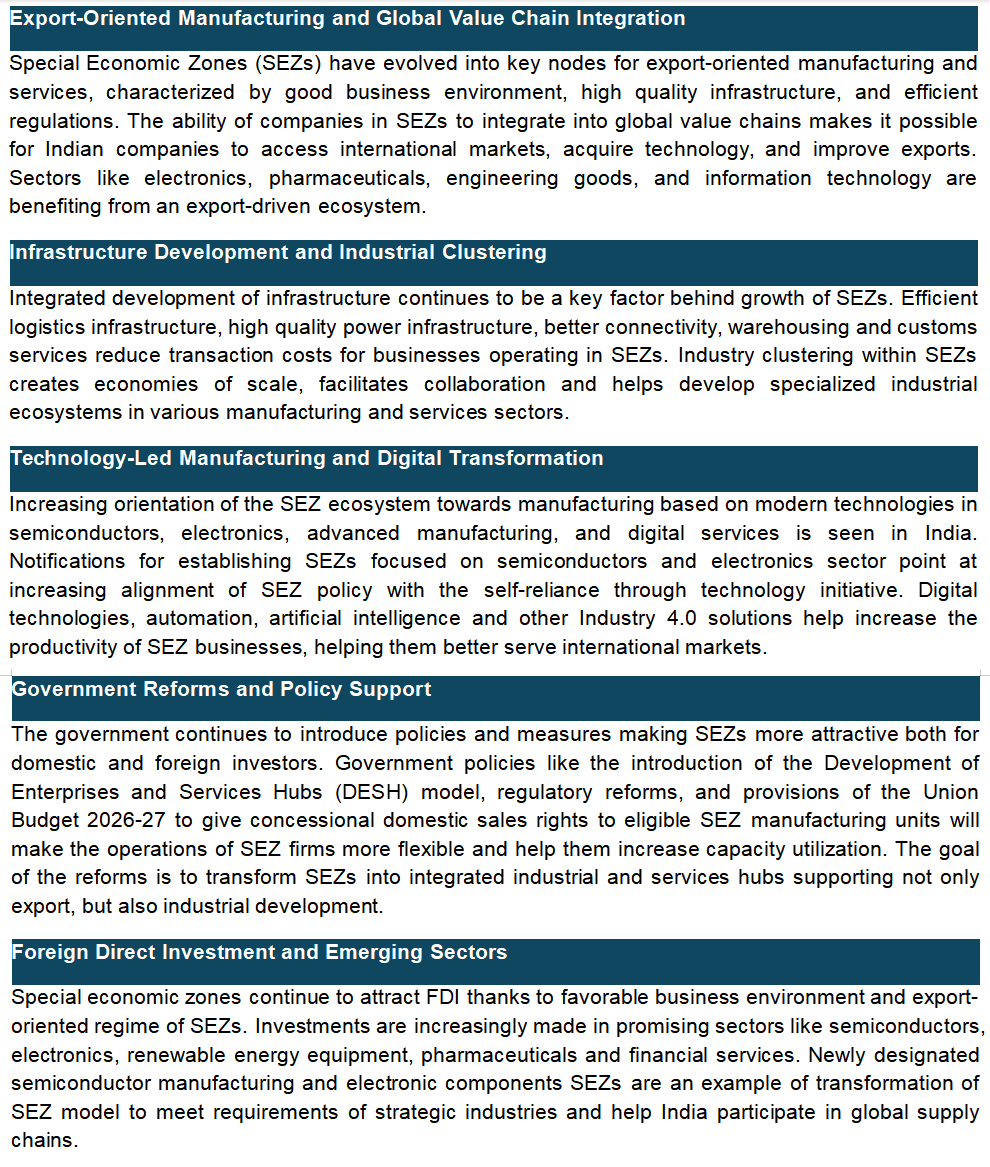
The continuous growth and relevance of Special Economic Zones (SEZs) in India are based on certain structural, policy, and market-related drivers that make SEZs important mechanisms for promoting exports and investments.
Outlook and Road Ahead
Special Economic Zones (SEZs) have been instrumental in facilitating export-led growth in India by increasing exports, investments, creating jobs, and improving the infrastructure of industries. With growing exports, new investments coming into strategic industries like semiconductors and electronics, and policies designed to boost competitiveness, SEZs will continue to be key to achieving India's ambition to become an export hub for manufacturing and services in the world. Against the backdrop of changing global supply chain dynamics and international trade, SEZs in India offer great potential for facilitating export growth, adoption of technology, and industry development in the country thus becoming a critical ingredient of its economic growth in the future and realization of Viksit Bharat 2047.
FAQs
What is a Special Economic Zone (SEZ)?
A Special Economic Zone (SEZ) is a geographical region functioning on the basis of a separate regulatory and financial regime meant to encourage the export-oriented manufacture and services. The SEZ Act of 2005 regulates SEZs in India which are offered incentives, improved processes, and world-class infrastructure with an aim to attract investments and increase exports.
How do SEZs contribute to export-led growth?
SEZs support export-led growth by providing businesses with a competitive operating environment, including efficient infrastructure, streamlined customs procedures and access to global markets. These advantages help increase exports, attract foreign investment, strengthen industrial competitiveness and integrate Indian firms into global value chains.
What has been the export performance of Indian SEZs?
Indian SEZs have recorded strong export growth over the past two decades. Exports from operational SEZs crossed Rs. 11.70 lakh crore (US$132.38 billion) in FY26 (up to December 2025), representing a 32.02% increase over the corresponding period of the previous year. In FY25, SEZ exports reached US$ 172.27 billion, accounting for around 37% of India's merchandise exports.
What sectors dominate India's SEZ ecosystem?
Manufacturing and Services sectors currently dominate the India’s SEZ ecosystem. As of December 2025, India had 368 notified SEZs, of which 276 were operational, hosting more than 6,200 approved units across manufacturing and services sectors.
What role do SEZs play in attracting investment and generating employment?
SEZs attract investment through duty-free imports, GST and tax exemptions, and single-window clearances, backed by world-class infrastructure. This has drawn cumulative investment of over Rs.7.86 lakh crore and generated employment for more than 31.73 lakh people as of December 2025, spanning IT/ITES, manufacturing, pharmaceuticals and emerging high-tech sectors.
Partners




