SEARCH
RECENT POSTS
Categories
- Agriculture (39)
- Automobiles (21)
- Banking and Financial services (36)
- Consumer Markets (58)
- Defence (6)
- Ecommerce (21)
- Economy (72)
- Education (14)
- Engineering (9)
- Exports (22)
- Healthcare (25)
- India Inc. (10)
- Infrastructure (31)
- Manufacturing (33)
- Media and Entertainment (17)
- Micro, Small & Medium Enterprises (MSMEs) (16)
- Miscellaneous (31)
- Perspectives from India (37)
- Pharmaceuticals (5)
- Railways (5)
- Real Estate (20)
- Renewable Energy (19)
- Research and Development (12)
- Retail (1)
- Services (7)
- Startups (16)
- Technology (66)
- Textiles (8)
- Tourism (16)
- Trade (9)
Authors






How Culinary Tourism Is Reshaping India's Travel Economy
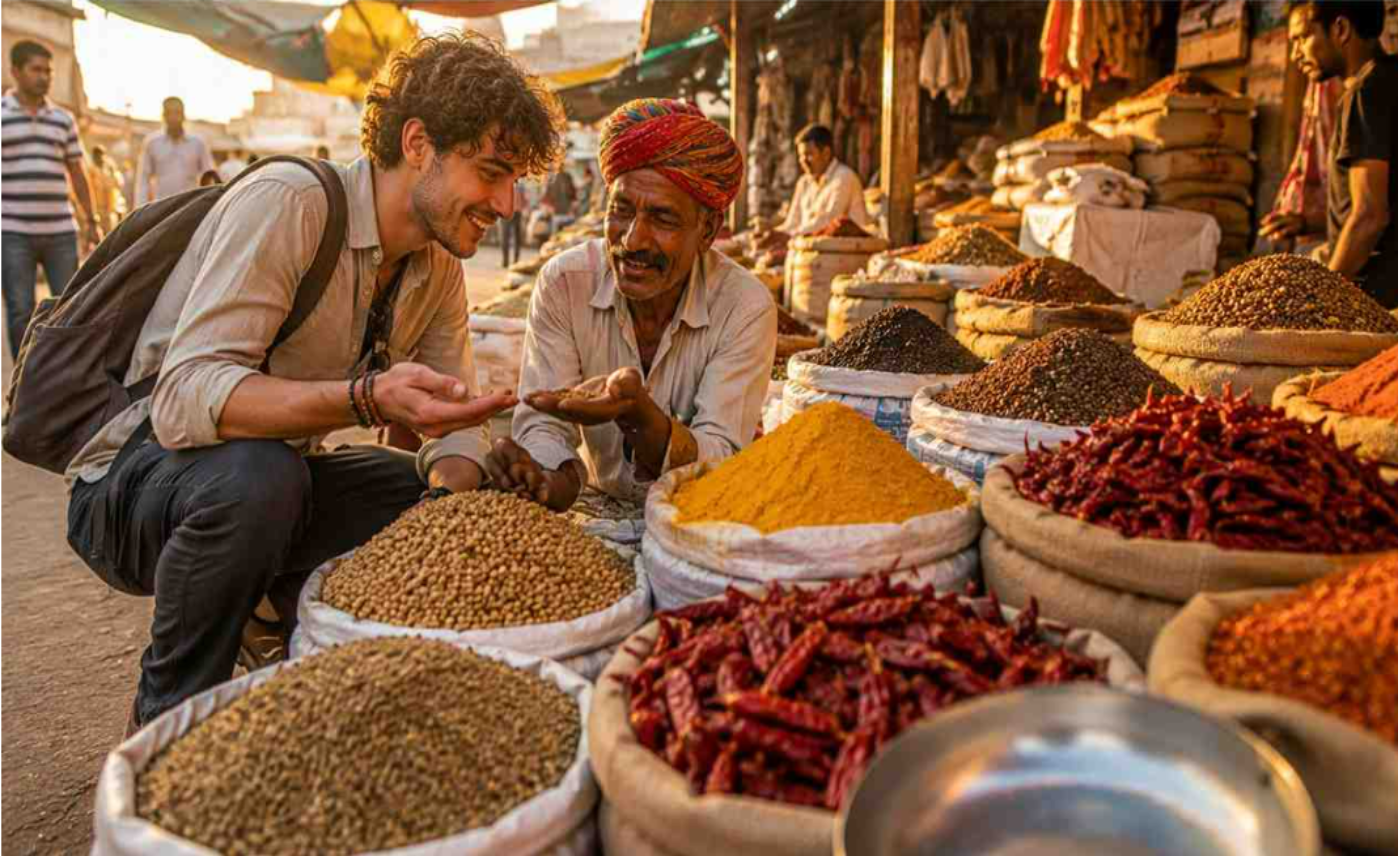
India's tourism industry has now begun transitioning from conventional sightseeing tourism towards experience-based tourism. This shift makes culinary tourism an important sector for India's tourism industry, as tourists look forward to having authentic cuisine and experiences associated with traditional cooking methods.
The importance of culinary tourism has been understood well by the Government of India, which is now working on promoting culinary tourism through its experience-based tourism policies. Programs like Dekho Apna Desh and Swadesh Darshan 2.0 motivate states to promote their cuisines and culture at destinations.
The importance of culinary tourism is further justified by the rapid development that has taken place in India's tourism sector. India received 2,948.19 million domestic tourist visits and 20.57 million international tourist visits in 2024 and earned Rs. 2,93,033 crore (US$ 34.93 billion) foreign exchange. Tourist cities of Hyderabad, Kerala, and Amritsar are clear examples of how culinary tourism can contribute to regional economies.
India's Regional Food Heritage Is Enhancing Destination Appeal
India's food tourism can be used effectively as an important differentiator in the destination marketing approach, and each state will use its unique cuisine, local produce, and traditional food culture for attracting tourists. As food experiences become one of the top priorities for modern travellers, food becomes not only a component of the destination but also one of its key elements, influencing the destination choice and spending of tourists. As a result, food tourism starts becoming an integral part of destination marketing approaches.
One of the key strengths of the food tourism industry in India lies in the large number of Geographical Indication (GI) registered food items in India that protect the unique culinary traditions of the country. In 2026, India has more than 600 GI registered products that range from handicrafts, textile products, agricultural products, food products, manufactured products, and natural products. Out of these, more than 230 GI registered products have been identified in agriculture and food categories, reflecting the unique culinary specialties of India. Some examples of GI products include Hyderabad Haleem, Bikaneri Bhujia, Tirupati Laddu, Banaras Langda Mango, Ratlami Sev, Dharwad Peda, Alphonso Mango, Nagpur Orange, Joha Rice of Assam, Darjeeling Tea, Kashmir Saffron, and Coorg Arabica Coffee.
Furthermore, the states are leveraging their culinary specialties to develop diversified tourism products. One example is the Spice Route Tourism of Kerala that blends together tour of plantations, food experiences along with the heritage of spice trade. As per the Spices Board India, the state of Kerala remains one of the leading producers of pepper, cardamom, nutmeg, and cinnamon in India. Hence, spices tourism provides another avenue for earning revenue for the plantation owners, guides, food processing industries, and hotels.
In addition, Hyderabad becomes a more attractive tourism destination due to being recognized as India's first UNESCO Creative City of Gastronomy, and now tourists are visiting the city not only because of its heritage but also because of its culinary heritage. The same situation is with Amritsar, which offers tourist's experience not only due to its religious heritage but also because of its Guru Ka Langar, where nearly 100,000 pilgrims visit the Golden Temple each day.
Finally, there are many food festivals that improve the image of destination and make people visit the places. Examples of those festivals include National Mango Festival, Goa Cashew & Coconut Festival, National Street Food Festival, and different state-based seafood, millets, and spices festivals.
Government Initiatives Strengthening India's Culinary Tourism Ecosystem
In line with the growing need for experience-based tourism, the Government of India has included culinary tourism in its overall strategy for developing tourism through destination development, cultural tourism, and sustainable tourism endeavours. This will help states leverage their cuisine as a means of destination marketing and simultaneously aid in creating job opportunities and greater community engagement.
The Ministry of Tourism revamped the Swadesh Darshan Scheme into Swadesh Darshan 2.0 (SD2.0) in 2022 with the objective of developing sustainable tourism destinations across India. Under the scheme, the Ministry sanctioned 34 projects worth Rs. 795.86 crore (US$ 96.14 million) in FY24, followed by 18 projects worth Rs. 1,312.70 crore (US$ 155.24 million) in FY25. In FY26, one additional project worth Rs. 99.71 crore (US$ 11.28 million) was sanctioned. Overall, 53 projects with a cumulative sanctioned cost of Rs. 2,208.27 crore (approximately US$ 262.66 million) have been approved under the scheme.
As an extension of the Swadesh Darshan 2.0 Scheme, the Challenge-Based Destination Development (CBDD) initiative has approved 36 projects worth Rs. 648.11 crore (US$ 76.64 million) in FY25, covering themes like Culture & Heritage, Spiritual Tourism, Ecotourism, and Vibrant Village Programme. CBDD aims at developing a destination holistically by paying attention to enhancing the facilities for tourists along with encouraging the community-based tourism that allows visitors to get to know about local food, markets, and festivals.
Moreover, the Government of India has made use of the Indian culinary tradition through its Dekho Apna Desh campaign wherein the government highlighted various regional foods and ingredients used along with local food practices through its destination promotion campaigns. Also, International Year of Millets 2023 which is led by India promoted the incorporation of the millet cuisine within tourism activities, hotels’ menus, restaurants and food festivals as well. This initiative was launched in collaboration with the Ministry of Agriculture & Farmers Welfare, Ministry of Tourism and Ministry of Food Processing Industries in India which assisted in the integration of traditional food system with sustainable tourism and healthy eating habits.
Culinary Tourism Generating Economic Opportunities Across Local Communities
Culinary tourism helps to boost the economic strength of local communities through increasing demand for products in agriculture, food processing, hospitality industries and MSMEs. Unlike regular tourism, food tourism ensures a distribution of spending on farmers, food processors, local restaurants, artisans and small businesses, thus helping to increase economic gains from the activity.
According to the information provided by the Ministry of Food Processing Industries (MoFPI), the food processing industry has been responsible for 7.9% of GVA in manufacturing and 8.1% of GVA in agriculture in FY24, emphasizing the growing importance of this sector in boosting the food value chain in India. Increasing demand for authentic local food products has been creating new markets for locally grown ingredients and traditional food products.
Commercialization of the GI-tagged products has also become another source of economic opportunities. In March 2026, APEDA helped with the export of 25 metric tonnes of Joha Rice to the United Kingdom and Italy, in collaboration with the Department of Agriculture, Government of Assam. The activity increased the global recognition of regional food products and provided farmers and food producers with new opportunities for their products. Growing demand for authentic food experiences will help to create strong connections between agriculture, food processing, hospitality and tourism industries.
Outlook and Road Ahead
The potential of culinary tourism in India is tremendous, as the current trends among travelers point to the desire to explore more authentic destinations and have experience-driven travel. At the same time, it needs to be noted that even though the culinary heritage of India is already quite prominent, there are several measures which need to be taken to fully unleash its potential.
Several government schemes, such as Swadesh Darshan 2.0, Dekho Apna Desh, and Challenge-Based Destination Development (CBDD), contribute towards the promotion of culinary tourism via destination development and rural tourism. Further schemes which may include food trails, farm-to-table tours, GI product circuits, culinary museums, and regional food festivals are likely to contribute further towards enhancing the experiences of visitors and driving tourism to small towns and villages.
Technological innovations and sustainability are likely to be key to the future success of the Indian culinary tourism. First, owing to advancements in technology, such as the new Incredible India Digital Portal, tourists find it easy to familiarize themselves with the food culture of the region and plan their journeys accordingly. Simultaneously, growing awareness about sustainable tourism in the country aligns with the preference of travelers for local produce and cuisine. Culinary tourism has immense possibilities as an element of experiential travel in India.
FAQs
Why is culinary tourism growing in India?
Culinary tourism is growing in India as travelers increasingly seek authentic, experience-based travel that includes regional cuisines, food festivals, and traditional cooking practices. Government initiatives and India's diverse food heritage are further boosting its popularity.
How many domestic tourist visits were recorded in India in 2024?
According to the Ministry of Tourism, India recorded 2,948.19 million domestic tourist visits in 2024. The growing demand for authentic food experiences is encouraging tourists to explore local cuisines and regional food trails.
Why is culinary tourism important for India's economy?
Culinary tourism supports farmers, MSMEs, restaurants, and food producers by increasing demand for local ingredients and traditional cuisine. It also creates jobs while preserving India's rich culinary heritage.
What government initiatives support culinary tourism in India?
The Government of India promotes culinary tourism through initiatives such as Swadesh Darshan 2.0, Dekho Apna Desh, and the Challenge-Based Destination Development (CBDD) scheme. These programs encourage destination development and the promotion of regional food experiences.
How can culinary tourism benefit local communities?
Culinary tourism generates income for local businesses by promoting regional cuisines, food festivals, farm visits, and GI-tagged products. It also encourages cultural preservation and inclusive economic growth across rural and urban destinations.
Partners