SEARCH
RECENT POSTS
Categories
- Agriculture (39)
- Automobiles (20)
- Banking and Financial services (36)
- Consumer Markets (57)
- Defence (6)
- Ecommerce (21)
- Economy (72)
- Education (14)
- Engineering (9)
- Exports (22)
- Healthcare (25)
- India Inc. (10)
- Infrastructure (31)
- Manufacturing (33)
- Media and Entertainment (17)
- Micro, Small & Medium Enterprises (MSMEs) (16)
- Miscellaneous (31)
- Perspectives from India (37)
- Pharmaceuticals (5)
- Railways (4)
- Real Estate (20)
- Renewable Energy (19)
- Research and Development (12)
- Retail (1)
- Services (7)
- Startups (16)
- Technology (66)
- Textiles (8)
- Tourism (16)
- Trade (9)
Authors






How Fitness Apps Are Reshaping Health and Wellness Habits in India
- Apr 10, 2026, 14:55
- Technology
- IBEF
India’s health and wellness ecosystem is undergoing a structural shift. Though access to organised fitness stays limited globally, daily habits tied to well-being is growing slowly. Instead of gyms, smartphone apps focused on exercise now help turn motivation into routine for countless individuals. As more users prioritise accessible and tailored health support, interest in these online platforms grows steadily across India. Driven forward through digital tools, workout apps have become a leading force altering methods that people use to monitor progress, engage with routines, maintain habits.
India is poised to become a healthier country before it becomes a gym-attending nation. This is because only 0.8% of the Indian population engages in ‘formal’ fitness centers, far less than the world average; however, the numbers of people are increasing in guided exercises, movement, step-ups, and employer-sponsored wellness programs. The disconnect between the aspirations of the population to live a healthy lifestyle and their actual engagement with these facilities is what fitness apps have successfully capitalized on.
The traditional fitness model, defined by weight loss and body building, is being replaced by fitness described by terms such as mobility, preventing injuries, mental lucidity, routine consistency and longevity with digital media playing an important role by helping to remove barriers defined by format, personalization, and tracking.
Market Outlook and Industry Overview
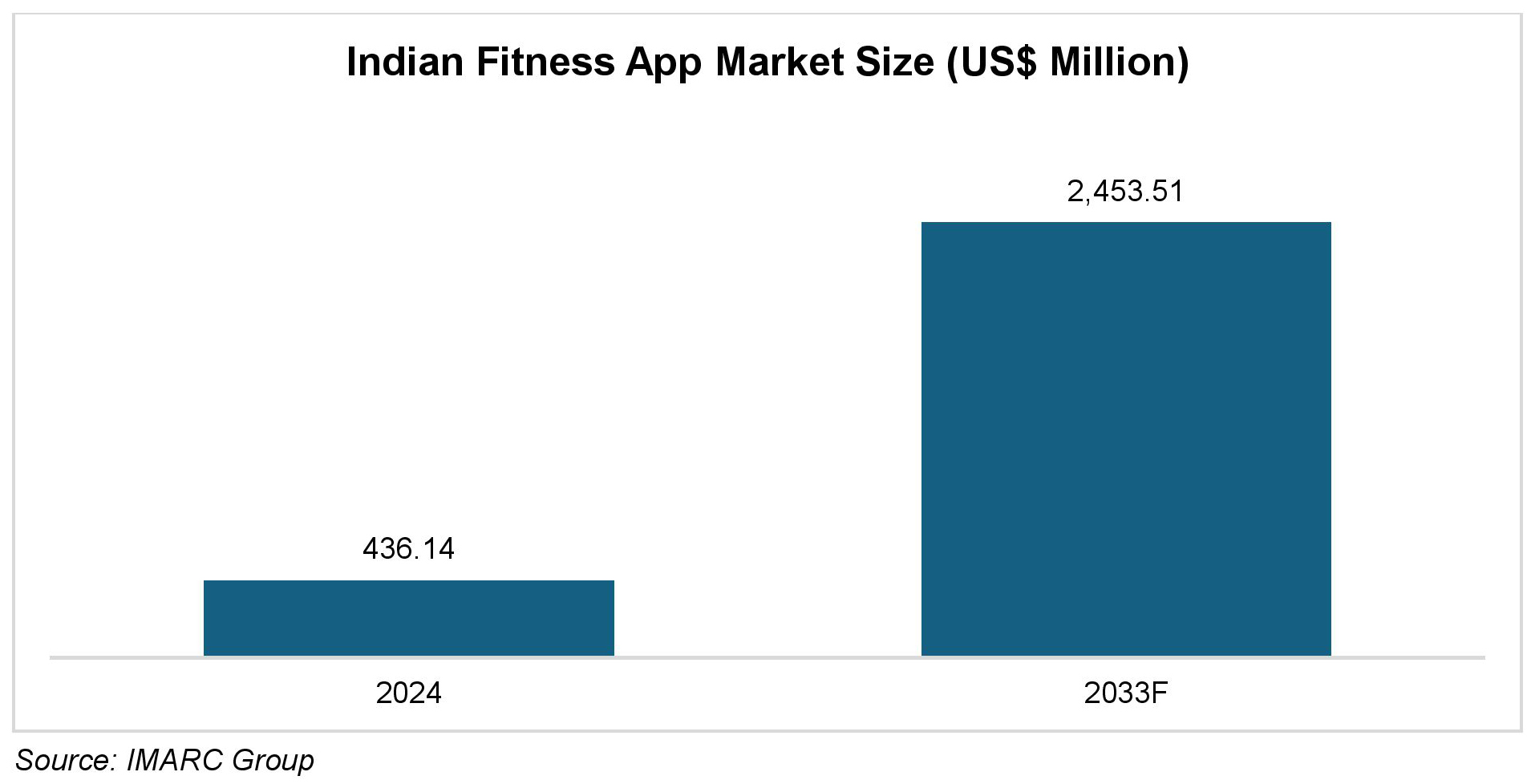
The Indian digital health/fitness landscape represents a healthy economic opportunity. The India Fitness App Market size in 2024 was Rs. 3,881.65 crore (US$ 436.14 million), which is expected to grow at a 19.47% CAGR from 2025 to 2033, reaching Rs. 21,836.24 crore (US$ 2.45 billion) by 2033. The growth can be attributed to the increase in the number of smartphones, health awareness, and the need for personalized health/fitness apps.
This parallel trend can be observed for the broader fitness services segment. In the Deloitte’s India Fitness Market Report 2025, the fitness service segment is predicted to grow and more than double its revenue from Rs. 16,200 crore (US$ 1.82 billion) in 2024 to Rs. 37,700 crore (US$ 4.24 billion) by 2030. However, the growth is considered to be geographically subjective. Cities from the top 10 account for over 56% of revenue, but only host 31% of fitness establishments, while Tier 2 cities and onwards account for 40% of revenue but host most of the fitness facilities.
Since the inception of the Fit India Movement in August 2019, the focus has been on integrating fitness into the fabric of life through physical activities promoted via campaigns. The facility to track physical activity and monitor goals via the Fit India app and MyGov sites points to the increasing adoption of digital fitness tools.
Fitness Apps Shaping India’s Digital Fitness Ecosystem
The fitness app market in India has reached the point where it is diverse and sprawling, with both local and international fitness apps available for all needs, whether it is regarding weight, in-home workouts, performance tracking, and much more. Cult.fit, is a mix of digital workout content, live classes, meditation, as well as offline gyms. HealthifyMe has established its place in the Indian health and fitness niche as an app that uses AI technology for nutrition tracking, providing personalized health plans that comply with the dietary habits of the Indian population.
Global names such as Nike Training Club and MyFitnessPal continue to be popular options among urban fitness enthusiasts who require training programs, calorie tracking, and a wide library of workouts. Runners and cyclists are often found on Strava and Adidas Running due to the social aspects and performance tracking. Community-based fitness platforms such as Fittr provide a combination of coaching, transformation programs, and community support that encourages accountability in fitness.
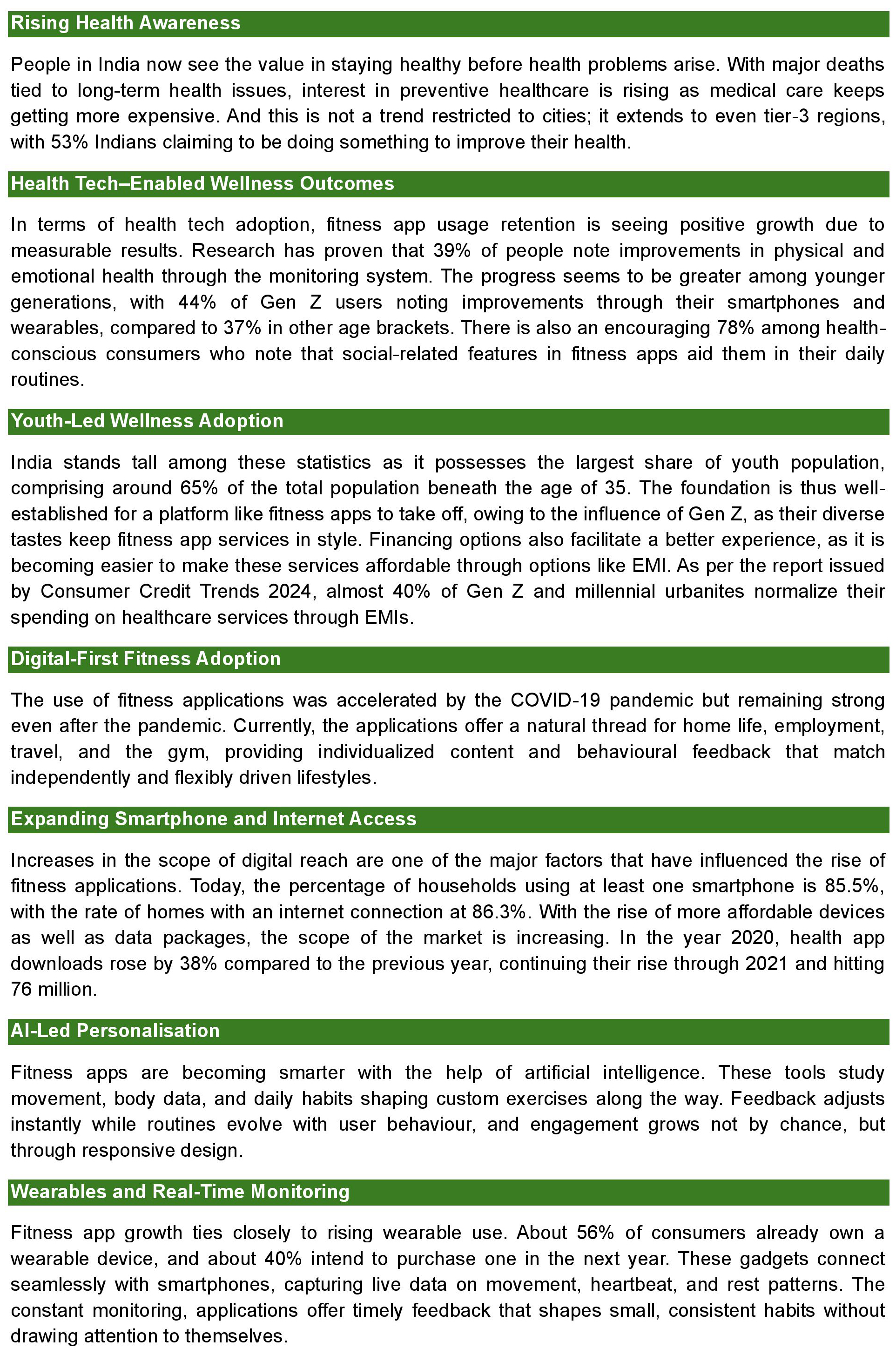
Meanwhile, other wellness and activity tracking applications, including Google Fit, Samsung Health, and Garmin Connect, have evolved along with wearables to enable users to track their steps, heart rate, sleep, and other activities within larger health management infrastructures. Wellness platform such as such as Freeletics, FitOn, and Apple Fitness+ find followers among high-end users who prefer structured workouts through paid subscriptions. Shifting habits in India reveal fitness becoming less about gyms, more about ongoing personal practice. This change grows alongside wider access to smartphones, greater attention to well-being, along with a need for adaptable exercise options fitting seamlessly into everyday life - seen clearly within city and suburban communities.
Growth Drivers and Key Trends
Outlook: The Road Ahead
The fitness revolution in India is taking an interesting turn, with deeper and ingrained fitness habits surpassing the grip of gym memberships. Though the gym penetration in India is limited, the adoption of daily wellness habits is now increasing through digital technologies that focus on accessibility, adaptability, and personalization.
The role played by the fitness apps is going to be an integral facility in the country’s health and wellness arena. The advancement in technology adoption, government initiatives, and increasing awareness, along with the growth in internet penetration across the tier-2 and tier-3 cities, can ensure the growth and adoption of digital fitness as an integral part of the preventive healthcare approach. The next growth cycle depends on how to keep users engaged and make fitness a lifestyle rather than a routine.
FAQs
Why are fitness apps growing in India?
Fitness apps are growing in India because they address low gym penetration by providing accessible, flexible, and personalized wellness solutions that can be used across geographies without requiring physical infrastructure.
How big is India’s fitness app market?
The India fitness app market accounted for Rs. 3,881.65 crore (US$ 436.14 million) in 2024 and is projected to grow at a 19.47% CAGR from 2025 to 2033, reaching Rs. 21,836.24 crore (US$ 2.45 billion) by 2033.
How does government policy support digital fitness?
Government initiatives such as the Fit India Movement and the Ayushman Bharat Digital Mission support digital fitness by promoting preventive healthcare, encouraging health awareness, and enabling the adoption of digital health platforms.
Why are Tier-2 and Tier-3 cities important for fitness apps?
Tier-2 and Tier-3 cities are important for fitness apps because rising internet penetration and limited access to organized fitness infrastructure make digital platforms a convenient and scalable alternative for health and wellness services.
What will drive the future growth of fitness apps in India?
The future growth of fitness apps in India will be driven by AI-led personalization, integration with wearable devices, and improved user engagement through data-driven fitness and wellness programs.
Partners