SEARCH
RECENT POSTS
Categories
- Agriculture (37)
- Automobiles (20)
- Banking and Financial services (36)
- Consumer Markets (57)
- Defence (6)
- Ecommerce (21)
- Economy (72)
- Education (14)
- Engineering (8)
- Exports (21)
- Healthcare (25)
- India Inc. (10)
- Infrastructure (31)
- Manufacturing (32)
- Media and Entertainment (16)
- Micro, Small & Medium Enterprises (MSMEs) (16)
- Miscellaneous (31)
- Perspectives from India (37)
- Pharmaceuticals (5)
- Railways (4)
- Real Estate (20)
- Renewable Energy (19)
- Research and Development (12)
- Retail (1)
- Services (7)
- Startups (16)
- Technology (66)
- Textiles (8)
- Tourism (16)
- Trade (8)
Authors






How Green Hydrogen Will Shape Renewable Energy in India
- Feb 10, 2026, 12:20
- Renewable Energy
- IBEF
Green hydrogen, a superior and a more sustainable alternative to fossil fuels is rapidly emerging as the clean fuel of the future in India. It has zero carbon emissions and broad industrial applications and has the potential to transform the energy mix in India leading to a decrease in fossil fuel use. To aid its growth, the Indian government has responded with a bold National Green Hydrogen Mission, with a target of five million tonnes of annual production by 2030, backed by 125 gigawatts (GW) of new solar and wind energy to the vision of net zero by 2070. This change has the potential to bring investments of Rs. 8,00,000 crore (US$ 89.45 billion), generate six lakh new jobs, and prevent almost 50 million metric tonnes of greenhouse gas emissions annually. Be it for common day to day transportation or demanding heavy industrial tasks, green hydrogen is poised to drive deep decarbonisation across sectors.
What makes green hydrogen different?
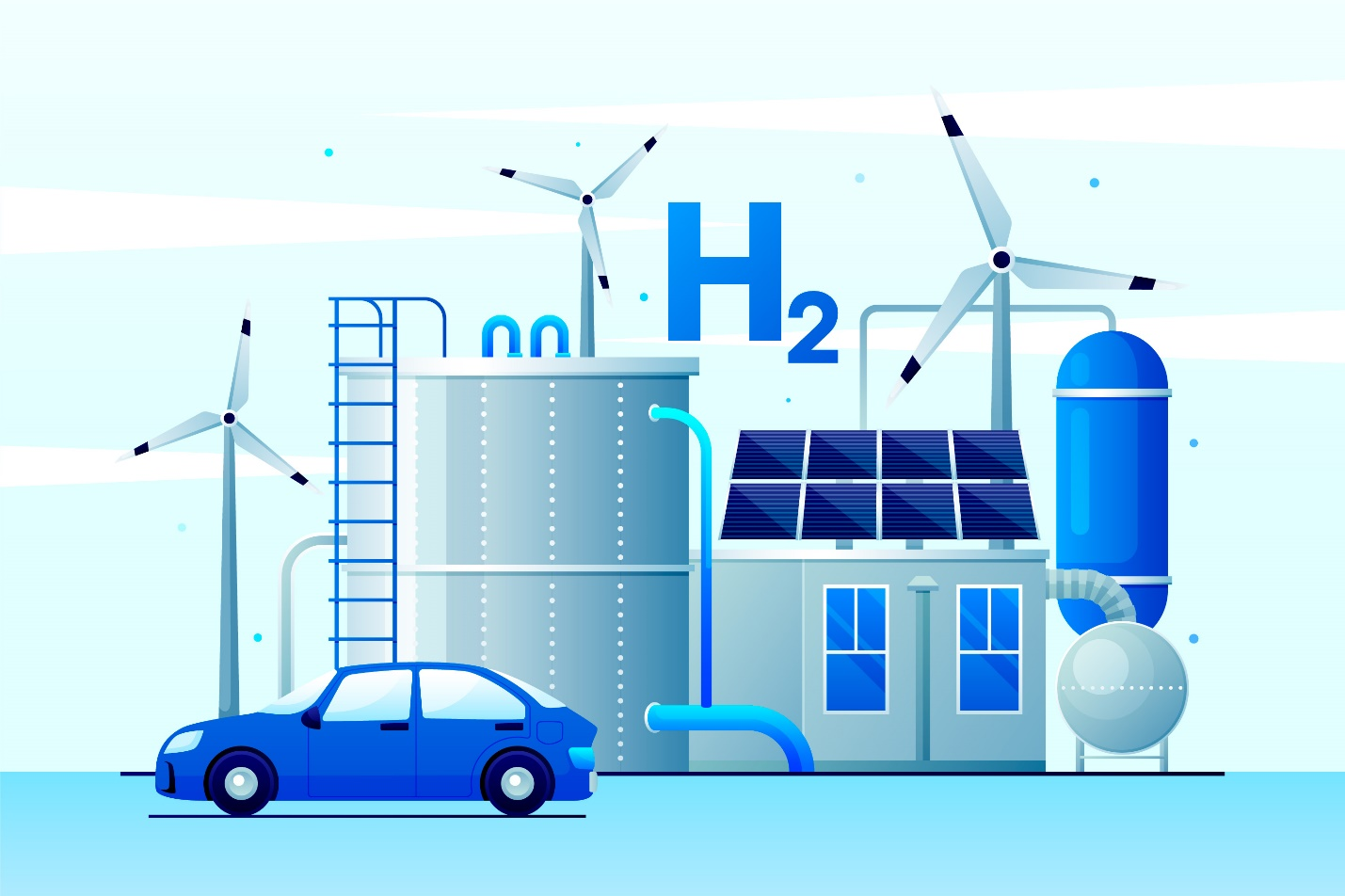
Green hydrogen is produced with renewable energy sources unlike grey hydrogen that is produced with the help of fossil fuels and releases carbon dioxide and other harmful gases. Green hydrogen is produced by electrolysers that use solar or wind energy to divide water into hydrogen and oxygen.
Green hydrogen is a flexible energy carrier as it can be transported and stored. It enables the storage of surplus renewable energy and can replace fossil fuels in regions that are comparatively harder to electrify. This is especially significant in industrial processes that require high temperature heat or hydrogen as a feedstock e.g. in oil refining, fertiliser manufacturing and steel production.
How renewable power feeds hydrogen economy
Green hydrogen is based on renewable electricity that is plentiful and cheap. By July 2025, India already met half of its installed electrical capacity through non-fossil fuels sources five years earlier than its 2030 target. The increasing solar and wind power of India puts it in a unique position to emerge as a global centre of green hydrogen production. To reinforce this, the government has exempted transmission fees on renewable power applied in hydrogen projects for 25 years and are given priority access to the grid. Along with this, three coastal areas have been identified as Green Hydrogen Hubs, including Kandla in Gujarat, Thoothukudi in Tamil Nadu and Paradip in Odisha. These regions will incorporate green hydrogen production, storage and exportation facilities, which will enjoy the advantage of smooth clearances and infrastructure support.
Where green hydrogen can transform industries
Green hydrogen is a sustainable substitute in industries that have been relying on fossil fuels. It holds the potential to decarbonise industries such as oil refining, fertiliser production, and steelmaking, where hydrogen is already being utilised. Industrial carbon footprints can also be significantly decreased by substituting grey hydrogen with green alternatives.
The fertiliser industry that is highly dependent on hydrogen derived ammonia can gain by having cleaner production processes. Likewise, the steel sector can embrace green hydrogen in direct reduced iron (DRI) processes, which will reduce emissions by a large margin.
Green hydrogen is a perfect solution in mobility in long-haul transport, heavy duty trucks, and public buses, where battery-electric options are constrained. Hydrogen fuel cell cars have longer range and can be refuelled faster, so they can be used in commercial and intercity use.
Hydrogen based solutions are also being considered by ports, aviation and railways. Pilot projects are being undertaken to use hydrogen in maritime ports to cut down on the emissions of cargo handling and experiment with hydrogen powered trains as a way of sustainable rail travel.
Moreover, green hydrogen allows storage of renewable energy, which facilitates the balancing of the grid and acts as a reliable supply of energy during peak demand. It can also be transformed into derivatives such as green ammonia or methanol, which can be used as clean fuels or industrial feedstocks.
Creating international relationships and building an export edge
India is not only seeking to cater to domestic demand but also to become a key exporter of green hydrogen and its derivatives, ammonia and methanol. India is a natural competitor due to its cost advantage in renewable energy and access to robust coastal infrastructure. The Green Hydrogen Certification Scheme by the government is a measure to ensure that the hydrogen exported by the government is sustainable in the global market. As Europe, Japan and Korea are interested in importing clean hydrogen, India may become the key to the global green energy supply chain.
Recently in 2024, India entered the international hydrogen community at the World Hydrogen Summit in Rotterdam, opening the first Indian Pavilion. This positions India as an excellent investment partner and a major player in the new world of hydrogen economy.
- European Union (EU)-India Cooperation: Cooperation is increasing under the EU-India Trade and Technology Council where over 30 joint proposals have been received on the production of hydrogen using waste.
- India-United Kingdom (UK) Partnership: A dedicated Standards Partnership Workshop in February 2025 took place to bolster collaboration on hydrogen standardisation, including safe, scalable, and globally harmonised Regulations, Codes and Standards (RCS) to improve trade.
- Collaboration with H2Global: In November 2024, Solar Energy Corporation of India (SECI) entered into a Memorandum of understanding (MOU) with H2Global Stiftung in Germany to cooperate in the market based mechanisms and joint tender designs to enable the export of Indian green hydrogen to foreign markets.
- Singapore: Sembcorp Industries signed MoUs with V.O. Chidambaranar and Paradip Port Authorities in October 2025 to develop an integrated green hydrogen and ammonia hub to produce, store and export.
Government incentives backing the growth
National Green Hydrogen Mission - The National Green Hydrogen Mission was launched in 2023 with a target of five million tonnes of green hydrogen annually by 2030. The budget of the mission is Rs. 19,744 crore (US$ 2.2 billion) and is headed by the Ministry of New and Renewable Energy.
Strategic Interventions of Green Hydrogen Transition (SIGHT) - A major aspect of the mission is the SIGHT scheme that will offer incentives to the manufacture of electrolysers and the production of green hydrogen to the extent of Rs. 17,490 crore (US$ 1.94 billion). Under this scheme, major players such as Reliance, Adani, L&T and Jindal have already enrolled to construct electrolyser hubs and factories.
In addition to direct incentives, an all-inclusive enabling framework is being created to de-risk investments and speed up development.
- Policy Framework: To enable the provision of low-cost renewable energy to hydrogen production, the government has granted a waiver of Interstate transmission charges and a time limited grant of Open Access.
- Skill Development: A coordinated skill development programme is underway, that has already seen over 5,600 trainees certified in hydrogen related qualifications, creating a future ready workforce.
Technology, innovation and investment trends
Another technology and innovation opportunity in India is the green hydrogen story. Electrolysers, storage solutions and hydrogen powered mobility are being invested in by startups, public sector companies and global joint ventures. Firms such as L&T, NTPC and Greenko are spearheading mega projects and forming alliances. With the cost of hydrogen dropping to less than Rs. 270 (US$ 3) per kg, the economics becomes feasible to a wider adoption.
By 2030, India may cut down on energy imports by Rs. 1,00,000 crore (US$ 11.2 billion) per year. It is estimated that the green hydrogen economy would draw investments of Rs. 8,00,000-10,00,000 crore (US$ 89-111 billion). The process of the hydrogen economy in India is only starting. However, with a strong policy base, innovation and industrial impetus, green hydrogen will drive the future of the country towards a cleaner, self-sufficient, and a low carbon economy.
FAQs
Which sectors will benefit most from green hydrogen?
Refining, fertilisers and steelmaking are early adopters, supported by new green hydrogen plant projects in India and wider investment across the renewable energy industry in the country.
How is India emerging as a major green hydrogen competitor?
Certification, export-focused hubs and partnerships are helping position India as a leading supplier in the green hydrogen market in India.
Why is green hydrogen in India gaining momentum?
Falling renewable power costs and strong policy incentives are boosting green hydrogen production in India and widening the green hydrogen market in India.
What makes India competitive globally?
Low renewable power costs, large coastal hubs, favourable certification standards and export-ready infrastructure give India a strong advantage in the global green hydrogen market.
How will green hydrogen cut India’s emissions?
Replacing grey hydrogen in refining, fertilisers and steel with green alternatives can prevent almost 50 million metric tonnes of emissions each year, aligned with India’s goal of producing five million tonnes of green hydrogen by 2030.
Partners