SEARCH
RECENT POSTS
Categories
- Agriculture (39)
- Automobiles (20)
- Banking and Financial services (36)
- Consumer Markets (57)
- Defence (6)
- Ecommerce (21)
- Economy (72)
- Education (14)
- Engineering (9)
- Exports (22)
- Healthcare (25)
- India Inc. (10)
- Infrastructure (31)
- Manufacturing (33)
- Media and Entertainment (17)
- Micro, Small & Medium Enterprises (MSMEs) (16)
- Miscellaneous (31)
- Perspectives from India (37)
- Pharmaceuticals (5)
- Railways (4)
- Real Estate (20)
- Renewable Energy (19)
- Research and Development (12)
- Retail (1)
- Services (7)
- Startups (16)
- Technology (66)
- Textiles (8)
- Tourism (16)
- Trade (9)
Authors






How India's Industrial Valve and Pump Industry Supports Infrastructure and Manufacturing
- Oct 06, 2026, 16:30
- Manufacturing
- IBEF
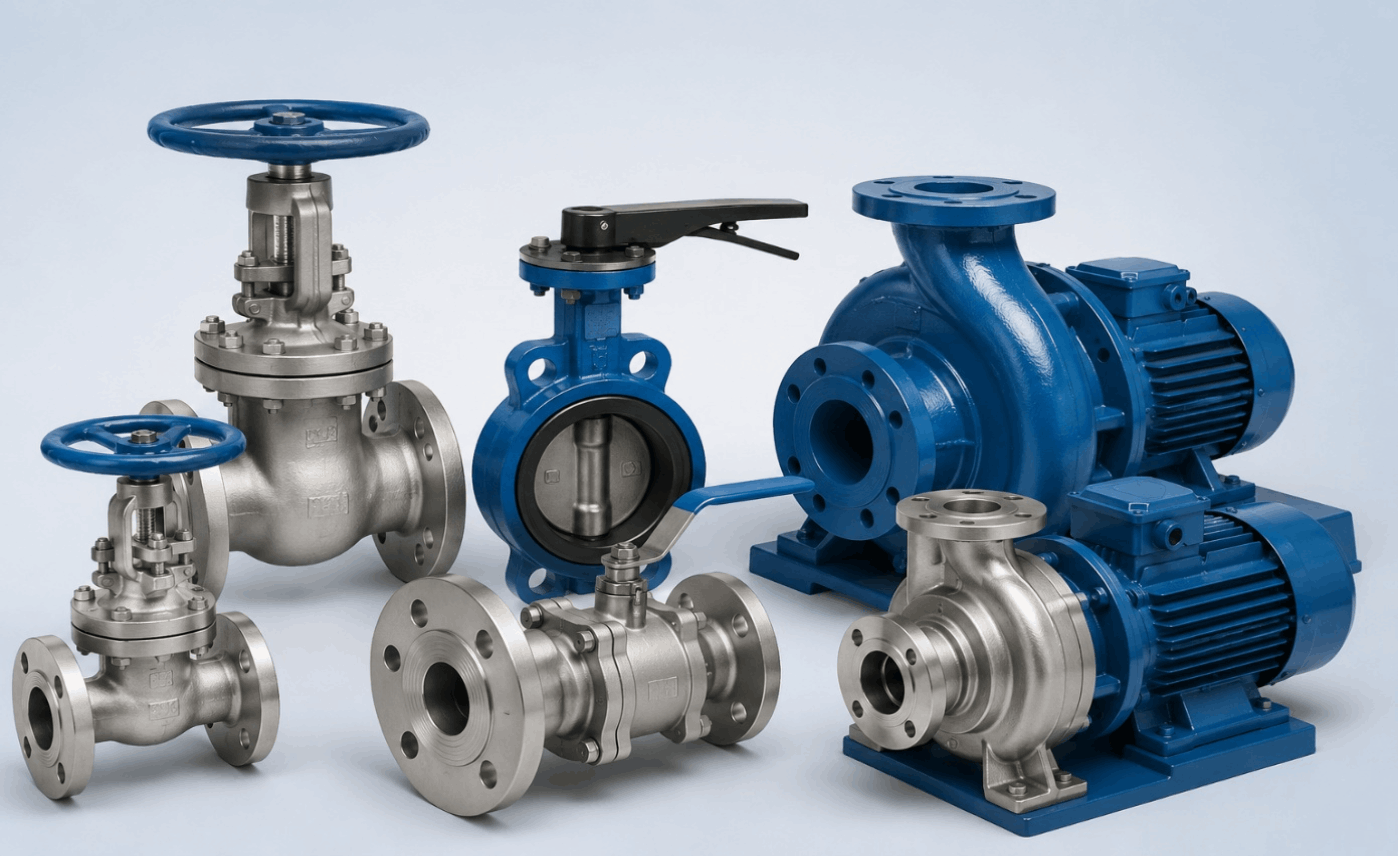
Pumps and industrial valves represent the basic building blocks of today’s modern infrastructure and manufacturing by enabling the efficient movement, regulation and control of liquids, and other process fluids across industrial systems. The pumps enable the transportation of fluids in pipelines and processing units, whereas the valves provide control over the flow of fluids. These products are used across a wide range of industries, including water and wastewater management, power generation, pharmaceuticals, oil and gas, chemicals, mining, food processing, steel, construction among others, where continuous fluid handling is essential for smooth industrial operations.
India's Industrial Valve and Pump Industry: Market Landscape and Growth Potential
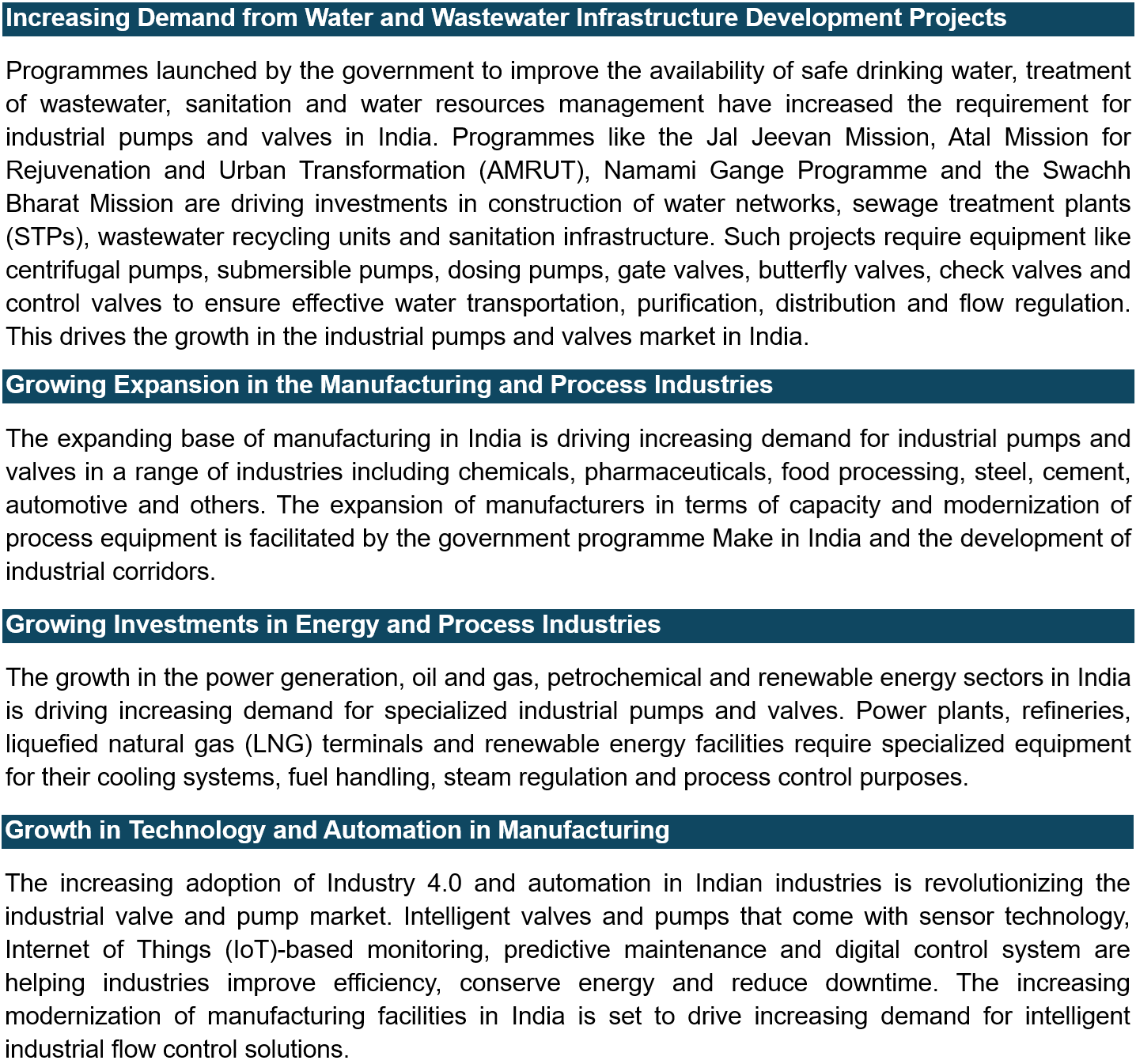
With the rise in industrialisation and infrastructure development, India requires highly efficient pumps and industrial valves. Government initiatives such as Make in India, Production Linked Incentive (PLI) Scheme, Market Access Initiative (MAI) Scheme, Brand India Engineering Campaign, Jal Jeevan Mission and the expansion of manufacturing under various industrial policies are driving investments across sectors that rely extensively on fluid control equipment.
As per DPIIT, India’s manufacturing industry is set to be one of the key drivers for India’s economic growth in the long term, supported by continued investments in industrial infrastructure, advanced engineering capabilities, and policy-led manufacturing initiatives. India has become the most important manufacturing destination for engineering products because of the presence of a robust network of manufacturers, MSMEs, and export-based industries.
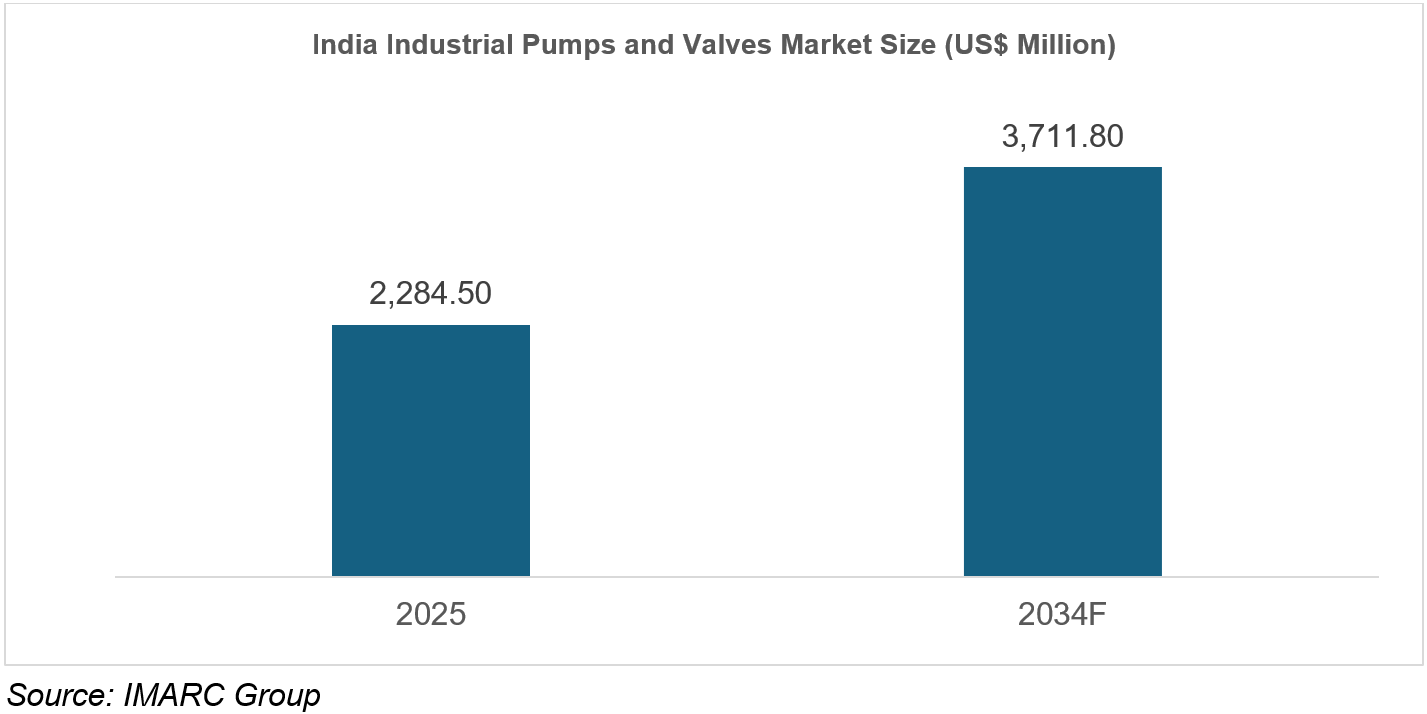
India's industrial valve and pump industry was valued at Rs. 19,911.10 crore (US$ 2,284.50 million) in 2025 and is projected to reach Rs. 34,399.04 crore (US$ 3,711.80 million) by 2034. The industrial valves and pumps industry is a key contributor to India's engineering and capital goods sector, supporting the development of infrastructure and the efficient operation of manufacturing and process industries. The sector includes a diverse network of large manufacturers, micro, small and medium enterprises (MSMEs), and engineering firms operating in both domestic and international markets. India manufactures a wide range of industrial pumps, valves, and flow control systems used in water and wastewater management, oil and gas, power generation, chemical, pharmaceutical, mining, and food processing industries, showing the growth of India's industrial base.
India's engineering exports showed steady growth within the last decade, from around Rs. 4.28 lakh crore (US$ 70 billion) in FY15 to a record-high Rs. 10.82 lakh crore (US$ 122.43 billion) in FY26, thus confirming the increasing manufacturing capabilities of India and its growing competitiveness. Engineering sector remains the main exporter in India, which accounts for almost 28% of India's merchandise exports. Moreover, the sector showed record growth in exports for three consecutive years, when the exports amounted to Rs. 9.05 lakh crore (US$ 109.30 billion) in FY24, to Rs. 10.09 lakh crore (US$ 116.67 billion) in FY25 and Rs. 10.82 lakh crore (US$ 122.43 billion) in FY26.
The growth has been supported by government initiatives such as the Market Access Initiative (MAI) Scheme, Brand India Engineering Campaign, and the Production Linked Incentive (PLI) Scheme, among others, along with expanded market access through Free Trade Agreements (FTAs) with the United Arab Emirates, Australia, the United Kingdom, the European Union, and the European Free Trade Association (EFTA) countries. Further strengthening the export ecosystem, the Export Promotion Mission, with an outlay of Rs. 25,060 crore (US$ 2.65 billion) for 2025-31, aims to promote exports through digital trade facilitation, improved market access, and enhanced support for micro, small and medium enterprises (MSMEs).
As India progresses further with investment in infrastructure, manufacturing industries, energy, and urban developments, there is expected to be increasing demand for industrial valves and pumps. Along with the government policies favouring domestic manufacture and export of engineering, the industry is set to strengthen its position in aiding India's infrastructure growth, industrial competitiveness, and engineering supply chain.
Government Initiatives Strengthening India's Industrial Valve and Pump Industry
Government policy has played a crucial role in strengthening India's industrial valve and pump industry by promoting domestic manufacturing, accelerating infrastructure development and enhancing the competitiveness of the engineering sector.
Growth Drivers and Key Trends
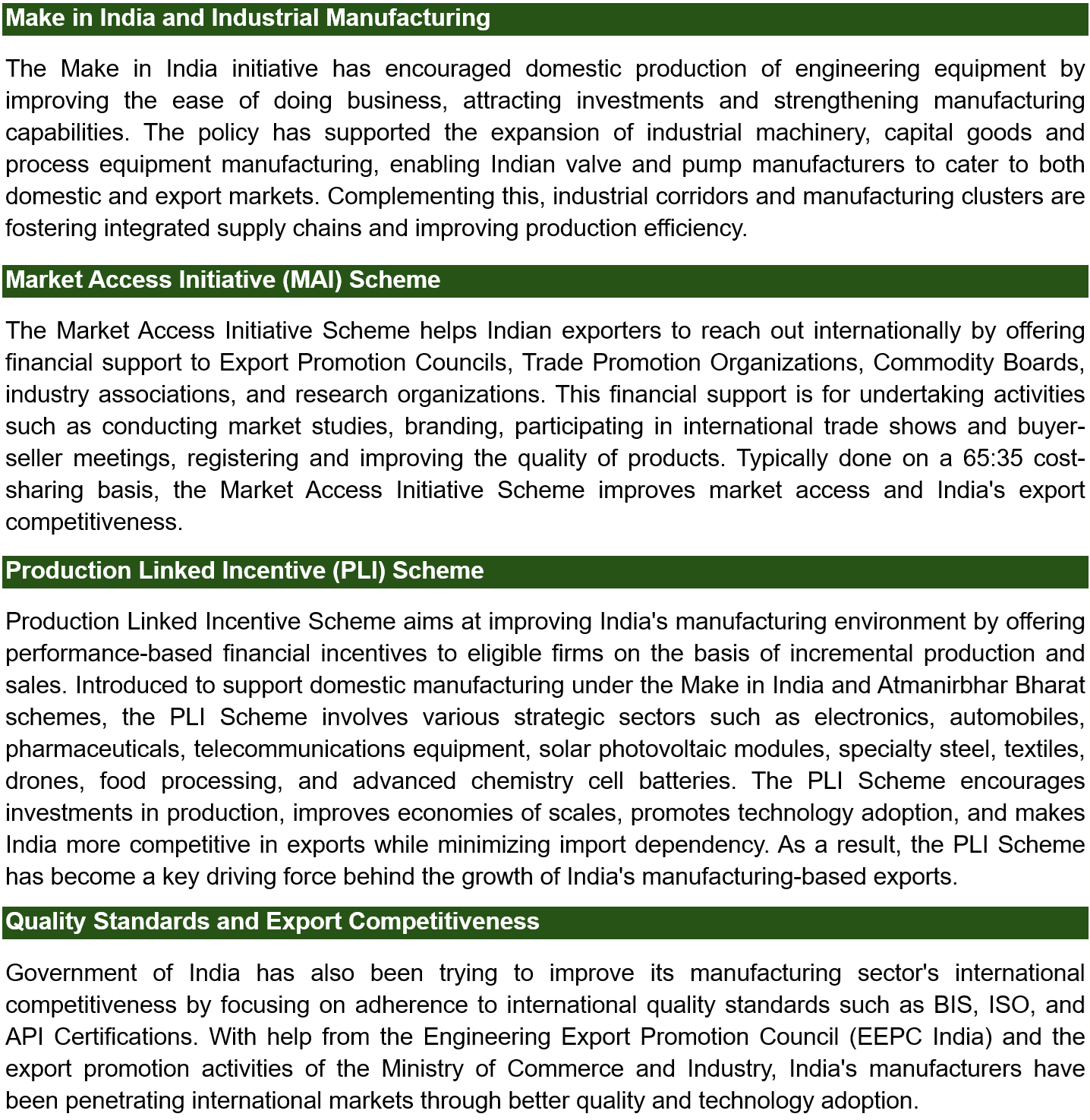
The following factors are supporting the growth of India's industrial valve and pump industry, driven by increasing investments in infrastructure, manufacturing, water management and energy projects.
Outlook and Road Ahead
India's industrial valves and pumps industry is well positioned for sustained growth, supported by increasing investments in infrastructure, manufacturing, and green energy projects. In addition, the establishment of new manufacturing facilities, including semiconductor fabrication plants, is expected to drive demand for industrial valves and pumps across process manufacturing and utility applications. Increasing investments in the areas of water supply networks, sewage treatment, industrial corridors, electricity production, and construction of smart cities are likely to create steady demand for advanced solutions of fluid handling and flow control systems. Government initiatives to strengthen domestic manufacturing, supported by rising engineering exports, are enhancing India's position as a global manufacturing hub and creating new export opportunities for Indian manufacturers.
Another key factor that will contribute to the growth of the industrial valve and pump industry will be the rise in the application of smart manufacturing, energy-saving solutions, and digital industrial technologies. With the increasing need of industrial facilities to improve their performance by implementing new technologies, the demand for intelligent valve and pump systems, which will be equipped with IoT monitoring, predictive maintenance, and automation technologies, will rise. Further, the development of emerging segments such as green hydrogen, water recycling, desalination, renewable energy, and process manufacturing will create new market opportunities.
Supported by continued policy initiatives, infrastructure investments and technological innovation, India's industrial valve and pump industry is poised to play an increasingly strategic role in strengthening the country's industrial competitiveness. By enabling efficient resource management, reliable industrial operations and sustainable infrastructure development, the sector will continue to support India's vision of becoming a globally competitive manufacturing and engineering powerhouse.
FAQs
Why is the industrial valves and pumps industry considering a key part of India's engineering sector?
The industry is an integral part of India's engineering and capital goods sector, supplying critical equipment for infrastructure, manufacturing, energy, and process industries. It also supports domestic production and engineering exports.
How is urbanisation influencing demand for industrial valves and pumps in India?
Rapid urbanisation is increasing investments in water supply networks, sewage treatment plants, commercial buildings, and industrial infrastructure. These developments are driving the demand for industrial valves and pumps across municipal and industrial applications.
How do industrial valves and pumps improve operational efficiency?
Industrial valves and pumps help regulate fluid flow, maintain system pressure, and optimise energy consumption. Their use improves process efficiency, reduces operational downtime, and enhances the reliability of industrial systems.
What is the importance of the aftermarket for industrial valves and pumps?
The aftermarket, including maintenance, repair, replacement, and refurbishment services, plays an important role in extending equipment life and improving operational reliability. Growing industrial activity is expected to support demand for aftermarket services.
How is export growth benefiting India's industrial valves and pumps industry?
Growing engineering, exports are creating opportunities for domestic manufacturers to expand their presence in international markets. Increasing product quality, manufacturing capabilities, and compliance with global standards are supporting the industry's export competitiveness.
Partners