SEARCH
RECENT POSTS
Categories
- Agriculture (39)
- Automobiles (21)
- Banking and Financial services (36)
- Consumer Markets (58)
- Defence (6)
- Ecommerce (21)
- Economy (72)
- Education (14)
- Engineering (9)
- Exports (22)
- Healthcare (25)
- India Inc. (10)
- Infrastructure (31)
- Manufacturing (33)
- Media and Entertainment (17)
- Micro, Small & Medium Enterprises (MSMEs) (16)
- Miscellaneous (31)
- Perspectives from India (37)
- Pharmaceuticals (5)
- Railways (5)
- Real Estate (20)
- Renewable Energy (19)
- Research and Development (12)
- Retail (2)
- Services (8)
- Startups (16)
- Technology (66)
- Textiles (8)
- Tourism (16)
- Trade (9)
Authors






How Ready-to-Cook Foods Are Changing Everyday Indian Meals
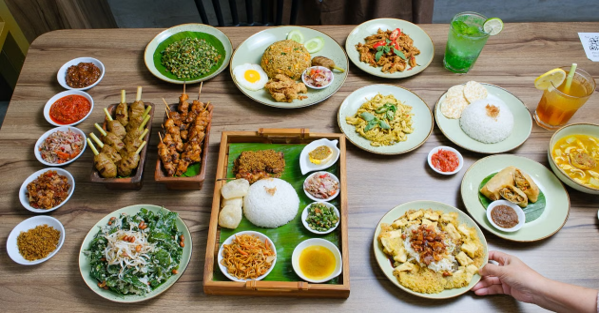
Throughout the years, Indian cooking has been associated with dependence on fresh produce and elaborate preparation processes. Activities like soaking lentils, grinding spices, kneading dough, and fermenting batters have been traditionally carried out before the meal preparation. With increasing time constraints associated with urban lifestyles and family life, which includes working, commuting, and taking care of families, time for these activities is changing.
Ready-to-cook (RTC) foods have started to play an increasing role in this context of changing food preparation practices. Instead of replacing meal preparation altogether, these products allow for the automation of certain cooking processes. One can cook a meal at home using ready-made chapatis, prepare accompaniments using frozen parathas, or use ready-made batter for dosas. It is another approach to convenience: shorter preparation times without necessarily losing the flavor of homemade food.
This trend is already noticeable in consumer behavior. According to data provided by Kantar Worldpanel in The Economic Times, the RTC segment showed 58% growth in 2024, while the overall packaged food segment experienced a growth of only 8%. At the same time, RTC foods doubled their volumes in the past two years, adding 18 million households to their consumers' base. From batter and curry mixes to frozen snacks and ready-to-eat meals, RTC foods are gradually making their way into daily meals. In other words, the Indian meal stopped being a choice between cooking and convenience.
Global flavours and frozen foods are widening the menu
Ready-to-cook (RTC) market in India has evolved beyond the realm of frozen snacks and has now expanded to include a wider range of cuisines and usage occasions. Current product offerings include Indian breads and kebabs, Pan-Asian momos, Korean-style chicken and even Western snacks and thus increasingly positioning frozen foods as alternatives to restaurant and food delivery offerings at home.
A clear example of this development is the recent expansion move of ITC. Following the acquisition of Prasuma in 2025, ITC has reported more than 20% growth in the dairy, snacks, noodles and frozen snacks segments in the June quarter 2026. The consolidated frozen portfolio now features over 80 products under the ITC Master Chef brand and includes offerings from Prasuma in North Indian, Pan-Asian and Oriental cuisines. ITC's digital-first portfolio, which includes Prasuma and Meatigo has generated the annual revenue run-rate of approximately Rs.1,500 crore (US$ 172.4 million) on the trajectory driven by the growth of e-commerce, quick commerce and modern trade. All of the above indicate that the category expansion has been powered not only by the diversification of offerings but also by greater digital reach, making it possible for brands to serve wider occasions.
Products innovations follow a similar path. Products like Mumbai Aloo Vada of HyFun Foods show how the Indian flavors and street-foods are being modernized for retail consumption. Simultaneously, Godrej Yummiez has created a diverse portfolio of over 40 products including burger patties, nuggets, sausages and also momos, kebabs and Indian snacks thus positioning the frozen food as "Ghar Ka Fast Food". Utilization of Individual Quick-Freezing technology indicates the importance of product freshness as the differentiation point in the category.
The market has now started showing signs of becoming specialized. The company behind the brand of Zappfresh named DSM Fresh Foods launched itself in the frozen vegetarian convenience food market by creating Meevaa Foods in 2026. This brand has a range of 12 high-protein foods like momos, kebabs, patties, tikkis, and spring rolls. An impressive 55% repeat customer rate in Delhi-NCR along with 3,430 orders within 11 days of the launch campaign demonstrates promising signs for the future in terms of convenience food products that cater to particular needs of the consumers.
From supermarket shelves to the 10-minute food economy
The concept of quick commerce is disrupting the distribution economics of chilled and frozen ready-to-consume (RTC) foods. Earlier, smaller players were facing the problem of having higher costs of installing and managing the freezers/chillers at local neighbourhood retail stores, making their geographical expansion difficult beyond large urban centers. The Hindustan Times report published in July 2026 revealed that a company dealing in chilled and frozen foods expanded from 8-10 cities to 18-20 cities and then had access to approximately 120 cities owing to quick commerce delivery channel infrastructure.
The scale of this particular distribution channel has become commercially significant in itself. According to the Redseer Strategy Consultants, frozen RTC sales on quick commerce platforms amounted to around Rs. 3,200 crore (US$ 367.1 million) in the calendar year 2025, growing by about 88% year-on-year. Vegetarian products comprised nearly 47% of the frozen RTC products available on such platforms. Frozen vegetarian snacks like smileys, aloo tikkis, and mini samosas, along with peas, contributed nearly 40% of the frozen RTC category. This shows that the growth of frozen foods is not limited only to premium products but the everyday vegetarian meal components/snacks are contributing significantly to it.
The impact of quick commerce goes beyond simply speeding up delivery processes. The cold chain system enables easy access to frozen foods, and more than 6,000 dark stores across India ensure an established distribution channel for brands. In doing so, the dependency of small companies that specialize in refrigerated and frozen food on building their cold chain is reduced, making the distribution process a key facilitator in driving categories along with innovations in products.
Demand trends shaping RTC consumption
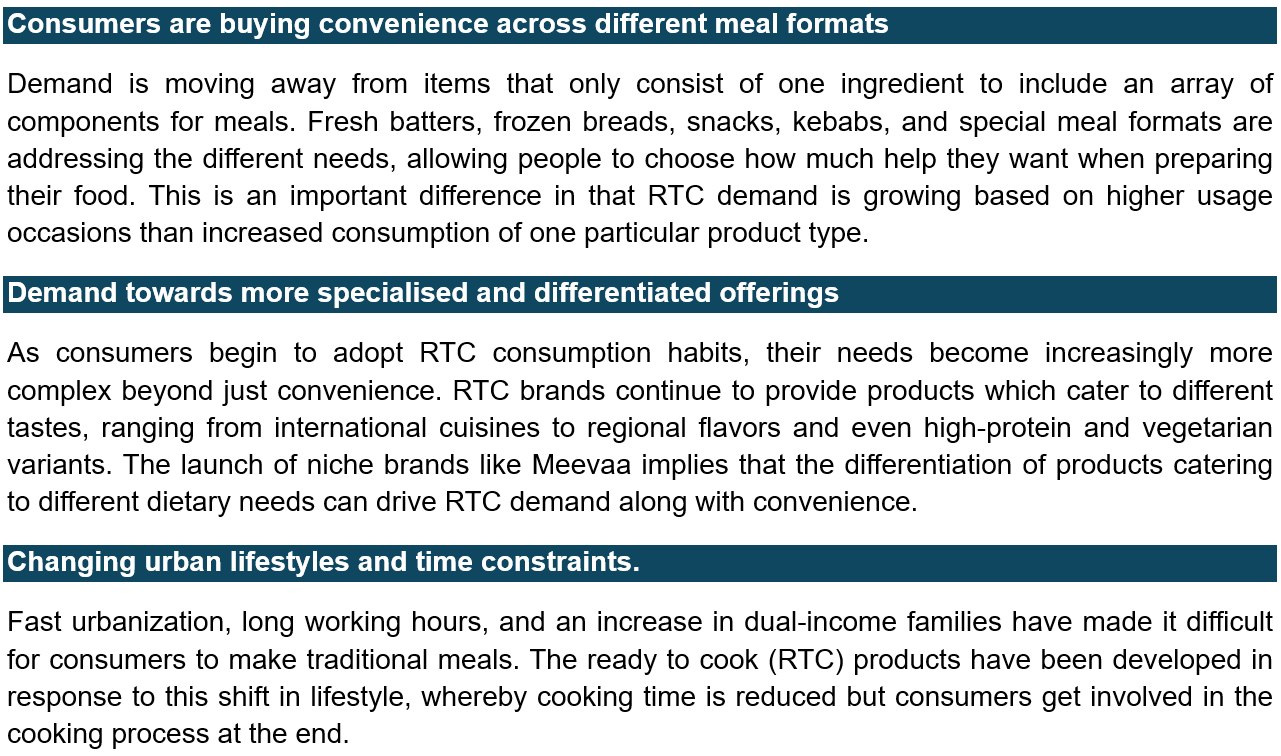
The trend in the Indian market for ready-to-cook products is changing as there is an overall reorientation in how families plan their cooking process. There is no doubt that the factor of saving time is still important but customers become more selective about what they are buying, choosing RTC products to save time during the particular stage of cooking instead of replacing home cooked meals completely.
Competitive Landscape
The market for ready-to-cook (RTC) foods in India includes a range of large FMCG companies, existing food brands, and convenience food companies. The market includes different types of products, ranging from instant mixes, fresh batters, meals components, and frozen snacks, which allows companies to compete at various stages of consumption rather than in one type of product category.
Among the major players, ITC Limited is expanding into the market of frozen and convenience foods with Master Chef and Prasuma, while MTR Foods, Gits Food Products, and Haldiram Foods have already established their place in the market of traditional Indian meals solutions and convenience foods. Nestlé India and Tata Consumer Products are adding to the competitiveness of the market with their diversified portfolios of packaged foods.
Specific players like iD Fresh Food and McCain Foods India focus on distinct types of foods including, fresh meals and frozen snacks, respectively, while Kohinoor Foods Ltd., Bambino Agro Industries Ltd., and Capital Foods Limited add variety to the market of instant and convenience foods. Thus, fragmentation of the market suggests that competition is becoming more related to innovation, distribution capabilities, and making traditional foods convenient to consume.
Government support is strengthening the RTC ecosystem
Government assistance adds to the larger ecosystem in which the market for ready-to-cook (RTC) in India functions. The Production Linked Incentive Scheme for the Food Processing Industry (PLISFPI) rolled out between 2021-22 to 2026-27, with an overall cost of Rs. 10,900 crore (US$ 1.14 billion). Ready-To-Cook and Ready-To-Eat foods are one of the four major product categories covered under this scheme. The scheme focuses on value addition, increase food processing capabilities and development of food brands in India.
Simultaneously, the Pradhan Mantri Kisan SAMPADA Yojana (PMKSY), effective since 2017-18, supports preservation, food processing and cold chain infrastructure across the farm-to-retail value chain. By 30 June 2026, 1,256 of 1,735 approved projects have been set up, providing 294.21 lakh metric tonnes per annum processing and preservation capacity and benefitting around 37.76 lakh farmers. All these schemes combined help provide the infrastructure needed for processed and RTC food while improving supply chain efficient and value addition.
The road ahead
Ready-to-Cook (RTC) foods are not only being recognized more as a remedy for time pressures but are also being seen as reflecting a structural shift in the Indian household meal production system. The issue here is the allocation of cooking activities between autonomous and outsourced elements.
The consumer side of the RTC classification offers consumers the ability to save time yet retain more control over the resulting meals than when consuming ready-to-eat products. From the standpoint of companies, there is much potential to explore in this classification among different kinds of cuisine, meals, and sales channels, from fresh batter to regional products, global frozen meals, and quick commerce apps.
However, continued success will depend on more than speed and variety. As RTC food is becoming part of regular consumption routines, the importance of quality, ingredients, affordability, and trust will keep growing. Companies that are able to balance these aspects along with convenience and fit with Indian culinary traditions will have a competitive advantage in the next stage of category development.
FAQs
What is driving the growth of the ready-to-cook market in India?
The ready-to-cook market continues to grow owing to the consumer need to reduce cooking time yet still have some homemade meals. Better availability of products, changing dietary trends, and better accessibility via new retail distribution and quick commerce together widen the application of the segment.
What types of ready-to-cook products are gaining popularity in India?
The trend towards ready-to-cook foods in India has grown from being focused on frozen snacks to including global cuisine options, regional cuisine and even specialty categories of products. Products like momos, kebabs, Korean cuisine, as well as familiar street food from India have started to become more available alongside regular meals/snacks.
How is quick commerce supporting the growth of frozen RTC foods?
Quick commerce helps in overcoming the major barrier to growth for this product category, which is distribution of the temperature-sensitive products. By making use of cold storage and the last mile delivery logistics network, quick commerce helps the brands, especially new ones, scale up without the need for building an independent cold chain.
Who are the major players in India's ready-to-cook market?
It consists of big FMCG companies along with some food brands, such as ITC (Master Chef & Prasuma), Godrej Yummiez, iD Fresh Food, HyFun Foods, MTR Foods, and McCain Foods. The above-mentioned companies compete among others in various categories like frozen snacks, fresh batter, Indian meals solution, and international cuisine formats.
What does the future hold for India's ready-to-cook market?
The next step in growth is predicted to focus on improving the convenience factor through relevance and diversity, instead of increasing speed only. The brands that offer taste, quality, affordability, and range of products, along with strong distribution channels will have a favorable position since ready-to-eat (RTC) food products will become a common part of Indian families.
Partners