SEARCH
RECENT POSTS
Categories
- Agriculture (40)
- Automobiles (21)
- Banking and Financial services (36)
- Consumer Markets (59)
- Defence (6)
- Ecommerce (21)
- Economy (72)
- Education (14)
- Engineering (9)
- Exports (22)
- Healthcare (25)
- India Inc. (11)
- Infrastructure (31)
- Manufacturing (34)
- Media and Entertainment (17)
- Micro, Small & Medium Enterprises (MSMEs) (16)
- Miscellaneous (31)
- Perspectives from India (37)
- Pharmaceuticals (5)
- Railways (5)
- Real Estate (20)
- Renewable Energy (19)
- Research and Development (12)
- Retail (2)
- Services (8)
- Startups (16)
- Technology (67)
- Textiles (8)
- Tourism (16)
- Trade (10)
Authors






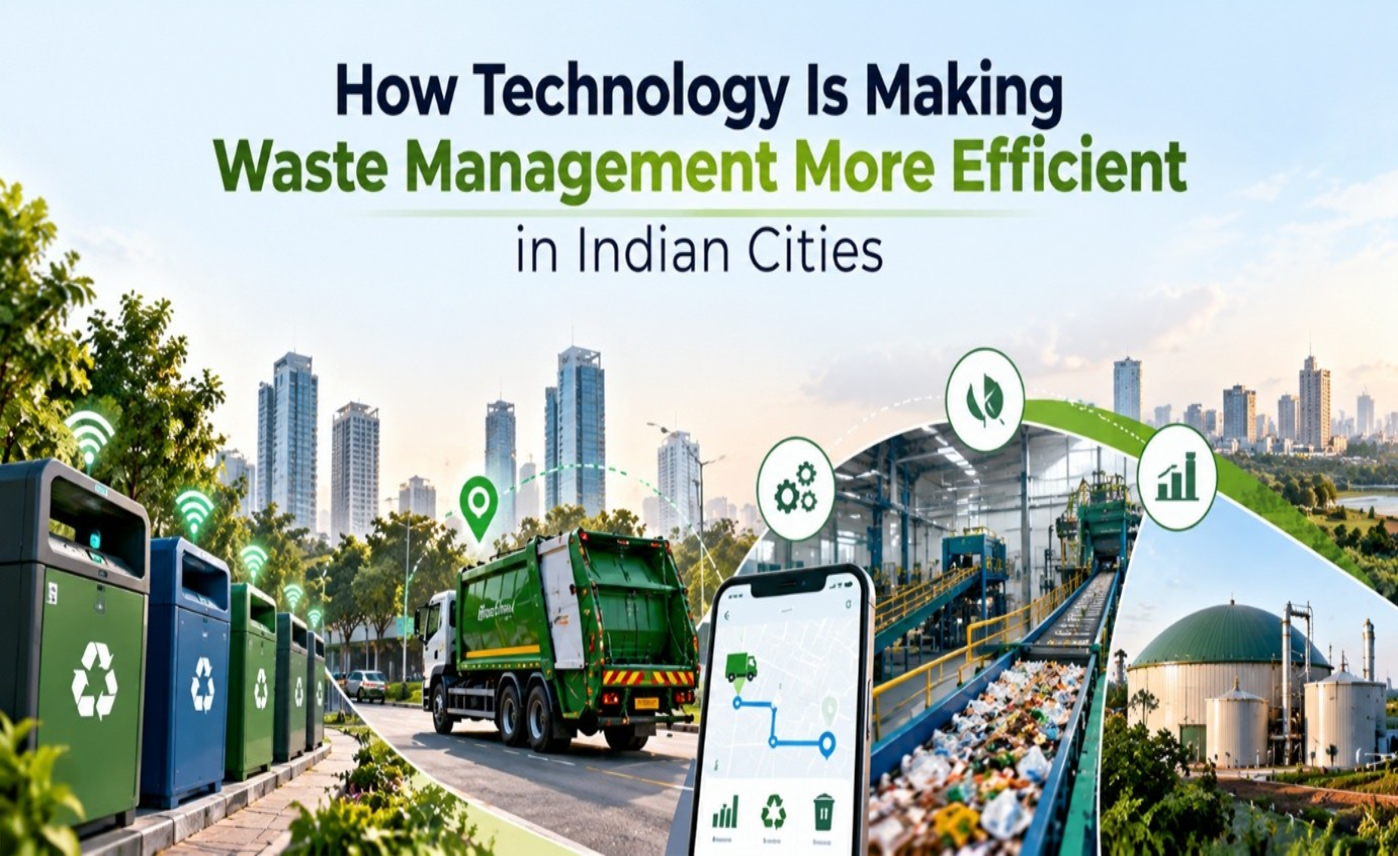
How Technology Is Making Waste Management More Efficient in Indian Cities
- Nov 10, 2026, 18:00
- Technology
- IBEF
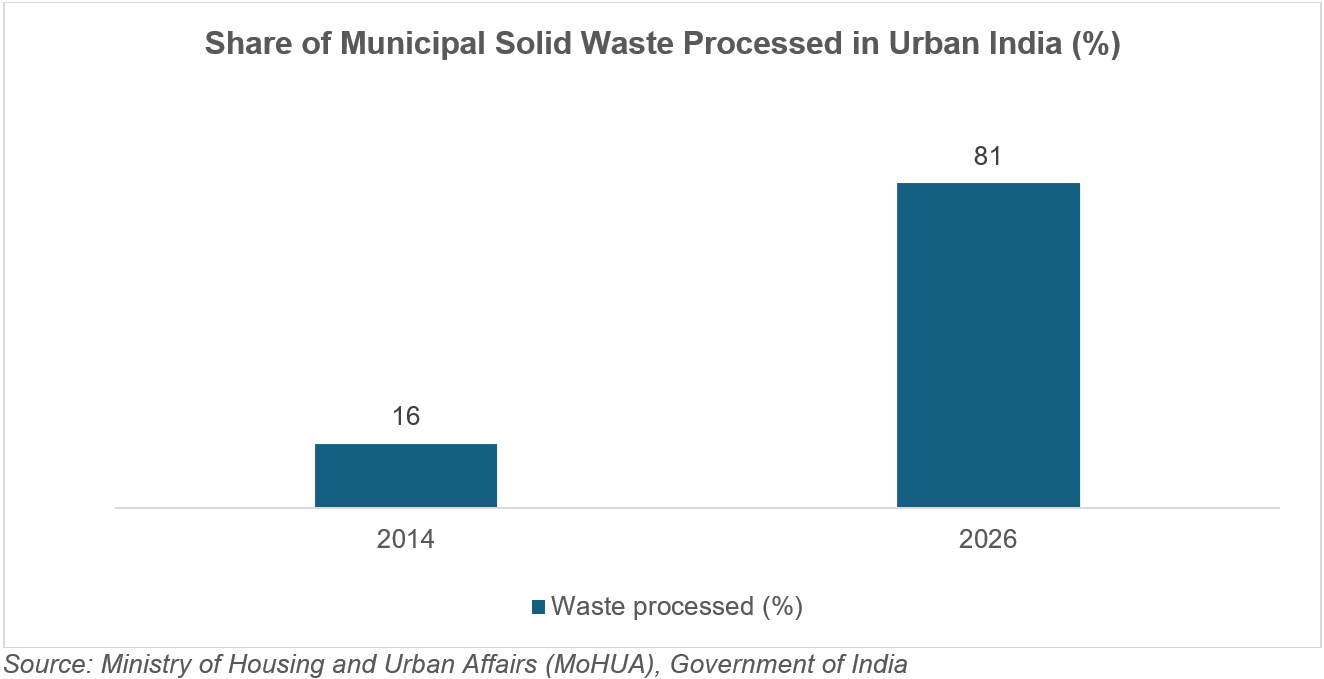
Indian cities are adopting digital monitoring, sensors, and automated waste collection and processing systems to manage municipal solid waste more efficiently than before. Urban India generates almost 1,62,000 tonnes of solid waste every day, and the share that is scientifically processed has risen from 16% in 2014 to 81% in 2026, according to the Ministry of Housing and Urban Affairs (MoHUA). The development has been made possible through the Swachh Bharat Mission-Urban (SBM-U) 2.0 initiative, which is a paperless and digitally monitored initiative, as well as the increasing number of technology firms, start-ups and research institutes collaborating with urban local bodies (ULBs).
Technology plays a critical role throughout the value chain of urban waste including households tagged using radio-frequency identification (RFID), collection vehicles tracked using the global positioning system (GPS), artificial intelligence (AI)-based sorting lines, bio-methanation plants that turn wet waste into compressed biogas (CBG) and biomining activities which have reclaimed lands from legacy dumpsites. The Solid Waste Management Rules, 2026, which have come into force from April 1, 2026, have further made digital tracking and online reporting mandatory within the regulatory framework for cities.
Digital Foundations of Swachh Bharat Mission-Urban 2.0
SBM-U 2.0, approved by the Union Cabinet on October 12, 2021, with an outlay of Rs. 1,41,600 crore (US$ 19.03 billion) for 2021-22 to 2025-26, aims at making all cities garbage-free through 100% source segregation, functional material recovery facilities (MRFs) in all cities and the remediation of all legacy dumpsites. This mission was developed to become a fully paperless and digital mission where the waste management infrastructure would be mapped on a geographic information system (GIS) platform, an online grievance redressal system and also online project monitoring from the beginning to fund releases.
This digital architecture gives MoHUA and state governments a near real-time view of collection, processing and remediation across the country's ULBs. States now update dumpsite remediation progress daily on the Swachhatam Portal, while the Swachhata App continues to serve as a citizen-facing channel for reporting uncollected garbage and other sanitation issues directly to municipal staff. Door-to-door collection now covers 97% of urban wards, and the share of waste processed has risen to 81% (figure 1).
The Swachh Survekshan, the annual assessment of cleanliness conducted under SBM-U, has also become a data-driven exercise. At the Swachh Survekshan 2024-25 awards ceremony, presided over by President of India Ms. Droupadi Murmu on July 17, 2025, a Super Swachh League was launched featuring cities that have performed consistently well (Indore, Surat, Navi Mumbai and Vijayawada), Ahmedabad, Bhopal and Lucknow were recognised among the best-ranked cities, and the results were accompanied by an interactive dashboard showing rankings and performance measures for cities.
Smart Collection: GPS, RFID and Sensor-Enabled Operations
A large share of municipal waste budgets goes to collection and transportation, and it is here that digitisation has had the most visible impact. Integrated command and control centres established as a part of the Smart Cities Mission monitor GPS-enabled collection vehicles against their planned routes and get automatic alerts from the field devices. For instance, Agra has fitted 150 collection and transport vehicles with GPS monitoring, used RFID to tag 1,044 community bins and put QR codes on about 3.5 lakh households in order to trigger an automatic alert at the city's command centre with each scan during door-to-door collection. Lucknow has implemented household-level RFID devices following the model adopted in Pune, and Kakinada provides RFID tags to all households for sanitation staff to scan with each visit.
Sensor-enabled smart bins complement vehicle monitoring. Chennai has tested out GPS-enabled bins designed by a start-up company that emerged from IIT Madras and which alert authorities as soon as a bin has reached its capacity; Bhopal has fitted 150 smart bins, and similar initiatives have been rolled out or considered in Tiruppur and New Town Kolkata. Such technologies enable ULBs to switch from fixed collection schedules to demand-based routing with less fuel consumption and prompt clearance of bins having reached their capacity.
The city of Indore, the winner of the title of India's cleanest city for eight consecutive years, serves as an illustration of such an integrated system. This city uses source segregation and monitored fleet of collection vehicles with Internet of Things (IoT) sensors placed on processing equipment measuring methane generation, compost output and solar power generation. The data provided by such sensors made it possible to verify and sell the carbon credits worth Rs. 8.34 crore (US$ 1.12 million) over 2021-22, establishing a financing model that other cities are now studying.
Technology in Processing: From Material Recovery to Bio-CNG
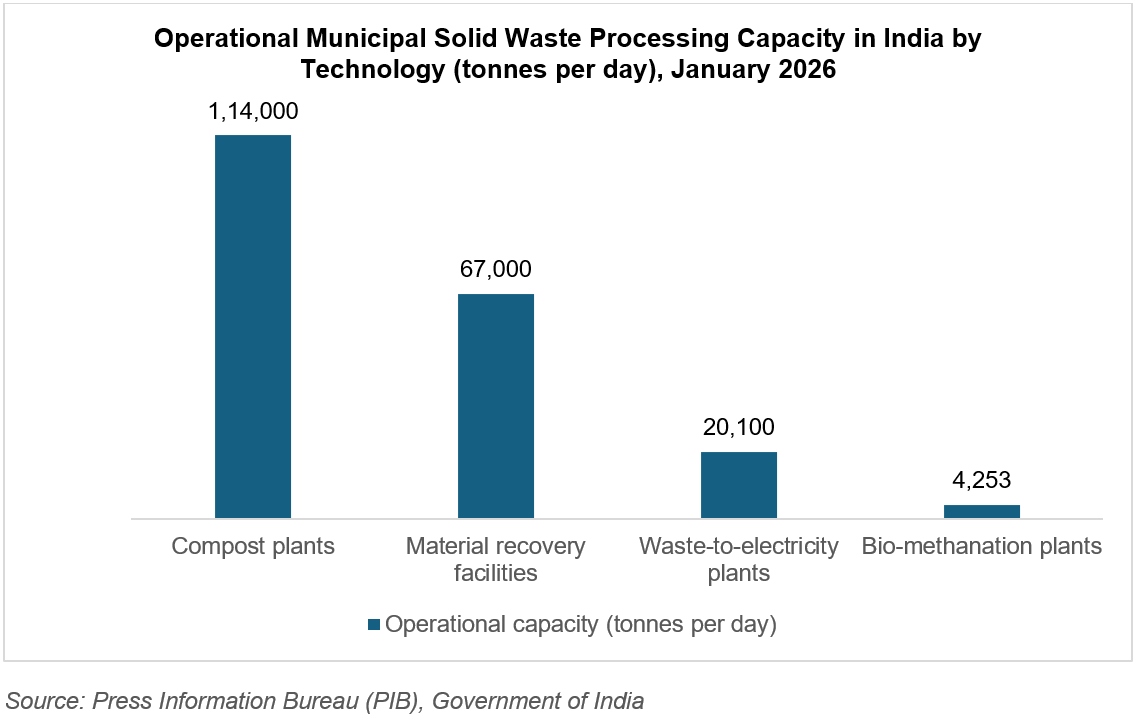
Processing capacity has expanded alongside collection. As of January 2026, around 2,900 MRFs with a combined capacity of 67,000 tonnes per day (TPD) and about 2,800 compost plants handling 1.14 lakh TPD were operational across the country, together with 131 bio-methanation plants (4,253 TPD) and 17 waste-to-electricity plants processing 20,100 TPD. A further 145 CBG plants with a combined capacity of 20,155 TPD are under implementation, and the mission targets at least one functional MRF in every city (figure 2).
In MRFs, AI and machine vision are beginning to supplement manual sorting. Ahmedabad-based Ishitva Robotic Systems has created an AI-powered air sorting machine and a robotic pick-and-place system to sort plastics such as polyethylene terephthalate (PET), polypropylene (PP) and high-density polyethylene (HDPE) from mixed dry waste through real-time recognition of type, colour and brand. These types of innovations increase the yield of recyclable material from waste and ensure higher quality of sorted products, thus increasing their value and allowing companies to comply with extended producer responsibility (EPR) requirements.
Wet waste is increasingly being converted into fuel and compost. Indore's Gobar-Dhan plant, inaugurated by Prime Minister Mr. Narendra Modi on February 19, 2022, processes 550 TPD of segregated wet waste to produce about 17,500 kg of bio-CNG and 100 tonnes of organic compost per day, with the gas fuelling around 400 city buses. Developed under a public-private partnership at no capital cost to Indore Municipal Corporation, the plant pays the corporation an annual premium of about Rs. 2.50 crore (US$ 0.34 million). Refuse-derived fuel (RDF) recovered from MRFs and biomining operations is co-processed in cement kilns and waste-to-energy plants, closing a further loop in the processing chain.
Reclaiming Land through Biomining of Legacy Dumpsites
The technology-based aspect of SBM-U 2.0 involves remediating the legacy dumpsites. Around 2,479 dumpsites covering 15,000 acres of land with about 25 crore tonnes of legacy waste have been identified across India. Biomining is carried out in these dumpsites, whereby the waste is stabilised in aerated windrows using bio-cultures to increase the rate of decomposition, followed by mechanical screening of the waste into soil-like fines, construction materials, metals, plastics and RDF. Only the non-reusable fraction goes to scientific landfills.
By January 2026, 1,138 dumpsites from 1,048 cities had been fully remediated with treatment of about 8.77 crore tonnes of legacy waste, with 459 dumpsites remediated in 2025 alone. Under the Lakshya Zero Dumpsite programme, 214 high-impact dumpsites holding nearly 80% of the remaining legacy waste have been prioritised, with projects worth Rs. 6,700 crore (US$ 758.13 million) sanctioned and central assistance of Rs. 550 (US$ 5.81) per tonne of legacy waste. As of May 2026, nearly 9,000 acres of land had been reclaimed across the country, according to MoHUA.
City-level examples illustrate the results. At Delhi's Bhalswa dumpsite, where biomining has been taking place since July 2022, about 99.07 lakh tonnes had been remediated as of July 31, 2026, and reclaimed portions are being covered with bamboo plantation. In Gorakhpur, a 40-acre dumpsite processed at around 400 TPD has been converted into an eco park; Nagpur's Bhandewadi facility combines mechanised material recovery with CCTV and real-time monitoring; and Raichur has reclaimed nearly 22 acres of land, one part of which now has Miyawaki forest plantation.
A Stronger Regulatory and Data Framework
The Solid Waste Management Rules, 2026, announced by the Ministry of Environment, Forest and Climate Change, that are effective from April 1, 2026, are replacements to the earlier rules announced in 2016. As per these rules, four-stream segregation at source, involving waste types like wet, dry, sanitary and special care, becomes compulsory for all waste generators. These new rules provide for an online portal established by the Central Pollution Control Board (CPCB), to monitor the life cycle of waste starting from its generation and collection, processing, disposal and finally biomining of legacy dumps, online registration as well as mandatory audits of all processing facilities. Bulk waste generators have been instructed to process wet waste in situ wherever possible, whereas industry units need to progressively replace solid fuel with RDF. Cities have been encouraged to create carbon credits out of their waste operations.
Outlook and Road Ahead
Adoption of technology in urban waste management is likely to deepen as the Lakshya Zero Dumpsite target of October 2026 approaches and the 2026 rules become fully operational. The combination of GIS, sensors, artificial intelligence-based sorting, bio-CNG production and biomining technologies provides Indian cities a replicable operating model, which is to be transferred by means of Swachh City Partnership that connects 78 top-performing cities with other cities of their respective states. As India is forecast to generate about 165 million tonnes of urban waste annually by 2030, further investment in processing, digital platforms and capable municipal teams would ensure that more and more waste is converted into compost, fuel, recyclables and reclaimed land.
FAQs
How much of urban India’s municipal solid waste is scientifically processed?
According to MoHUA, the percentage of the municipal solid waste generated in urban India and which has been scientifically processed has increased to 81% from 16% in 2014. This is facilitated by the door-to-door system of solid waste collection that now covers 97% of the urban wards.
What is the outlay of Swachh Bharat Mission-Urban 2.0?
The approval for Swachh Bharat Mission-Urban 2.0 took place on October 12, 2021. It has an outlay of Rs. 1,41,600 crore (US$ 19.03 billion) for 2021-22 to 2025-26 for making all the cities garbage-free using source segregation and scientific processing as well as the remediation of legacy dumpsites.
How is technology used in waste collection in Indian cities?
Cities track GPS-enabled collection vehicles from integrated command and control centres, use RFID tags and QR codes on households and community bins that are scanned on each visit, and deploy sensor-based smart bins that alert when a bin becomes full. They also use the Swachhata App for grievance redressal by citizens.
What is biomining and what has it achieved so far?
The biomining process involves excavation of the legacy waste which is then stabilised using bio-cultures and screened into reusable fractions. By January 2026, 1,138 dumpsites had been fully remediated and about 8.77 crore tonnes of legacy waste treated and nearly 9,000 acres of land had been reclaimed by May 2026.
What do the Solid Waste Management Rules, 2026 require?
Effective from April 1, 2026, the rules mandate four-stream segregation at source (wet, dry, sanitary and special care waste), establish a CPCB-developed centralised online portal to track waste from generation to disposal, and require online registration and audits of processing facilities.
Partners