SEARCH
RECENT POSTS
Categories
- Agriculture (37)
- Automobiles (20)
- Banking and Financial services (36)
- Consumer Markets (57)
- Defence (6)
- Ecommerce (21)
- Economy (72)
- Education (14)
- Engineering (9)
- Exports (22)
- Healthcare (25)
- India Inc. (10)
- Infrastructure (31)
- Manufacturing (32)
- Media and Entertainment (16)
- Micro, Small & Medium Enterprises (MSMEs) (16)
- Miscellaneous (31)
- Perspectives from India (37)
- Pharmaceuticals (5)
- Railways (4)
- Real Estate (20)
- Renewable Energy (19)
- Research and Development (12)
- Retail (1)
- Services (7)
- Startups (16)
- Technology (66)
- Textiles (8)
- Tourism (16)
- Trade (9)
Authors






How the Coffee Board of India Supports Coffee Farmers and Exports

Coffee forms an important crop for Indian plantations, providing a living to a lot of farmers as well as contributing to a significant extent to the agricultural exports of India. Indian coffee is noted for being shade grown arabica and robusta and has gained a reputation globally for its distinct taste and superior quality. While India produces only about 3.5% of global coffee, it is the seventh largest producer of coffee in the world and a major exporter of the product. Rising domestic demand for coffee and growing demand for premium and special coffees are helping to propel growth in the industry.
The organization that is central to this entire industry is the Coffee Board of India, which is a statutory body within the Ministry of Commerce & Industry, set up according to the Coffee Act of 1942. It has been over the years evolving into an organization that has not only helped in regulating the coffee trade but also helped it to become more competitive in the global market.
India's Coffee Market Overview
India has become one of the major producers of coffee worldwide owing to the favorable agro-climatic conditions, well-developed plantation system, and the increasing recognition of quality arabica and robusta beans. The coffee production is primarily prevalent in Karnataka, Kerala, and Tamil Nadu regions, but it has been gradually shifting towards Andhra Pradesh, Odisha, and North-eastern regions of India. The shade grown Indian coffee is internationally renowned for its unique taste and eco-friendly farming methods.
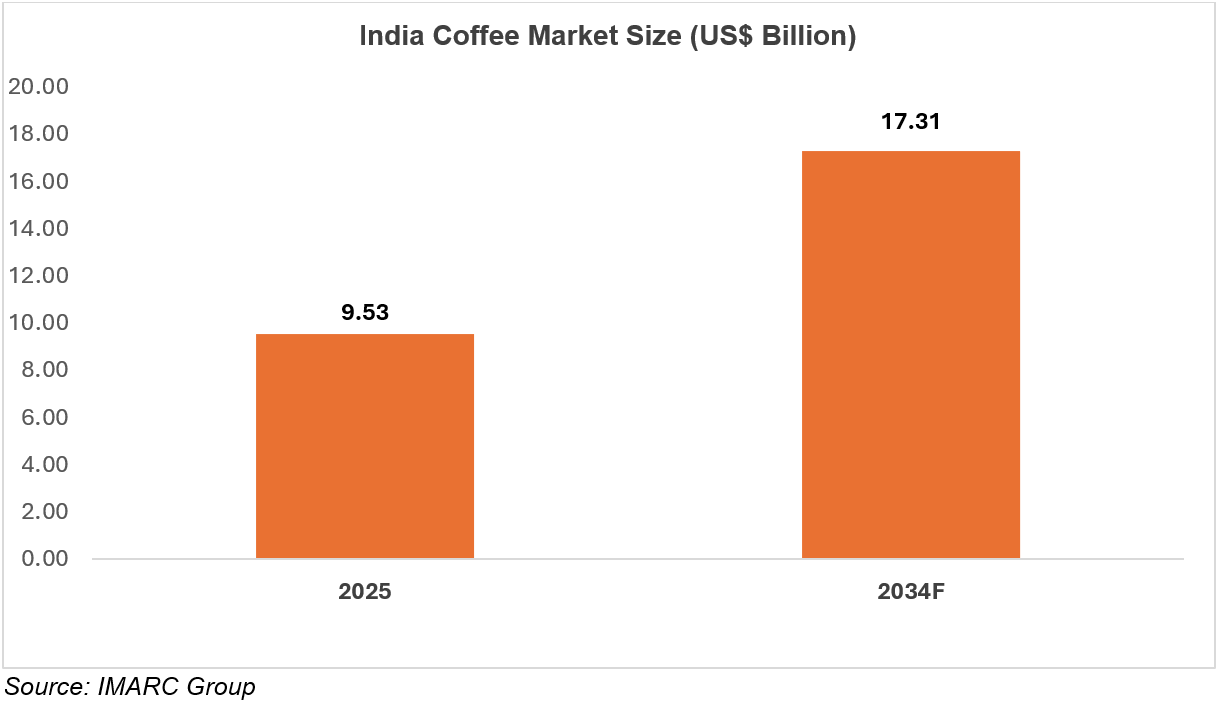
As per IMARC Group the market size of India coffee reached US$ 9.53 billion in 2025 and will grow up to US$ 17.31 billion in 2034 with a CAGR of 6.86% between the period 2026-2034. This growth is determined by the increasing consumption of coffee, urbanization trends, growing demand for high quality and specialty coffees, development of organized cafe chains along with growing investments into cultivation and processing.
India exports nearly 70% of its coffee production. During FY 2025–26, exports reached approximately 4.05 lakh tonnes, valued at over US$ 2.12 billion, with shipments to more than 125 countries, including Italy, Germany, Belgium, Russia and the United Arab Emirates. Growing demand for sustainably produced coffee has further strengthened India's position in global markets.
As the sector expands, institutional support remains essential to improve productivity, quality, farmer incomes and export competitiveness. In this regard, the Coffee Board of India plays a pivotal role in connecting growers, researchers, processors and exporters.
Coffee Board of India: Strengthening the Coffee Ecosystem
Founded through the Coffee Act, 1942, the Coffee Board of India is a statutory body under the Ministry of Commerce & Industry tasked with the development and growth of the Indian coffee industry.
Research work is carried out by the Central Coffee Research Institute (CCRI), Balehonnur, Karnataka, which celebrated 100 years of coffee research in 2025. The CCRI works on breeding new varieties, weather-resistant technologies, and pest and disease management along with post-harvest techniques for coffee.
Key Functions of the Coffee Board of India
The Coffee Board strengthens the Indian coffee industry through the key functions of the board which are as follows:
- Research and Innovation: Creates improved planting material, climate-proof technologies, and sustainable farming techniques through the CCRI and its network of research institutions.
- Extension Services: Provides scientific advice, demonstration of technology, training to farmers, and technology transfer to increase efficiency and encourage sustainable farming.
- Quality Improvement: Assists in quality testing, grading, processing and certification to help Indian coffee meet international standards of quality.
- Market Information: Provides production, export, and market statistics along with up-to-date information on domestic and international coffee market trends.
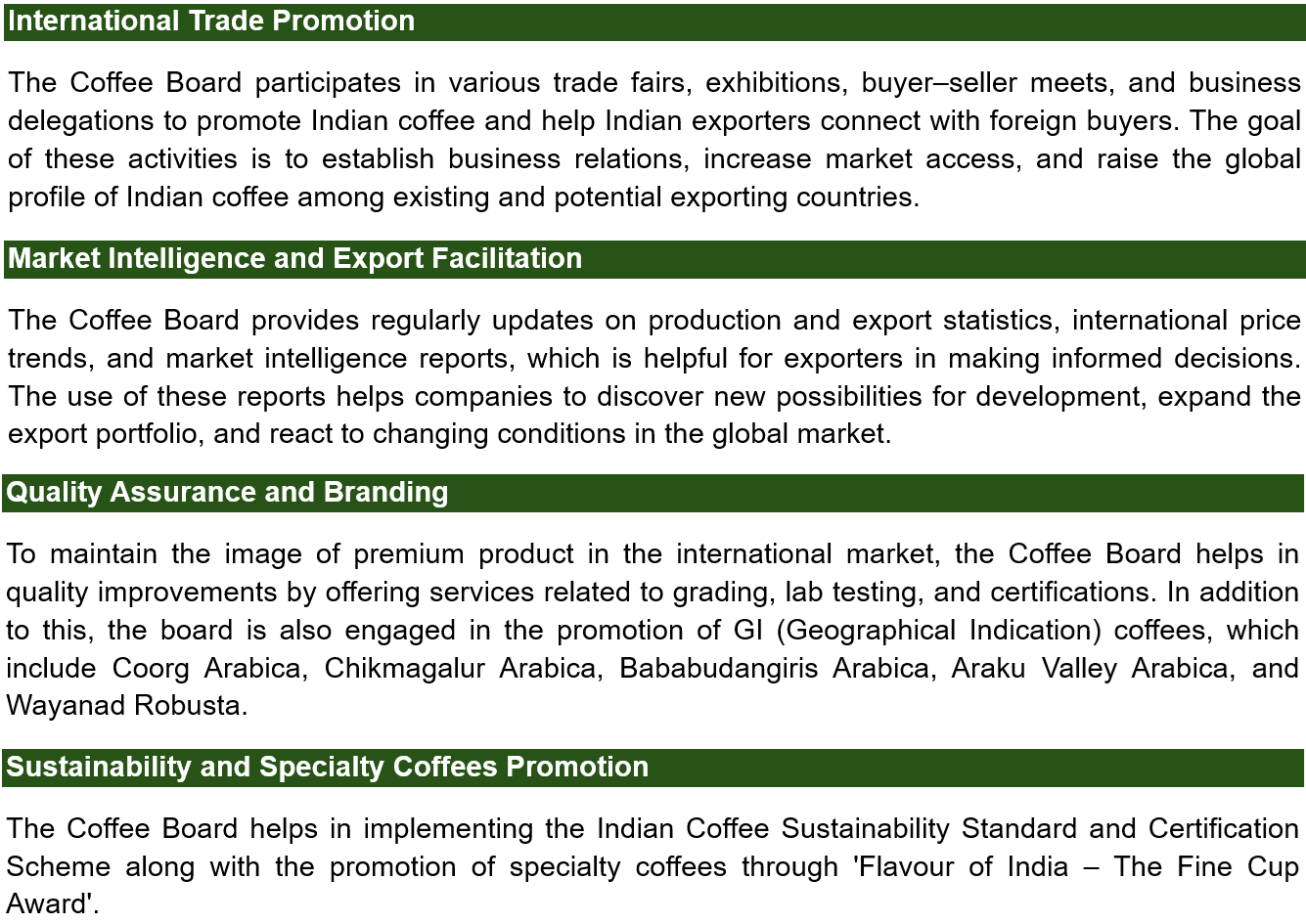
- Domestic and Export Promotion: Conducts international exhibitions, buyer-seller meets, branding campaigns, and promotional drives to increase the profile of Indian coffee in domestic as well as foreign markets.
- Entrepreneurship and Sustainability: Encourages value addition, innovation, and sustainable coffee production along with meeting international sustainability requirements.
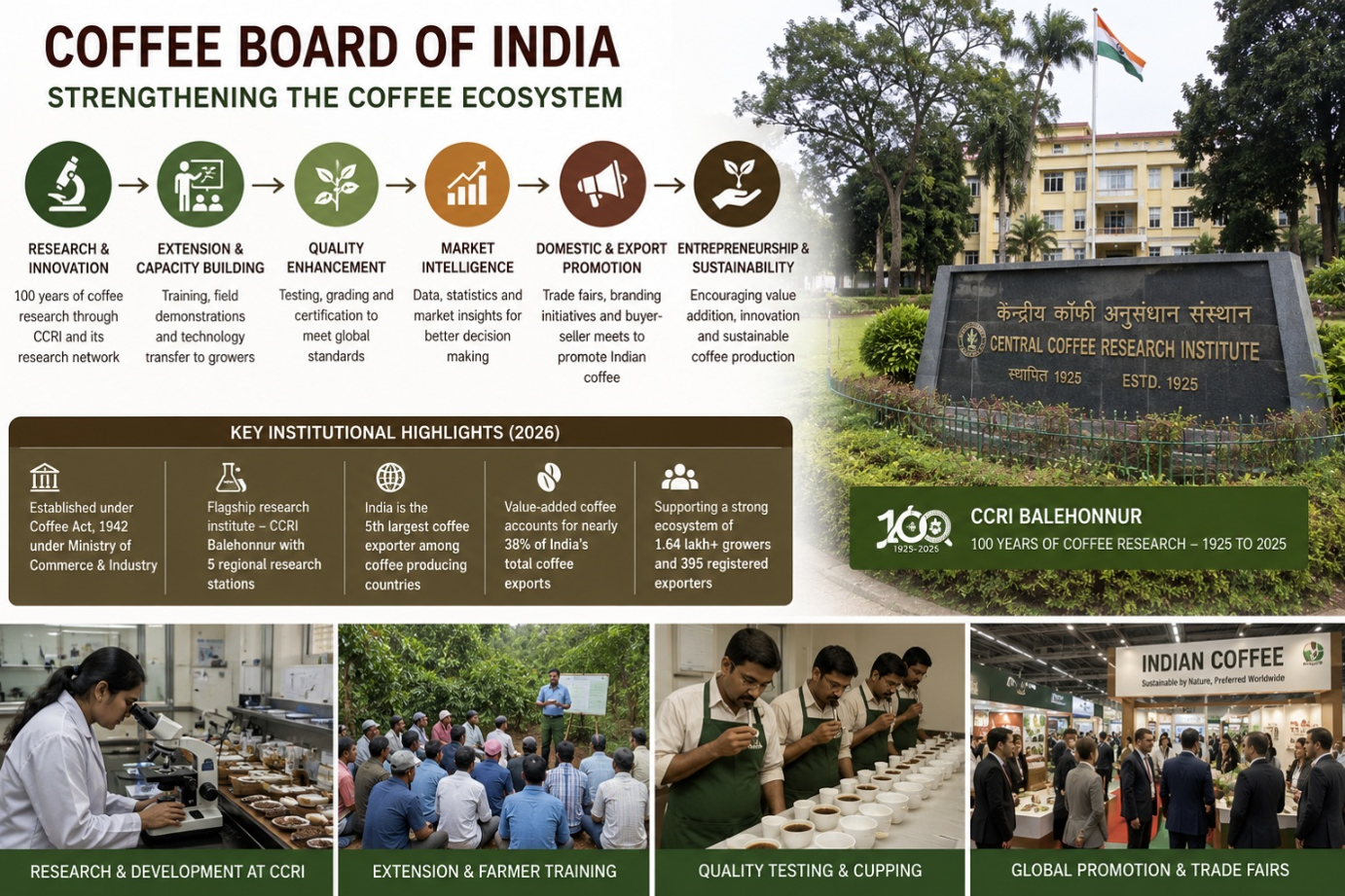
In recent times, the Coffee Board has been more concerned about building the sustainability and resiliency of the coffee industry in India. In 2026, the Board made concerted efforts towards the adoption of the Indian Coffee Sustainability Standard and Certification Scheme, sustainable cultivation methods and helping growers and exporters meet the international standards of traceability. The board also increased its participation in the international trade show, which included the India TPR exhibition at WTO, Geneva. The board also advocates for specialty coffee, value addition, and sustainable production systems.
How the Coffee Board Supports Coffee Farmers
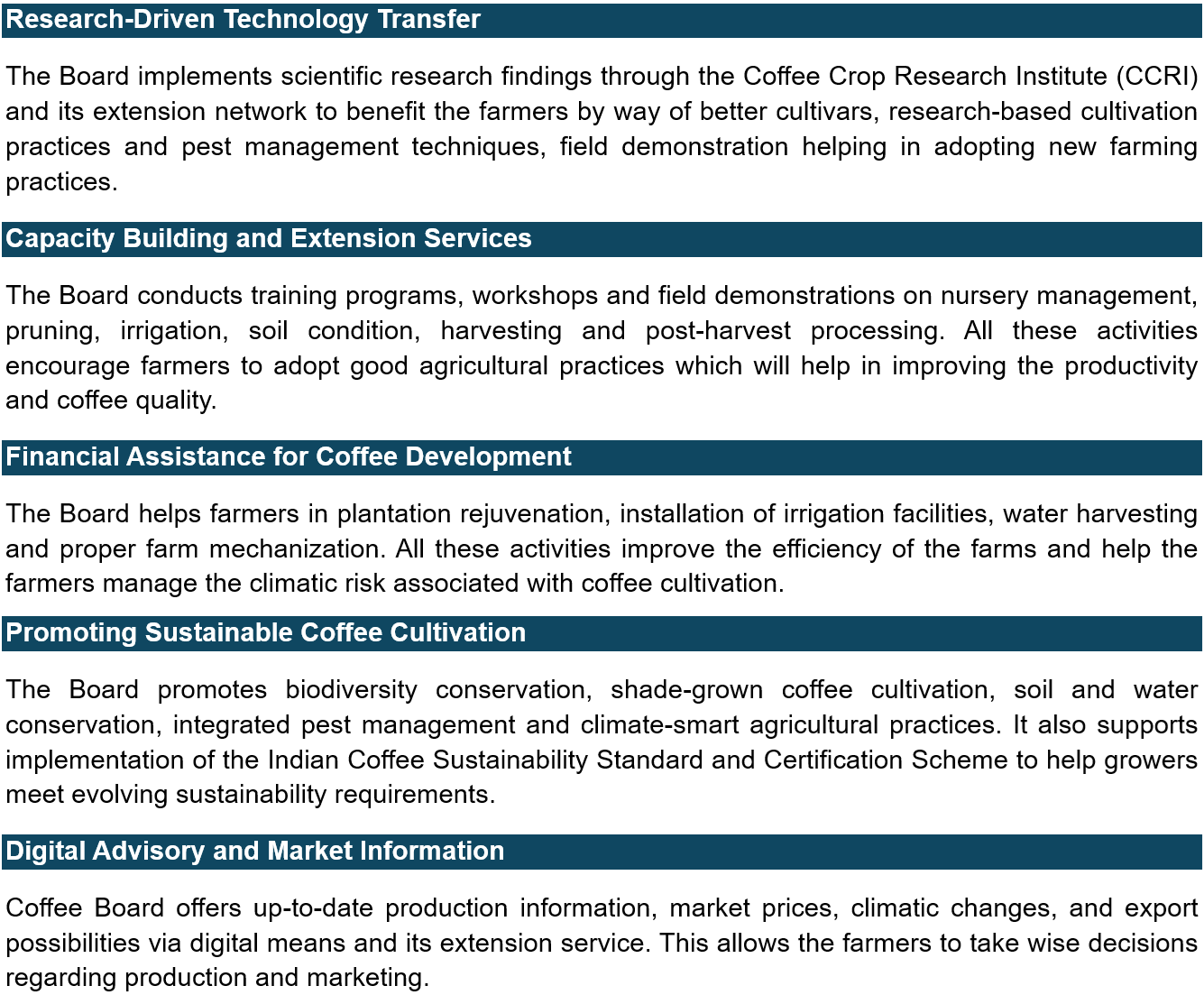
The Indian coffee industry comprises primarily of small and marginal farmers; hence, providing help to farmers is an essential mission of the Coffee Board. The Board through research, extension services, financial help and sustainability programs ensures increase in productivity, quality of coffee and resilience of farms while adapting to the changing climatic and market conditions.
How the Coffee Board Promotes Coffee Exports
Around 70% of the coffee production is exported from India, making the export of coffee one of the basic pillars of the Indian coffee industry. The Coffee Board of India has an important contribution in increasing the international presence of India by promoting Indian coffee, providing access to the market, and helping exporters meet the international standards of quality, sustainability, and traceability. This is done through trade promotion activities, market intelligence, and branding.
The Road Ahead: Building a Sustainable and Globally Competitive Coffee Sector
The Indian coffee sector stands to benefit from future growth and development due to increasing domestic consumption, export prospects, and increased international demand for sustainably produced premium coffee. Efforts to add value, produce specialty coffee, increase quality, and expand markets will play a critical role in helping India maintain its position in the global coffee industry.
The Coffee Board of India is set to play an instrumental role in this shift through research and development, promotion of climate-smart coffee production, digital advice provision, and sustainability and traceability. Continued efforts to enhance productivity, support coffee farmers, and create international markets will help make Indian coffee more competitive in the global market.
In the future, efforts by the Coffee Board, through its collaborative effort to involve coffee growers, researchers, processors, exporters, and other stakeholders in the creation of the new coffee eco-system, will play an instrumental role in creating a resilient and innovative coffee industry that is able to compete globally.
FAQs
What is the current size of the India coffee market?
According to IMARC Group, the India coffee market was valued at US$ 9.53 billion in 2025 and is projected to reach US$ 17.31 billion by 2034, growing at a CAGR of 6.86% during 2026–2034. The market is being driven by rising domestic consumption, increasing demand for premium and specialty coffee, urbanisation and the expansion of organised cafe chains.
How does the Coffee Board support coffee farmers?
The Coffee Board assists coffee farmers through research-based technologies, training programmes, extension services, plantation development support, digital advisory services and initiatives that promote sustainable farming practices, helping improve productivity, quality and farm resilience.
What is the Central Coffee Research Institute (CCRI)?
The Central Coffee Research Institute (CCRI), located at Balehonnur in Karnataka, is the research arm of the Coffee Board of India. It develops improved coffee varieties, climate-resilient cultivation technologies, pest and disease management practices and post-harvest innovations.
Why is the Coffee Board important for India's coffee industry?
The Coffee Board connects growers, researchers, processors and exporters to strengthen the entire coffee value chain. By promoting innovation, sustainability, quality improvement and global market access, it plays a vital role in enhancing the competitiveness of India's coffee industry.
What are the key functions of the Coffee Board of India?
The Coffee Board supports the coffee value chain by conducting scientific research, providing extension services to growers, improving coffee quality, publishing market intelligence, promoting Indian coffee in domestic and international markets, and encouraging sustainable coffee cultivation and value addition.
Partners




