SEARCH
RECENT POSTS
Categories
- Agriculture (40)
- Automobiles (21)
- Banking and Financial services (36)
- Consumer Markets (59)
- Defence (6)
- Ecommerce (21)
- Economy (72)
- Education (14)
- Engineering (9)
- Exports (22)
- Healthcare (25)
- India Inc. (11)
- Infrastructure (31)
- Manufacturing (34)
- Media and Entertainment (17)
- Micro, Small & Medium Enterprises (MSMEs) (16)
- Miscellaneous (31)
- Perspectives from India (37)
- Pharmaceuticals (5)
- Railways (5)
- Real Estate (20)
- Renewable Energy (19)
- Research and Development (12)
- Retail (2)
- Services (8)
- Startups (16)
- Technology (66)
- Textiles (8)
- Tourism (16)
- Trade (10)
Authors






India's Cold Chain Logistics: The Backbone of Perishable Trade
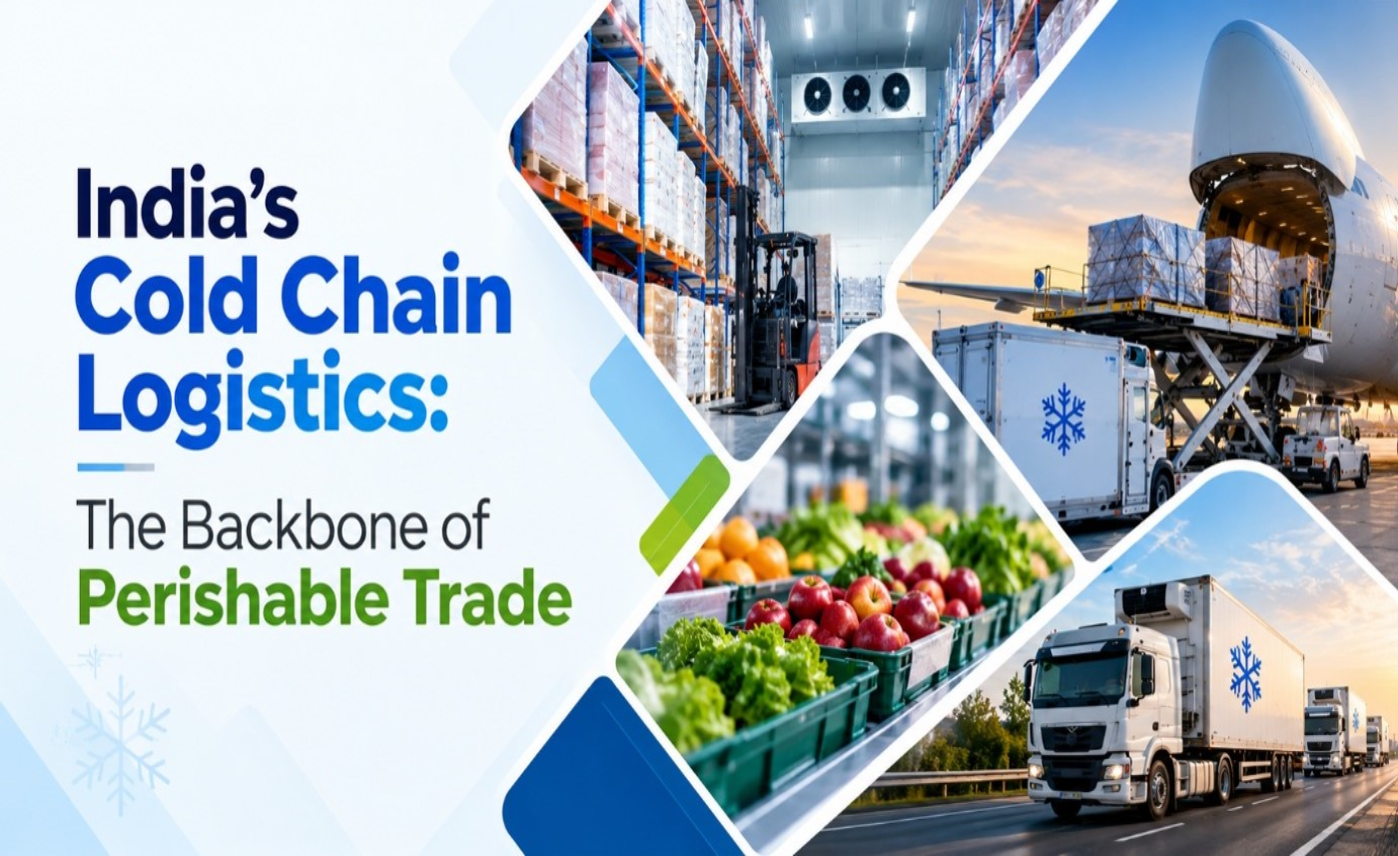
India's cold chain network allows the transfer of perishables from farms and manufacturing units to domestic consumers as well as exports via a linked process of cold storage, cold transport, and cold processing infrastructure. With the growth of the dairy, horticultural and fisheries industries, the efficacy of the cold chain network plays a key role in minimising post-harvest losses and reaching out of Indian products into domestic and global markets.
Being the leading producer of milk and second-leading producer of fruits and vegetables in the world, India's need for cold storage and refrigerated transport has been steadily increasing. The constant investments in cold storage, cold transport, and cold processing infrastructure helped create better connections between agricultural production, domestic consumption and exports.
India's Expanding Cold Chain Infrastructure
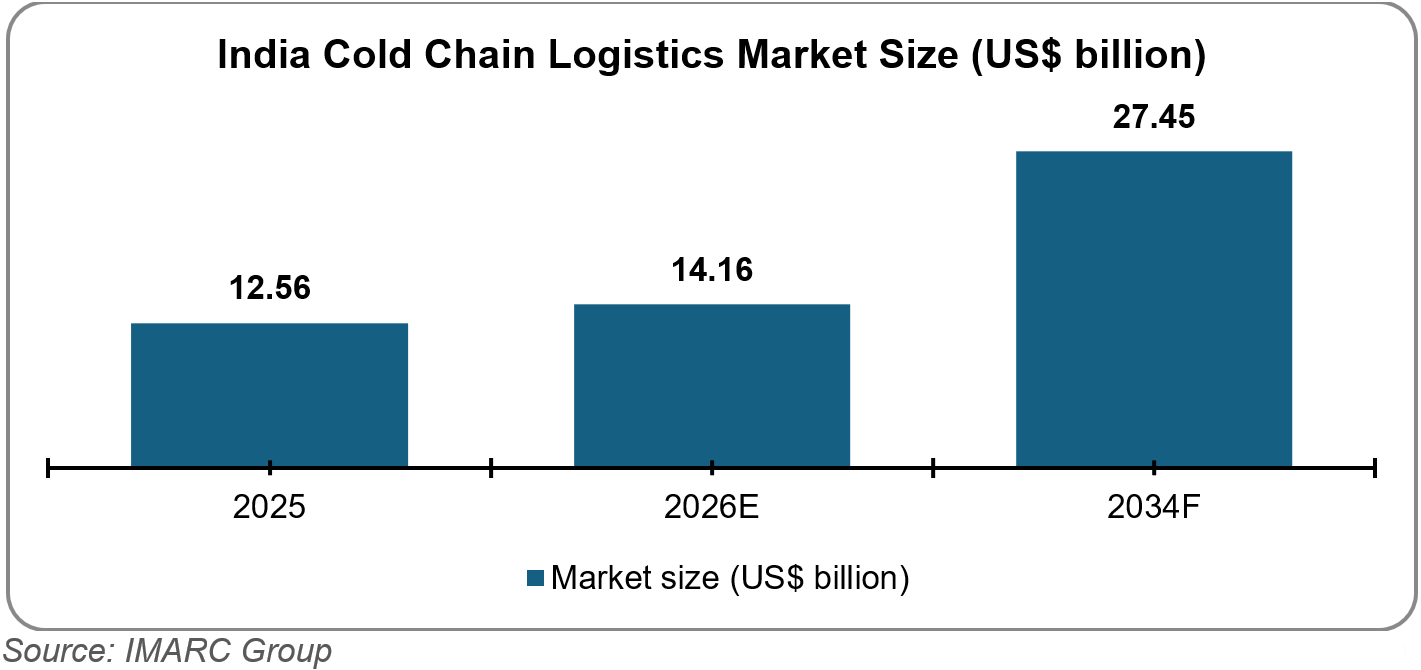
The value of India's cold chain logistics market in 2025 was Rs. 1.09 lakh crore (US$ 12.56 billion), and it is estimated to be around Rs. 1.32 lakh crore (US$ 14.16 billion) in 2026, according to IMARC Group. The market is projected to reach Rs. 2.56 lakh crore (US$ 27.45 billion) by 2034, growing at a CAGR of 8.62% during 2026-2034. Such growth will be facilitated by the growth of organised food retail and quick commerce dark stores, increase in pharmaceutical logistics, higher consumption of frozen foods and exports requiring certification of temperature-controlled storage facilities.
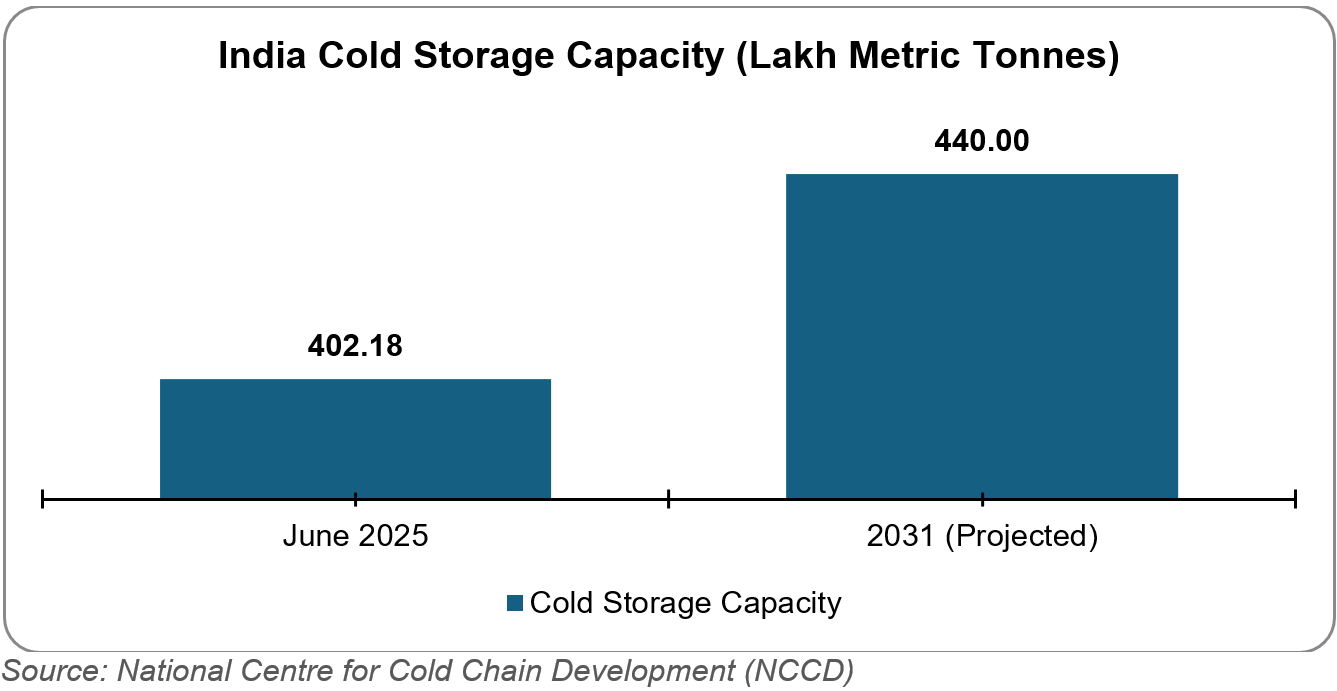
With the growth of the cold chain logistics market, India's physical cold chain infrastructure has been increasing. In particular, there were 8,815 cold storage facilities in India with total capacity of 402.18 lakh metric tonnes (40.22 million metric tonnes) as of June 30, 2025, and by 2031, India's capacity of cold storage will reach about 440 lakh metric tonnes, according to the National Centre for Cold-chain Development (NCCD). There is a growth of refrigerated transport at the same time, with the number of reefer vehicles increasing from around 10,000 currently to around 33,000 by 2031.
Policy Architecture Supporting Cold Chain Development
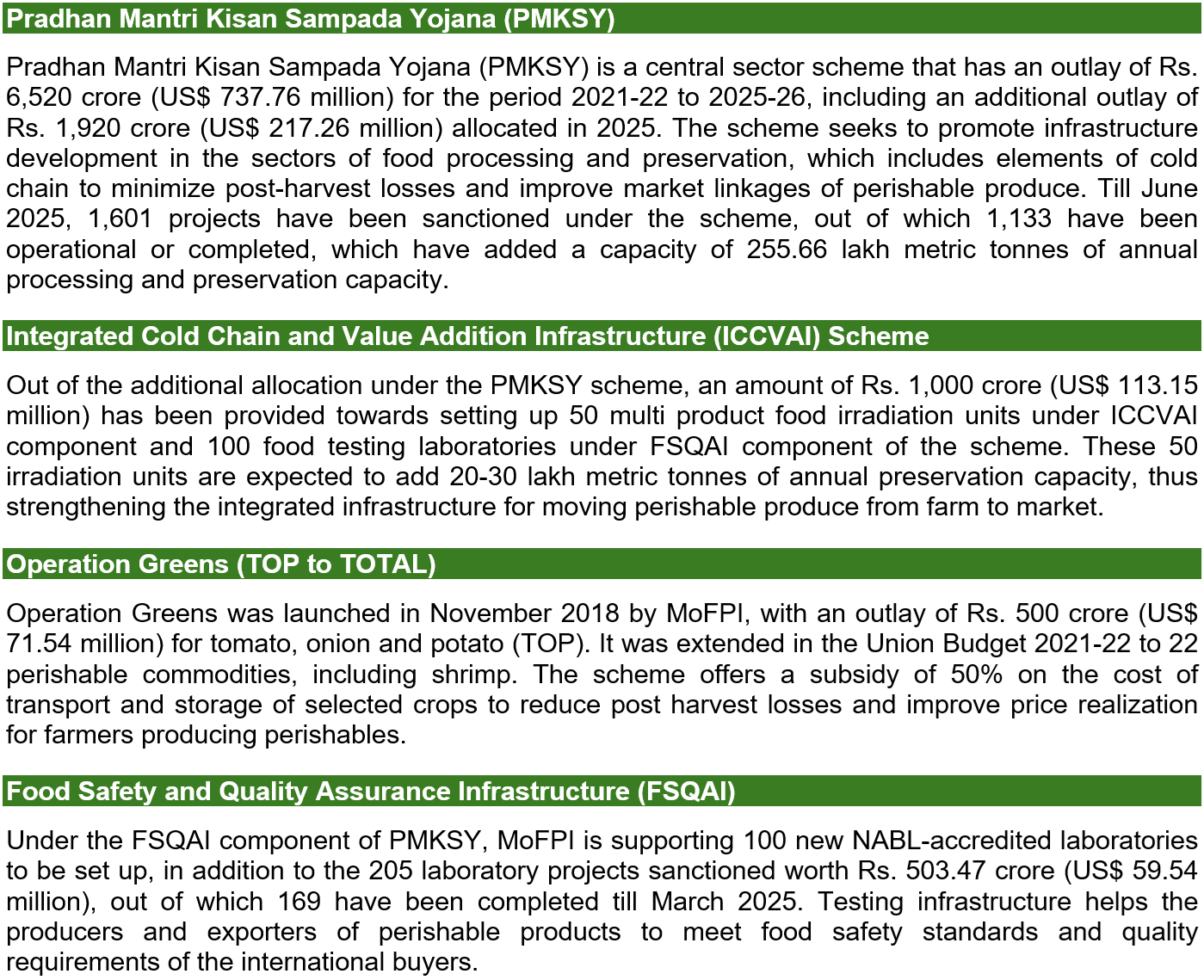
There exists a policy structure in place with respect to storage, transportation and value addition within the Indian cold chain industry, where the Ministry of Food Processing Industries (MoFPI) acts as the nodal ministry.
Cold Chain and India's Perishable Trade
India is the world's largest milk producer by volume. Milk production reached 239.30 million tonnes in FY24, a growth of 63.56% from 146.30 million tonnes in FY15, and accounts for nearly a quarter of global milk production. Per capita milk availability exceeded 471 grams per day in FY24, well above the global average of about 322 grams per day. This reflects strong domestic demand and the expanding cold chain infrastructure required to move perishable dairy products to consumers.
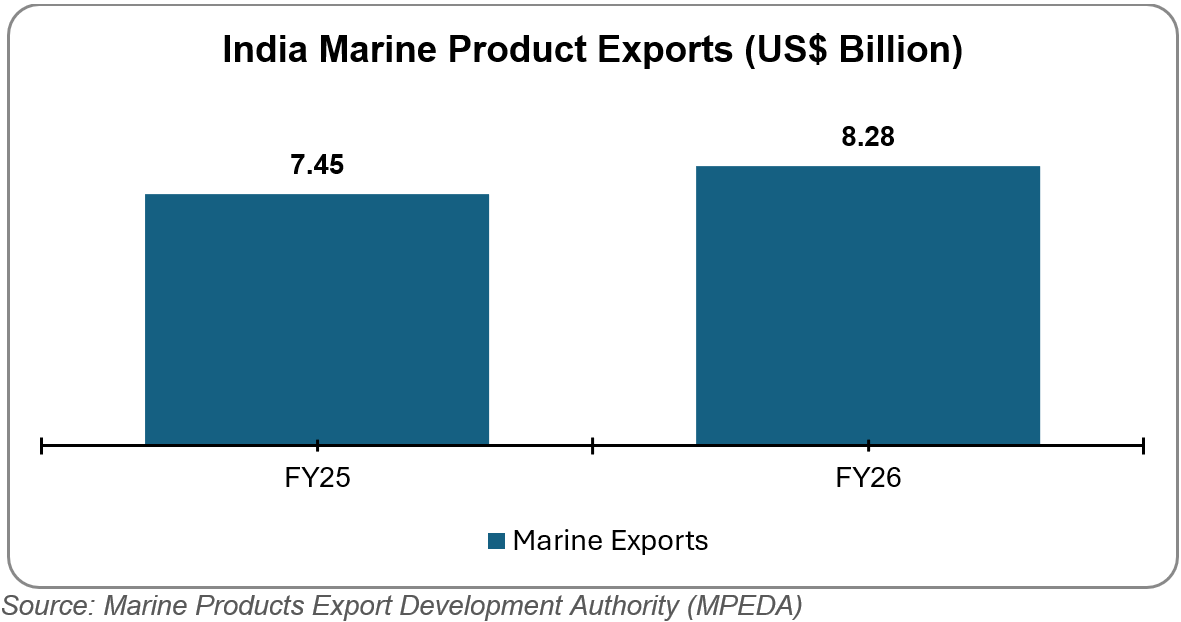
Exports of marine products, which is one of the most cold chain dependent categories, hit record levels of Rs. 72,325.82 crore (US$ 8.28 billion) during FY26 as against Rs. 62,408.45 crore (US$ 7.45 billion) in FY25, with frozen shrimp making up over two-thirds of the export revenue generated.
How Companies Are Strengthening India's Cold Chain Network
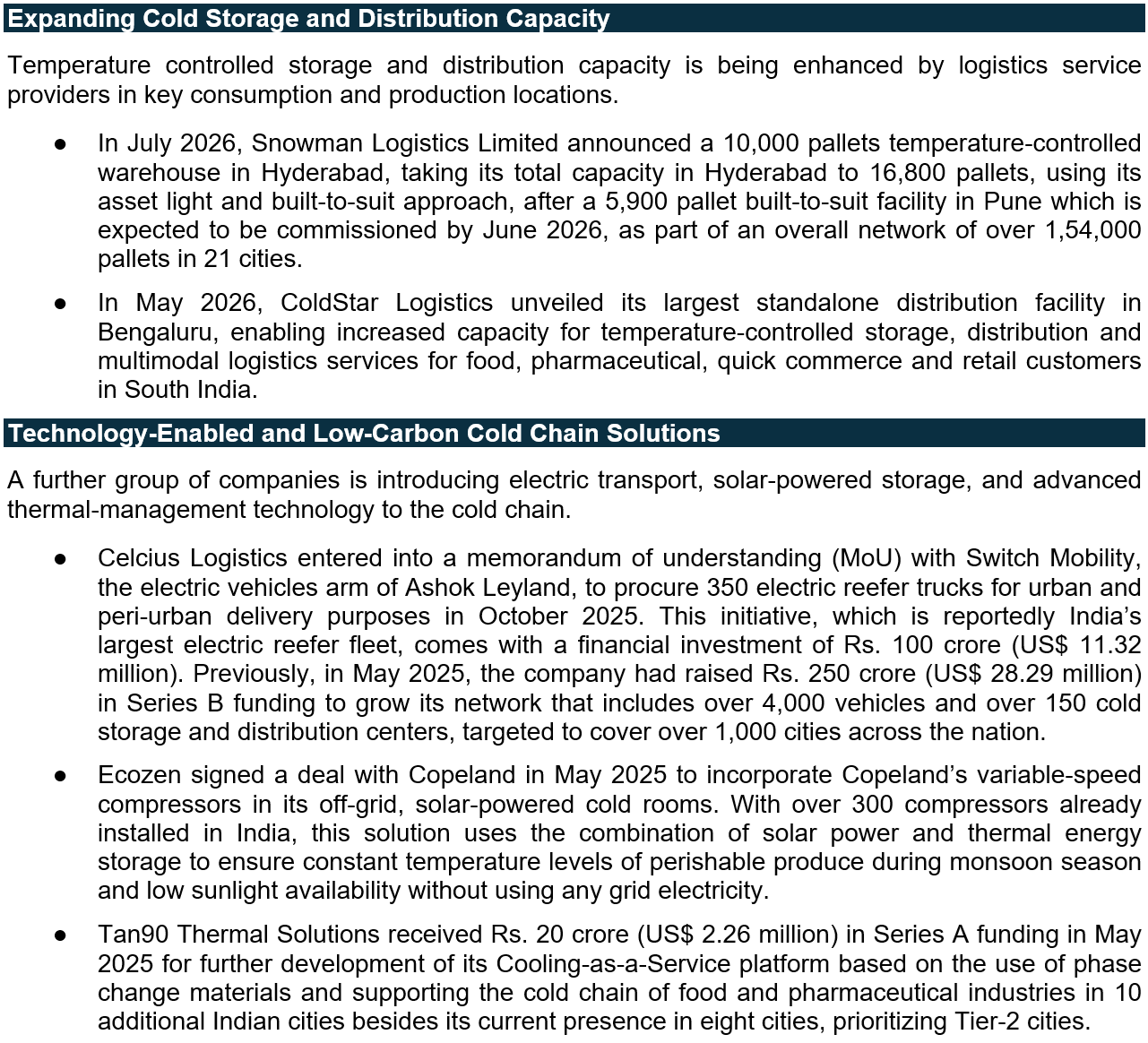
Private investment is adding both capacity and new technology across India's cold chain, with logistics providers expanding storage networks and a growing group of technology-focused companies introducing lower-carbon transport and storage solutions.
Outlook and Road Ahead
Cold chain infrastructure in India will keep growing in the coming years, with the expansion of storage capacity, refrigerated transportation, and value-added facilities under the PMKSY, ICCVAI, and Operation Greens schemes. The increasing production of dairy, horticulture, and marine products as well as the demand from exports for perishable goods will foster investments into temperature-controlled storage and transportation infrastructures. Such a development will strengthen India’s position as a major exporter of perishable agricultural and marine products and minimize post-harvest losses.
FAQs
What is India's current cold storage capacity?
India had 8,815 cold storage facilities with a combined capacity of 402.18 lakh metric tonnes (40.22 million metric tonnes) as of June 2025, projected to reach approximately 440 lakh metric tonnes by 2031.
What is the Pradhan Mantri Kisan Sampada Yojana (PMKSY)?
PMKSY is a central sector scheme with an outlay of Rs. 6,520 crore (US$ 737.76 million) for 2021-22 to 2025-26, supporting food processing and preservation infrastructure, including cold chain components.
How have India's marine product exports performed?
Marine product exports reached a record Rs. 72,325.82 crore (US$ 8.28 billion) in FY26, up from Rs. 62,408.45 crore (US$ 7.45 billion) in FY25, with frozen shrimp as the leading commodity.
What is the Integrated Cold Chain and Value Addition Infrastructure (ICCVAI) scheme?
ICCVAI is a component of PMKSY that supports integrated cold chain and value addition infrastructure. Under the additional allocation to PMKSY, Rs. 1,000 crore (US$ 113.15 million) has been earmarked for 50 multi-product food irradiation units and 100 food testing laboratories, with the irradiation units expected to add 20-30 lakh metric tonnes of annual preservation capacity.
What is the current market size and projected growth rate of the cold chain logistics industry in India?
The value of India's cold chain logistics market in 2025 was Rs. 1.09 lakh crore (US$ 12.56 billion), and it is estimated to be around Rs. 1.32 lakh crore (US$ 14.16 billion) in 2026, according to IMARC Group. The market is projected to reach Rs. 2.56 lakh crore (US$ 27.45 billion) by 2034, growing at a CAGR of 8.62% during 2026-2034.
Partners