Advantage India
Robust
Demand
*The Indian technical textiles market is expected to expand to US$ 23.3 billion by 2027, driven by increased awareness of goods and higher disposable incomes.
*Cotton production in India is projected to reach 7.2 million tonnes (~43 million bales of 170 kg each) by 2030, driven by increasing demand from consumers.
*In FY26, the total exports of textiles and apparel (including handicrafts) stood at US$ 35.52 billion, with Ready-Made Garments (US$ 15.77 billion), Cotton Textiles (US$ 10.25 billion), and Man-Made Textiles (US$ 5.23 billion) as the key contributors.

Competitive
Advantage
*Abundant availability of raw materials such as cotton, wool, silk and jute.
*India enjoys a comparative advantage in terms of skilled manpower and in cost of production relative to other major textile producers.
*Union Minister of Commerce and Industry, Mr. Piyush Goyal, emphasised that the India–United Kingdom (UK) Free Trade Agreement (FTA) opens transformative opportunities for textiles, leather, and footwear sectors, enhancing competitiveness and visibility in the UK market.

Policy
Support
*100% FDI (automatic route) is allowed in the Indian textile sector.
*The Union Budget 2026–27 allocated Rs. 5,279.01 crore (US$ 597.34 million) to the Ministry of Textiles, broadly maintaining funding levels compared to the previous year. It also continues to support the five-year Cotton Mission, aimed at boosting cotton productivity, reducing import dependence, and strengthening MSME-driven textile competitiveness.
*The Indian Council of Agricultural Research (ICAR)–Central Institute for Cotton Research (CICR) is implementing a special cotton project under the National Food Security and Nutrition Mission across eight major cotton-growing states, with an outlay of Rs. 6,032.35 lakh (US$ 6.83 million) allocated for FY25–26 to promote best practices and enhance cotton productivity.

Increasing
Investments
*Total FDI inflows in the textiles (including Dyed, printed) sector stood at Rs. 33,512.66 crore (US$ 5,073.03 million) between April 2000-March 2026.
*According to Apparel Export Promotion Council (APEC), significant opportunities exist to deepen collaboration between Indian and Japanese firms in the textiles sector, with Tokyo-based companies expressing keen interest to invest in India.

Introduction
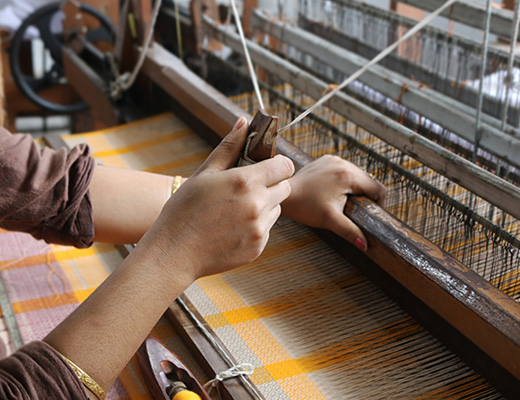
India’s textiles sector is one of the oldest and most diverse industries in the country, with roots stretching back centuries. It spans from traditional hand-spun and handwoven clusters to sophisticated capital-intensive mills, supported by a robust base of fibres and yarns ranging from cotton, jute, silk, and wool to polyester, viscose, and acrylic. The decentralised power loom, hosiery, and knitting segment remains the largest component, reflecting the industry’s ability to cater to multiple consumer markets. Its close linkage with agriculture, reliance on natural resources like cotton, and strong cultural heritage give the Indian textiles industry a unique identity compared to other manufacturing sectors.
Over the years, India has built the capacity to serve a wide spectrum of demand, from affordable mass-market apparel to niche high-value categories, both domestically and internationally. The industry today employs more than 45 million people, underlining its role as one of the country’s largest generators of livelihoods. Forecasts suggest the domestic textile and apparel market could reach US$ 225 billion by 2025, growing at 10-12% annually, with exports expected to rise sharply in parallel.
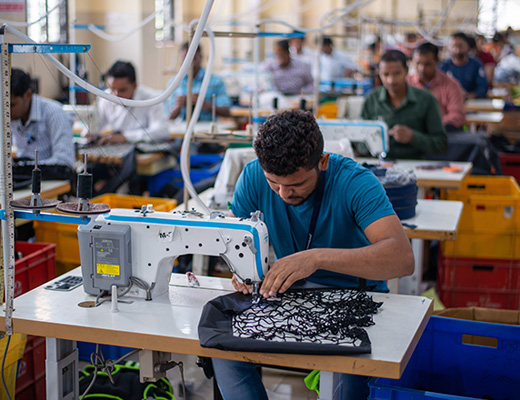
To sustain competitiveness and attract investment, the government has been actively supporting the sector through targeted initiatives such as the Scheme for Integrated Textile Parks (SITP), the Technology Upgradation Fund Scheme (TUFS), and the Mega Integrated Textile Region and Apparel (MITRA) Park scheme. These measures, along with new investments in technology, innovation, and design, are positioning the textiles sector not only as one of India’s oldest industries but also as one of its most future-ready.
Market Size
The market for Indian textiles and apparel is projected to grow at a 10% CAGR to reach US$ 2.3 billion by 2030. India ranks among the top five global exporters in several textile categories, with exports expected to reach US$ 100 billion.
The textiles and apparel industry contribute approximately 2% of India’s GDP and about 11% of manufacturing GVA (Gross Value Added) as of February 2026. The textile industry in India is predicted to double its contribution to the GDP to approximately 5% by the end of this decade.
Global fibre demand is expected to reach around 149 million tonnes in 2030, with increasing population and growth in per-capita consumption.
The Indian Technical Textiles market is the fifth largest in the world. The technical textiles industry was valued at US$ 29 billion in 2024 and is projected to grow to US$ 45 billion by 2026, US$ 123 billion by 2035, and US$ 309 billion by 2047.
The India mobiltech textile market (a division of technical textiles for automotive use) is projected to grow from US$ 2.32 billion in FY25 to US$ 4.57 billion by FY33, at a CAGR of 8.84%.

This growth is driven by rising demand for advanced materials, electric vehicles, and sustainability focus.
India's sports technology market was valued at US$ 501.3 million in 2025 and is projected to reach US$ 1528.5 million by 2034, growing at a CAGR of 12.79% from 2026 to 2034.
India’s home textile market is projected to grow at a CAGR of 7.08% during 2026–2031, reaching US$ 16.76 billion by 2031 from US$ 11.18 billion in 2025.
Technical textiles are revolutionizing the textile industry in India by offering innovative solutions across various sectors. These specialized fabrics are designed for specific performance attributes and applications, ranging from automotive and aerospace to healthcare and construction. With a growing emphasis on technology and research, India is positioning itself as a global leader in this field, leveraging its strong textile heritage and advanced manufacturing capabilities.
The Indian composites market is expected to reach an estimated value of US$ 1.9 billion by 2026 with a CAGR of 16.3% from 2021 to 2026 and the Indian consumption of composite materials will touch 7,68,200 tonnes in 2027.
India is the world’s largest producer of cotton. India’s total production of cotton in the 2025-26 season have been estimated at 292.15 lakh bales of 170 kgs.
In the cotton season 2025–26, as of February 5, 2026, the Government of India, through its nodal agency Cotton Corporation of India (CCI) under the Ministry of Textiles, procured 90.97 lakh bales of cotton valued at Rs. 36,355 crore (US$ 4.11 billion) under Minimum Support Price (MSP) operations. To strengthen procurement coverage, CCI expanded its network from 508 centres in 2024–25 to 571 centres across 150 districts in 11 cotton-growing states during 2025–26.
India saw a 36.4% increase in industrial design applications, particularly in textiles, accessories, tools, machines, health, and cosmetics.
The global apparel market was valued at US$ 1.9 trillion in 2025 and is expected to grow at a CAGR of 4.1% from 2026 to 2034. Growth is driven by rising demand for casualwear and athleisure, social media trends, higher disposable incomes, and e-commerce expansion.
In FY26, the total exports of textiles and apparel (including handicrafts) stood at US$ 35.52 billion, while imports were recorded at US$ 8.49 billion. The Ready-Made Garments (RMG) category, with exports of US$ 15.77 billion, accounted for the largest share (44%) of total exports, followed by Cotton Textiles (29%, US$ 10.25 billion) and Man-Made Textiles (15%, US$ 5.23 billion).
The sector employs over 45 million people and produces approximately 22,000 million pieces of garments annually.
Investments and Key Developments
Total FDI inflows in the textiles (including Dyed, printed) sector stood at Rs. 33,512.66 crore (US$ 5,073.03 million) between April 2000-March 2026.
The textile sector has witnessed a spurt in investment during the last five years.
- On December 9, 2025, the Government stated that the five-year Cotton Mission would focus on developing climate-smart, pest-resistant, and high-yielding cotton varieties, including extra-long staple (ELS) cotton, to strengthen domestic cotton productivity and reduce import dependence.
- Union Minister of Commerce and Industry, Mr. Piyush Goyal, emphasised that the India-United Kingdom (UK) Free Trade Agreement (FTA) opens transformative opportunities for well-established sectors of India such as textiles, leather, and footwear sectors, enhancing competitiveness and visibility in the UK market.
- The India-UK FTA, offers duty-free access to 99% of goods, boosting India's competitiveness. It is expected to benefit labor-intensive sectors like home textiles, which currently face a 12% UK tariff. India could double its home textiles market share in the UK within three years. Last year, India exported US$ 1.2 billion in garments, ranking among the top four suppliers to the UK.
- The India-UK Comprehensive Economic Trade Agreement (CETA) is expected to boost India's technical textile exports to the UK to US$ 1 billion by 2030, from the current US$ 240 million. The agreement grants 100% duty-free access for Indian exports, giving India a competitive advantage over China. Manmade Fibre and Technical Textiles Export Promotion Council (MATEXIL) will provide support to help Indian exporters capitalize on the opportunities.
- India is actively pursuing diversification of its textile export markets, including engagement with the European Union and other emerging economies, in response to global trade challenges such as recent tariffs imposed by the US.
- The Indian Council of Agricultural Research (ICAR)–Central Institute for Cotton Research (CICR) is implementing a special cotton project under the National Food Security and Nutrition Mission across eight major cotton-growing states, with an outlay of Rs. 6,032.35 lakh (US$ 6.83 million) allocated for FY25–26 to promote best practices and enhance cotton productivity.
- In February 2026, the Government of India reiterated its focus on strengthening the textile sector through initiatives such as PM MITRA Parks, the Cotton Mission, and technical textiles development, aimed at enhancing global competitiveness, promoting innovation, and supporting MSME-driven growth across the value chain.
- The center has approved four start-ups with a grant of approx. Rs. 50 Lakhs (US$ 58,568), each, under the ‘Grant for Research & Entrepreneurship across Aspiring Innovators in Technical Textiles (GREAT)’ scheme. The approved start-up projects are focused on key strategic areas of medical textiles, industrial textiles and protective textiles.
- The committee has also approved a grant of approx. Rs. 6.5 crore (US$ 761,392) to three education institutes to introduce courses in technical textiles under the ‘General Guidelines for Enabling of Academic Institutes in Technical Textiles’.
- The Textile Ministry’s allocation increased marginally, rising from Rs. 5,272 crore (US$ 623.46 million) in 2025–26 to Rs. 5,279.01 crore (US$ 597.34 million) in 2026–27, indicating continued government support toward strengthening the textile sector and sustaining growth momentum.
- The Union Budget 2026–27 allocates Rs. 405 crore (US$ 45.83 million) for the Production-Linked Incentive (PLI) Scheme for Textiles to boost domestic manufacturing and exports in man-made fibre apparel, man-made fibre fabrics, and technical textiles.
- Sutlej Textiles plans to set up a green field project for 89,184 spindles comprising cotton mélange yarn and PC grey yarn along with a dye house in Jammu & Kashmir with an estimated cost of US$ 111.41 million (Rs. 914 crore).
- Vardhman has established Vardhman ReNova, a cotton recycling facility with a six TPD production capacity. By establishing two new facilities in Madhya Pradesh, the company has also increased its capacity to produce yarn. With top-notch technology, the expansion includes over 100,000 spindles in total. This will result in a 75 TPD increase in yarn production capacity.
- The textile ministry has selected 61 companies, including Arvind Limited to enjoy benefits under its US$ 1.3 billion (Rs. 10,683 crore) production-linked incentive (PLI) scheme for the labour-intensive textiles and garment sector. The companies have pledged to invest US$ 2.32 billion (Rs 19,077) crore over five years under the scheme, which will lead to an incremental turnover of US$ 22.55 billion (Rs 1.85 trillion) and direct employment generation for 240,000 people.
- Arvind Limited, the largest textile-to-technology conglomerate in India, and PurFi Global LLC, a sustainable technology firm that specializes in rejuvenating textile waste into virgin-grade products, have formed a joint venture to reduce the quantity of textile waste dumped in landfills.
- Between FY21 and FY26, under the SAMARTH scheme, 3,90,512 beneficiaries were trained during FY21–FY25, while an additional 2,04,668 beneficiaries were trained during FY26. A cumulative 4,64,812 beneficiaries have been placed in employment under the scheme, supporting skill development and job creation across the textile and apparel value chain.
Government Initiatives
The Indian government has come up with several export promotion policies for the textile sector. It has also allowed 100% FDI in the sector under the automatic route.
Other initiatives taken by the Government of India are:
- In May 2026, the Prime Minister inaugurated the country's first operational PM MITRA Park at Warangal, Telangana. Developed at a project cost of Rs. 1,695.54 crore (US$ 191.87 million), the integrated textile park spans 1,327 acres and is expected to attract investments of over Rs. 6,000 crore (US$ 679 million) while generating more than 24,400 jobs across the textile value chain.
- On February 28, 2026, the Ministry of Textiles announced that the PM MITRA Park in Tamil Nadu allotted 190.44 acres to 23 investors, unlocking committed investments of nearly Rs. 2,192 crore (US$ 248.03 million) and potential creation of 15,000 jobs across yarn, fabric, garment, and technical textile segments.
- On December 9, 2025, the Government stated that the five-year Cotton Mission would focus on developing climate-smart, pest-resistant, and high-yielding cotton varieties, including extra-long staple (ELS) cotton, to strengthen domestic cotton productivity and reduce import dependence.
- On December 5, 2025, the Government reported that a total of 168 projects had been approved under the National Technical Textiles Mission (NTTM), including 79 research projects covering speciality fibres, geotextiles, agro-textiles, and smart textiles to strengthen India’s technical textiles ecosystem.
- As of February 2026, the Government continued development of seven PM MITRA Parks aimed at creating integrated textile manufacturing ecosystems with world-class infrastructure to reduce logistics costs and enhance global competitiveness of India’s textile sector.
- The government signed an MoU with the Brand & Sourcing Leaders' Association to boost Madhya Pradesh’s textile sector, aligning with the PM MITRA Park in Dhar. Over Rs. 16,000 crore (US$ 1.83 billion) in investment intent letters have been received, with Rs. 3,500 crore (US$ 399.32 million) already invested. The state is promoting organic cotton and modern textile infrastructure under India’s Five 'F' Vision.
- In May 2026, KVIC reported record provisional sales of Rs 1,87,105 crore (US$ 21.17 billion) in FY26, while Khadi textile sales reached Rs 7,869 crore (US$ 0.89 billion), reflecting growing consumer demand and strengthened promotion of indigenous products.
- The Khadi and Village Industries Commission (KVIC) recorded a historic turnover of Rs. 1.70 lakh crore (US$ 19.23 billion) in FY25, reflecting the continued revival of Khadi and village industries, alongside stronger demand, employment generation, and broader rural economic activity.
- The Samarth Scheme extended for FY25 and FY26 with Rs. 495 crore (US$ 56.6 million) budget aims to train three lakh people in textile skills. It is demand-driven, placement-focused, covers the entire textile value chain except spinning and weaving, and supports job creation and productivity enhancement.
- As of February 2026, over 2 lakh weavers, artisans, and handloom-related entities have been onboarded on the Government e-Marketplace (GeM) portal.
- The Central government aims to achieve Rs. 86,680 crore (US$ 10 billion) in technical textile exports under the National Technical Textiles Mission, launched in FY21 and extended until FY26 with a financial outlay of Rs. 1,480 crore (US$ 170.74 million). India's technical textile exports range between Rs. 17,336 crore (US$ 2 billion) and Rs. 26,004 crore (US$ 3 billion).
- The Prime Minister Mega Integrated Textile Region and Apparel (PM MITRA) Parks Scheme aims to establish 7 world-class mega textile parks with state-of-the-art infrastructure, plug-and-play facilities, and a fully integrated textile value chain with a total investment of US$ 541.82 million (Rs. 4,445 crore) for the years up to 2027-28 was approved by the government. These parks are expected to attract investments worth Rs. 85,370 crore (US$ 10 billion).
- Secretary of the Ministry of Textiles, Ms. Rachna Shah, announced that India's technical textiles market has great potential, with a notable growth rate of 10% and ranking as the 5th largest in the world.
- A tripartite Memorandum of Understanding (MoU) was signed by the Textiles Committee under the Ministry of Textiles, the Government e Marketplace (GeM) under the Ministry of Commerce and Industry, and the Standing Conference of Public Enterprises (SCOPE) to promote upcycled products made from textile waste and scrap.
- Mr. Piyush Goyal also discussed the roadmap to achieve the target of US$ 250 billion in textiles production and US$ 100 billion in exports by 2030.
Road Ahead
The future of India’s textiles industry looks promising, supported by rising domestic demand, growing exports, and policy interventions that are strengthening competitiveness. The sector, which already contributes around 2% to GDP and employs over 45 million people, is expected to see its share in the economy nearly double by the end of the decade.
Technical textiles will play a pivotal role in this growth. The segment, valued at US$ 29 billion in FY24, is projected to expand rapidly, reaching US$ 45 billion by 2026 and continuing on a strong trajectory thereafter. Within this, mobiltech textiles for automotive use are expected to nearly double from US$ 2.32 billion in FY25 to US$ 4.57 billion by FY33, driven by the rise of electric vehicles and demand for advanced materials.
Sustainability and innovation are emerging as defining themes for the industry. Companies are increasingly adopting eco-friendly processes and recyclable fibres to align with global trends, while government schemes like MITRA Parks and support for integrated textile hubs are encouraging value addition and modernisation.
With household incomes rising, urbanisation expanding, and demand from sectors like housing, healthcare, and hospitality growing steadily, India’s textile and apparel market is projected to reach US$ 350 billion by 2030. This positions India not only to strengthen its domestic market but also to expand its global footprint in textiles and apparel.
References: Ministry of Textiles, Indian Textile Journal, Department of Industrial Policy and Promotion, Press Information Bureau, Union Budget 2026-27
FAQs
The textile industry in India is growing due to rising domestic demand, expanding exports, supportive government schemes, increasing technical textile adoption, and investments in modern manufacturing. Strong linkages with agriculture and a large skilled workforce further support industry growth.
The Indian textile and apparel market is projected to grow steadily, with textile and apparel exports reaching US$ 35.52 billion in FY26. India aims to achieve US$ 100 billion in textile exports by 2030, supported by rising global demand.
India's textile industry benefits from abundant raw materials, the world's largest cotton production, a diversified fibre base, competitive manufacturing, and over 45 million workers. Its integrated value chain enables the production of both traditional and technical textiles.
The Indian textile sector has attracted investments in cotton productivity, recycling, technical textiles, PM MITRA Parks, and manufacturing expansion. New projects, free trade agreements, and the PLI Scheme are strengthening India's global textile competitiveness.
The Government is supporting the textile industry in India through PM MITRA Parks, the National Technical Textiles Mission, the PLI Scheme for Textiles, SAMARTH, the Cotton Mission, and 100% FDI under the automatic route to boost manufacturing and exports.
India's textile manufacturing industry is advancing through technical textiles, sustainable materials, recycling technologies, modern production processes, and research-led innovation. These developments are improving product quality, efficiency, and competitiveness across the textile value chain.
The Indian textile and apparel industry is expected to witness strong long-term growth, driven by rising domestic consumption, exports, technical textiles, sustainability, and integrated manufacturing. The market is projected to reach US$ 350 billion by 2030.
Related News
MOREMajor Textiles hubs in India
- NCR
- Gujarat
- Maharashtra
- Uttar Pradesh
- West Bengal
- Tamil Nadu
- Madhya Pradesh
- Rajasthan


IBEF Campaigns
MORE

Aatmanirbhar Bharat Utsav 2024
Union Minister of External Affairs, Dr. S. Jaishankar and Union Commerce an...
Case Studies
MOREThe Rise of Contract Manufacturing in India's Electronics Sector

India's rise to become a large center for electronics manufacturing services is one of the most significant manufacturing changes in India's r...
Emergence of Battery Swapping Stations and Battery Swapping Electric Vehicles in India
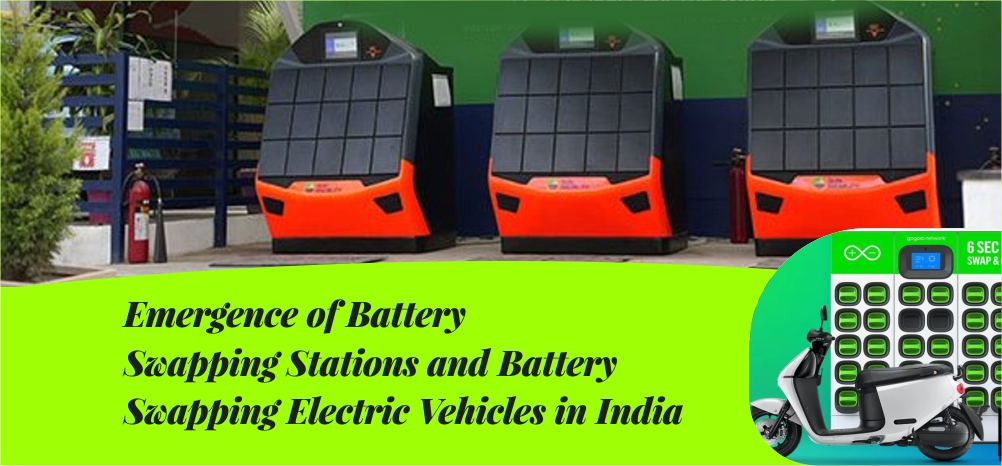
Battery swapping has emerged as a notable addition to conventional electric vehicle (EV) charging for electric two and three-wheelers that require hig...
Smart Metering Deployment in India Policy Framework, Institutional Structure and National Implementation Status

smart metering deployment in India, smart meter policy India, smart metering implementation India, smart meter rollout, institutional framework for sm...
IBEF BLOG
MORE
India's Push for Self-Reliance in Advanced Technology Sectors
Strategic priority on technological self-reliance in high-tech sectors is a...

How AI and Smart Classrooms are Changing the Education System in India
Education serves as an important pillar in the socio-economic development o...
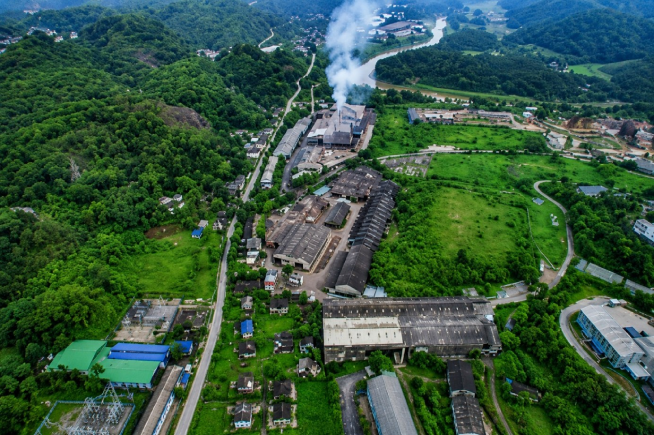
Industrial Development in Meghalaya: Trends and Opportunities
Meghalaya is emerging as an important economic and industrial hub in North-...
Partners