SEARCH
RECENT POSTS
Categories
- Agriculture (37)
- Automobiles (20)
- Banking and Financial services (35)
- Consumer Markets (56)
- Defence (6)
- Ecommerce (21)
- Economy (72)
- Education (14)
- Engineering (8)
- Exports (21)
- Healthcare (25)
- India Inc. (10)
- Infrastructure (31)
- Manufacturing (32)
- Media and Entertainment (16)
- Micro, Small & Medium Enterprises (MSMEs) (16)
- Miscellaneous (31)
- Perspectives from India (37)
- Pharmaceuticals (5)
- Railways (4)
- Real Estate (19)
- Renewable Energy (19)
- Research and Development (12)
- Retail (1)
- Services (7)
- Startups (16)
- Technology (66)
- Textiles (8)
- Tourism (16)
- Trade (8)
Authors






How Joha Rice Supports Assam's Agricultural Economy
- Sep 16, 2026, 03:15
- Real Estate
- IBEF
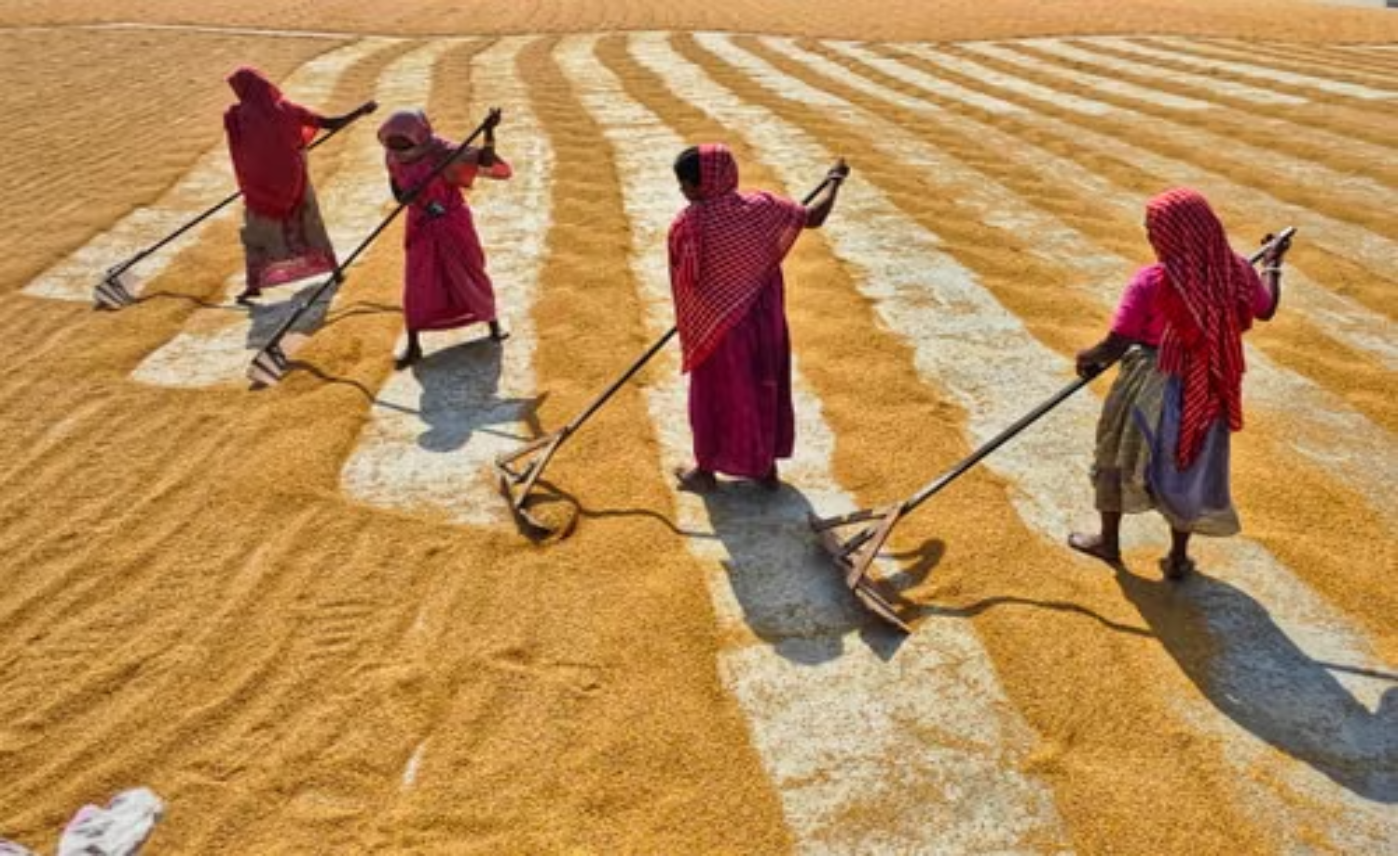
Joha Rice is famous for its aroma and texture. It is different from the long-grain aromatic rice because it is a short to medium-grain scented rice that grows only in Assam and has been associated with Assamese agriculture for many centuries now. The North-Eastern part of India where Assam lies is one of the rice biodiversity hotspots in India and Joha is one of the best aromatic landraces available in Assam.
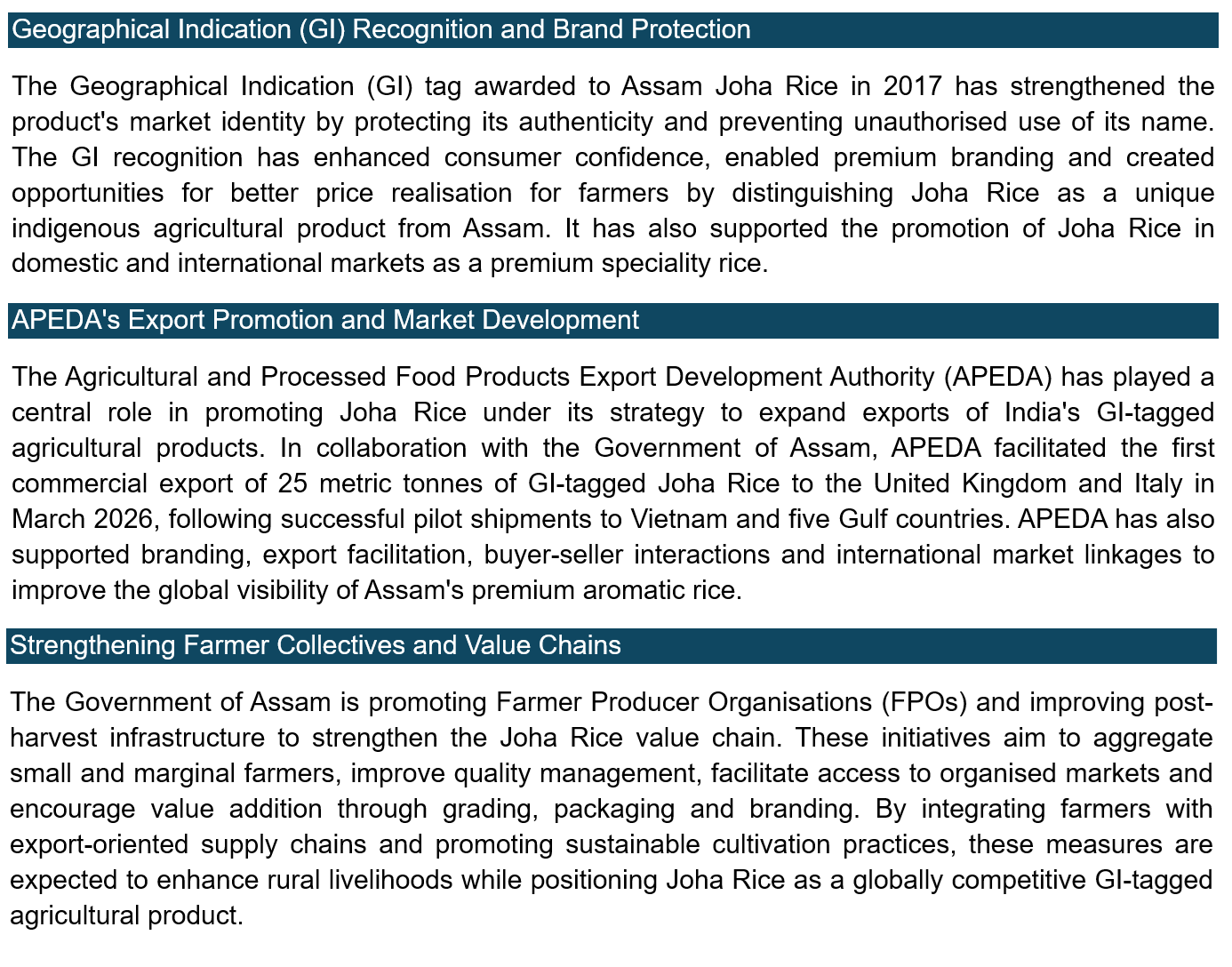
In recognition of its uniqueness and geographic origin, the Joha Rice of Assam received the Geographical Indication (GI) tag in 2017. Joha Rice is primarily cultivated during the winter season, which is called Sali, and include various varieties like Kola Joha, Keteki Joha, Rampal Joha, Boga Joha, and Kon Joha. They grow in the fertile alluvial soil of Assam, thanks to abundant rainfall and humid subtropical climate. Grown mostly by small farmers, these rice crops need specific regional farming techniques and are priced higher due to their aromatic character.
Consumer preference for premium and authentic GI-tagged (or GI-certified) products has increased the export potential of Joha Rice. In March 2026, APEDA facilitated the first export of GI-tagged Joha Rice to the UK and Italy. Besides protecting the rich agricultural heritage of Assam, Joha Rice is also a lucrative crop for the local farmers that enhances farmers' incomes and contributes to Assam's agricultural economy.
Economic Importance of Joha Rice in Assam
One of the indigenous agricultural products of Assam that is generating significant economic opportunities for the farmers as well as contributing positively to the state's rural economy is the Joha Rice. Joha Rice is different from the other variants of rice due to the presence of a specific aroma and superior quality of grains. It enjoys GI tag, which makes it fetch a high market price, thereby allowing the cultivators to earn more even with limited land holding. Premium pricing is encouraging the farmers to grow native aromatic rice variants to cater to the growing demand for high value region specific agricultural products.
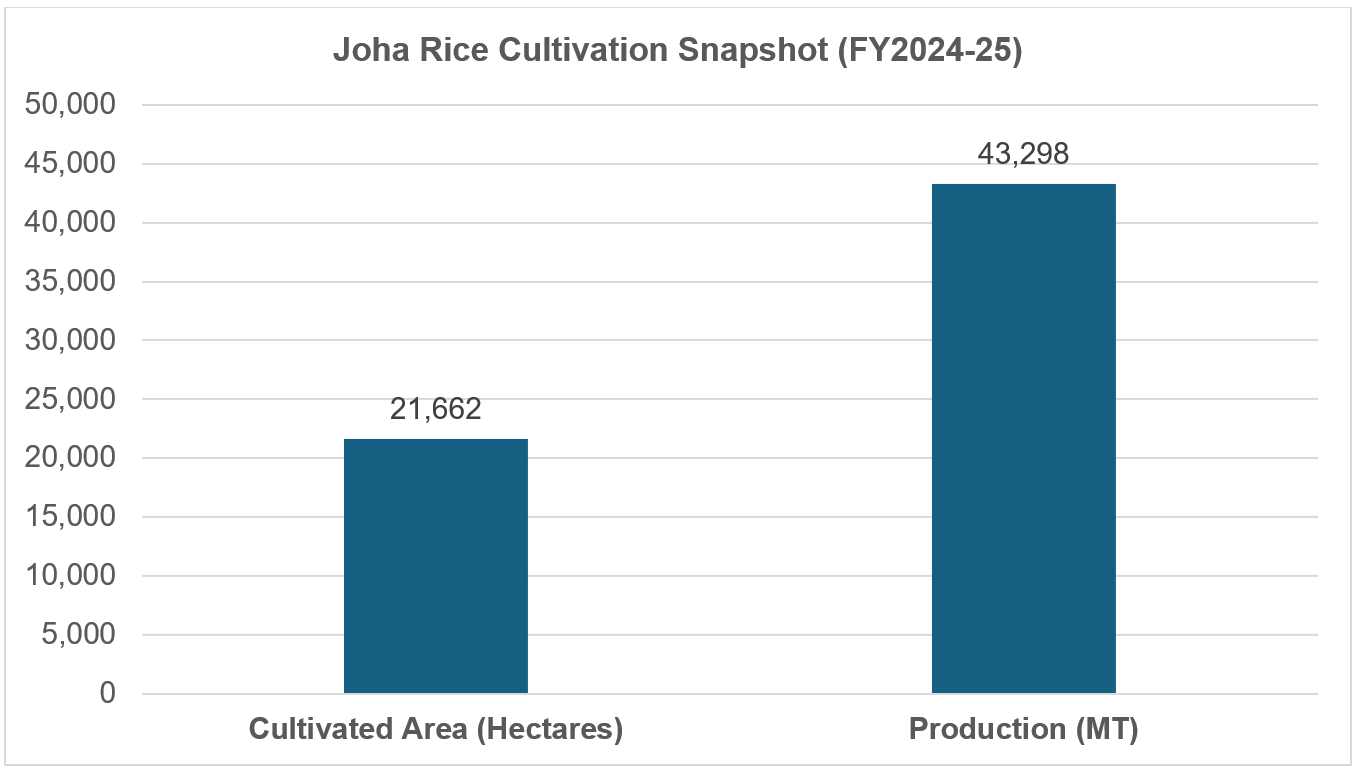
As per the Press Information Bureau (PIB), the total area under cultivation of Joha Rice in Assam was around 21,662 hectares in financial year 2024-25, yielding about 43,298 metric tonnes. Nagaon, Baksa, Goalpara, Sivasagar, Majuli, Chirang and Golaghat are some of the prominent districts in Assam where this premium variant of rice is grown due to suitable agro climatic conditions that allow cultivation of premium aromatic rice. Joha Rice is providing livelihood support to thousands of small and marginal farmers in Assam who depend on agricultural activities.
Besides providing earnings to the farmers, the Joha Rice is also contributing in terms of developing agricultural value chain involving seed production, milling, grading, packaging, branding, transportation and marketing etc. The GI tag is also giving additional advantage to the cultivators in terms of adding value to the product in addition to making use of niche market opportunities both domestic as well as international. Moreover, APEDA is actively promoting export of Joha Rice carrying GI tag through various promotional activities.
Joha Rice also holds export potential that is providing new growth channels for the agricultural economy of Assam. In March 2026, APEDA succeeded in facilitating export of first consignment of 25 metric tonnes of Joha Rice carrying GI tag to United Kingdom and Italy. The growing demand for premium and GI tagged food products has made Joha Rice a high value product for the Assam farmers.
Domestic and Export Market Opportunities
Growing preferences of consumers for branded, traceable and authentic food products have made huge market openings for GI tagged Joha Rice of Assam. Known for its unique fragrance, fine grains and excellent eating quality, Joha Rice caters the increasing consumer preferences for specialty rice. The GI tag has further increased the trust of consumers on the product due to its increased position in premium rice. With increasing demand of region-specific food products, Joha Rice is being considered an important agriculture product for high value generation.
Joha Rice of Assam has been successfully exported in internationally in March 2026 with its first ever consignment of 25 metric tonnes of GI tagged Joha Rice to the United Kingdom and Italy. With the facilitation of APEDA in collaboration with the government of Assam, the event highlights the growing international recognition of premium agricultural products of Indian Northeast Region. Before exporting to UK and Italy, APEDA has successfully piloted exports of GI tagged Joha Rice to Vietnam and five Middle Eastern countries including Kuwait, Bahrain, Qatar, Oman and Saudi Arabia.
In addition to export, Joha Rice provides great possibilities for value addition of premium retail packaging, GI certification, organic rice products and specialty foods. APEDA believes that improved market linkages, proper branding and increased exports of GI tagged agriculture products will help in higher price realization of farmers as well as development of sustainable livelihood opportunities along the value chain. With increasing demand of premium and traceable food products worldwide, Joha Rice provides great opportunity to improve Assam's agricultural exports.
Government Initiatives Supporting Joha Rice
Government support has played a pivotal role in strengthening the production, branding and export competitiveness of Assam's Joha Rice through targeted initiatives focused on GI promotion, market development, farmer empowerment and global market access.
Outlook and Road Ahead
Going forward, the increased focus on the organic cultivation of the product, development of value-added products, premium branding and international certifications can enhance its competitiveness in global specialty food markets. Combining Joha Rice with the agri-tourism programs and culinary experience of Assam can also generate additional sources of income for farming communities and promote the distinctiveness of Assam in terms of agriculture.
Given that the Government of Assam, APEDA and other stakeholders are working together to develop Joha Rice, it can potentially improve the income levels of farmers, support rural prosperity and help India become one of the top exporters of GI-based agricultural products. In the context of increasing demand for premium and sustainably sourced food products, Joha Rice is likely to become one of the most distinctive Indian agriculture products. Continued investments in modern post-harvest infrastructure, Farmer Producer Organisations (FPOs) and export-oriented value chains will be essential to improve quality, strengthen market access and support the long-term growth of Joha Rice.
FAQs
Which regions in Assam are the major producers of Joha Rice?
Joha Rice can be found in areas like Nagaon, Baksa, Goalpara, Sivasagar, Majuli, Chirang and Golaghat that are best suited for growing Joha Rice.
What role does APEDA play in promoting Joha Rice?
The APEDA has helped promote the export of GI-registered Joha Rice through efforts like providing access to foreign markets, brand and package development, buyer-seller meet and enhancing export value chains.
Which countries import Assam's Joha Rice?
So far, Joha Rice has been exported to the UK and Italy, and also as a pilot effort to Vietnam and Middle Eastern countries like Kuwait, Bahrain, Qatar, Oman and Saudi Arabia.
What are the future growth opportunities for Joha Rice?
There are many growth opportunities for Joha Rice in premium food products, organic farming, value-added product manufacturing, agritourism and international marketing.
How does Joha Rice contribute to Assam's agricultural economy?
Joha Rice helps farmers earn money, create jobs along the agricultural supply chain, improve rural livelihood and enhance the position of Assam among agricultural exports of India based on Geographical Indications (GI).
Partners