RECENT CASE STUDIES
Emergence of Battery Swapping Stations and Battery Swapping Electric Vehicles in India
Last updated: Jul, 2026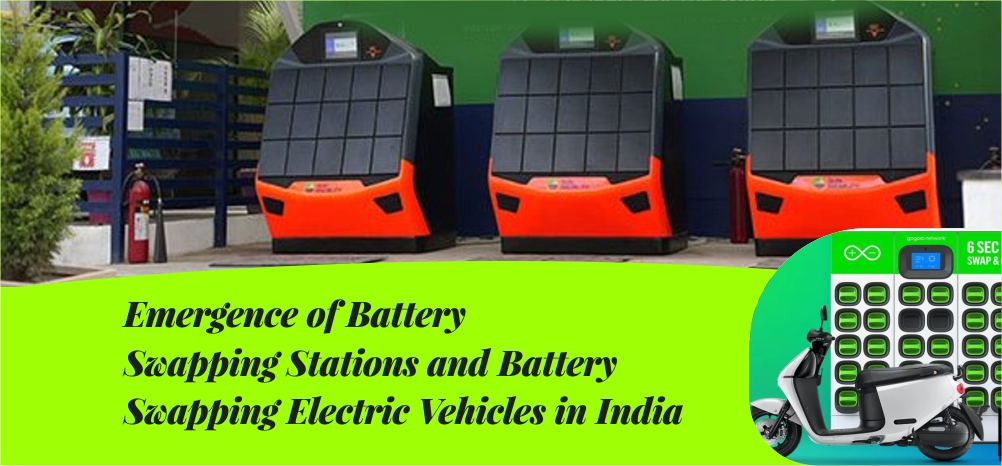
Battery swapping has emerged as a notable addition to conventional electric vehicle (EV) charging for electric two and three-wheelers that require high vehicle utilisation and low downtime. While traditional charging requires the attachment of the depleted battery to the vehicle during the process, the swapping option allows users to replace a used-up battery with a charged battery at a specialised battery swapping station within a few minutes. As a result, the model significantly decreases vehicle downtime and makes the system more efficient. It has proven to be especially effective in commercial applications.
The battery swapping model also enables the Battery-as-a-Service (BaaS) concept, where battery ownership is separated from the electric vehicle ownership. Within this model, users buy an electric vehicle without a battery and then subscribe to battery usage via the swapping network. Since the battery accounts for a considerable portion of an EV cost, this solution reduces initial costs and relieves the consumer from battery maintenance, charging, and replacement. Key benefits of this solution include:
- Reduced vehicle downtime, making it ideal for e-rickshaws, last-mile deliveries, ride-hailing, and urban mobility services fleet
- Reduced EV purchase price, since the battery is not purchased together with the vehicle
- Reduced consumer concerns about battery maintenance, charging, and replacement
- Battery tracking across the whole network for the operator
- Efficient battery lifecycle management, since batteries will be charged and serviced by specialized operators instead of individual owners
In recognition of the potential of this technology, the Government of India introduced the idea of developing a Battery Swapping Policy in the Union Budget 2022–23. Afterward, NITI Aayog introduced the Draft Battery Swapping Policy in April 2022, creating the enabling framework that focuses on interoperability, safety, BaaS models, and private investments. It complements the existing FAME Scheme and PLI Scheme by providing a standard battery swapping ecosystem. The case study explores battery swapping developments in India, the policy context of its implementation, emerging models of business, key players in the market, innovations, trends, challenges, and future prospects of the industry.
Market Size & Growth
The electric mobility ecosystem of India has witnessed significant growth in recent years owing to policy interventions and infrastructure developments. In its quest to boost the deployment of EVs, the Government has followed an all-encompassing strategy involving various initiatives like national and state-level policies, manufacturing incentives, and expansion of charging infrastructure such as the FAME program, the PLI Scheme for automobiles, batteries, and components, and electric bus programs.
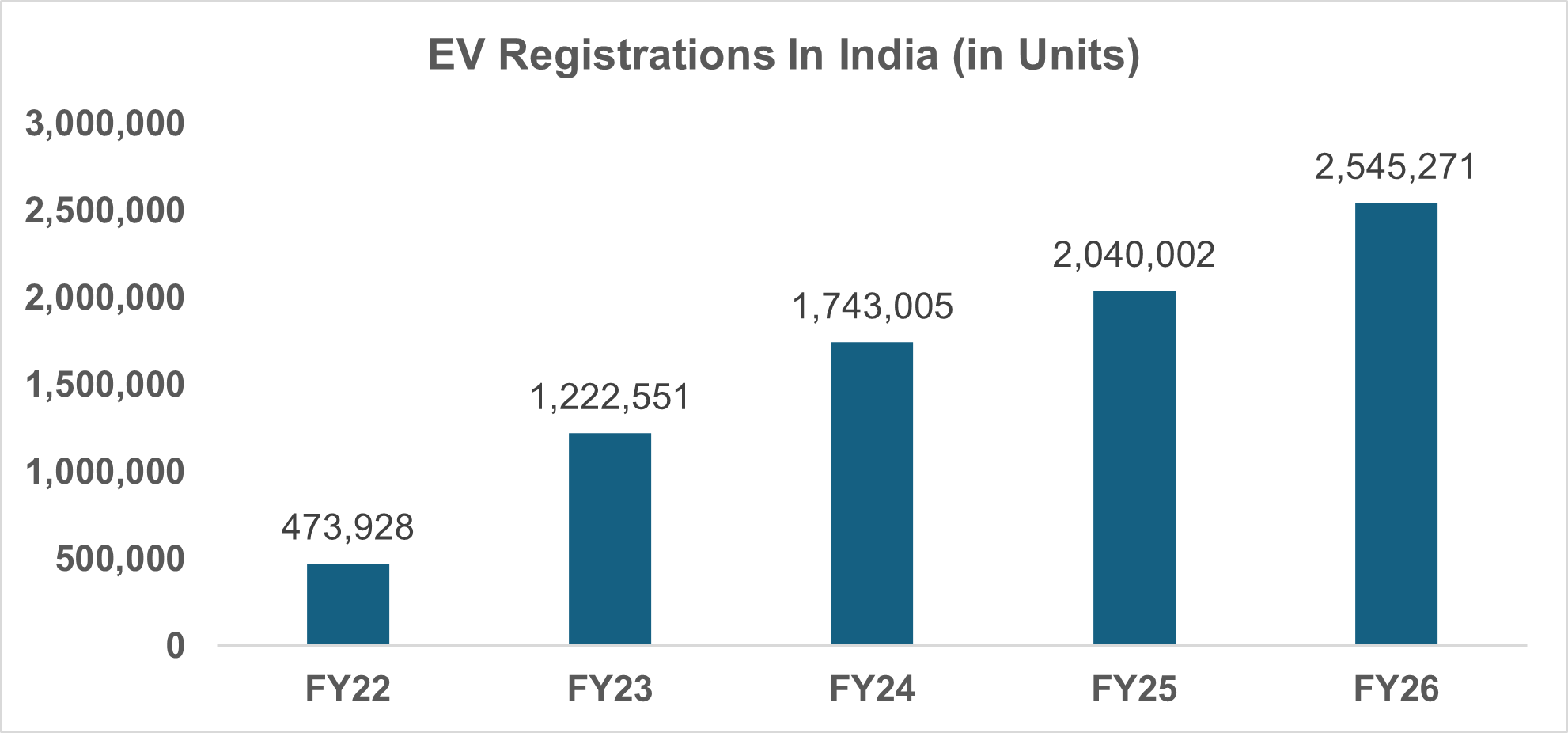
- EV sales have increased from 50,000 vehicles in 2016 to 2.08 million vehicles in 2024, with EV penetration of nearly 9% recorded in FY26 (NITI Aayog).
- The Government plans to achieve 30% of total vehicle sales from EVs by 2030, making the sector worth US$ 200 billion and boosting India’s energy security.
- Demand for lithium-ion batteries would be on the rise from 29 GWh in 2025 to 248 GWh in 2035, driven by growing use of EVs and application in clean energy technologies.
- The Battery-as-a-Service (BaaS) market of India would be valued at around Rs. 14,307 crore (US$ 1.71 billion) in 2024 and is projected to touch US$ 11.20 billion in 2032, marking a CAGR of 26.5%.
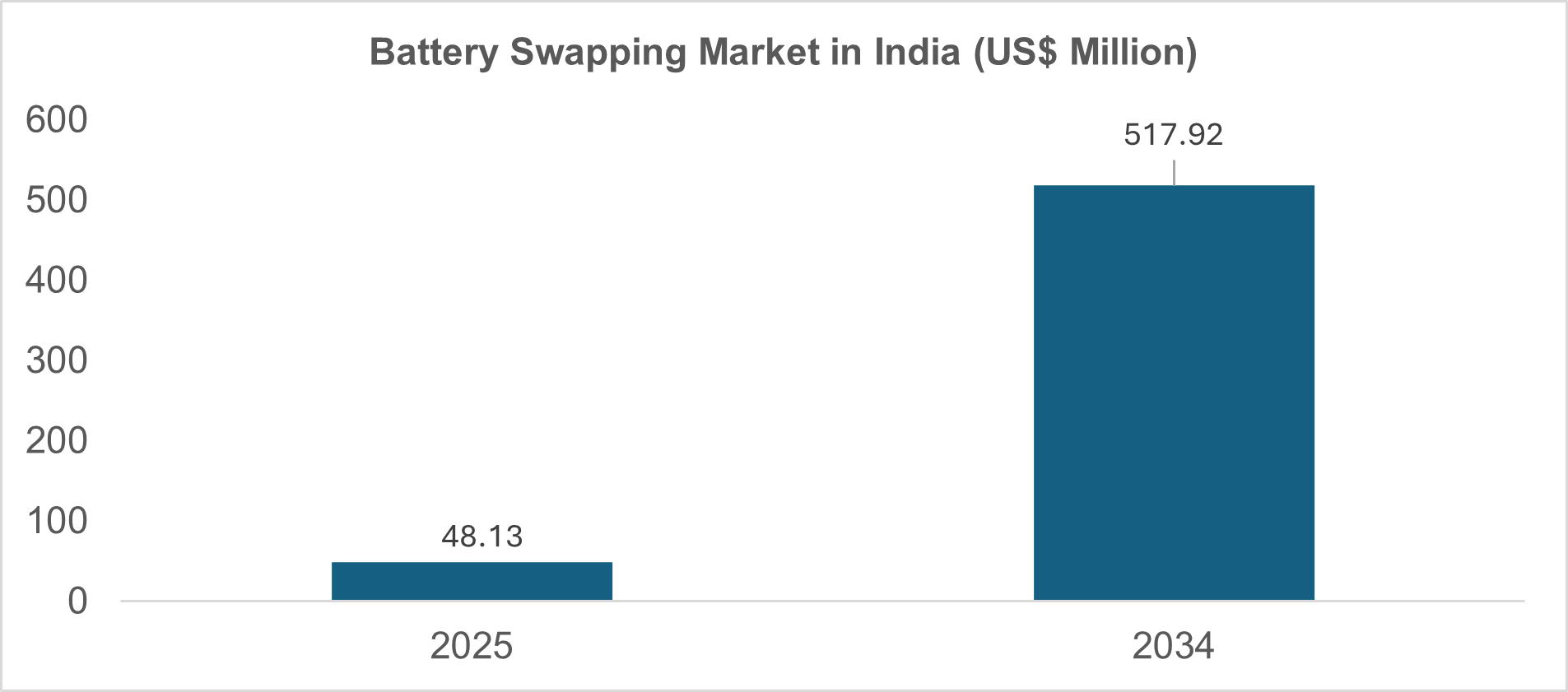
- The operational battery swapping market would be worth US$ 48.13 million in 2025 and is expected to reach US$ 517.92 million in 2034, marking a CAGR of 30.21%.
Source: IMARC Group
- There were over 4,000 battery swapping stations in India by mid-2025, concentrated mostly in Delhi-NCR, Bengaluru, Hyderabad, Chennai, and Mumbai.
- The growth of battery swapping stations is also highly correlated with overall growth in charging stations owing to continued public and private investments in EV charging and battery swapping infrastructure across major metropolitan and semi-urban markets.
- The growth in battery swapping can be attributed to commercial users like e-rickshaw drivers, ride-hailing services, and last mile logistics companies where battery swapping cuts down vehicle idle time allowing them to quickly swap the discharged batteries thus increasing their earnings and operational efficiency.
Source: Vahan Dashboard
In line with the growing expansion of electric mobility, there has been an urgent need for sustainable resource management. According to NITI Aayog projections, the number of End-of-Life Vehicles (ELVs) in India would grow from 23 million in 2025 to 50 million by 2030, while the generation of e-waste is expected to grow from 6.19 million metric tonnes (MMT) in 2024 to 14 MMT by 2030. This calls for building robust infrastructure for battery recycling, EPR, and circularity of lithium-ion batteries.
Government Policies
Acknowledging the possibility of battery swapping in accelerating EV adoption especially in the two- and three-wheeler categories, India’s battery swapping regime is developing under a multi-tiered regulatory regime facilitated by NITI Aayog in collaboration with the Ministry of Power (MoP), the Ministry of Road Transport and Highways (MoRTH) and state governments.
- Union Budget 2022-23: outlined the drafting of the National Battery Swapping Policy aimed at ensuring interoperability, standardization, and safety along with promoting BaaS models in support of FAME-II scheme and PLI scheme.
- April 2022: after consultation with the Bureau of Indian Standards (BIS), Department of Science and Technology (DST), industries and ministries, NITI Aayog came up with the Draft Battery Swapping Policy. The policy classified BSS, emphasized ACC batteries and also set the requirements for BMS.
- January 2025: MoP issued the Guidelines for the Establishment and Operation of Battery Swapping and Battery Charging Stations, which included technical, operational and safety standards along with recognizing BaaS and making a regulatory distinction between the ownership of battery and vehicle.
- MoRTH allowed registration of battery-less electric vehicles providing legal status to those EVs being offered without batteries.
- PM E-DRIVE Scheme (launched in 2024): allocating funds worth Rs. 10,900 crore (US$ 1.23 billion) aims at expanding demand incentives for electric two- and three-wheelers using swappable batteries; till July 2025, the scheme helped to deploy over 2.8 million electric vehicles, including 14,000 electric buses.
- FAME-II scheme: has been supporting more than 1.6 million electric vehicles since 2019 and has allocated Rs. 912.50 crore (US$ 107.91 million) to install 9,332 public EV charging stations.
- State governments supported the national schemes: Maharashtra’s EV Policy recognizes battery-less electric vehicles and allocates demand incentives between manufacturers and swapping operators; Delhi offers incentives on purchase of swappable EVs; Karnataka supports the infrastructure by providing lands and capital incentives, resulting in the rise of Bengaluru as a major center of battery swapping.
- August 2025: NITI Aayog rolled out India Electric Mobility Index in order to evaluate the performance of states in terms of vehicle electrification, charging readiness and research activities; Delhi, Maharashtra and Chandigarh have been recognized as early adopters.
- Battery Waste Management Rules, 2022, regulated by Central Pollution Control Board (CPCB) via EPR framework requires battery swapping operators and producers to take care of environmentally responsible battery collection, recycling and end-of-life management.
- Hence, these regulations at both central and state level can be considered as a multi-tiered regulatory regime that is meant to increase consumer trust, promote safety standards and attract private investments into battery swapping infrastructure.
Road Ahead
A new phase of commercial development is coming for the battery swapping ecosystem in India due to an improving regulatory framework, the increased engagement of private sector actors, and the spread of electric mobility in the country.
- Regulatory measures include Draft Battery Swapping Policy, Guidelines for Installation and Operation of Battery Swapping and Battery Charging Stations (2025), battery-less vehicle registration by MoRTH, and PM E-DRIVE Scheme.
- Industry leaders such as Indofast Energy, Battery Smart, Yuma Energy, and other BaaS providers are expanding their operating networks. Meanwhile, major automobile manufacturers such as Honda, TVS Motor Company, Ather Energy, and Hero MotoCorp are gradually adopting battery swapping solutions for their electric mobility.
- Commercial fleets, e-rickshaw services, and urban logistics providers will likely to remain the main source of demand for the service due to the requirement of fast energy recharge and vehicle usage.
- Government's goal to increase the proportion of electric vehicles to 30% of all vehicles sold in the country by 2030 and increasing the development of public charging and battery swapping infrastructure is expected to increase the adoption of BaaS services among high-utilization segments of vehicles like two-wheelers, three-wheelers, commercial fleets, and last-mile delivery.
In the future, the further expansion of interoperable battery standards, the development of domestic battery production, advanced Battery Management Systems, recycling infrastructure, and digital energy management platforms will be critical for improving the ecosystem of the battery swapping infrastructure in India. Strategic partnerships between oil marketing companies, battery swapping operators, technology companies, and vehicle manufacturers are expected to increase the availability of the infrastructure and its adoption in urban and semi-urban markets. As long as technologies evolve and policies continue to support them, battery swapping will remain one of the important alternatives to traditional charging infrastructure.
Partners