Advantage India
Robust
Demand
*Electric vehicle sales rise is key factor for growth in auto component industry as India's electric vehicle (EV) sales continued to rise in FY26, reaching 2.66 million units, up from 2.05 million in FY25. While the total number of units sold increased, the YoY growth grew to 29.76% in FY26, compared to a 22.02% jump in FY25.
*By 2030, ten million EVs could be sold each year. The EV market is expected to reach US$ 206 billion by 2030.
*Most of the components sold to OEMs are engine components (26%), body/chassis (14%), suspension & braking (15%), drive transmission & steering (13%), and electricals & electronics (11%) in FY25.
*India’s auto-component industry is poised to reach US$ 200 billion by 2030, supported by its cost competitiveness, skilled workforce, and growing domestic demand, according to a McKinsey report titled Shaping the future of India’s auto component industry.

Export
Opportunities
*Exports of auto components rose by 8%, reaching Rs. 1,95,726 crore (US$ 22.90 billion) in FY25, up from Rs. 1,81,196 crore (US$ 21.20 billion) in FY24.
*Amid evolving trade dynamics, India is increasingly recognised for its strategic advantages, positioning it as a reliable hub for anchoring businesses. This is driven by India's rapid economic growth, global integration, and leadership in five India-led corridors.
*The Indian auto components industry exports over 25% of its production annually. By FY28, the Indian auto industry aims to invest Rs. 58,000 crore (US$ 7 billion) to boost localization of advanced components like electric motors and automatic transmissions, reducing imports and leveraging 'China Plus One’ trend.

Policy
Support
*Key initiatives include the US$ 5 billion Production Linked Incentive (PLI) Scheme, aimed at enhancing automotive battery and components manufacturing, and the US$ 1.3 billion PM Electric Drive Revolution in Innovative Vehicle Enhancement (E-DRIVE) Scheme, which subsidises the purchase of electric and hybrid vehicles and serves as a major driver for auto component manufacturing.
*The GST on electric vehicles has been lowered from 12% to 5%, and the GST on chargers and charging stations for electric vehicles has been decreased from 18% to 5%.
*In January 2024, the Government of India approved additional fund of Rs. 1,500 crore (US$ 180.3 million) for second phase of FAME-II.
*100% FDI allowed under automatic route for the auto components sector.

Competitive
Advantage
*India ranked as the second most attractive hub in 2024, the country's manufacturing sector is projected to expand by 8% to 10% over the next 20 years, with value-added manufacturing anticipated to grow by 30% by 2030.
*India's competitive cost base, rising investments, and strong industrial foundation are set to drive annual GDP growth of 6% to 7% over the next five to seven years, establishing it as the world's third-largest economy by 2030.
*A cost-effective manufacturing base in India keeps costs lower by 10-25% relative to operations in Europe and Latin America.
*Second-largest steel producer globally, hence a cost advantage.
*India is emerging as a global auto component sourcing hub due to its proximity to key automotive markets such as ASEAN, Europe, Japan and Korea.

Introduction
India has emerged as the fastest-growing economy in the world in recent years. Rising incomes, higher infrastructure spending, and supportive manufacturing incentives have together accelerated the automobile sector, making it a critical pillar of India’s growth story. The two-wheeler segment, driven largely by the expanding middle class, continues to dominate the market, with sales reaching 22.2 million units in FY26. This surge in demand has also encouraged the expansion of original equipment and auto component manufacturers, helping India build strong expertise in this space and enhancing global demand for Indian vehicles and components.
India’s automotive sector outlines an ambitious yet attainable vision by 2030. The automotive component production reaching US$ 145 billion, with exports tripling from US$ 20 billion to US$ 60 billion. This expansion would elevate India’s global automotive value chain share from 3% to 8%. Supporting this growth, the auto component industry has become a vital segment of the economy, spanning large corporations to micro enterprises across manufacturing clusters nationwide. It accounted for 2.3% of India’s GDP in FY25 and provided direct employment to over 1.5 million people, a figure expected to rise as the sector’s GDP contribution reaches 5-7% by 2026.

India’s auto-component industry is poised to reach US$ 200 billion by 2030, supported by its cost competitiveness, skilled workforce, and growing domestic demand, according to a McKinsey report titled Shaping the future of India’s auto component industry.
The Indian auto component industry recorded a turnover of Rs. 3,56,193 crore (US$ 41.20 billion) in H1 FY26, registering a growth of 6.8% between H1 FY25 and H1 FY26. The sector is projected to achieve exports worth Rs. 8,54,700 crore (US$ 100 billion) by 2030, underscoring its global competitiveness. In H1 FY26, exports stood at Rs. 1,07,826 crore (US$ 12.20 billion). In FY25, North America remained the largest export destination with a 32% share, recording 8.4% growth, while Europe, with a 30% share, registered a 2.1% decline. Asia accounted for 26% of exports and witnessed robust growth of 15.1%. The key components sold to OEMs are engine components (26%), body/chassis (14%), suspension & braking (15%), drive transmission & steering (13%), and electricals & electronics (11%) in FY25. According to a McKinsey report, India's auto component exports are projected to reach US$ 70-100 billion by FY30, driven by rising demand for electric vehicle (EV) technologies and global supply chain diversification. Indian SMEs could capture US$ 20-30 billion of this opportunity by leveraging cost advantages and high-quality standards.
Market Size
India’s auto components industry has significantly expanded its market share, driven by rising automobile demand from the growing middle class and strong global exports. The sector has attracted both Indian and international players and is broadly classified into organised and unorganised segments. While the unorganised sector primarily caters to the aftermarket with low-value items, the organised sector focuses on supplying high-value precision instruments to Original Equipment Manufacturers (OEMs).
India’s automobile production further highlights the scale of demand that supports the component industry. In FY26, domestic sales stood at 2,17,05,974 units for two-wheelers, 46,43,439 units for passenger vehicles, 10,79,871 units for commercial vehicles, and 8,36,231 units for three-wheelers. In FY26, the total production of Passenger Vehicles, Commercial Vehicles, Three Wheelers, Two Wheelers and Quadricycle was 3,47,08,984 units.
In H1 FY26, domestic OEM supplies accounted for about 65.92% of the industry’s turnover, followed by the domestic aftermarket at around 11.42% and exports at 22.66%. In H1 FY26, Supplies to OEMs stood at Rs. 3,04,663 crore (US$ 35.20 billion),

reflecting a ~7% YoY growth, while the aftermarket segment was valued at Rs. 53,160 crore (US$ 6.10 billion), recording a ~9% increase over H1 FY25. India's Automotive Mission Plan 2047 aims to boost vehicle production to 50 million by 2030 and 200 million by 2047, positioning India among the top two global auto producers. It prioritizes sustainable vehicle production with hydrogen, electric, CNG, and biogas, while not curbing petrol or diesel vehicles immediately.
Investments
The Indian automobile sector recorded an inflow of huge investments from domestic and foreign manufacturers. Foreign Direct Investment (FDI) inflow in the sector stood at Rs. 2,59,753.31 crore (US$ 39.14 billion) between April 2000-June 2025 which is 5% of the total FDI inflows in India during the same period.
Some of the recent investments made/planned for the auto component sector are as follows:
- Auto components maker Carraro got listed on BSE and NSE on December 2024, and the IPO comprised entirely an OFS of 1.78 crore shares.
- Inalfa Gabriel Sunroof Systems (IGSS) opened a new plant in Chennai which became operational in Q1 2024 is now nearing its full capacity and produced 1,30,000 sunroofs in 2024 alone.
- In February 2026, AISIN Corporation, along with its Indian subsidiary AISIN Automotive Haryana Private Limited, announced plans to expand its existing manufacturing operations and establish a new facility in Maharashtra. This move is aimed at strengthening its presence in India’s rapidly growing automotive market. The total planned investment for this expansion is estimated at approximately US$ 204 million, focusing on advanced transmission systems and localization.
- SKF India outlined an investment plan of up to approximately Rs. 1,460 crore (US$ 172.66 million) to be deployed by 2030. The investment is focused on expanding its manufacturing footprint and strengthening its automotive and industrial component production capacities in India.
- In October 2025, NDR Auto Components entered into a joint venture with Japan-based Hayashi Telempu to manufacture automotive interior components in India. This collaboration aims to bring advanced technology, improve localization, and cater to both domestic and export markets.
- According to industry estimates by Automotive Component Manufacturers Association of India, the Indian auto component sector attracted investments of around US$ 2.5–3 billion in FY2025, largely directed towards capacity expansion, EV component development, and supply chain localization.
- As part of the Union Budget 2025-26, the government has announced duty exemptions on lithium-ion battery scrap and other essential minerals. This initiative also includes adding 35 capital goods for electric vehicle production to the exemption list, with the goal of enhancing domestic production.
- Craftsman Automation Ltd., a prominent producer of automotive and industrial components, has disclosed intentions to construct a state-of-the-art manufacturing facility within the SIPCOT Industrial Park in Shoolagiri, Hosur. The company is set to invest approximately Rs. 150 crore (US$ 17.3 million) in this strategic expansion project.
- A new plant for manufacturing automotive parts for BMW will be set up in Punjab.
- Accuron Technologies and Hyundai CRADLE have co-invested in Xnergy, a startup focused on developing contactless charging solutions for electric and autonomous vehicles.
- India and Uzbekistan signed a Bilateral Investment Treaty (BIT) to enhance investor confidence in both countries. FDI from India to Uzbekistan reached US$ 20 million from April 2000 to August 2024, with significant investments in pharmaceuticals, amusement parks, automobile components, and hospitality sectors.
- Honda R&D (India) Private Limited, has inaugurated its new Solution R&D Centre in Bengaluru, Karnataka. The company has established a global objective to attain carbon neutrality across all its products and corporate activities by the year 2050.
- Apollo tires, which holds a 25% share of India's passenger-car radial segment in the aftermarket, aims to enhance its presence in rural areas across the country.
- Bharat Forge will invest Rs. 1,000 crore (US$ 119 million) over a period of five years in Tamil Nadu to enhance production capacity for the long term.
- In October 2023, Tata Motors signed a definitive agreement to acquire a 27% stake in Freight Tiger, a software-as-a-service (SaaS) company, for Rs. 150 crore (US$ 17.99 million).
- Auto components maker Happy Forgings to launch IPO on December 19th, 2023. It comprises a fresh equity issue of Rs. 400 crore (US$ 47.99 million) and an offer for sale (OFS) of 71.59 lakh shares.
- Ola Electric IPO was the first auto company in India to launch an IPO in over two decades (20 years). It had and IPO size of Rs. 8,500 crore (US$ 1.01 billion).
- In August 2023, Bosch earmarks Rs. 480 crore (US$ 58.11 million) for R&D and an additional capex of Rs. 480 crore (US$ 58.11 million).
- In June 2023, Tata Motors will invest US$ 2 billion towards developing new products and platforms over the next four years.
- In May 2023, Apollo tires would be making an investment around Rs. 1,100 crore (US$ 133.17 million) in FY24.
- By 2030, Chinese EV manufacturer BYD hopes to control 40% of the Indian EV market. It already has a manufacturing setup in India, and the current plant's capacity may be increased by another 10,000-15000 units.
Government Initiatives
The Government has reaffirmed its commitment towards EVs and its mission for 30% electric mobility by 2030. Budget announced customs duty exemption on the import of capital goods and machinery required for the manufacture of lithium-ion batteries that typically power EVs.
The Union Cabinet approved the Production Linked Incentive (PLI) Scheme for the Automobile and Auto Components sector on September 15, 2021, with a budgetary outlay of Rs. 25,938 crore (US$ 3.03 billion) from FY23 to FY27. The scheme is expected to attract fresh investments of over Rs. 42,500 crore (US$ 4.9 billion) during this period.
Key initiatives include the US$5 billion Production Linked Incentive (PLI) Scheme, aimed at enhancing automotive battery and components manufacturing, and the US$ 1.3 billion PM Electric Drive Revolution in Innovative Vehicle Enhancement (E-DRIVE) Scheme, which subsidises the purchase of electric and hybrid vehicles and serves as a major driver for auto component manufacturing.
The Bharat New Car Assessment Program (BNCAP) will boost the auto component value chain by driving advanced manufacturing, fostering innovation, and promoting global standards.
The Government of India’s Automotive Mission Plan (AMP) 2006-26 has been instrumental in ensuring growth for the sector. The Indian automobile industry is expected to achieve a turnover of US$ 300 billion by 2026 by expanding at a CAGR of 15% from its current revenue of US$ 74 billion.
The government’s AMP 2016-26 will help the automotive industry grow and will benefit the economy in the following ways:
- The auto industry’s GDP contribution will rise to over 12%.
- Additional ~65 million direct and indirect jobs will be created.
- End-of-life policy will be implemented for old vehicles.
Road Ahead
The rapidly globalising world is creating new opportunities for the transportation industry, particularly with the shift towards electric, electronic, and hybrid vehicles that are seen as more efficient, safe, and reliable. Over the next decade, this transition will open new verticals for auto component manufacturers, supported by strong government policy measures. The Indian government has already introduced production incentives and is investing heavily in electric vehicle (EV) infrastructure, including the exemption of customs duties on capital goods and machinery used for producing lithium-ion cells.
As of December 2025, India’s EV charging network has expanded rapidly, growing rapidly from FY22 to Q3 FY25. Public charging stations reached 29,151 by Q3 FY25, marking a strong 78% CAGR. This will enable the auto component industry to strengthen its capabilities in EV components manufacturing, positioning India as a global hub for clean mobility solutions. As global supply chains realign, India’s automotive component trade is expected to expand 4-5% annually to reach US$ 70 to US$ 100 billion by FY30.
At the same time, manufacturers are increasingly focusing on sustainable solutions, lightweight materials, and efficient production processes to meet the evolving needs of the automotive sector.

The integration of digitalisation and data analytics is also becoming a priority to optimise operations and enhance product performance. Going forward, collaboration with automakers, continuous investment in research and development, and adaptation to changing regulations will be critical for the industry to stay competitive. With these shifts, the Indian auto component sector is set to play a pivotal role in shaping the future of mobility, reinforcing India’s position as the world’s third-largest automobile market by both value and volume.
References: International Organization of Motor Vehicle Manufacturers, Media Reports, Press Releases, Department for Promotion of Industry and Internal Trade, Automotive Component Manufacturers Association of India, Society of Indian Automobile Manufacturers
FAQs
The auto component industry in India manufactures parts such as engines, transmissions, braking systems, electricals, electronics, and body components for automobiles. It is a key part of the automotive value chain, supplying both OEMs and the aftermarket.
India's auto component industry is expanding due to rising vehicle production, growing domestic demand, increasing exports, and investments in advanced manufacturing. Government incentives and the shift towards electric mobility are further accelerating industry growth.
The Indian auto component industry manufactures engine components, suspension and braking systems, drive transmission and steering systems, electrical and electronic parts, body and chassis components, and EV-specific parts for domestic and global markets.
The auto component industry supplies critical components to vehicle manufacturers, ensuring efficient production across passenger vehicles, commercial vehicles, two-wheelers, and EVs. It also supports innovation, localisation, and a strong automotive supply chain.
Exports are a major growth driver for the auto component industry in India, with North America, Europe, and Asia being key markets. Rising global demand and supply chain diversification are strengthening India's position as a reliable export hub.
The transition to electric vehicles is creating new opportunities for the Indian auto component industry in batteries, power electronics, lightweight components, and advanced manufacturing. It is also driving investments in localisation and EV-focused technologies.
The Government supports the auto component sector in India through initiatives such as the PLI Scheme, PM E-DRIVE Scheme, Automotive Mission Plan, and customs duty exemptions for EV manufacturing, encouraging investment, localisation, and innovation.
The future of the auto component industry in India is driven by electric mobility, export growth, digital manufacturing, supply chain diversification, and increasing demand for high-value automotive components in domestic and international markets.
India's auto component industry benefits from a cost-competitive manufacturing base, skilled workforce, strong OEM ecosystem, and expanding export network. Rising investments and policy support continue to strengthen India's position in the global automotive supply chain.
Related News
MOREAuto Component Clusters
- Maharashtra
- Tamil Nadu
- National Capital Region(NCR)
- Gujarat
- Madhya Pradesh

Posters
MORE
COMPONENTS OF QUALITY
India is emerging as the world's hub of choice when it comes to manufacturing quality auto components. The industry has over 600 manufacturers who exceed the world's most stringent quality standard.
IBEF Campaigns
MORE

Aatmanirbhar Bharat Utsav 2024
Union Minister of External Affairs, Dr. S. Jaishankar and Union Commerce an...
Case Studies
MOREThe Rise of India's Pathology Laboratories: Strengthening Quality and Safety in Healthcare

India has seen its healthcare system witness an impressive evolution in the last two decades because of the growth in healthcare infrastructure, incre...
SUV Dominance and the Future of Passenger Vehicles

India's passenger vehicle industry over the past two decades have been gone under significant changes. In particular, the market has been transfor...
Expressway Infrastructure Development Outlook in India
India's vision of becoming a Viksit Bharat by 2047 has positioned transport infrastructure as a cornerstone of its long-term economic growth strat...
IBEF BLOG
MORE
Consumer Market in India: The Rise of Premium, Sustainable and Experience-Based Consumption
The consumer market in India is undergoing the process of transition fueled...
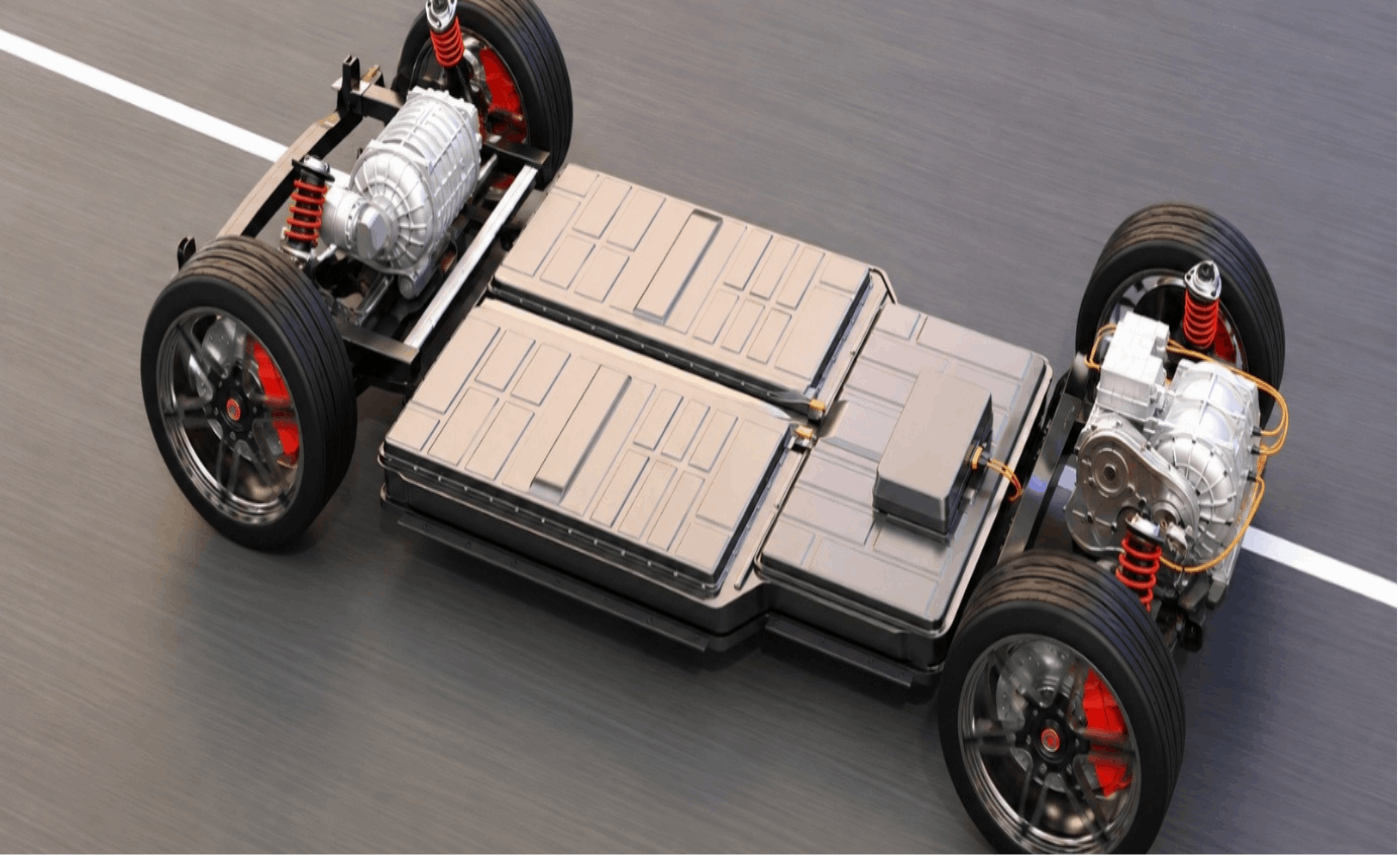
How Battery Technology Is Transforming the Electric Vehicles Market
Battery technology is emerging as a critical driver of India’s electr...

How Emerging Railway Food Services Are Improving the Passenger Experience
Indian railways food services have been witnessing a paradigm shift enabled...
Partners




