Bihar is located in the eastern part of India. The state is surrounded by Nepal in the north, West Bengal in the east, Uttar Pradesh in the west, and Jharkhand in the south. The state enjoys a unique location-specific advantage because of its proximity to the vast markets of eastern and northern India, access to ports such as Kolkata and Haldia, and to raw material sources and mineral reserves from the neighbouring states.
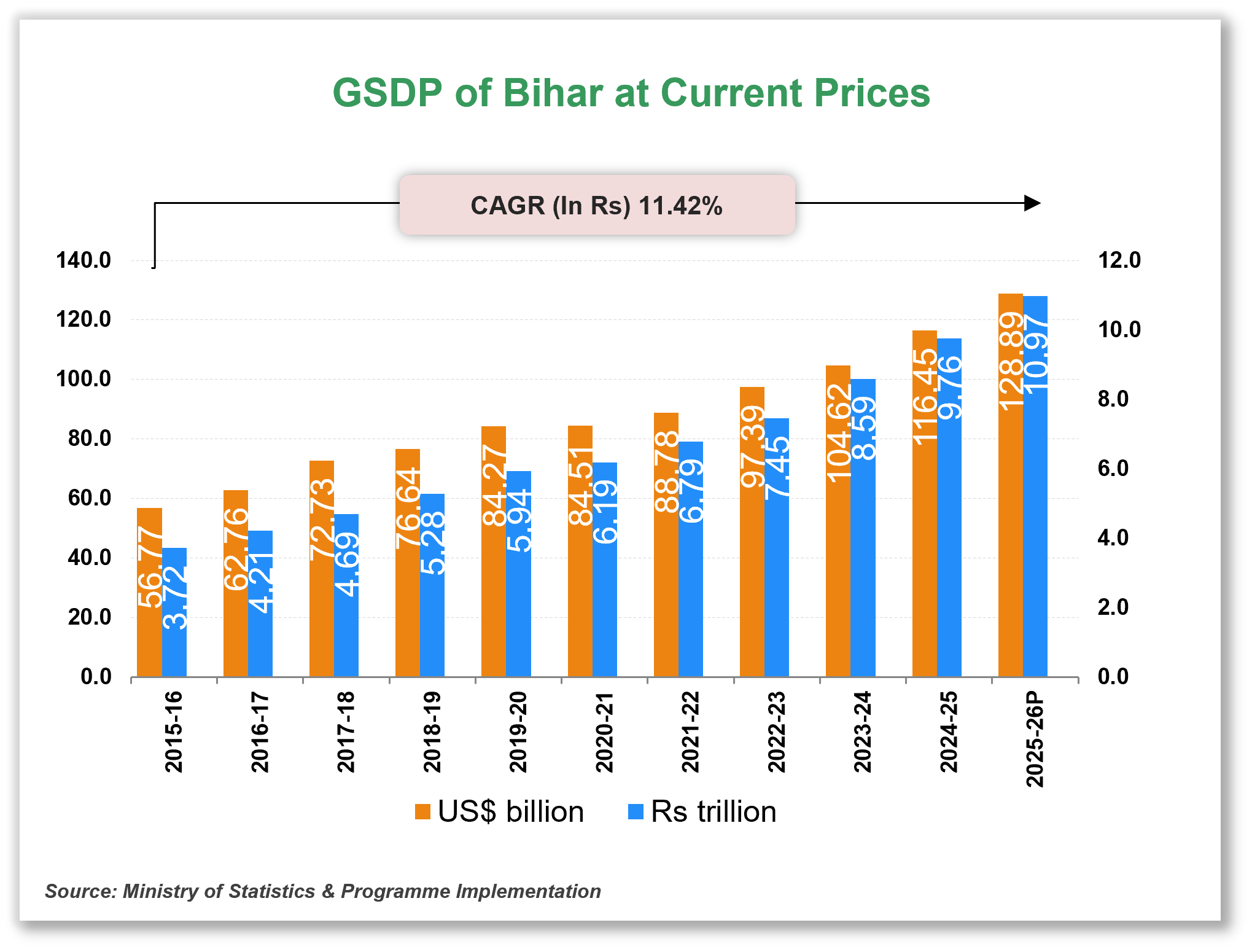
In 2025-26, Bihar’s GSDP at current prices is projected to be Rs. 10.97 trillion (US$ 128.89 billion) and increased at a CAGR (in Rs.) of 11.42% between 2015-16 and 2025-26.
The per capita GSDP of Bihar increased to Rs. 66,828 (US$ 785.47) in 2023-24 and rose at a CAGR of 9.13% (in Rs.) between 2015-16 and 2023-24.
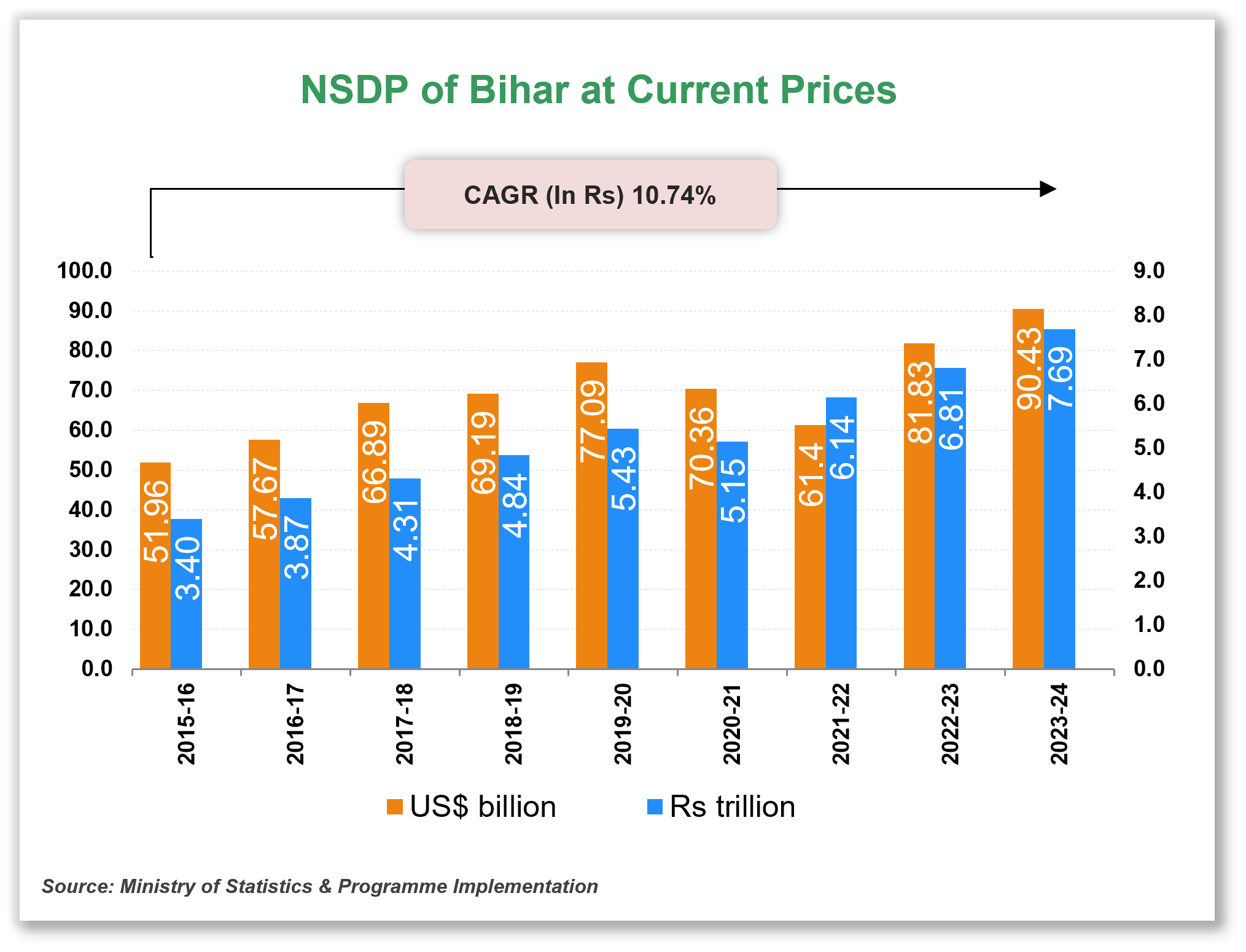
Bihar has witnessed strong growth in per capita net state domestic product. At current prices, the per capita NSDP of the state grew at a CAGR of 8.45% (in Rs.) between 2015-16 and 2021-22.
According to the Department for Promotion of Industry and Internal Trade (DPIIT), cumulative FDI inflows in Bihar were valued at Rs. 1,915 crore (US$ 215.9 million) between October 2019-June 2025.
Bihar is the fourth-largest producer of vegetables and the eighth-largest producer of fruits in India. Bihar has high agricultural production, making it one of the strongest sectors of the state. The percentage of the population employed in agricultural production in Bihar is around 80%, which is much higher than the national average. Food processing, dairy, sugar, manufacturing, and healthcare are some of the fastest-growing industries in the state. The state has planned initiatives for the development of other sectors such as education and tourism and provides incentives for information technology and renewable energy projects.
The state has a large base of cost-effective industrial labour, making it an ideal destination for a wide range of industries. The state enjoys a unique location-specific advantage because of its proximity to the vast markets of eastern and northern India, access to ports such as Kolkata and Haldia, and to raw material sources and mineral reserves from the neighbouring states.
As of FY26 (April-September 2025), Bihar had a total installed power generation capacity of 8,339.08 MW, of which 7,017.02 MW was contributed by central utilities, 70.70 MW by state utilities and 1,251.36 MW by private utilities.
Key Sectors:
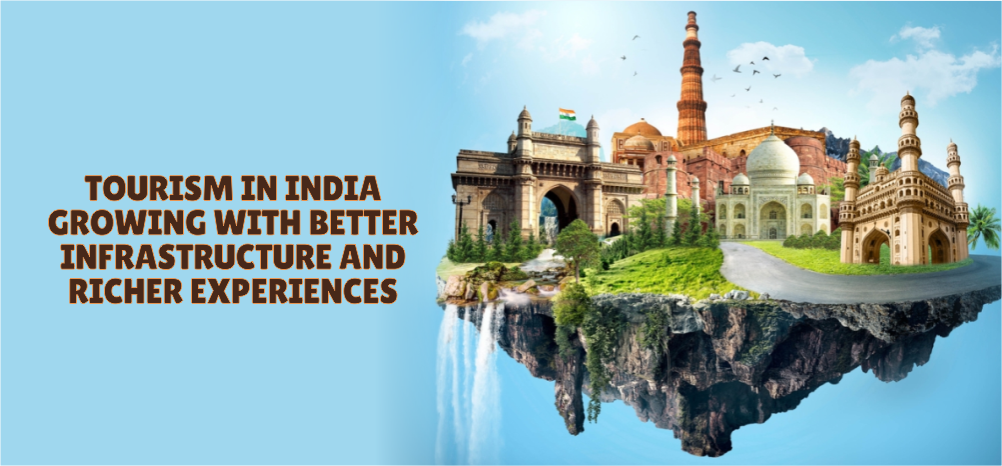
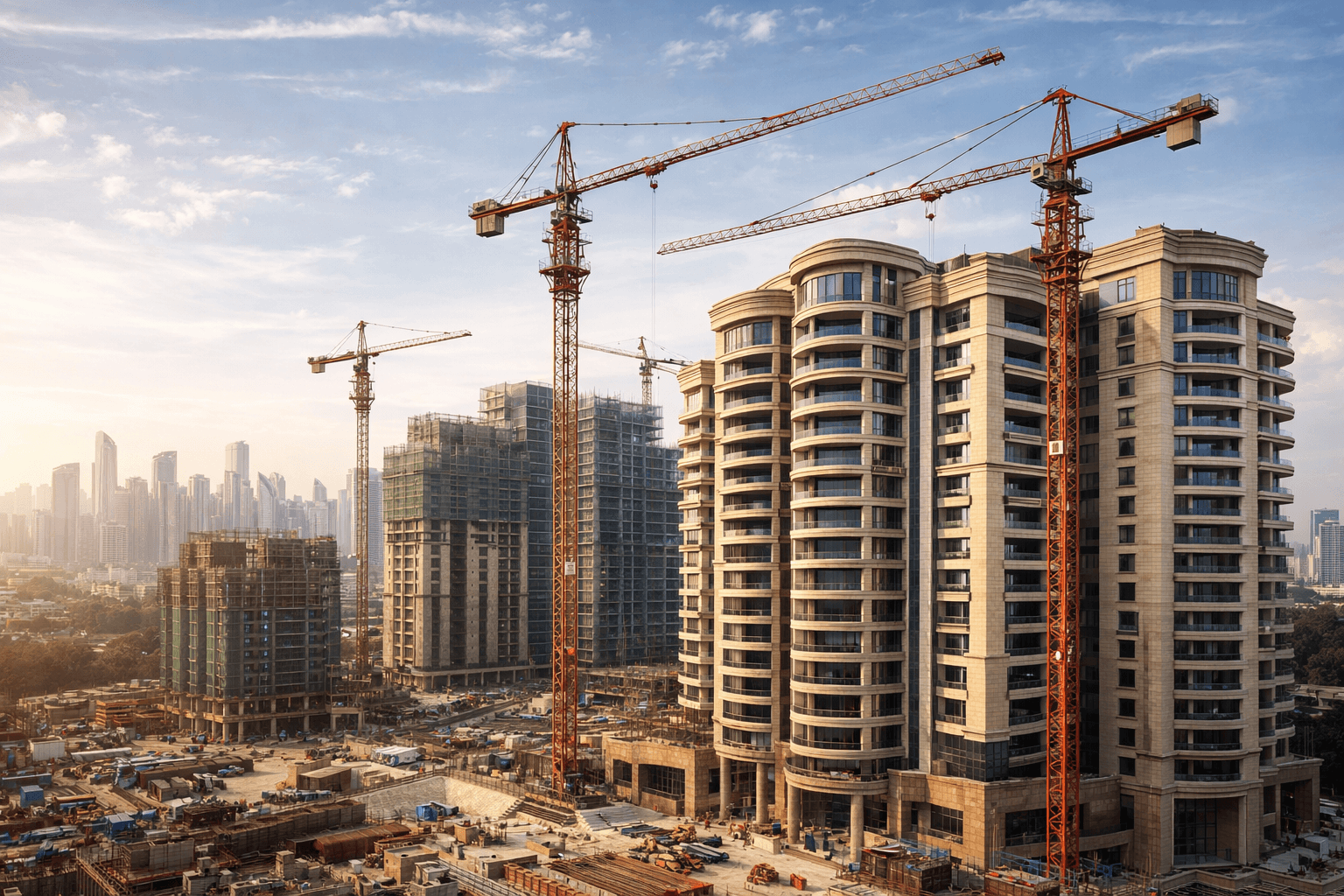
- The Bihar Government is boosting tourism and rural infrastructure through major projects, including themed circuits such as the Ramayana, Buddha and Sufi Circuits, and new ropeways in Jehanabad and Rohtas to improve connectivity. Under the Mukhyamantri Gramin Setu Yojana, the state plans to build 700 rural bridges in FY26 to enhance access in remote and flood-prone areas, supporting tourism, education, healthcare and local markets.
- In 2024, Bihar received a total of 49,859,236 tourists, including 49,352,094 domestic and 507,142 foreign tourists. Patna received 11.55% of the total tourists visiting the state, with 5,739,212 domestic and 20,967 foreign tourists.
- The state government has approved a scheme to provide a grant of Rs. 2 lakh (US$ 2,392) to poor households for setting up a small business. The estimated budget allocation for this initiative is Rs. 1,000 crore (US$ 120 million) in FY25, aiming to improve the financial condition of underprivileged households by supporting them in establishing their own small enterprises.
- In the 2025-26 railway budget, Bihar received a record allocation of Rs. 10,066 crore (US$ 1.18 billion), marking a ninefold increase compared to the average annual allocation during 2004-14.
- As of February 2025, Bihar is implementing 57 railway projects worth Rs. 86,458 crore (US$ 10.16 billion), covering 5,346 km of new lines, doubling tracks, and gauge conversion. Additionally, 98 Amrit Bharat stations are being redeveloped at a cost of Rs. 3,164 crore (US$ 372 million) Since 2014, Bihar has achieved 100% electrification with 3,020 km of tracks electrified. Twelve Vande Bharat trains and one Amrit Bharat Express are now operational.
- In FY25 (until February) the total passenger traffic and freight handled at Patna airport was 34,37,949 and 8,354.4 MT, respectively.
- On October 20, 2024, Prime Minister Mr. Narendra Modi laid the foundation stone for a Rs. 912 crore (US$ 107.16 million) civil enclave project at Darbhanga Airport. The civil enclave at Darbhanga Airport will significantly enhance air connectivity for the Mithila region and northern Bihar.
Bihar is an agrarian-led state with a rapidly expanding economy, benefiting from its strategic location near major eastern and northern markets and key ports such as Kolkata and Haldia. With a projected GSDP of US$ 128.89 billion in FY26 and sustained double-digit growth, the state is witnessing steady improvements in per capita income and industrial activity. Agriculture remains the backbone of the economy, employing nearly 80% of the population, while food processing, dairy, manufacturing, healthcare and small enterprises are emerging growth drivers. Rising exports, expanding power capacity, improved digital connectivity and large-scale public investment in roads, railways, airports, education and healthcare are strengthening Bihar’s infrastructure base and positioning it as an increasingly attractive destination for investment and inclusive growth.