Maharashtra is situated in the western region of the country. It is the most industrialised state in India and has maintained its leading position in the industrial sector in the country. The state is a pioneer in small-scale industries and boasts of the largest number of special export promotion zones. Maharashtra has a large base of skilled and industrial labour, making it an ideal destination for knowledge-based and manufacturing sectors.
At current prices, Maharashtra’s gross state domestic product was estimated at Rs. 49.39 trillion (US$ 578.31 billion) in FY26. GSDP of the state increased at a CAGR (in US$) of 10.78% from FY16 to FY26.
Mumbai, the state's capital, is the commercial capital of India and has evolved into a global financial hub. The city is home to several global banking and financial services providers. Pune, another major city in the state, has emerged as the educational hub. Maharashtra has emerged as a key hub for IT & ITeS, electronics, and captive business outsourcing industries.
The Government of Maharashtra has several policies in place to set up the right kind of business climate in the state. These policies aim to motivate investors to invest in various sectors in the state, thereby contributing to the overall development of the economy.
According to the Department for Promotion of Industry and Internal Trade (DPIIT), between October 2019-June 2025 FDI in Maharashtra stood at Rs. 8,32,730 crore (US$ 94.03 billion). Maharashtra ranked first for the highest FDI reception. Maharashtra ranked first for the highest FDI reception. Maharashtra ranked first for the highest FDI reception. Total exports from the state stood at Rs. 5,83,256 crore (US$ 65.86 billion) in FY25. Maharashtra exported key items such as Engineering goods, pearls, precious and semi-precious stones, gold and other precious metal jewellery, drug formulations, and electronic goods.
As of FY26 (until September 2025), the state had a total installed power generation capacity of 56,867.11 MW, of which the private sector was the largest contributor with a capacity of 34,496.60 MW, followed by 14,112.97 MW from state utilities and 8,257.54 MW from central utilities.
Thermal power contributed 27,839.02 MW to the total installed power generation capacity, followed by renewable power and nuclear power at 27,959.43 MW and 1,068.66 MW, respectively.
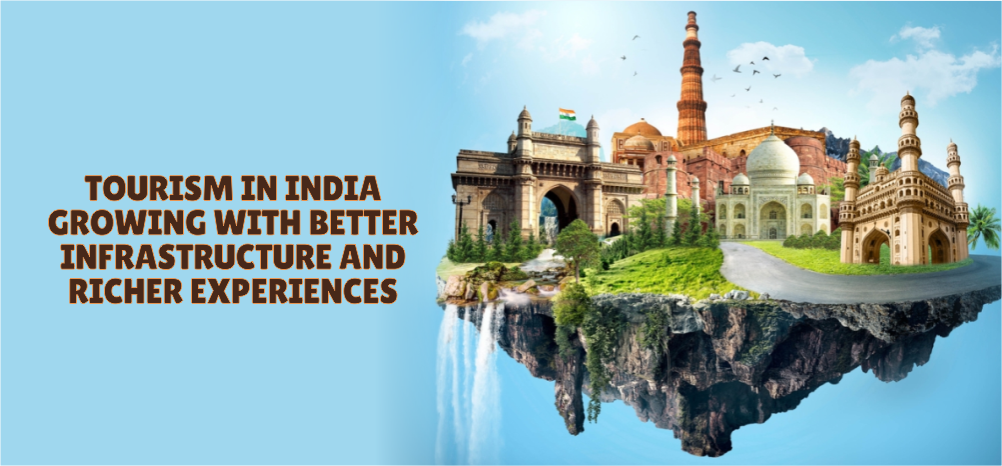
In 2023, India welcomed approximately 19.2 million tourists, with Maharashtra standing out as one of the states that attracted the highest number of international visitors, totalling 3,387,739 foreign tourists.
Market capitalisation of the NSE and BSE stood at Rs. 4,63,16,880 crore (US$ 5.23 trillion) and Rs. 4,69,80,008 crore (US$ 5.3 trillion), respectively.
The following are some of the major initiatives taken by the Government to promote Maharashtra as an investment destination:
- In October 2025, Maharashtra signed multiple Memoranda of Understanding (MoUs) with major domestic and global firms to boost shipbuilding and maritime infrastructure, positioning Mumbai as a leading global hub for vessel manufacturing. The agreements aim to enhance coastal logistics, create large-scale employment, and expand export opportunities for “Made in India” ships through new ports, shipyards, and innovation-led maritime clusters.
- The Government of India’s Union Cabinet has sanctioned projects worth Rs. 1,73,000 crore (US$ 19.53 billion) for railway infrastructure in Maharashtra as announced on April 11, 2025, by Minister of Railways, Information & Broadcasting and Electronics & Information Technology, Mr Ashwini Vaishnaw.
- Key sectors allotment under State Budget FY26:
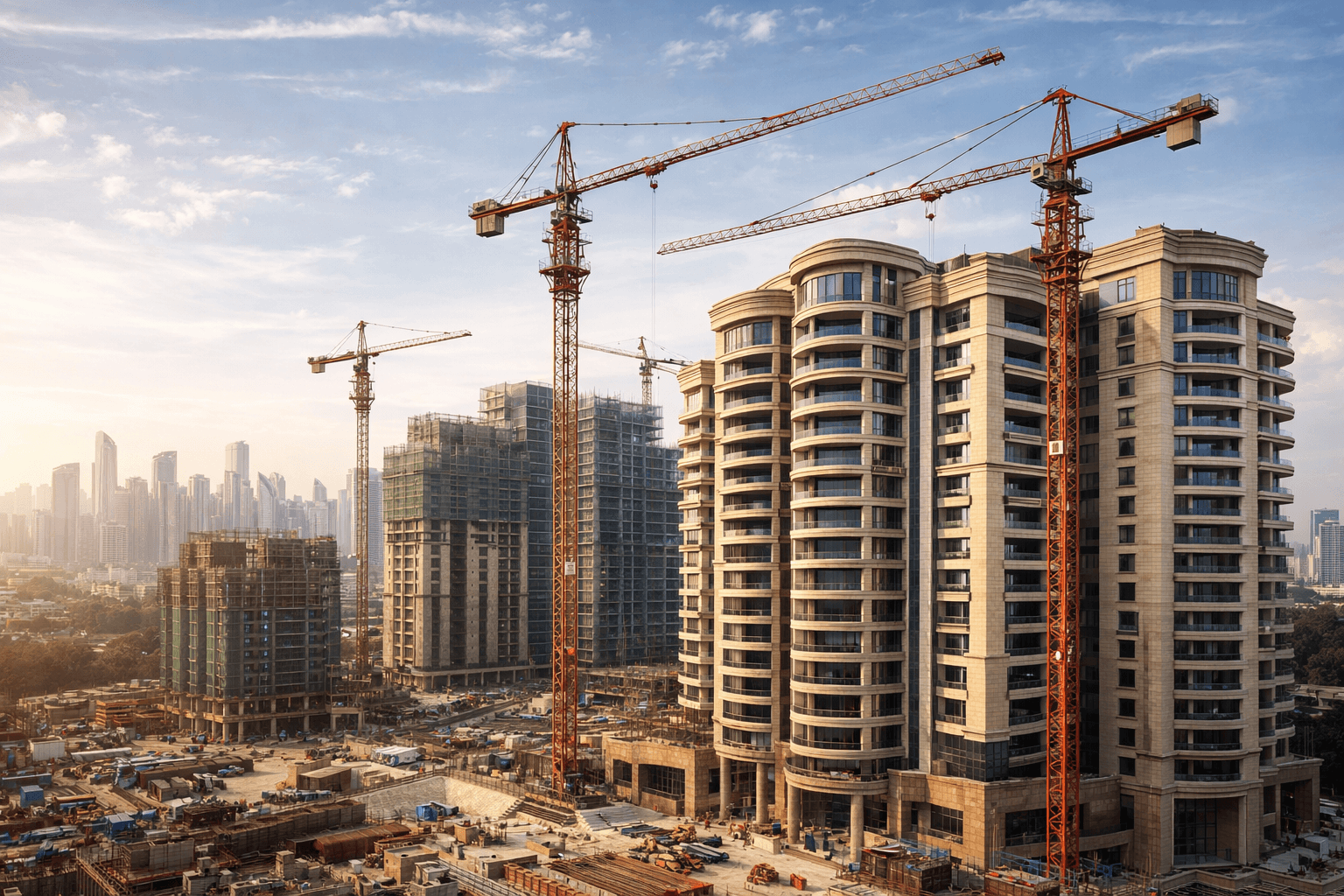
- A long-term road development plan will be prepared to connect tourist centers, pilgrimage sites, and national parks by 2047. Under the Mukhya Mantri Gram Sadak Yojana, it is planned that 3,582 villages will be connected to major roads and highways at a cost of Rs. 30,100 crore (US$ 3.52 billion).
- Government is expecting that electricity purchase costs will be reduced by Rs. 1.13 lakh crore (US$ 13.23 billion) due to the planning and procurement of low-cost green energy. As a result, Maharashtra’s industrial electricity rates are anticipated to be lowered below those of other states.
- Government has allocated Rs. 3,200 crore (US$ 374.7 million) has been allocated towards assistance to ULBs under Maharashtra Nagarothan Mahaabhiyaan.
- Rs. 9,051 crore (US$ 1.06 billion) has been allocated to assistance to local bodies for education.
- Rs. 943 crore (US$ 110.4 million) has been allocated for Mahatma Jyotiba Phule Jan Arogya Yojana.
- In October 2024, the Maharashtra State Government of India entered into a Memorandum of Understanding (MoU) with OFB Tech Pvt Ltd for an investment of US$ 89.30 million in the textile sector at the Karanja (Ghadge) Industrial Area in Wardha district.
- In January 2024, Prime Minister Mr. Narendra Modi inaugurated and laid the foundation stone for various development projects valued at over Rs. 12,700 crore (US$ 1.52 billion) in Navi Mumbai, Maharashtra.
- The state government proposed the ‘Hindu Hruday Samrat Balasaheb Thackeray Maharashtra Samruddhi Mahamarg’, an eight-lane expressway (701 km long and 120 metres wide) connecting Mumbai and Nagpur with a total estimated cost of Rs. 55,335.32 crore (US$ 7.6 billion). Of the total land required, 92.3% land was acquired as of December 2020.
Maharashtra continues to strengthen its position as one of India’s most dynamic economic engines, supported by a diverse industrial base, strong services economy, and sustained domestic and foreign investment. The state’s leadership in tourism, manufacturing, IT and ITeS, financial services, and infrastructure has created a robust foundation for long term growth. Rising exports, the highest FDI inflows in the country, large scale infrastructure expansion, and rapid progress across industrial clusters highlight Maharashtra’s competitive advantage. Government policies focused on connectivity, clean energy, urban development, education, healthcare, and industrial modernisation are enhancing the overall business environment while creating new employment opportunities. With strategic investments in tourism revival, technology driven industries, and future ready infrastructure, Maharashtra is well placed to maintain its leadership in India’s economic landscape and drive continued growth across sectors in the years ahead.