Advantage India
Robust
Demand
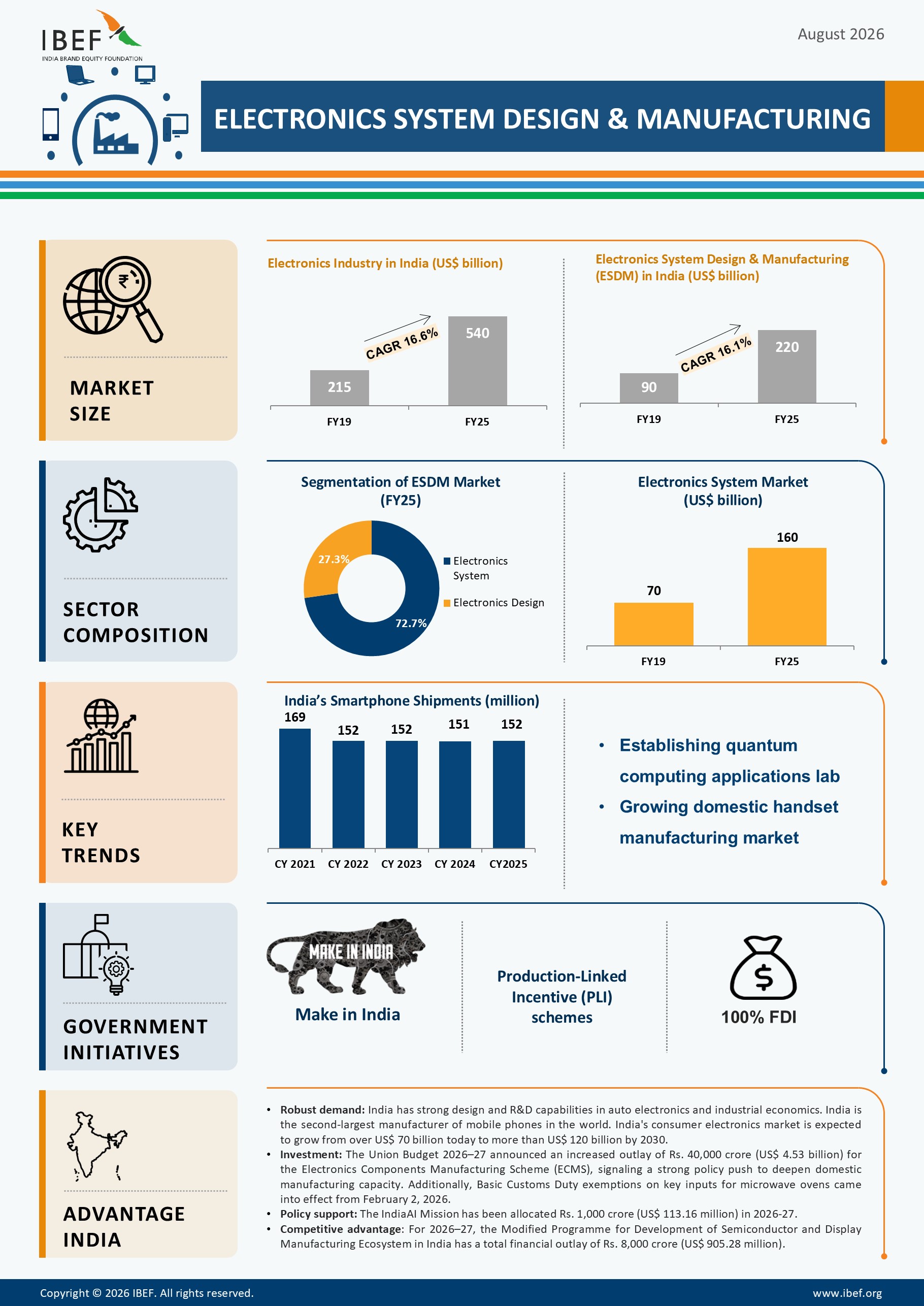
*In FY25, India became second-largest manufacturer of mobile phones in the world, with 300 manufacturing units.
*By December 2025, Apple exported more than Rs. 4.42 lakh crore (US$ 50 billion) worth of iPhones from India, marking a significant milestone in the country’s electronics manufacturing growth.
*The ultra-premium price segment of smartphones grew 37% YoY, the fastest among all price bands, driven by Apple and Samsung.

Competitive
Advantage
*As of December 2025, 136 projects with a total cost of Rs. 550 crore (US$ 57.82 million) have received funding, spanning emerging telecommunications technologies such as 5G/6G, AI, quantum communications, and others.
*India’s electronics production increased from Rs. 11.32 lakh crore (US$ 130.91 billion) in FY25 to Rs. 13.11 lakh crore (US$ 148.35 billion) in FY26, registering a year-on-year growth of 15.8%.

Policy
Support
*The production-linked incentive (PLI) schemes will provide companies opportunities to establish manufacturing plants in India.
*As of December 2025, India has approved 10 projects under the India Semiconductor Mission (ISM), with a cumulative investment of Rs. 1.60 lakh crore (US$ 18.11 billion) across 6 states.
*The Electronics Component Manufacturing Scheme, recently expanded with an allocation of US$ 2.7 billion, is a significant step toward increasing domestic production of PCBs, lithium-ion cells, and display modules.

Increasing
Investments
*As of December 2025, the Large-Scale Electronics Manufacturing (LSEM) scheme has attracted investments of Rs. 15,172 crore (US$ 1.72 billion) and generated 1,71,448 additional jobs.
*Tata Group plans to invest US$11 billion to develop a world-class Innovation City near the new Navi Mumbai International Airport, supporting India's ambition to become a global leader in artificial intelligence and semiconductor services.
*Electronics Development Fund invests around Rs. 258 crore (US$ 26.98 million) in 8 daughter funds, mobilising over Rs. 1,335 crore (US$ 140.72 million) investments across 128 startups and companies.


Related News
MOREESDM Clusters
- Madhya Pradesh
- Andhra Pradesh
- Punjab
- Kerala
- Tamil Nadu
- Uttar Pradesh

Posters
MORE
THE ESDM SECTOR WILL GENERATE US$ 1 TRILLION OF ECONOMIC VALUE
This growth is mainly attributed to increasing middle-class population, rising disposable incomes and declining electronics prices in the country.
IBEF Campaigns
MORE

Case Studies
MOREContainerisation: Transforming India's Maritime Trade

Despite other modes of transportation, the maritime shipping mode is the backbone of international trade. The concept of containerisation has revoluti...
India’s Growing Senior Care Needs: New Businesses and Services

The current state of India is characterised by the process of demographic transition with gradual growth of the proportion of senior citizens within t...
The Rise of India's Pathology Laboratories: Strengthening Quality and Safety in Healthcare

India has seen its healthcare system witness an impressive evolution in the last two decades because of the growth in healthcare infrastructure, incre...
IBEF BLOG
MORE
India's Blue Economy: Untapped Potential in Ports, Fisheries and Ocean Resources
The maritime space of India, which comprises the coastline, island areas, a...
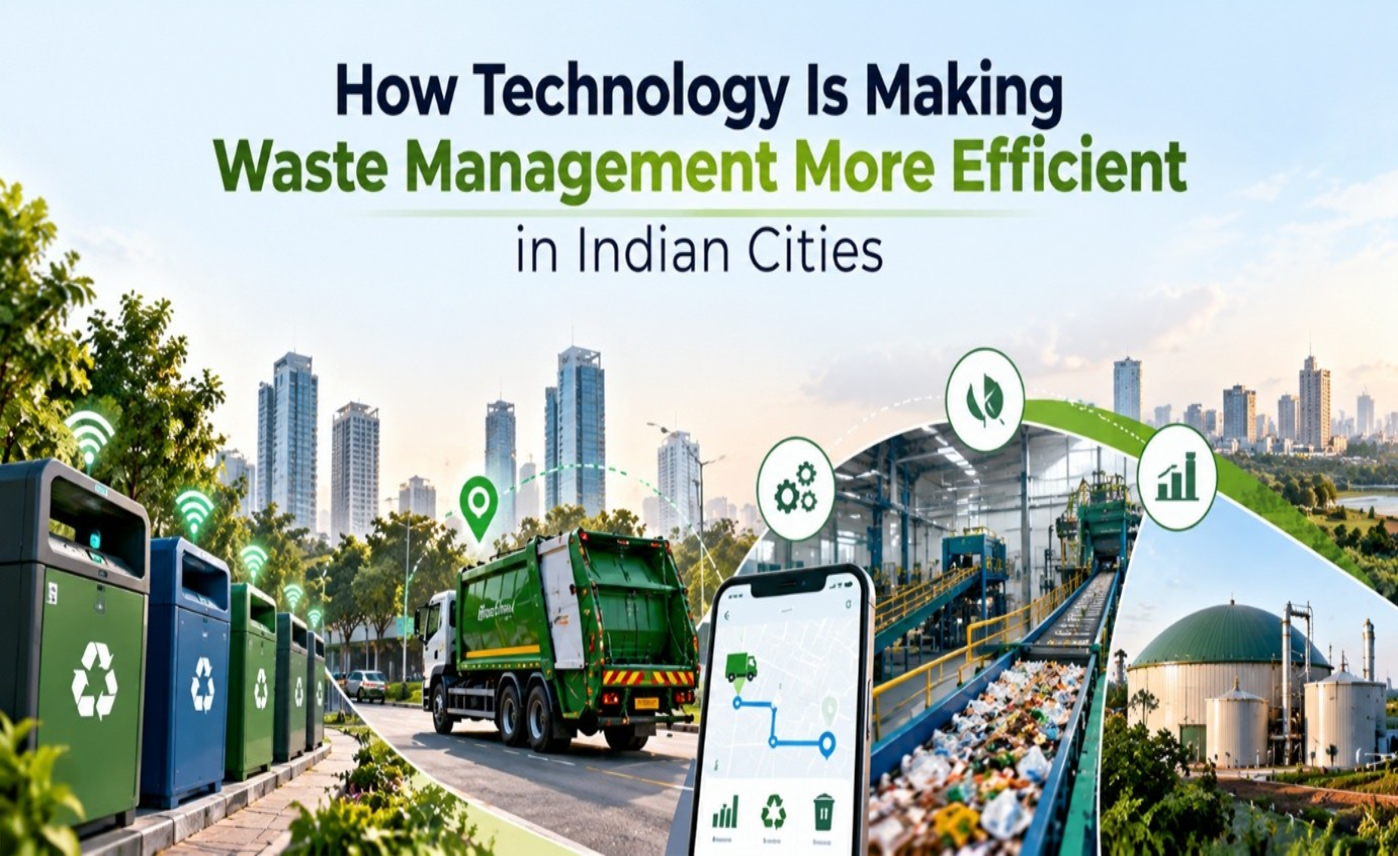
How Technology Is Making Waste Management More Efficient in Indian Cities
Indian cities are adopting digital monitoring, sensors, and automated waste...

India's Cold Chain Logistics: The Backbone of Perishable Trade
India's cold chain network allows the transfer of perishables from farm...
Partners