Advantage India
Robust
Demand
*Tele-density of rural subscribers reached 60.74% as of April 2026.
*India’s satellite communications (SATCOM) sector is set for robust growth, with the market expected to double over the next few years, Union Minister for Communications Mr. Jyotiraditya M. Scindia said. Highlighting the government’s proactive approach, he noted that three SATCOM licenses have already been issued and that regulatory frameworks and licensing processes are being formalised.

Attractive
Opportunities
*In February 2026, a Memorandum of Cooperation (MoC) was signed between the Digital Bharat Nidhi and the Government of Andhra Pradesh to accelerate the rollout of the Amended BharatNet Programme in the state. With an approved financial support of Rs. 2,432 crore (US$ 275.2 million), the initiative aims to strengthen rural telecom infrastructure by enhancing last-mile connectivity, upgrading network resilience, and expanding broadband access across over 13,000 Gram Panchayats.
*Expansion of the India Semiconductor Mission and electronics manufacturing schemes will strengthen domestic capabilities and supply chains. Tax exemptions for data centre services until March 2047 further support infrastructure growth.

Policy
Support
*The Production-Linked Incentive (PLI) scheme for telecom and networking products has been allocated Rs. 1,950 crore (US$ 220.7 million) in the Union Budget 2026–27, reflecting a slight increase from Rs. 1,944 crore in the revised estimates for 2025–26.
*DoT has reduced Telecom Security Testing Laboratory (TSTL) fees by over 50%, along with additional concessions for startups, MSMEs, and public institutions.
*In April 2026, The Government of India launched the revamped Technology Development and Investment Promotion (TDIP) Scheme with an allocation of Rs. 203 crore (USD 0.02 billion) for FY2026–FY2031 to enhance indigenous telecom innovation, strengthen India's participation in global telecom standards, and support startups, MSMEs, academia, and industry players developing next-generation telecom technologies.

Increasing
Investments
*The Department of Telecommunications received an allocation of Rs. 73,991 crore (USD 8.37 billion) under the Union Budget 2026–27, representing 1.4% of the central budget and a 39% increase over revised FY2025–26 estimates. The rise is largely attributed to a 314% increase in BSNL capital infusion, aimed at advancing network modernization and supporting the government's long-term revival strategy for BSNL and MTNL.
*In March 2026, The Government of India announced continued investments in digital infrastructure, including the BharatNet programme, with approximately USD 17.0 billion (₹1.50 lakh crore) being deployed to connect 260,000 Gram Panchayats through high-speed broadband.

Introduction
India’s telecom sector has transformed into one of the most dynamic pillars of the economy, shaping how people connect, communicate, and access services. Over the last decade, the industry has expanded at an unprecedented pace, driven by affordable tariffs, rapid mobile penetration, and the rising demand for digital connectivity. This progress has positioned India as the second-largest telecommunications market globally as of 2026, with a total telephone subscriber base of 1,337.54 million and a tele-density of 93.69% as of April 2026.
The country also ranks among the largest internet markets globally, with 1,092.79 million subscribers as of March 2026, underscoring its fast-growing digital ecosystem. According to a report by the GSM Association (GSMA) in collaboration with Boston Consulting Group (BCG), the Indian mobile economy is set to contribute significantly to GDP in the years ahead. Much of this growth has been enabled by liberal and reform-driven government policies, including deregulation of foreign direct investment (FDI), easier market access to telecom equipment, and a fair, competitive regulatory framework. Together, these efforts have ensured affordable services for consumers while making telecom one of the fastest-growing industries and a leading generator of employment opportunities in India.
Market Size
India’s telecom sector continues to demonstrate strong momentum, with gross revenue rising from US$ 39.22 billion in FY24 to US$ 43.42 billion in FY25. The cumulative gross revenue of telecom service providers (TSPs) surpassed the one lakh crore mark in the December 2025 quarter, reaching Rs. 1.02 lakh crore, (US$ 12.06 billion) according to a report released by the sector regulator, Telecom Regulatory Authority of India (TRAI).
As of April 2026, the total tele-density stood at 93.69%, reflecting the widespread reach of connectivity across the country. The number of total telephone subscribers in India increased from 1330.58 million at the end of March 2026 to 1337.54 million at the end of April 2026. At the end of April 2026, Reliance Jio Infocomm Ltd. leads the market with 505.92 million in term of wireless (mobile) subscribers, maintaining a substantial lead over competitors. Bharti Airtel Ltd. ranks second with 487.36 million subscribers, followed by Vodafone Idea Ltd. at 201.21 million.
Among public sector and regional players, Bharat Sanchar Nigam Ltd. holds 94.22 million subscribers, while MTNL accounts for 0.13 million. The total internet subscribers in the country reached 1,092.79 million (1.09 billion) at the end of March 2026.

This marks a significant 6.24% jump from the 1,028.61 million subscribers recorded in December 2025, underscoring rapidly expanding connectivity across both urban and rural regions.
As of April 2026, the Indian broadband market remains highly concentrated, with the top five service providers (Reliance Jio Infocomm Ltd., Bharti Airtel Ltd., Vodafone Idea Ltd , Bharat Sanchar Nigam Ltd., Atria Convergence Technologies Ltd.) accounting for 98.61 of the total subscriber base, indicating significant market consolidation.
As per the information received from 1538 operators for the month of April 2026, the total number of broadband subscribers increased from 1065.88 million at the end of March 2026 to 1073.44 million at the end of April 2026 with a monthly growth rate of 0.71%. This steady expansion underlines the sector’s growing role in driving India’s digital transformation and positioning the country among the world’s largest telecom markets.
Investment/Major Development
With daily increasing subscriber base, there have been a lot of investment and development in the sector. FDI inflow in the telecom sector stood at Rs. 2,42,122.16 crore (US$ 40,190.37 million) between April 2000-March 2026.
Some of the developments in the recent past are:
- On April 13, 2026, Bank of Baroda partnered with Reliance Jio to launch bob World Lite, India's first comprehensive mobile banking application for feature phone users. Available on the JioPhone Prima 4G, the initiative aims to expand digital banking and UPI-based payment services across semi-urban and rural India.
- On March 10, 2026, Bharti Airtel became the first telecom operator to provide mobile connectivity in Marwah, Jammu & Kashmir, a remote region linking Kishtwar and Anantnag. The deployment extends high-speed network coverage across a previously unconnected 150-km corridor, enhancing digital inclusion, supporting tourism development, and improving connectivity for local communities and security forces.
- On March 30, 2026, Nxtra Data, a subsidiary of Bharti Airtel, secured US$ 1.0 billion in funding from Alpha Wave Global, Carlyle, Anchorage Capital, and Airtel to expand its data center network across India and support growing demand for AI, cloud, and hyperscale infrastructure.
- At the end of 2025, 5G subscriptions reached 430 million and accounted for 35 per cent of total mobile subscriptions, the Ericsson Mobility report said. India also continues to lead globally in mobile data consumption per smartphone, the average monthly usage already at 37 GB is expected to nearly double to 70 GB by 2031.
- India’s satellite communications (SATCOM) sector is set for robust growth, with the market expected to double over the next few years, Union Minister for Communications Mr. Jyotiraditya M. Scindia said. Highlighting the government’s proactive approach, he noted that three SATCOM licenses have already been issued and that regulatory frameworks and licensing processes are being formalised.
- India accounted for 7.9% of the global smartphone market by value in H1 CY25, up from 7.7% a year earlier, making it the third-largest market worldwide, even as China and the UK saw their shares decline.
- On August 22, 2025, the Department of Telecommunications (DoT) urged M2M service providers, government ministries and IoT device makers to adopt oneM2M standards, to ensure secure, interoperable and scalable IoT ecosystems in India.
- In April 2026, India’s Unified Payments Interface (UPI) processed 22.35 billion transactions worth Rs, 29.03 lakh crore (approximately US$ 328.4 billion). The platform had 713 participating banks, highlighting the continued expansion and widespread adoption of digital payments across the country.
- Indian users spent over 1.2 trillion hours on mobile apps in 2025, up from 1.1 trillion hours in 2024 and 1 trillion hours in 2023.
- On June 16, 2025, TRAI’s Independent Drive Tests showed call drop rates under 2% in most cities, but weaker performance in Delhi, Bihar & Jharkhand, and parts of Sikkim.
- The Sanchar Saathi Mobile App, launched by the Department of Telecommunications (DoT) on 17 January 2025, improves telecom digital experience by enabling users to report fraud, manage lost or stolen devices, and check mobile connections in their name. Available on Android and iOS with support for Hindi, English, and 21 regional languages, it ensures broad accessibility. The app has crossed 1.5 crore downloads, highlighting strong adoption of secure, self-service telecom services.
- As of March 2025, the Indian telecom sector stands as the fourth-largest recipient of FDI equity inflows in India.
- The Union Budget 2026–27 has allocated Rs. 73,990 crore (US$ 8.37 billion) to the Department of Telecommunications, with the total net outlay reaching Rs. 80,927 crore including additional funding from the Universal Service Obligation Fund (USOF), reflecting continued emphasis on rural connectivity and telecom infrastructure expansion.
- The 5G infrastructure market is set to soar from Rs. 1,19,966 crore (US$ 14 billion) in 2025 to Rs. 49,18,606 crore (US$ 574.4 billion) by 2035, growing at a 45% CAGR on the back of rapid adoption, heavy investments, and large-scale rollouts.
- As of February 2026, approximately 5.23 lakh 5G Base Transceiver Stations (BTSs) have been installed across the country, reflecting the rapid pace of network expansion.
- As of October 2025, out of 644,131 villages in India, 634,019 are covered with mobile connectivity, of which 630,676 have 4G services. Broadband subscriptions have increased from 48 crore in September 2018 to 98 crore in June 2025, reflecting significant expansion in digital connectivity, driven by initiatives under the Digital Bharat Nidhi.
- The government is targeting fibre connectivity to every home in FY2026, with a goal of 1.5 crore FTTH connections and deployment of nearly 7 lakh km of optical fibre (OFC), alongside state-led execution models (e.g., Gujarat achieving 100% targets).
- The volume of total wireless data usage increased from 69,090 PB in Q.E. Sep-25 to 73,324 PB in Q.E. Dec-25, registering a quarterly growth rate of 6.13%.
- The total number of wireless data subscribers increased from 961.08 million at the end of Sep-25 to 1,018.59 million at the end of Dec-25.
- Out of the total 73,324 PB wireless data usage in Q.E. Dec-25, 2G data usage was 48 PB, 3G was 95 PB, 4G accounted for 44,087 PB, and 5G stood at 29,094 PB during the quarter.
- The contribution of 2G, 3G, 4G, and 5G data usage to the total wireless data volume was approximately 0.07%, 0.13%, 60.13%, and 39.68%, respectively, in Q.E. Dec-25.
- On October 14, 2025, Bharti Airtel partnered with Google to establish India’s first AI hub in Visakhapatnam, with an investment of US$15 billion, aimed at strengthening digital infrastructure, data centre capacity, and AI adoption across the country.
- On February 14, 2025, JioStar officially launched JioHotstar, merging JioCinema and Disney+ Hotstar into a single OTT platform with over 3,00,000 hours of content, multi-language support, AI-driven recommendations and premium sports, including IPL and ICC tournaments, into one immersive streaming experience.
- India’s 5G subscriber base is projected to surge to 980 million by 2030 from 290 million in 2024.
- As of April 2026, the wireless subscriber base of Jio stood at 505.92million, followed by Bharti Airtel 487.36 million, Vodafone Idea 201.21million, and BSNL 94.22 million.
- The wireless segment accounted for 96.4% of the total telephone subscriptions in April 2026 while, the wireline accounts for 3.6%.
- As of April 2026, the urban and rural segments accounted for 58.5% and 41.5% of the total telecom subscriber base in India, respectively.
- Bengaluru-based gear maker Tejas Networks has won a three-year deal (2024 to 2027) from Vodafone Idea (Vi) to supply backhaul equipment for India's third-largest telecom operator's 4G and commercial fifth-generation or 5G networks.
- The telecom industry recorded 10.72% sequential growth in gross revenue (AGR) at Rs. 3,72,097 crore (US$ 43.42 billion) in FY25 from Rs. 3,36,066 crore (US$ 39.22 billion) in FY24.
- On June 26, 2024, Vodafone Idea invested Rs. 3,510 crore (US$ 409 million) to acquire 50 MHz of spectrum across low and mid bands in 11 circles, boosting its 4G capacity and laying the groundwork for 5G rollout.
- Union Minister of Communications Mr. Jyotiraditya Scindia inaugurated Bharat Telecom 2025 in New Delhi, highlighting India's growing role as a global telecom exporter and innovation hub.
- In February 2026, a Memorandum of Cooperation (MoC) was signed between the Digital Bharat Nidhi and the Government of Andhra Pradesh to accelerate the rollout of the Amended BharatNet Programme in the state. With an approved financial support of Rs. 2,432 crore (US$ 275.2 million), the initiative aims to strengthen rural telecom infrastructure by enhancing last-mile connectivity, upgrading network resilience, and expanding broadband access across over 13,000 Gram Panchayats.
- Airtel Payments Bank surpassed one billion transactions in January 2025, reflecting a 47% YoY growth in transaction volume. The achievement highlights the increasing adoption of digital banking solutions and the bank's diverse business model.
- Independent telecom tower companies are expected to spend Rs 21,000 crore (US$ 2.42 billion) for the period between FY25 and FY26 in order to support the telecom companies in expanding rural networks and also improving service quality in urban areas, stated a report by CRISIL Ratings.
- Bharti Airtel has become the first private telecom operator to launch mobile services in Kupwara, Baramulla and Bandipore districts of Jammu and Kashmir.
- The Centre for Development of Telematics (C-DOT) and IIT Roorkee have partnered to develop a "Millimetre Wave Transceiver for 5G Rural Connectivity," supported by the Telecom Technology Development Fund. The project aims to improve affordable broadband and mobile services, bridging India’s digital divide.
- Vodafone Idea (Vi), boosted by a recent equity funding, plans to open more retail outlets to increase the sales.
- India's Bharat 6G alliance and the European telecom industry organization Industry are planning to establish a partnership. This partnership will facilitate cooperation between the two groups in the development of 6G technology.
- To make India 5G-ready, there is a push for fiberisation of telecom towers. Currently, 36% of towers are fiberized, and plans involve deploying 12 lakh towers.
Government Initiatives
The Government has fast-tracked reforms in the telecom sector and continues to be proactive in providing room for growth for telecom companies. Some of the key initiatives taken by the Government are as follows:
- In November 2025, the Minister of State for Communications highlighted a US$ 25 billion opportunity in telecom component manufacturing in India. He emphasized government support through fast-tracked approvals and simplified compliance for global investors to build in India. Andhra Pradesh was showcased as a key investment destination with strong industrial ecosystems supporting telecom and electronics manufacturing.
- As of February 28, 2026, a total of 4,09,403 Public Data Offices (PDOs) / public Wi-Fi hotspots are operational under the PM-WANI framework across States and Union Territories. PM-WANI hotspots have served 2,44,67,896 users till February 28, 2026, with total data consumption reaching approximately 58.64 petabytes, highlighting strong uptake of public Wi-Fi services.
- India’s draft National Telecom Policy 2025 (NTP-25) aspires to achieve 100% 4G coverage and 90% 5G population coverage by 2030 underscoring a bold vision to elevate digital inclusion and infrastructure.
- The India government allows 100% foreign participation via the Automatic Route.
- To improve Wi-Fi proliferation, Government has launched PM-WANI scheme which aims to accelerate proliferation of internet services for public including farmers by setting up public Wi-Fi Hotspots in the country.
- In the Union Budget FY26 the Department of Telecommunications and IT was allocated Rs. 81,005.24 crore (US$ 9.27 billion).
- The CCI has granted approval for Data infrastructure trust to acquire 100% of the share capital of ATC telecom infrastructure Private Limited, along with certain related transactions.
- The Telecom Regulatory Authority of India (TRAI) has issued a Telecom Tariff (69th amendment) order 2022 on “Tariff for SMS and Cell Broadcast alerts disseminated through Common Alerting Protocol (CAP) platform during disasters/non-disasters”. Department of Telecom (DoT) has requested TRAI to provide tariff for SMS and Cell Broadcast alerts/messages to be disseminated by TSPs through CAP platform during disasters/non-disasters.
- On November 15, 2024, Prime Minister, Mr. Narendra Modi launched the Nyaya Maha Abhiyan, a three-year mission with a Rs. 24,000 crore (US$ 2.9 billion) project outlay.
- The Government of India intends to establish one hundred labs for creating applications using 5G services in engineering universities as part of the Union Budget 2023, in order to realize a new range of possibilities, business models, and job potential.
Road Ahead
The Indian Government is planning to develop 100 smart city projects, and IoT will play a vital role in developing these cities. Indians downloaded over 24.3 billion apps on their mobiles in 2024 as compared to 25.6 billion downloads in 2023. A major force behind meeting the telecom industry's present and future technological needs is the Atmanirbhar Bharat programme. There had been UPI a push towards developing indigenous 5G technology to help India move towards 5G rapidly. India is also planning for 6G in advance and started investing in the development of 6G technology already.
References: Media Reports and Press Releases, Cellular Operators Authority of India (COAI), Telecom Regulatory Authority of India (TRAI), Department of Telecommunication (DoT), Department for Promotion of Industry and Internal Trade (DPIIT), India Services Sector Report by Deloitte, Union Budget 2023-24, PIB
Note: IP - Internet Protocol, PB - Petabytes, FDI- Foreign Direct Investment
FAQs
The telecom industry in India is the world's second-largest telecommunications market, with 1.34 billion telephone subscribers, 1.09 billion internet users, and a 93.69% tele-density as of April 2026. Rapid digital adoption continues to strengthen the sector.
Leading players in the telecommunication sector in India include Reliance Jio, Bharti Airtel, Vodafone Idea (Vi), and BSNL. Together, they account for the majority of India's wireless and broadband subscriber base while driving nationwide 4G and 5G expansion.
The Government is promoting the telecom industry in India through PM-WANI, BharatNet, the draft National Telecom Policy 2025, 100% FDI under the automatic route, and higher budget allocations to strengthen digital infrastructure and rural connectivity.
The telecom industry in India is expanding due to rising smartphone penetration, affordable data tariffs, 5G rollout, increasing internet usage, digital payments, cloud services, and growing demand for high-speed connectivity across urban and rural India.
India's telecommunication sector is being transformed by rapid 5G deployment, with over 5.23 lakh 5G base stations installed and 430 million 5G subscribers by the end of 2025. The technology is enabling AI, IoT, smart manufacturing, and advanced digital services.
The telecom industry in India is expected to witness sustained growth, supported by 5G expansion, fibre connectivity, data centres, satellite communications, indigenous 6G development, and increasing digital adoption across businesses and consumers.
The telecommunication sector in India is the second-largest telecommunications market globally and one of the world's largest internet ecosystems. It also ranks among the leading mobile data markets, driven by strong subscriber growth and affordable digital connectivity.
Related News
MORETelecommunication India


IBEF Campaigns
MORE

Aatmanirbhar Bharat Utsav 2024
Union Minister of External Affairs, Dr. S. Jaishankar and Union Commerce an...
Case Studies
MORESUV Dominance and the Future of Passenger Vehicles

India's passenger vehicle industry over the past two decades have been gone under significant changes. In particular, the market has been transfor...
Expressway Infrastructure Development Outlook in India
India's vision of becoming a Viksit Bharat by 2047 has positioned transport infrastructure as a cornerstone of its long-term economic growth strat...
The Rise of Contract Manufacturing in India's Electronics Sector
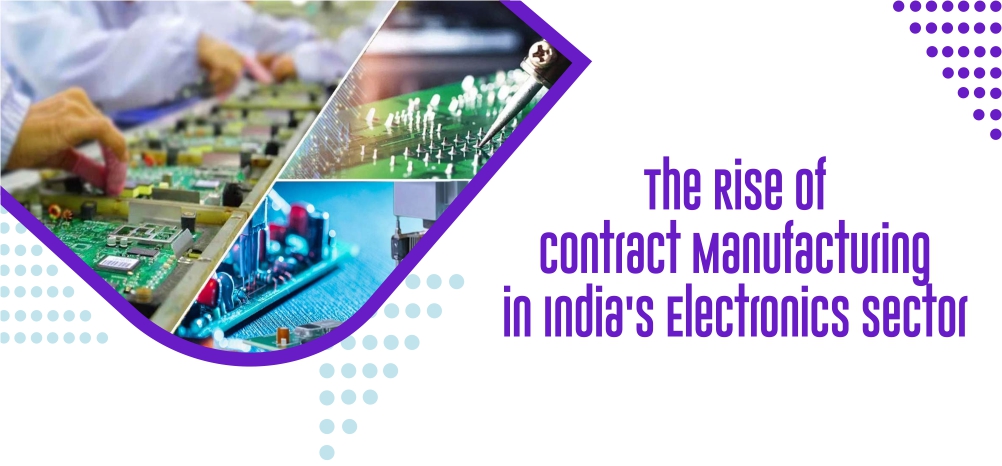
India's rise to become a large center for electronics manufacturing services is one of the most significant manufacturing changes in India's r...
IBEF BLOG
MORE
How India's Industrial Valve and Pump Industry Supports Infrastructure and Manufacturing
Pumps and industrial valves represent the basic building blocks of today&rs...

India's Premium Fresh Produce Exports: Creating New Opportunities for Farmers
India has emerged as a major exporter of horticulture crops owing to the pr...
India's Content Economy: Building Global Audiences Through Digital Entertainment
The digital entertainment ecosystem in India is currently experiencing a fu...
Partners