Advantage India
Robust
Demand
*As of FY25, the total length of National Highways in the country was 146,572 km.
*The continued expansion of India's road infrastructure supported robust vehicle demand during FY26, with domestic automobile sales reaching 28.27 million units.
*Two-wheelers accounted for 21.71 million units, followed by passenger vehicles (4.64 million units), commercial vehicles (1.08 million units) and three-wheelers (0.84 million units) reflecting sustained demand for road-based mobility and freight transportation.

Attractive
Opportunities
*India has joined the league of 15 of global alliance which will work towards the ethical use of smart city technologies.
*Road building in India is the second least expensive in Asia.
*Private investment in India's highway sector is expected to approach Rs. 1 lakh crore (US$ 10.60 billion) in FY27, driven by the revival of the Build-Operate-Transfer (BOT) model and increased participation from private developers. The Government is prioritising Public-Private Partnership (PPP) projects and asset monetisation to mobilise long-term capital and accelerate highway infrastructure development.
*In May 2026, the Ministry of Road Transport and Highways (MoRTH) revised the bidding framework for Build-Operate-Transfer (BOT) highway projects, allowing institutional investors to bid directly and boosting private investment in National Highway development.

Higher
Investments
*During the year FY26, NHAI monetised highway assets worth Rs. 28,077.90 crore (US$ 3.18 billion) through the Toll-Operate-Transfer (ToT) and Infrastructure Investment Trust (InvIT) models, with ToT contributing Rs. 12,357 crore (US$ 1.40 billion) and public and private InvITs together contributing Rs. 15,720.90 crore (US$ 1.78 billion), supporting sustained investment in National Highway infrastructure
*The government is developing 35 multimodal logistics parks as part of Bharatmala Pariyojana with an investment of about Rs. 46,000 crore (US$ 5.21 billion) to handle around 700 million metric tonnes of cargo.
*In September 2025, the government announced a massive Rs. 11 lakh crore (US$ 125 billion) initiative to build 17,000 km of high-speed, access-controlled expressways by 2033. This plan aims to expand India’s high-speed road network fivefold, boost logistics efficiency, and enhance economic connectivity. About 40% of these expressways are already under construction, with most expected to be completed by 2030.

Policy
Support
*In March 2026, MoRTH introduced stricter contractor evaluation norms, linking catastrophic failures in National Highway projects with contractor ratings and future contract eligibility to enhance construction quality
*The Government strengthens the National Highways network through flagship programmes such as Bharatmala Pariyojana (including the subsumed NHDP), SARDP-NE, LWE Road Development Programme (including the Vijayawada–Ranchi Road), and Externally Aided Projects (EAP).
*100% Foreign Direct Investment (FDI) is allowed under the automatic route in the road and highways sector, subject to applicable laws and regulation.

Reliance Infrastructure Limited (RInfra)
Reliance Infrastructure Limited (RInfra) is one of the largest infrastructure companies, developing projects through various Special Purpose Vehicles (SPVs) in several high growth sectors such as power, roads, metro rail and airport in the infrastructure space and the defence sector. The company is also a leading utility company with presence across the chain of power businesses such as generation, transmission, distribution, and power trading. RInfra, through its SPVs, has executed a portfolio of infrastructure projects under BOT such as a metro rail project in Mumbai and eleven road projects with total length of about 1,000 kms. RInfra, along with its wholly owned subsidiary company, has installed capacity of 441 MW of power and distributes power to over 40 lakh consumers in Delhi. RInfra also provides Engineering, Procurement, and Construction (EPC) services for developing power infrastructure and road projects.
Read More

GMR Infrastructure Limited
GMR Group is engaged in generation of power, mining and exploration activities, development of highways, infrastructure development, such as development and maintenance of airports and special economic zone; construction business, including Engineering, Procurement and Construction (EPC) contracting activities and operation of airports and special economic zones. Its airports segment is engaged in the development and operation of airports. Its power segment is engaged in generation of power and provision of related services and exploration and mining activities. The roads segment is engaged in the development and operation of roadways. The EPC segment is engaged in handling of engineering, procurement, and construction solution in the infrastructure sector. The others segment is engaged in urban infrastructure and other activities.
Read MoreIRB Infrastructure Developers Limited
IRB Infrastructure Developers Limited is a road BOT operator. The company's principal activity is the construction and maintenance of roads. Its business segments include road infrastructure projects, which includes development and operation of roadways; real estate, which includes real estate development; and others, which includes windmill (sale of electricity generated by windmill), hospitality and airport infrastructure. Its construction business complements its BOT vertical by executing engineering, procurement and construction, and O&M aspects of BOT concessions. It has a portfolio of over 20 road BOT projects. It has in-house integrated project execution capabilities in both its business verticals, including construction and O&M of highways. Its clients include government agencies such as National Highways Authority of India (NHAI) and state road development authorities, which develop highways.
Read More
Related News
MOREIndian Roads
- Srinagar
- Golden quadrilateral
- North South / East West / Corridor
- Porbandar
- Mumbai
- Chennai
- Kanyakumari
- Kolkata
- Silchar


IBEF Campaigns
MORE

Aatmanirbhar Bharat Utsav 2024
Union Minister of External Affairs, Dr. S. Jaishankar and Union Commerce an...
Case Studies
MORESUV Dominance and the Future of Passenger Vehicles

India's passenger vehicle industry over the past two decades have been gone under significant changes. In particular, the market has been transfor...
Expressway Infrastructure Development Outlook in India
India's vision of becoming a Viksit Bharat by 2047 has positioned transport infrastructure as a cornerstone of its long-term economic growth strat...
The Rise of Contract Manufacturing in India's Electronics Sector
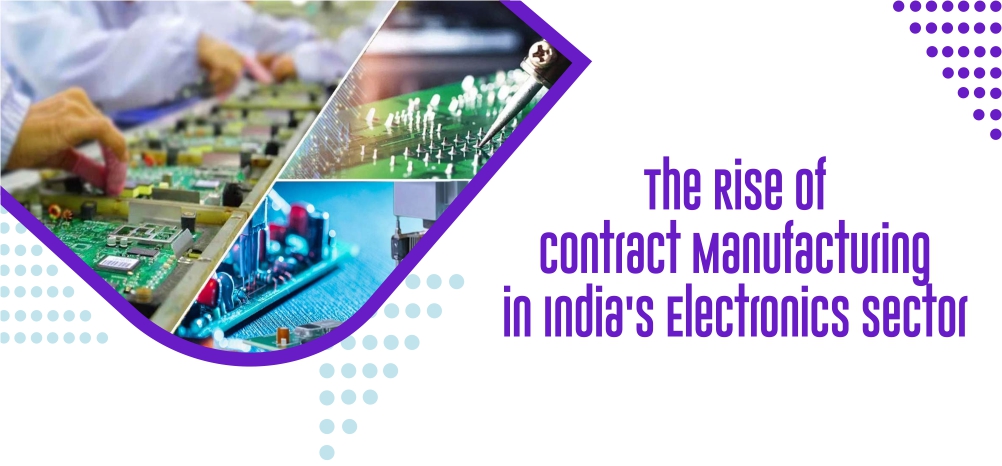
India's rise to become a large center for electronics manufacturing services is one of the most significant manufacturing changes in India's r...
IBEF BLOG
MORE
India's Content Economy: Building Global Audiences Through Digital Entertainment
The digital entertainment ecosystem in India is currently experiencing a fu...

Popular Rice Varieties in India: Market Landscape, Key Varieties and Growth Opportunities
Rice is one of the agricultural products which is of importance in India, a...

How the Coffee Board of India Supports Coffee Farmers and Exports
Coffee forms an important crop for Indian plantations, providing a living t...
Partners